
GADGET
2026.08.04
【Adult's Free Research】I found a "Rechargeable Digital Microscope 3.7V" at Cainz to check the tips of fishing lures
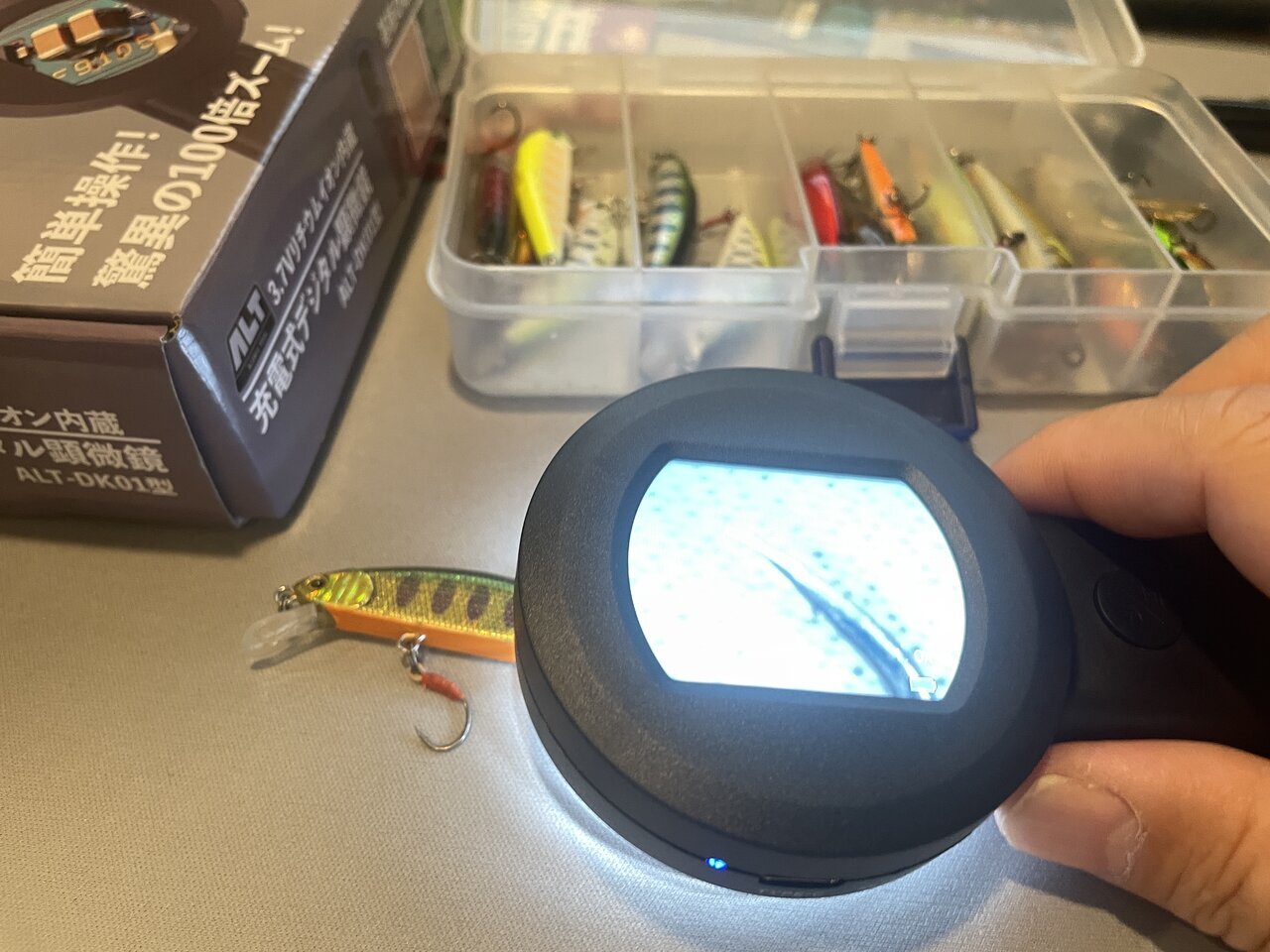
I thought the "Rechargeable Digital Microscope 3.7V" I found at Cainz looked interesting, so I took a look at the tips of fishing lures used for stream fishing. Its reasonable price and intuitive operation seem great not only for kids but also for adults' free research.
Observation & image storage for 1980 yen! What is the "Rechargeable Digital Microscope 3.7V"?
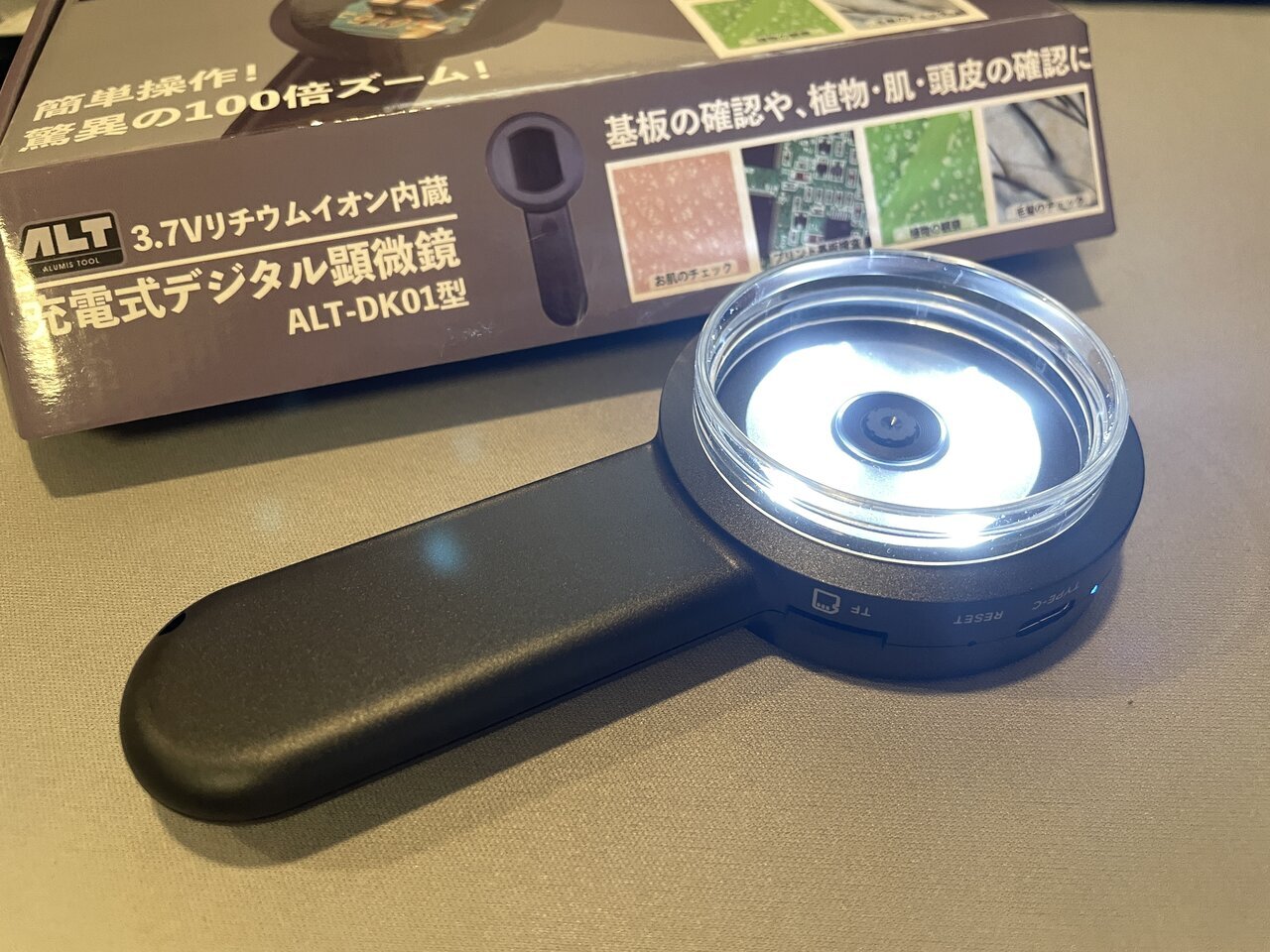
The "Rechargeable Digital Microscope 3.7V" sold at Cainz is a magnifying-glass-shaped digital microscope. It seems expensive since it can zoom in up to 100 times, but the price is reasonable at 1980 yen.
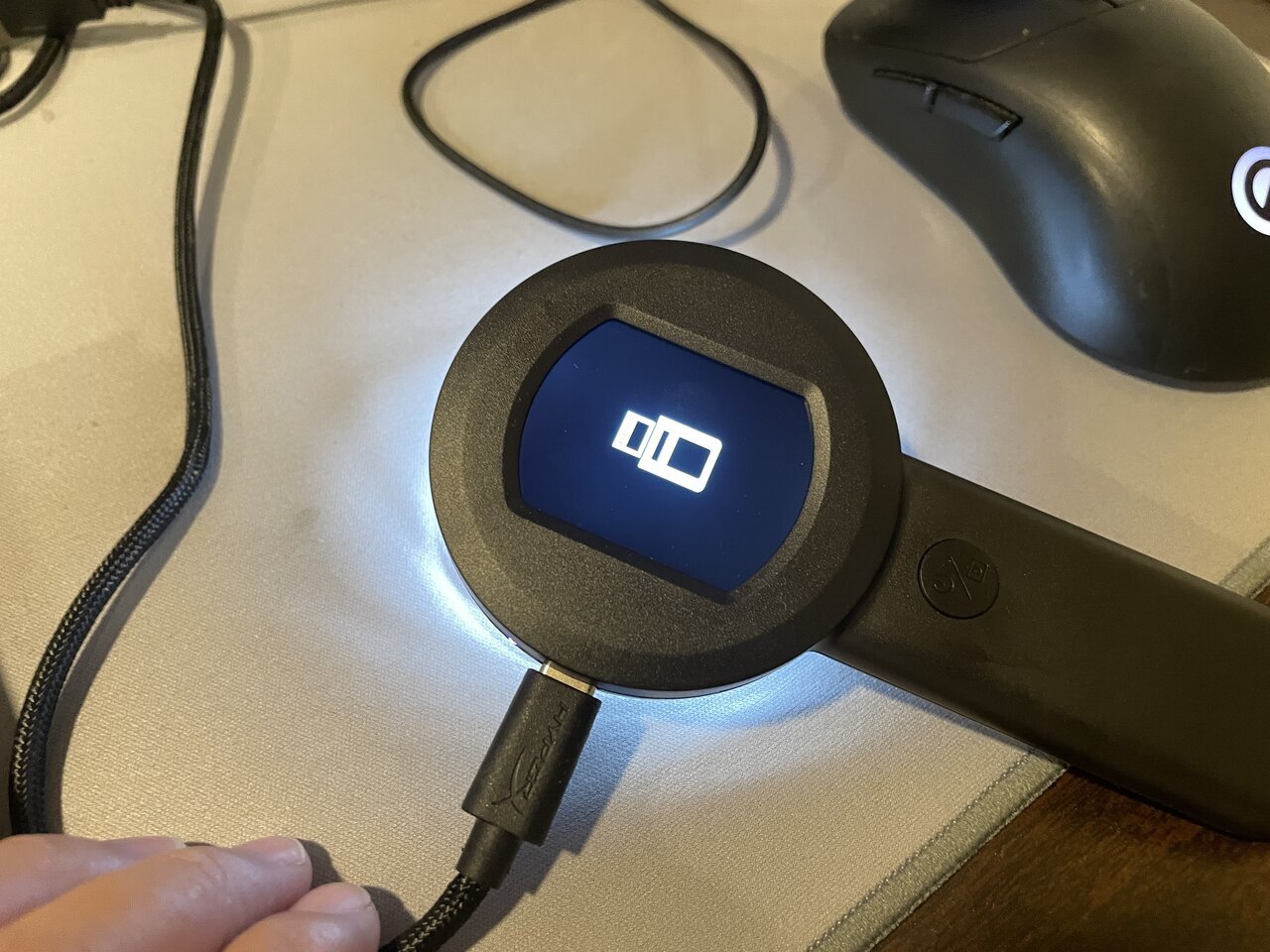
It features a wide viewing angle and displays excellent color reproduction on an IPS LCD screen, and it is equipped with a mechanism that allows you to capture images of what you are observing with a shutter button. Additionally, you can view image files saved on an SD card on various devices, making it feel like a magnifying-glass-shaped camera for detailed observation.
Can this digital microscope reveal the "lead" on the tip of a lure hook?
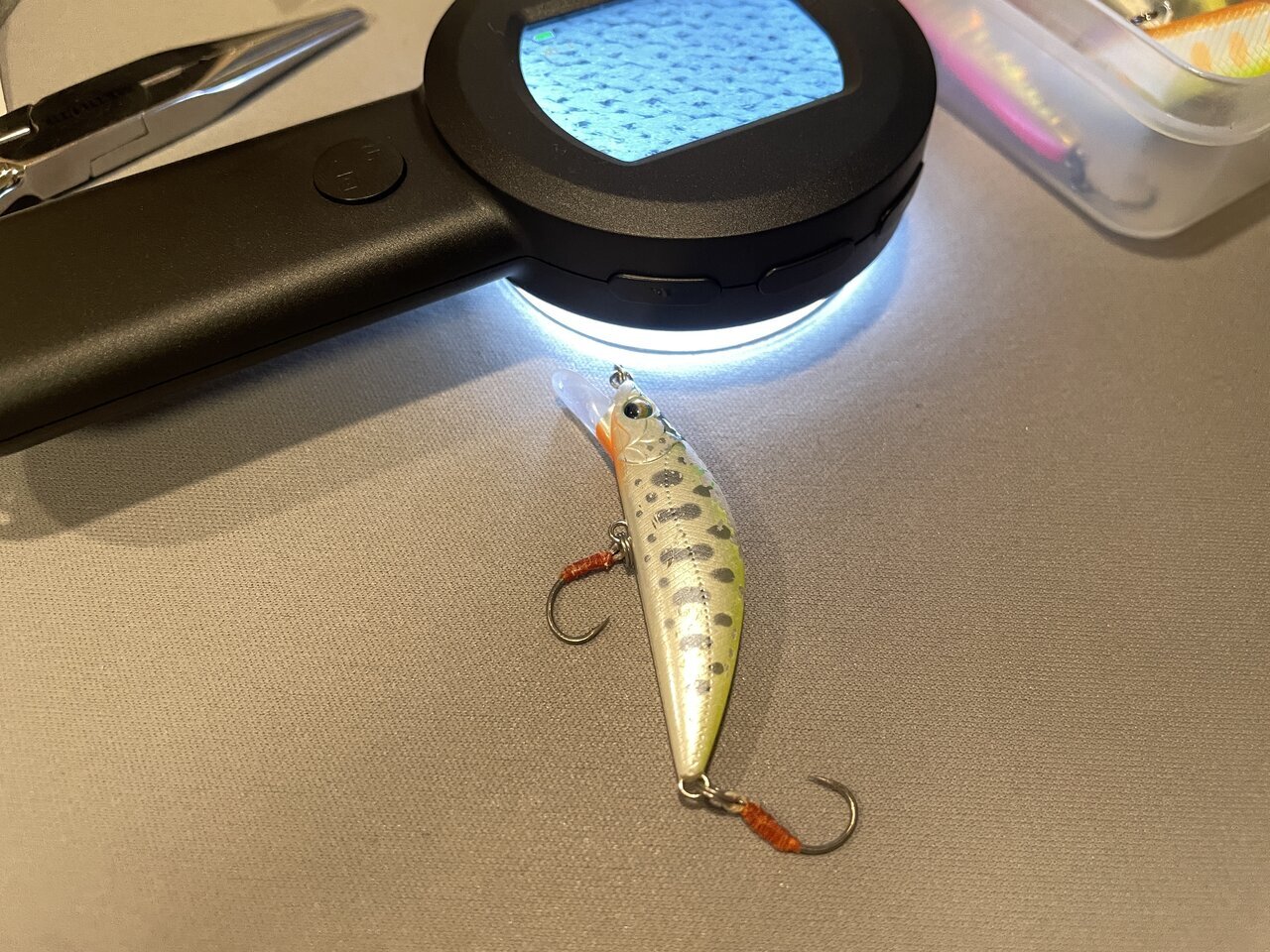
The idea of using this digital microscope came to me because I wondered if it could allow me to see the tiny "lead" on the tip of a lure hook.
One of the causes of losing fish while stream fishing (where a fish that has hooked is lost during the retrieval process) is that the tip of the hook becomes rounded due to snagging or contact with rocks, making it harder to catch fish in their mouths.
One of the causes of losing fish while stream fishing (where a fish that has hooked is lost during the retrieval process) is that the tip of the hook becomes rounded due to snagging or contact with rocks, making it harder to catch fish in their mouths.
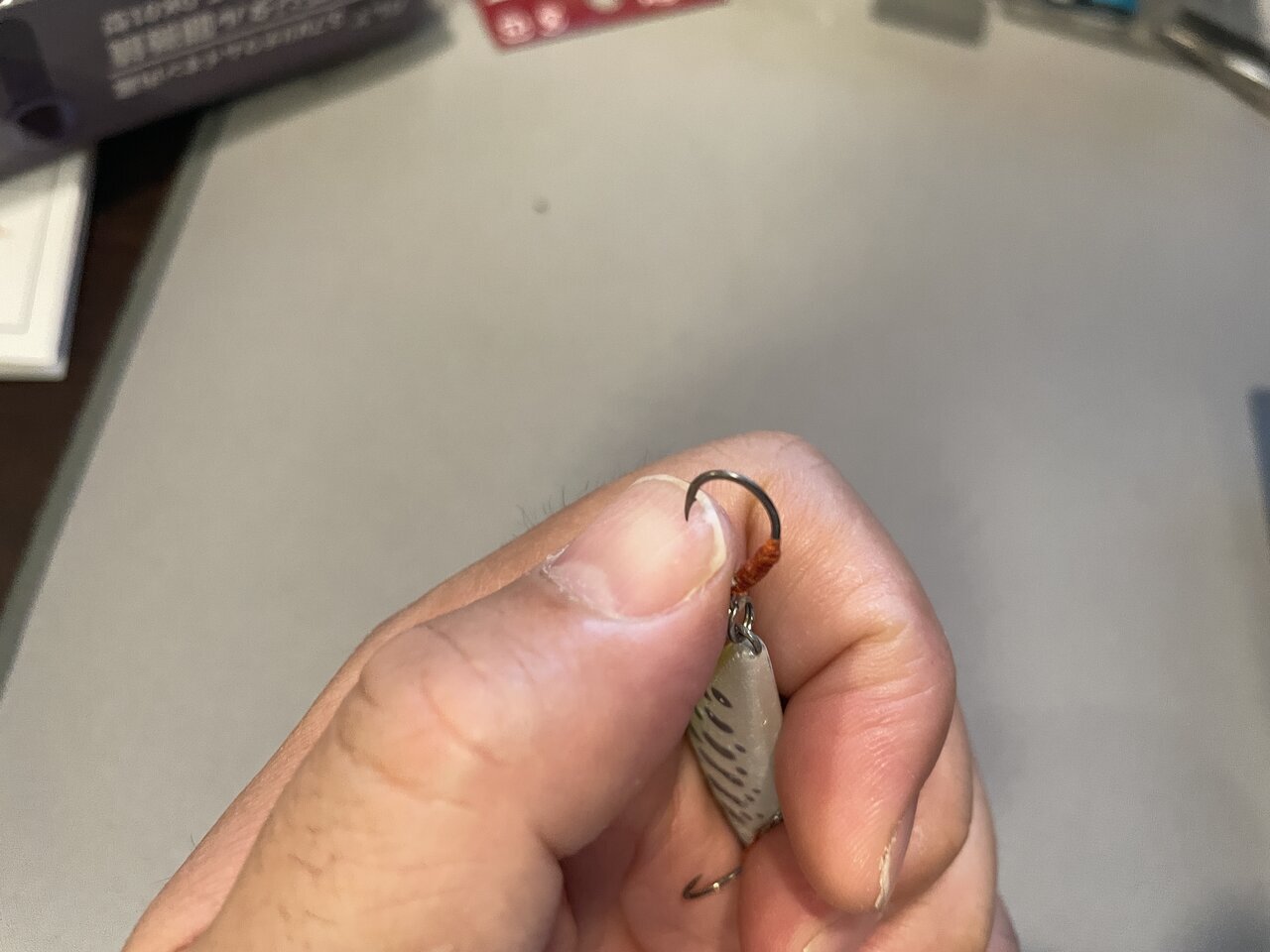
Checking the condition of the needle tip involves placing it against the nail and determining "if it catches, it's usable." Typically, the judgment criteria are "if it slips, it's dull." If the needle tip is dull, it will need to be filed or replaced.
By using this digital microscope to check the shape of the needle tip, I hope to understand its form and condition, which may help in improving my sharpening skills. That's why I wanted to try it.
By using this digital microscope to check the shape of the needle tip, I hope to understand its form and condition, which may help in improving my sharpening skills. That's why I wanted to try it.
Checked the needle tips of "new needles" and "sharpened needles"
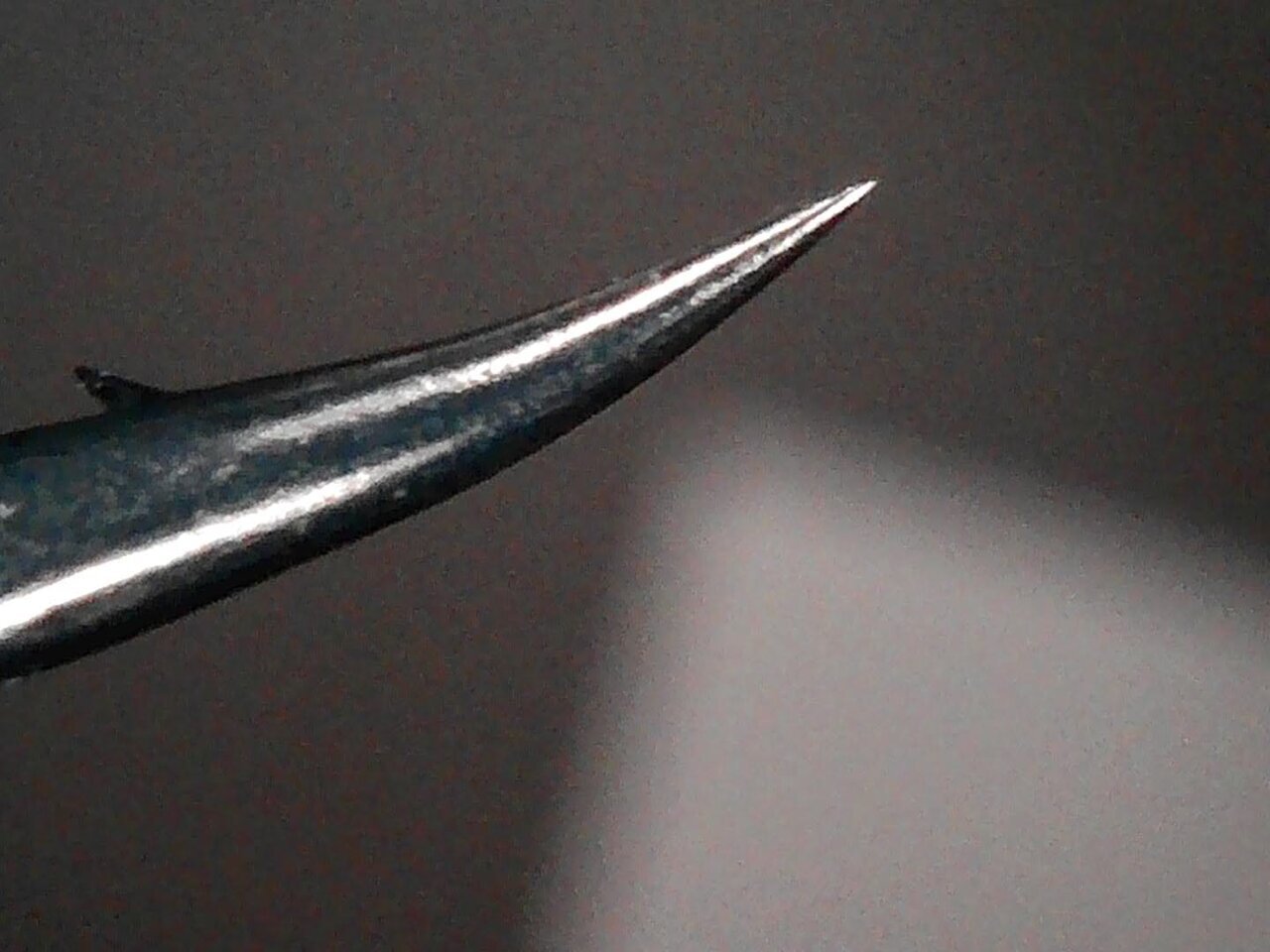
When I actually observed the needle tip under the microscope, the condition of the new needle was visibly very sharp, and it catches when I slide it against the nail. The surface is also smooth and has a beautiful shape. Based on this visual condition, I will use it as a reference for replacements and sharpening.
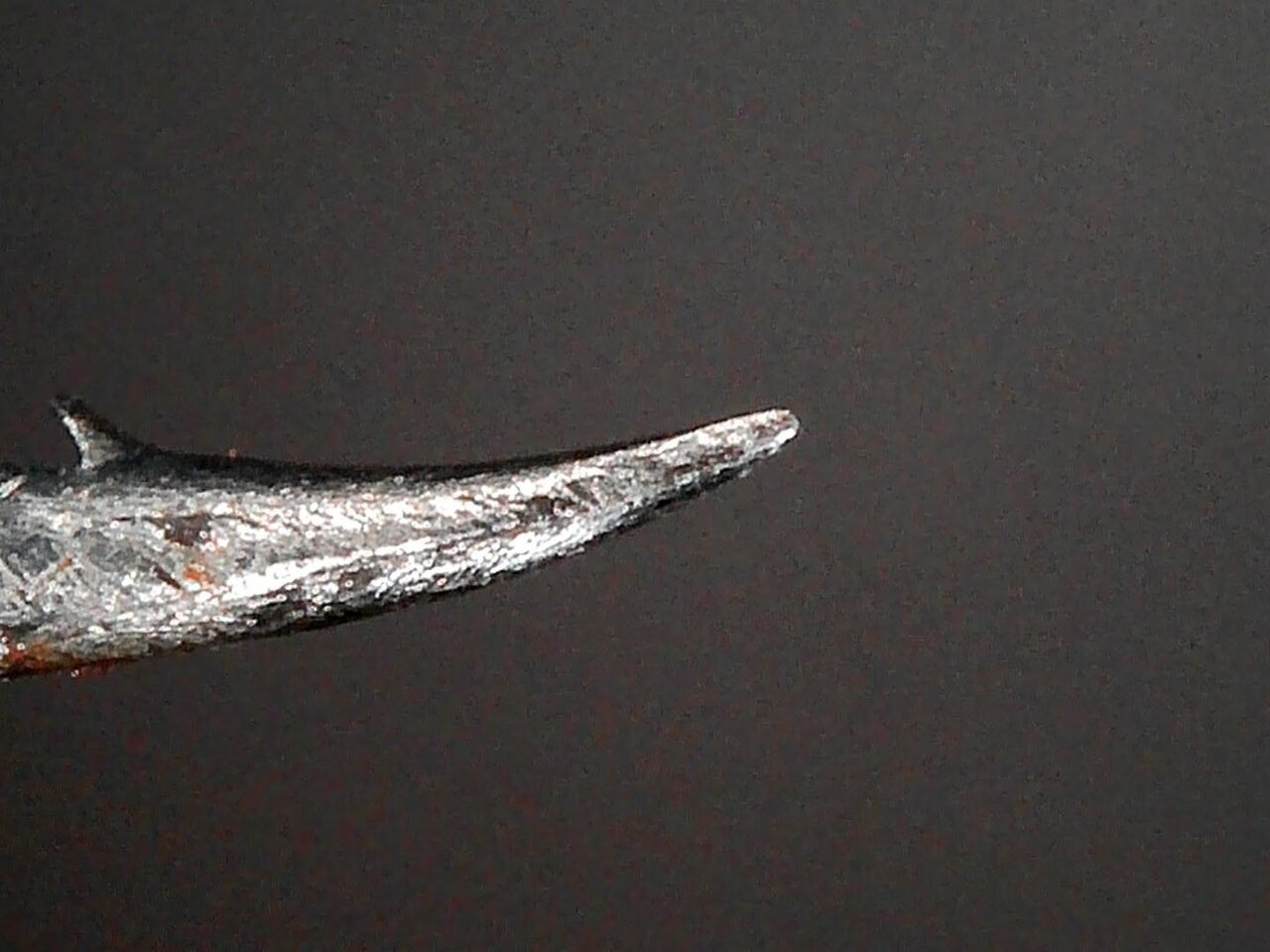
The image above shows the condition of the "blunted needle tip" after being sharpened with a file about 2 times. The needle tip is round and in a state with "no angles." Since it has been sharpened, the form is distorted, scratched, and rust is also visible. The surface of a new one should be coated and should bite smoothly, so changes in the condition of such surface parts should also affect hooking. Parts not visible to the naked eye can be confirmed with a digital microscope.
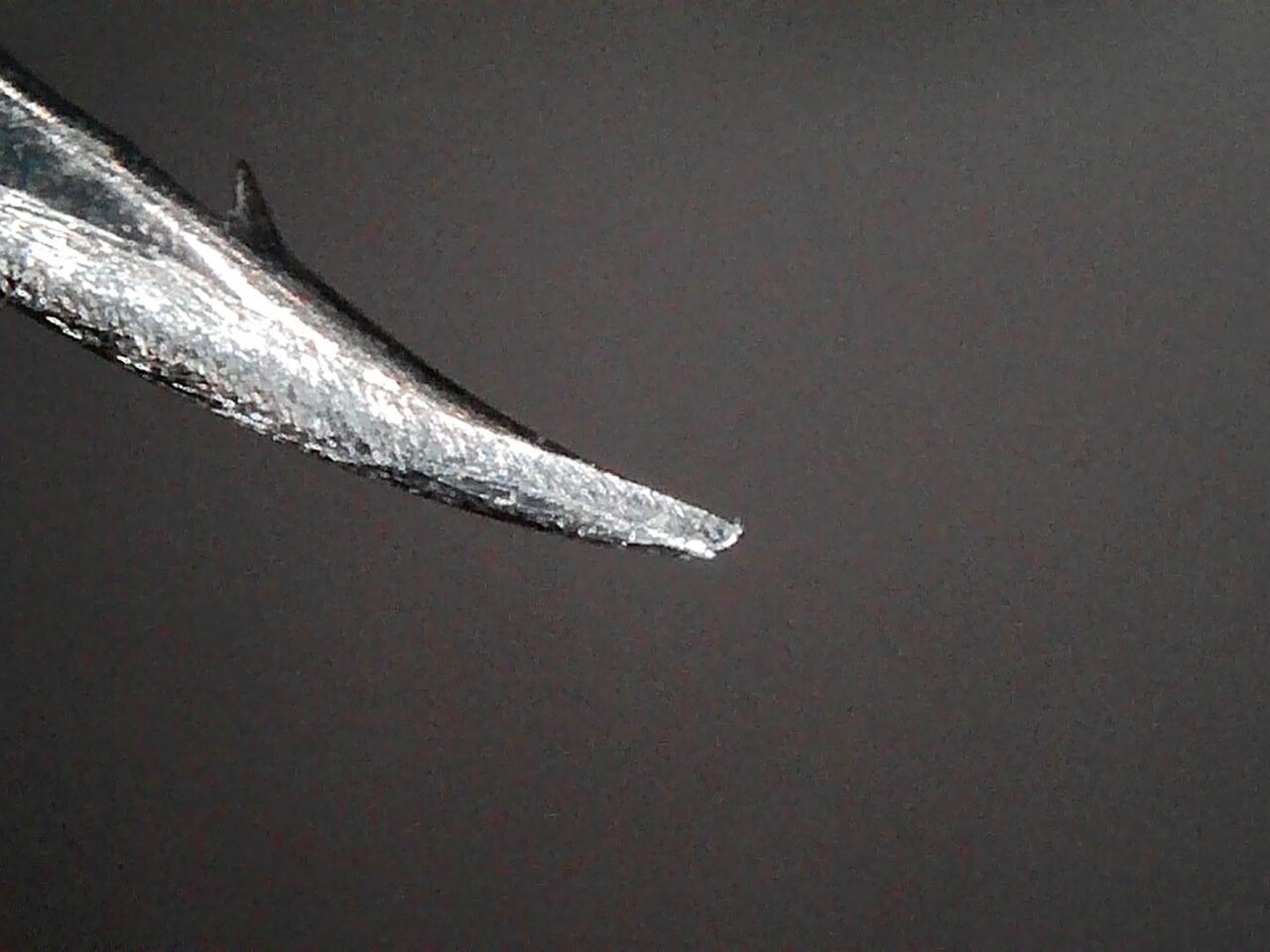
The image above shows the needle tip in a "state that catches on nails after sharpening" after a fishing trip. The shape is somewhat distorted, but the firmly "angled" parts appear different from the blunted needle. To recreate the sharp parts, it seems good to sharpen in one direction aiming for a point. If you check the shape while cutting, you might improve your sharpening skills. Such observations are incredibly interesting.
Observing plant surfaces with a digital microscope also seems fun.
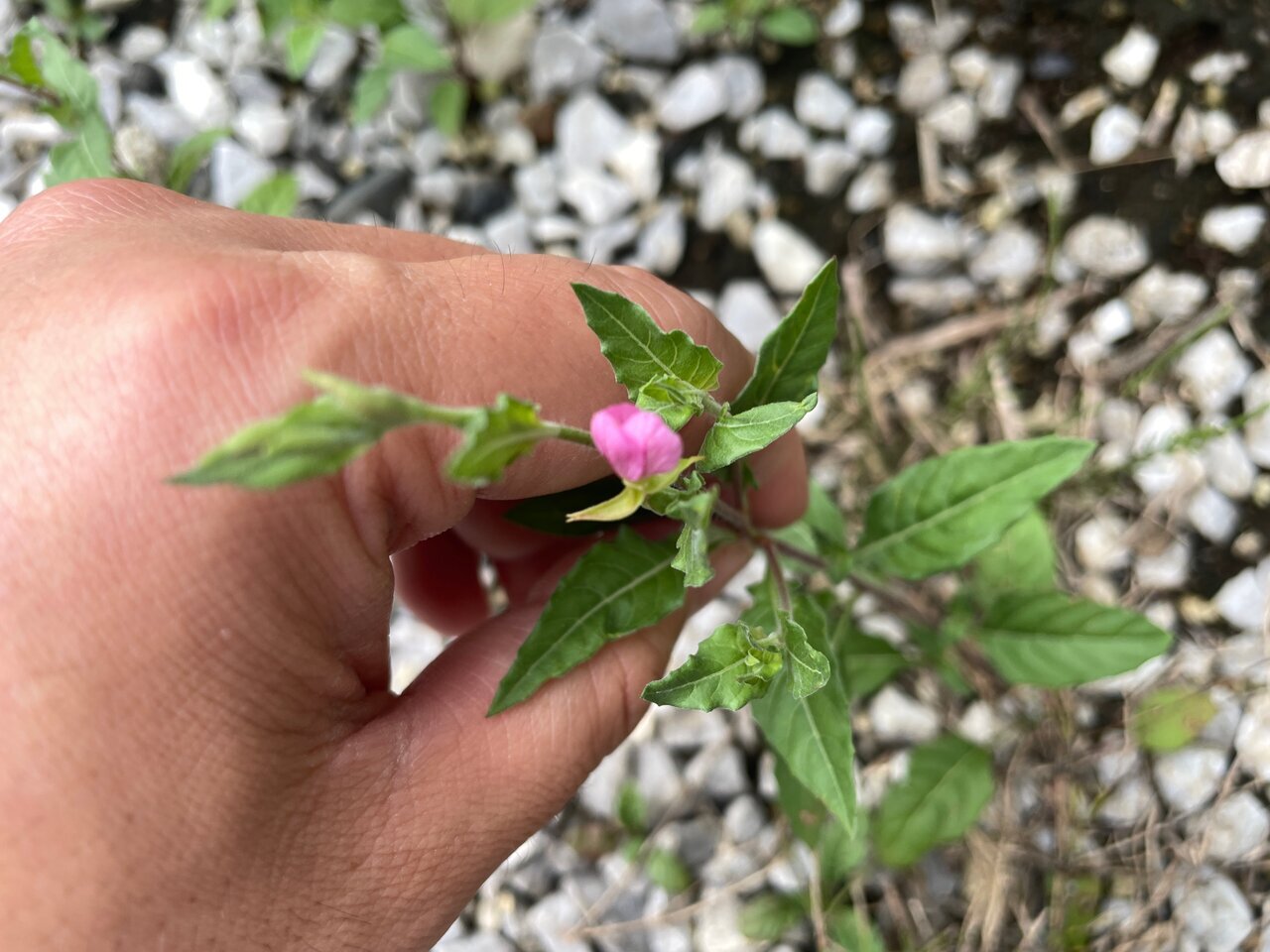
The intended use for this digital microscope appears to be well suited for plant observation. To check its usability, I observed some weeds growing nearby.
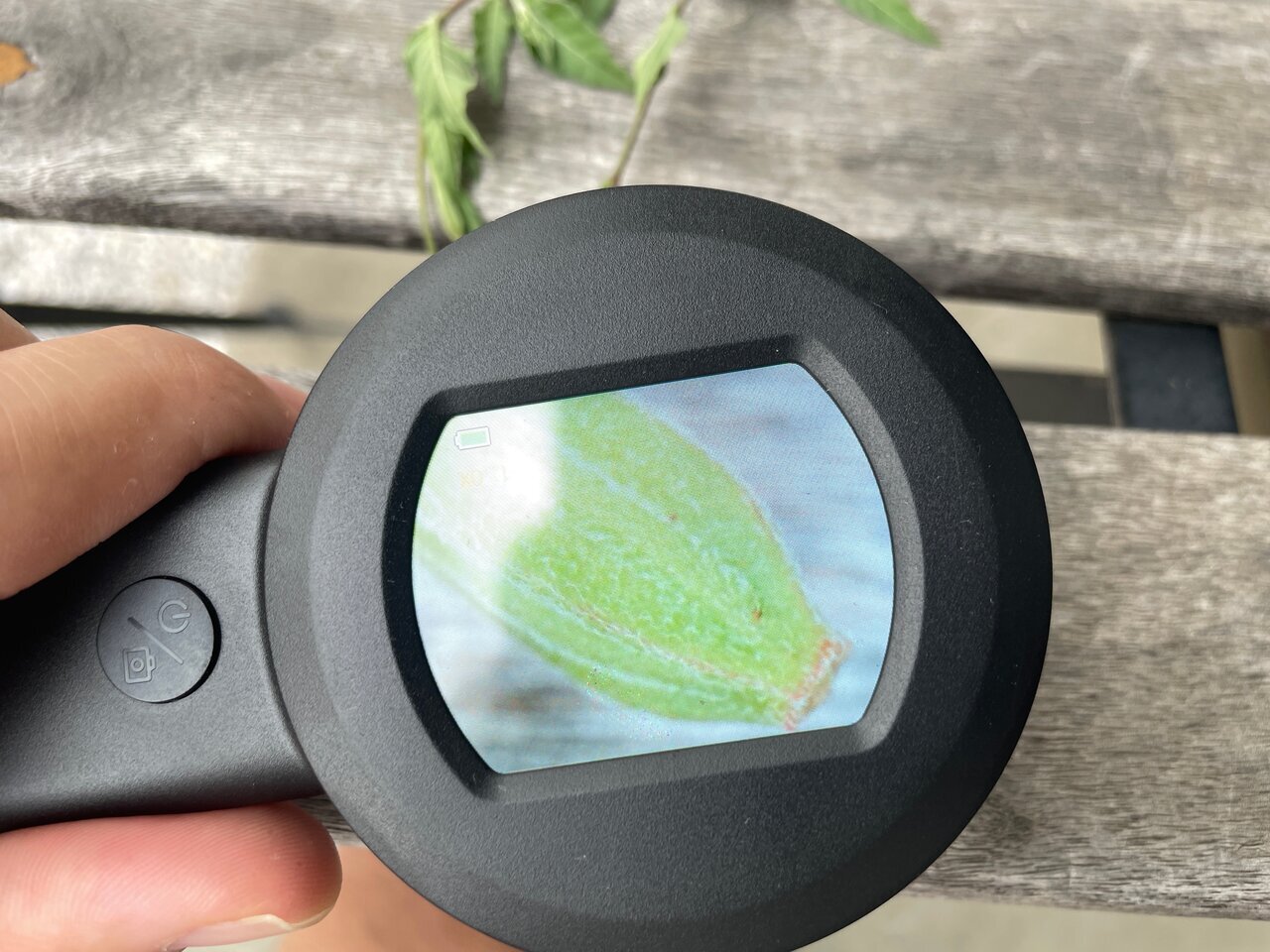
The LCD screen displays a zoomed image of what appears to be a seed, allowing us to see a surface that resembles fine hairs, which is difficult to recognize with the naked eye. There is also lighting around the lens, and the image on the screen is clear even outdoors during the day, making it seem suitable for children's independent research.
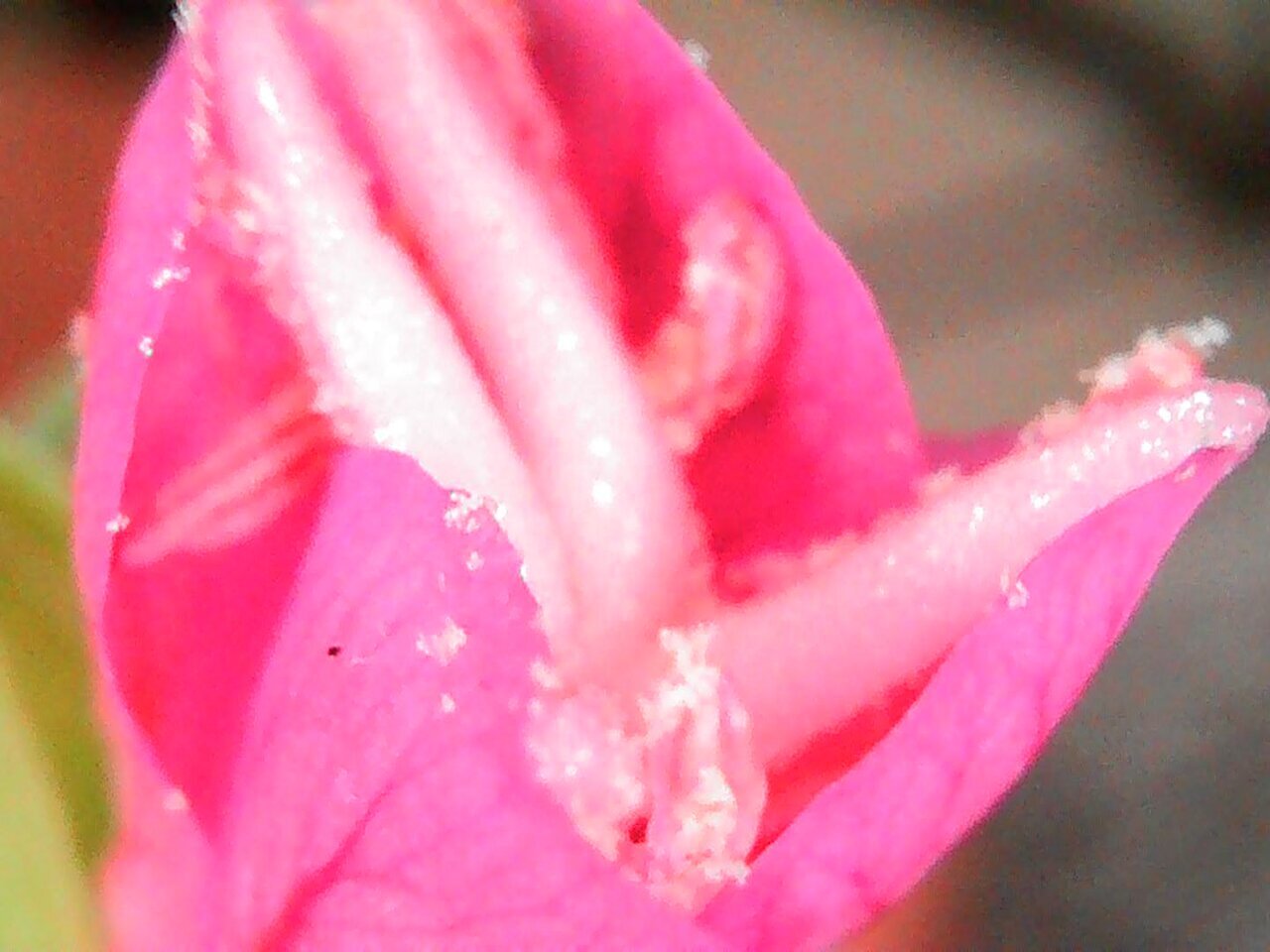
When observing the petal section, the focus was slightly off. If there is movement in the camera or the object, it tends to blur, and parts with depth were difficult to focus on. If you don't stabilize the microscope and the object you're observing before pressing the capture button, you might need some practice to get clear images. However, from my experience, it seems more effective to use it for observing stationary surfaces like plants rather than moving living creatures.
During summer vacation, both adults and children should observe the microscopic world together.
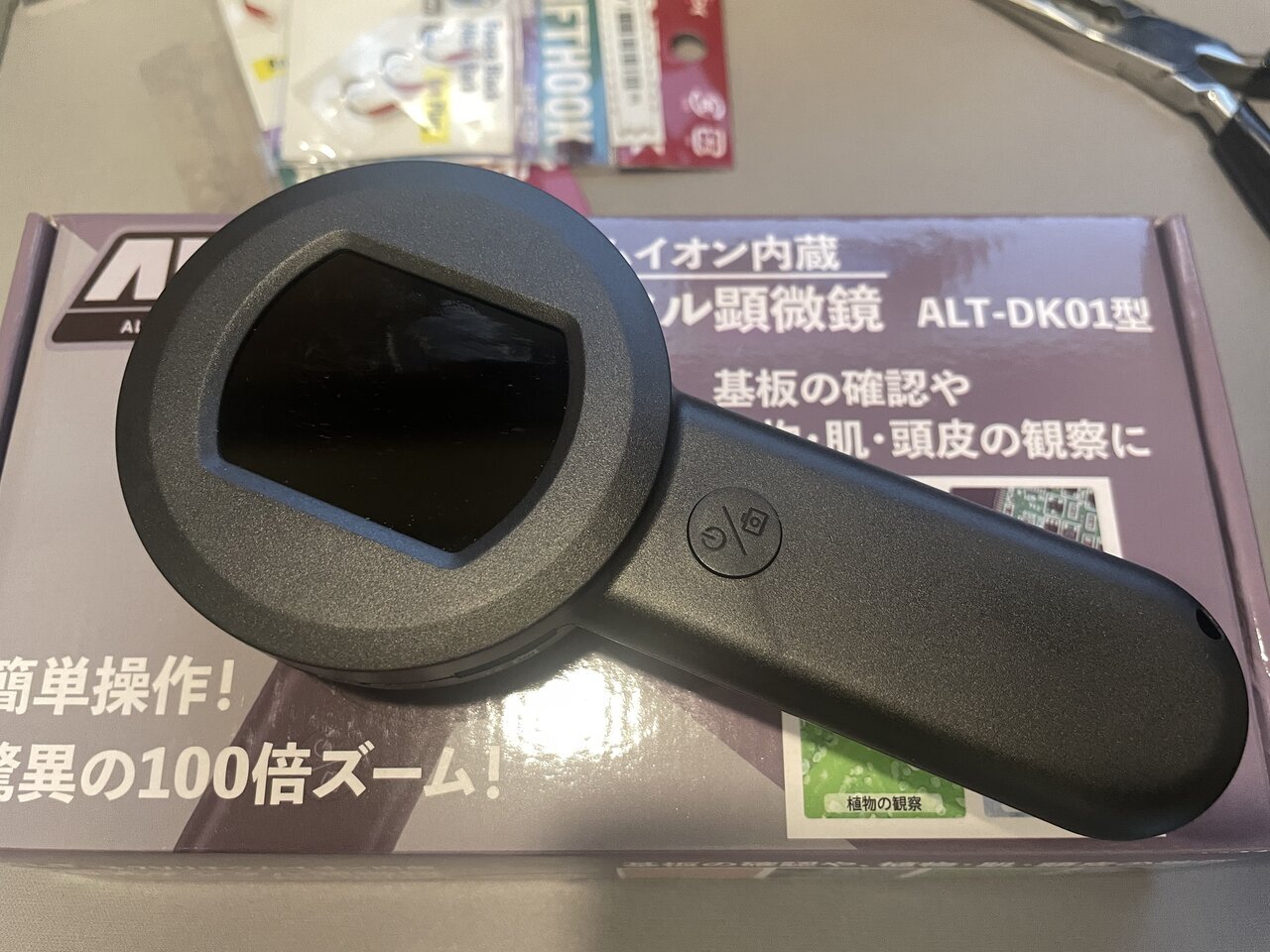
After discovering it at Cainz and buying it out of curiosity, I learned about the depth of the hooks used in stream fishing. With a price that is easy to handle, it seems like it can be used casually by children, making it perfect for summer vacation independent research. Personally, I feel there are still many convenient ways to use it, so I believe it's an item that adults can enjoy as well.
Interview/Writer: Kazuma Tanaka
- *Digital microscope
- Cainz
- Electron microscope
- Free research
- Stream fishing
- Summer vacation
- Takakuma Tanaka
- SHARE


![[Charcoal Cooking] It was the best when I grilled a charcoal mackerel sandwich using the BBQ grill from Cainz on a hot summer day.](https://cdn.clipkit.co/tenants/1046/articles/images/000/031/867/large/5d96b23a-fc0d-4372-8782-877163b87252.jpg?1784754154)
![[Cainz Top 3] Recommended for Cat and Dog Lovers! Windowsill boards, house-type carriers, and more.](https://cdn.clipkit.co/tenants/1046/articles/images/000/029/458/large/a41d246e-10c3-4c16-be04-c8c7ed99c0fb.jpg?1775422825)

![[Midnight Drive] I wanted to cool off a bit, so I went for an adult night stroll at the retro vending machine corner in Sagamihara.](https://cdn.clipkit.co/tenants/1046/articles/images/000/032/887/large/a1bf17cd-06d0-4ad5-8236-8fd2970728e5.jpg?1787522426)

![[Interview] Bongo Brownie ✕ VAN LIVING What is the concept of living space that can be enjoyed with simple DIY?](https://cdn.clipkit.co/tenants/1046/articles/images/000/029/348/large/1669c7fe-4dba-4cc5-b0a3-7defa56bc0c0.jpg?1774904732)
 FASHION
 OUTDOOR
 WATCH
WATCH CAR & BIKE
 SNAP
SNAP DINING
 LIFE
LIFE GADGET
 GOLF
GOLF