
TRAVEL
2026.09.13
Searching for coolness in Hakone, a luxurious two-day stay between forest and water
A record of a one-night, two-day visit to Gora, Hakone, solely for the purpose of coolness. The sound of water crossing the terrace, the tranquility after a hot spring bath, a brief exchange of nods with a passing foreign couple. Coolness may not be a numerical value of temperature, but rather a sensation remembered by the ears and skin.
The colors of light change on the high ground, Hakone, Gora Karaku
By the time the shinkansen arrives in Odawara, there was already a different quality of heat compared to Tokyo. Immediately upon exiting the shinkansen ticket gate at the west exit, I boarded the welcome bus. After about 45 minutes from Odawara, as we entered the mountain road, the path began to climb with various curves.
Although I hadn't opened the window, I could see that the green outside was gradually becoming richer and deeper. The whitish light of the city transformed into a light characteristic of the mountains, slightly tinged with blue. Even though it was a landscape separated by just a single pane of glass, it certainly appeared as if the air itself was changing.
Although I hadn't opened the window, I could see that the green outside was gradually becoming richer and deeper. The whitish light of the city transformed into a light characteristic of the mountains, slightly tinged with blue. Even though it was a landscape separated by just a single pane of glass, it certainly appeared as if the air itself was changing.
When I got off the bus, the humidity, the scent, and even the quality of sound were different. There was no reason to hurry. The sound of cicadas seemed lower and more drawn out than what I heard in the city.

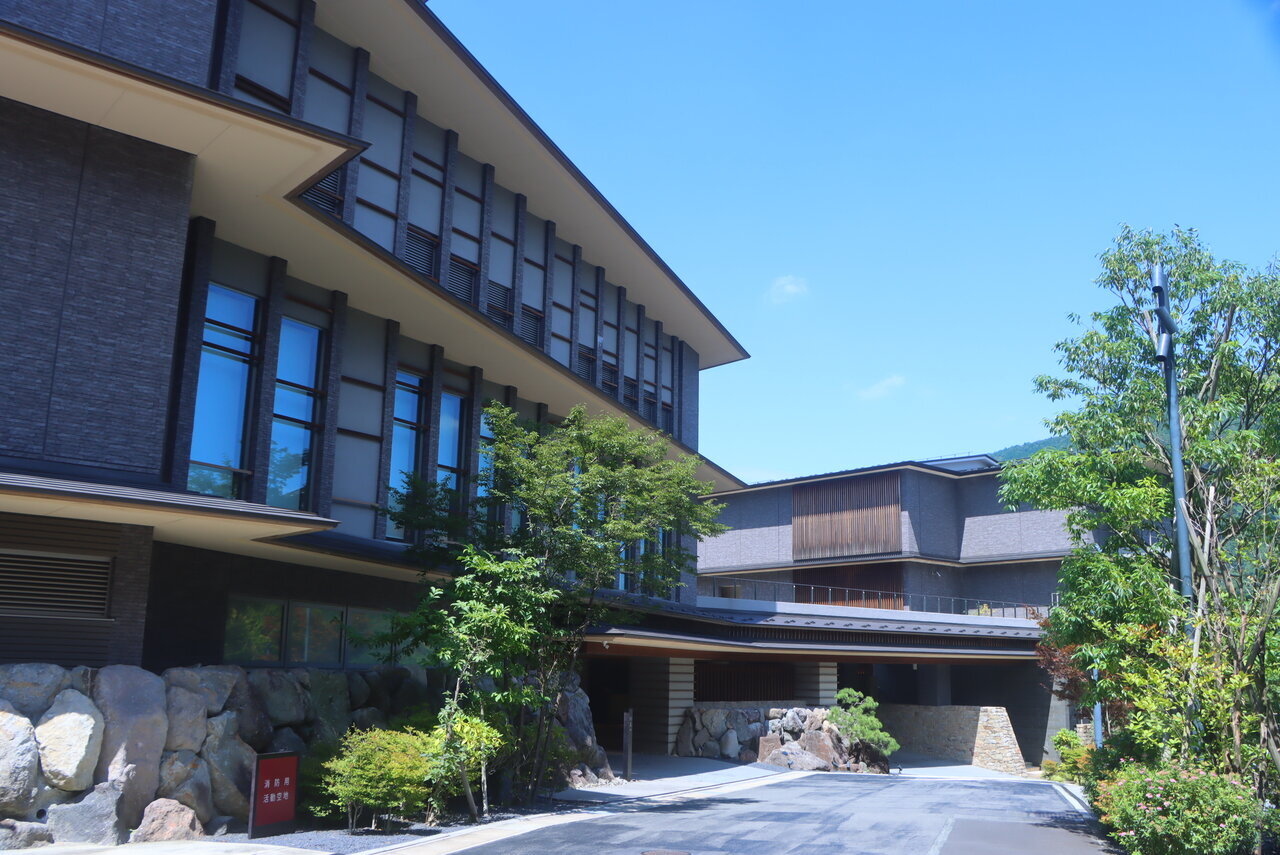
As I reached the top of the hill, my view suddenly widened. Hakone, Gora Karaku stood solidly on that high ground. Vertical wooden louvers covered the walls of the upper floors, and the line of the large overhanging roof sharply cut into the sky. It did not appear modest at all in front of the mountains behind; it had a dignified presence. As I approached, I could see the afternoon sun leaking through the gaps in the louvers, and the shadows of the wood gradually changed angles on the wall.
This land was opened up in the 27th year of the Meiji era. It began with drawing hot water from the fumarole of Sayunzan, and when a mountain railway extended here in the 8th year of the Taisho era, it became a resort where politicians, business leaders, and literati all built vacation homes. This means that about 130 years ago, in an era without electric air conditioning, people climbed to this altitude to seek coolness.
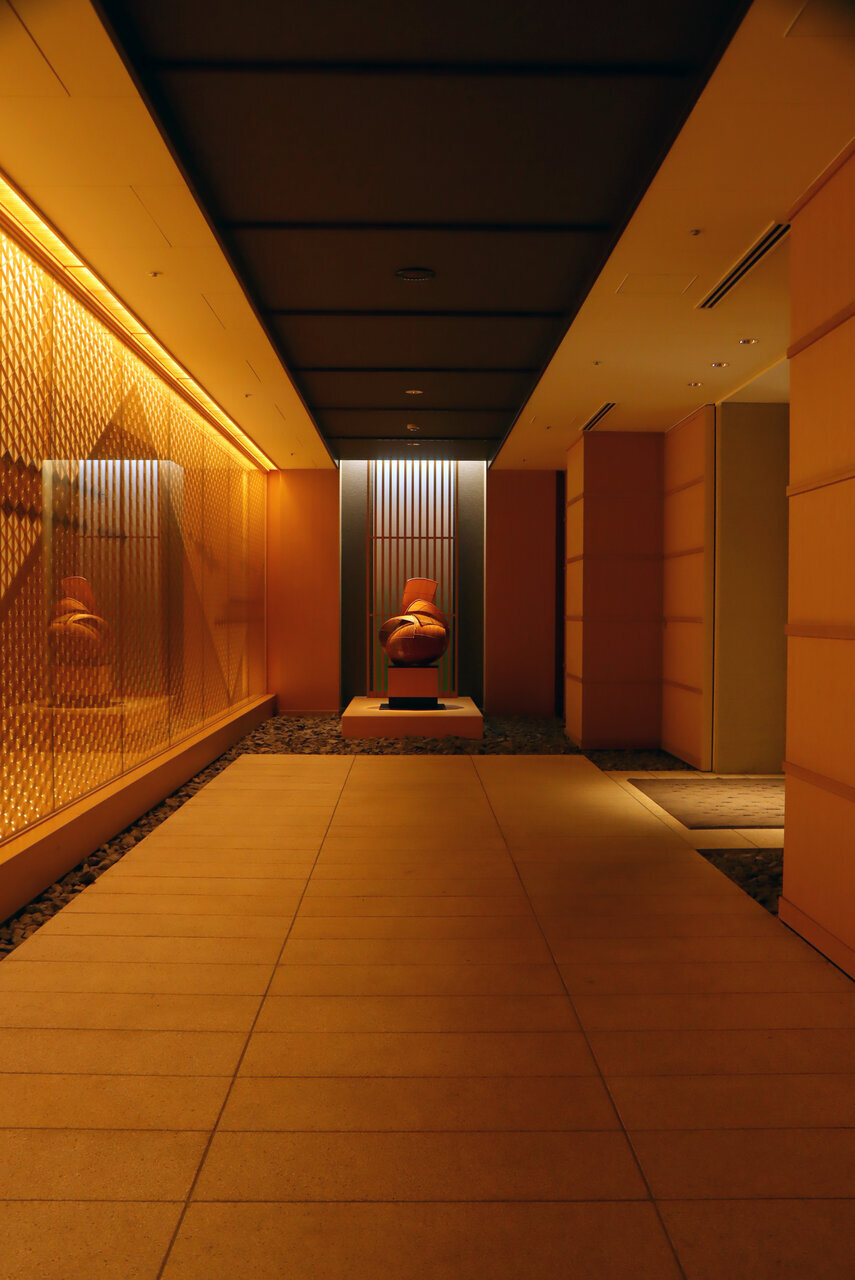
Moreover, the average temperatures back then were likely lower than they are now, and if we consider the urgency of seeking coolness, it may be that we, who live in the present, are much more desperate. We can no longer simply endure summer in a room without air conditioning. As I pondered such thoughts, I stepped into the lobby.
Moreover, the average temperatures back then were likely lower than they are now, and if we consider the urgency of seeking coolness, it may be that we, who live in the present, are much more desperate. We can no longer simply endure summer in a room without air conditioning. As I pondered such thoughts, I stepped into the lobby.
The forest and waterside to spend time in the building, two pleasant terraces
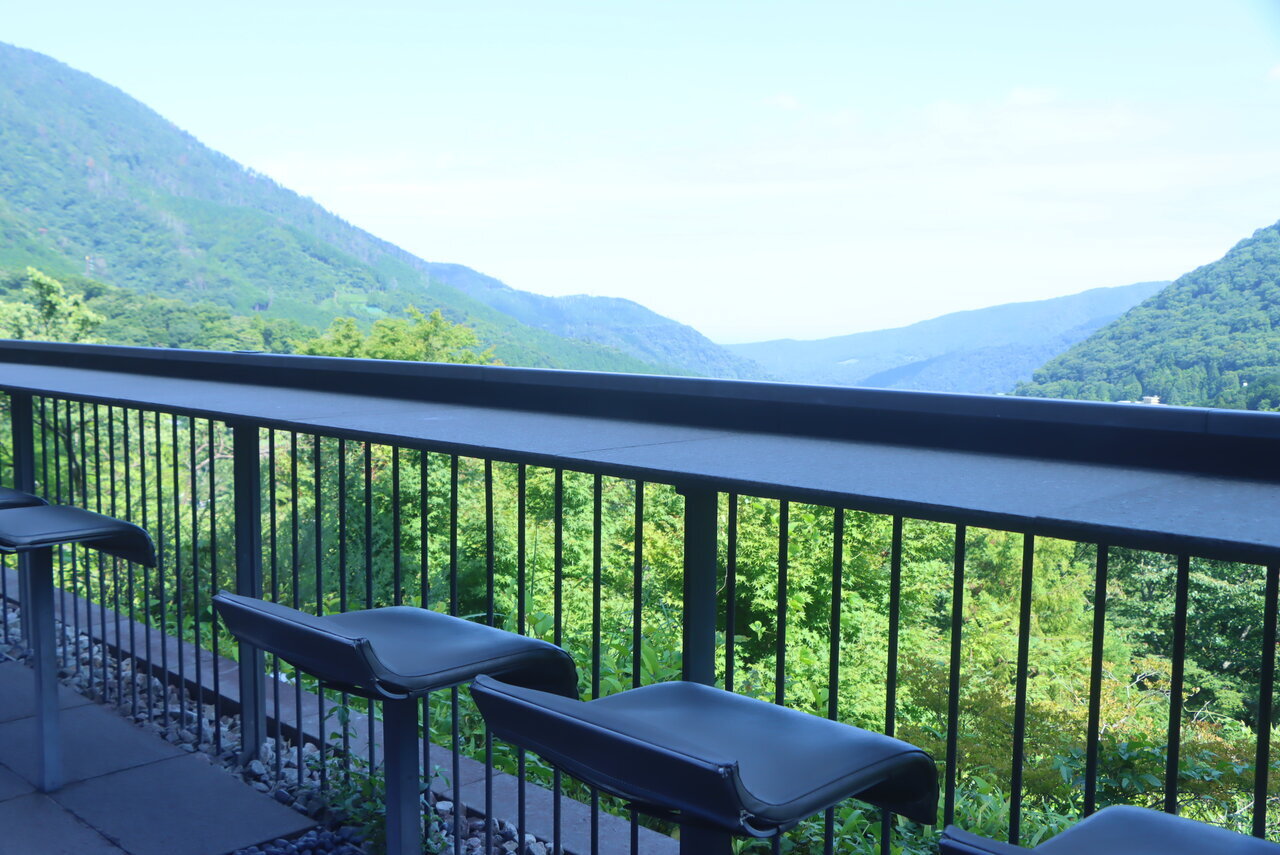
The forest terrace is built like a corridor that connects the main building and the annex, with the mountains of Gora spreading out directly at the end of the wooden deck. When I sit down on the bench provided, I find myself facing the mountain head-on. Below me, the mountain of Gora stretches out, and every time the wind blows, the trees rustle. There are no human voices. Only the sound of leaves rustling and the calls of distant birds, making me not want to move for a while.
Every time I inhale the scent of wood, it feels like a coolness spreads deep into my lungs. There’s no need to exchange words with anyone; simply sitting there and listening to the mountain’s breath is enough.
Every time I inhale the scent of wood, it feels like a coolness spreads deep into my lungs. There’s no need to exchange words with anyone; simply sitting there and listening to the mountain’s breath is enough.
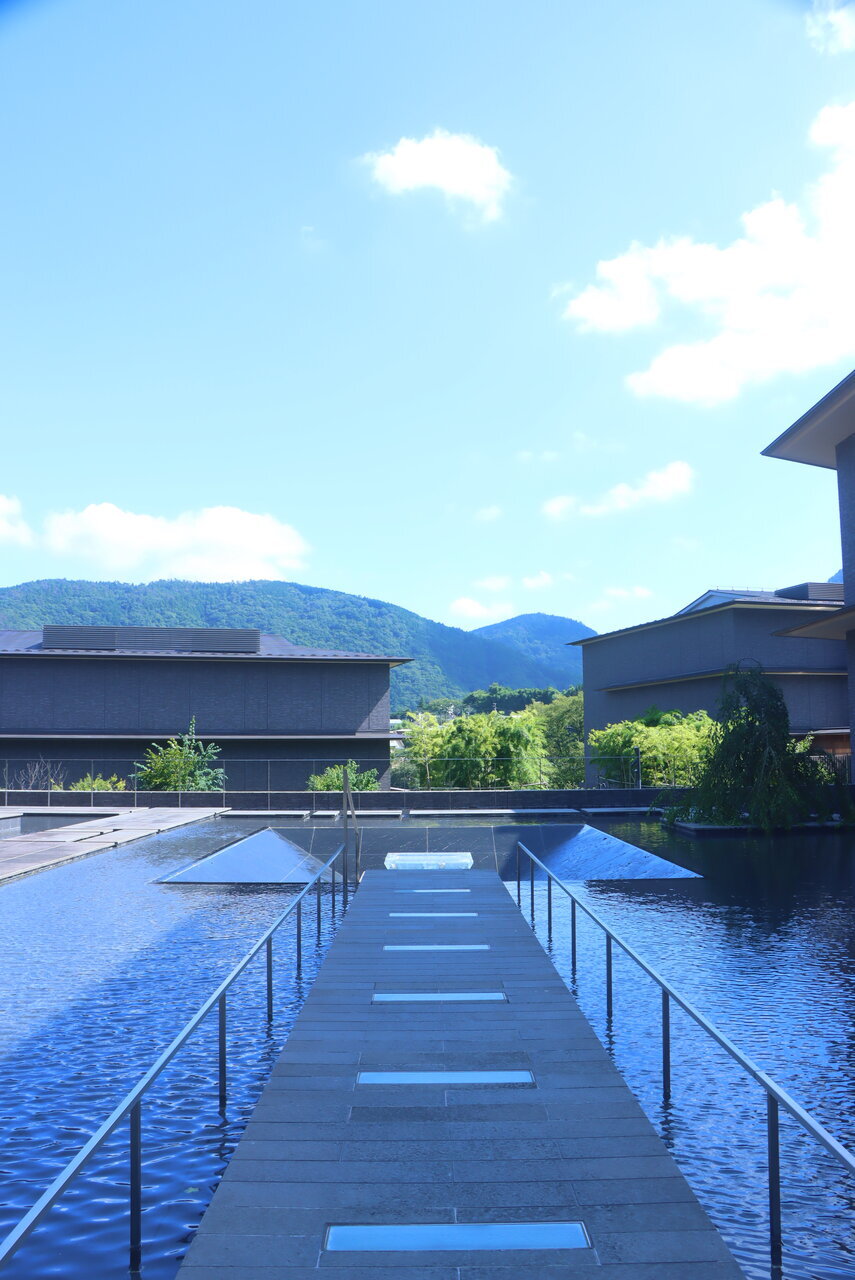
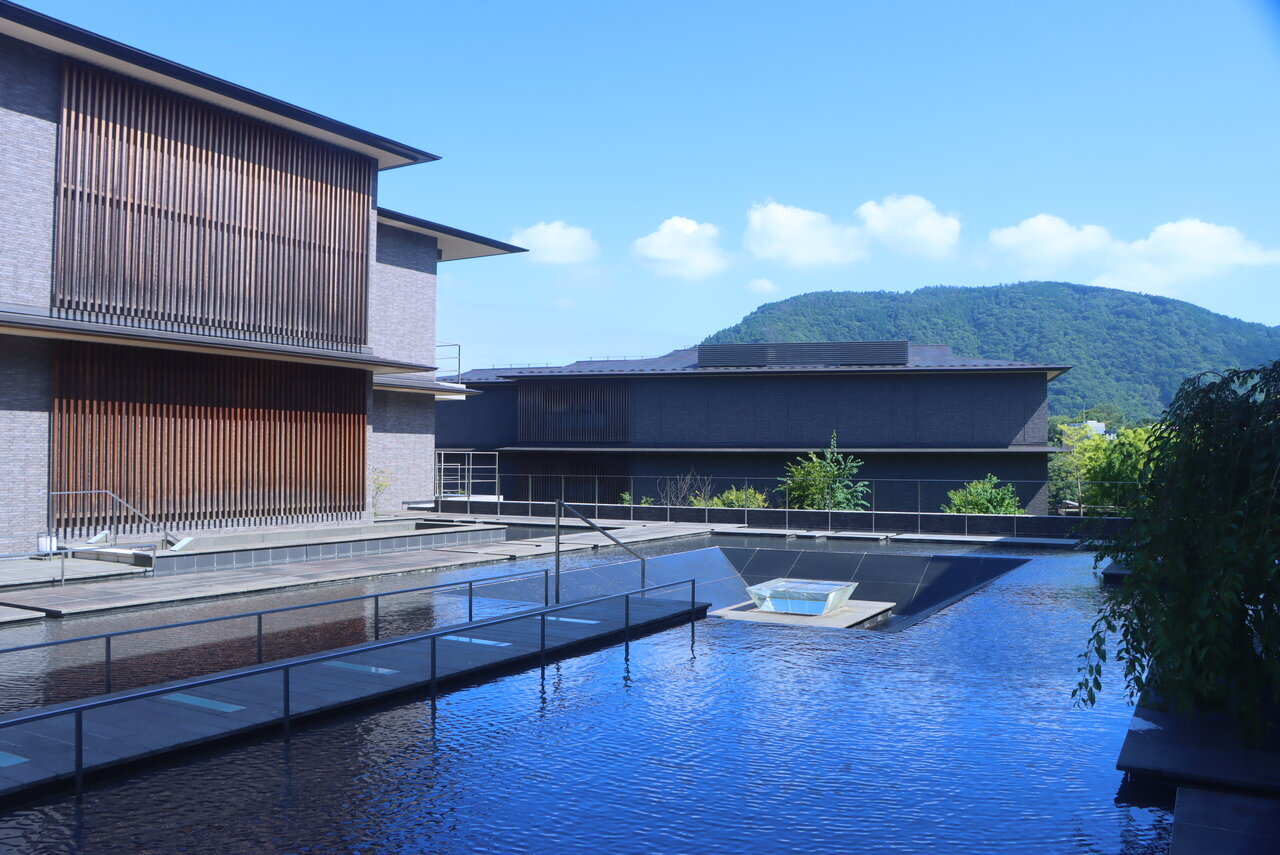
Just past the inside of the building, there was another waterside. Water slid diagonally down from all sides of a shallow basin filled with water. The sound of water flowing continuously filled the entire area. Standing above the straight path, the sky and trees reflected on the water’s surface, and with every gust of wind, that image swayed slowly. It felt more like bathing in the sound of water than simply listening to it. The sound seemed to touch my sun-warmed skin one drop at a time.
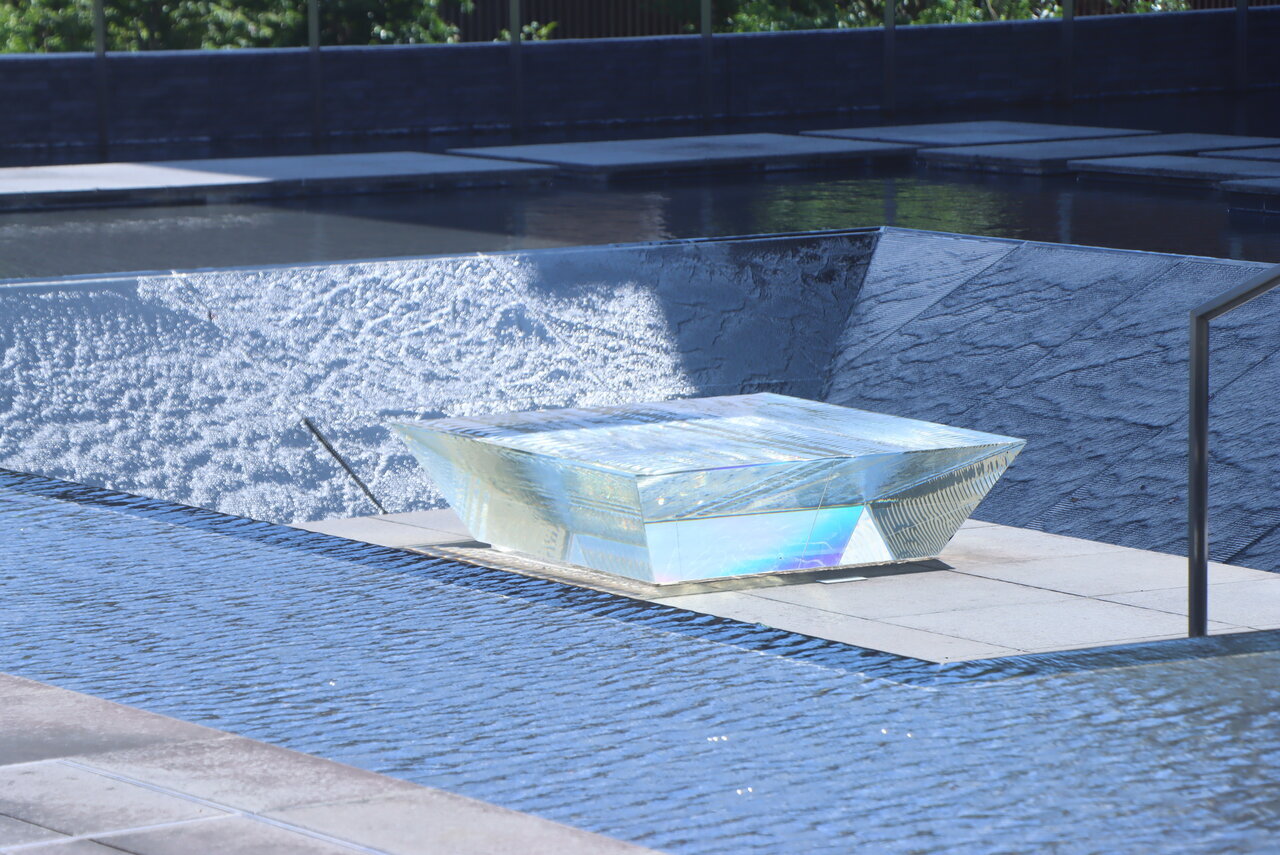
I crossed paths with a foreign couple by that waterside. They were likely enjoying the evening coolness, both dressed in yukata. When our eyes met, we exchanged small smiles without either of us initiating. “Beautiful, isn’t it,” one of them remarked, to which I simply replied, “Yes, very cool.” Just that brief exchange of a few seconds. It felt more like a mutual nod between those who had stopped to take in the same scenery than a conversation.
It’s surprisingly comforting in this place to share the same sound of water and the same coolness without needing to say much.
It’s surprisingly comforting in this place to share the same sound of water and the same coolness without needing to say much.
A night where cups are filled in between, a night sinking into the hot spring.
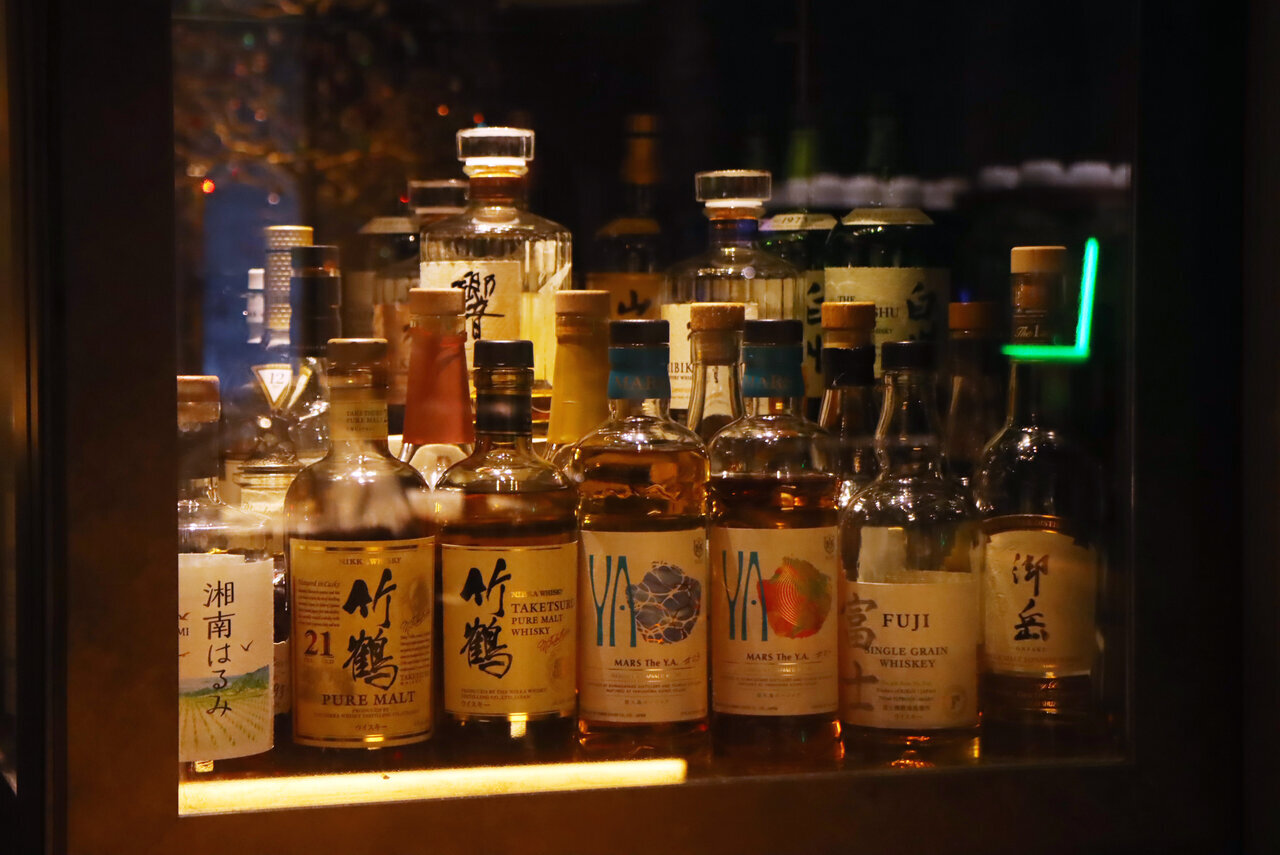
After checking in, I headed straight to the lounge without even putting down my luggage. The place, named "Awai," is designed to be as relaxing as one's own home. Several low sofas are scattered around, and indirect lighting softly illuminates the walls.
During the free-flow time, it is said that one can choose as much as they like from the lined-up drinks. After some hesitation, I piled one glass atop another, enjoying one drink after another. Each guest spent their time at whatever distance they preferred, and there was no discomfort in not joining the circle. The only sound breaking the silence was the ice melting.
Feeling slightly tipsy, I returned to my room, where I found a small open-air bath for one on the balcony. From outside the window, the sound of cicadas came in particularly loud. The evening cicada chorus sounded layered, more so than in the city.
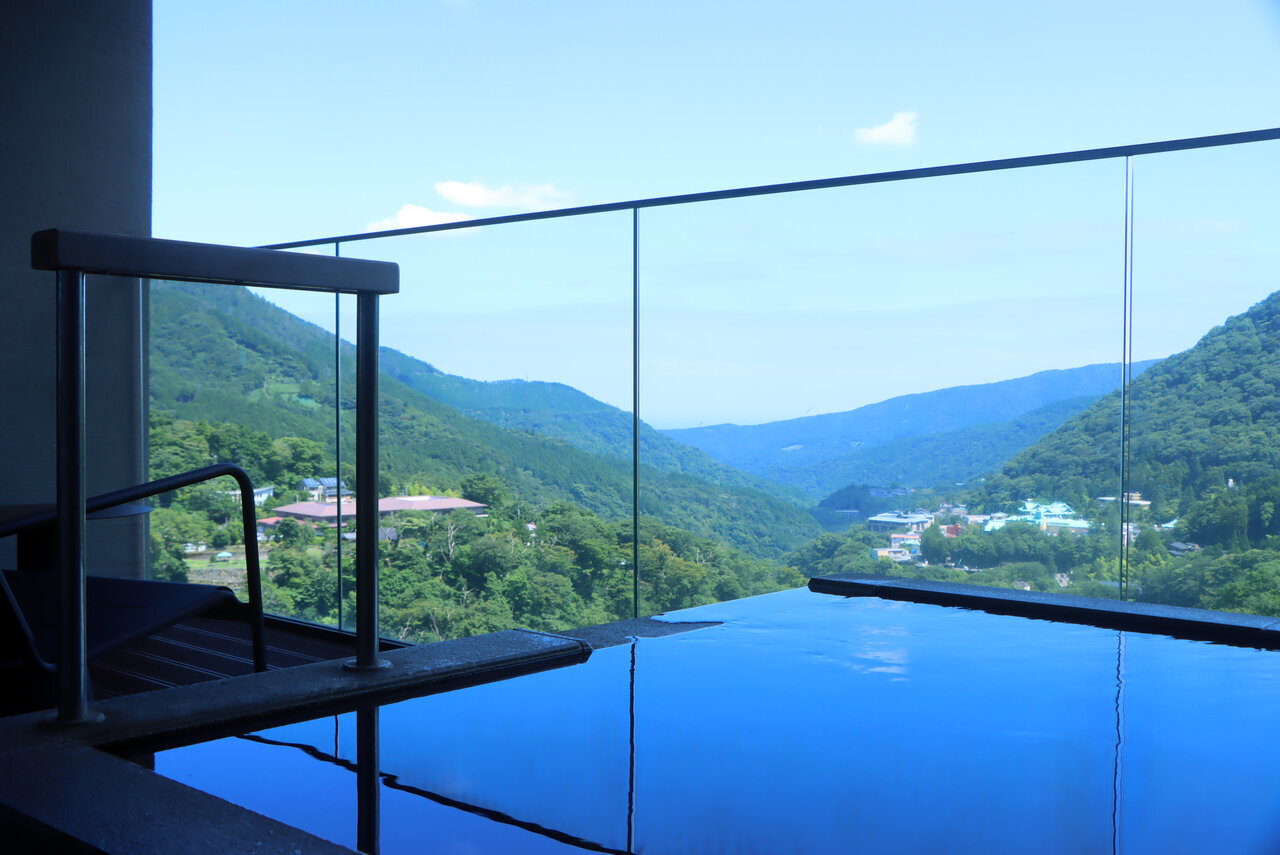
As I sank into the water up to my shoulders, the characteristic heavy heat of Gora's hot spring gradually spread. It is the so-called "thermal water" containing sodium and chloride. My body, warmed from within, did not cool down immediately upon exposure to the outside air. The twilight sky slowly reflected on the surface of the water, changing colors from orange to purple, and from purple to indigo. Just by watching this, my sense of time began to fade away.
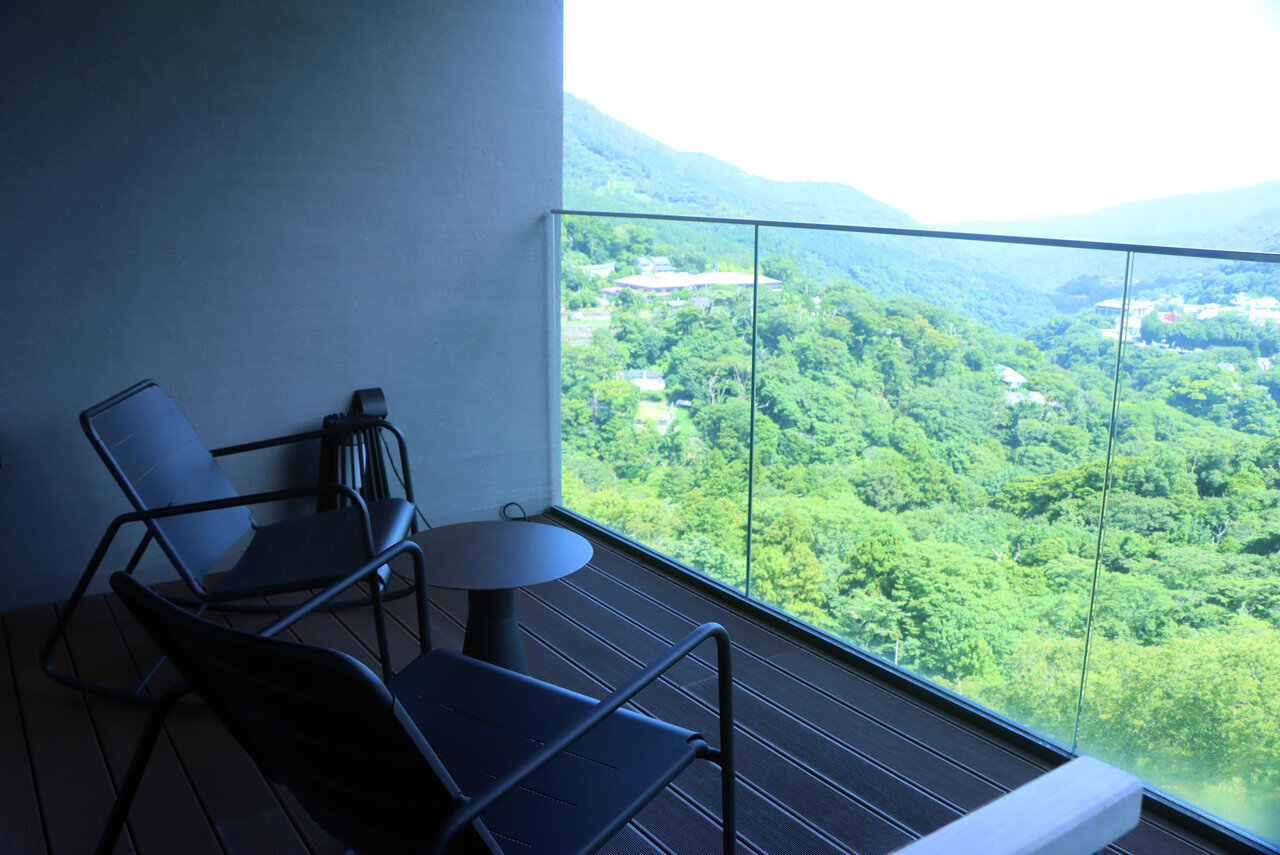
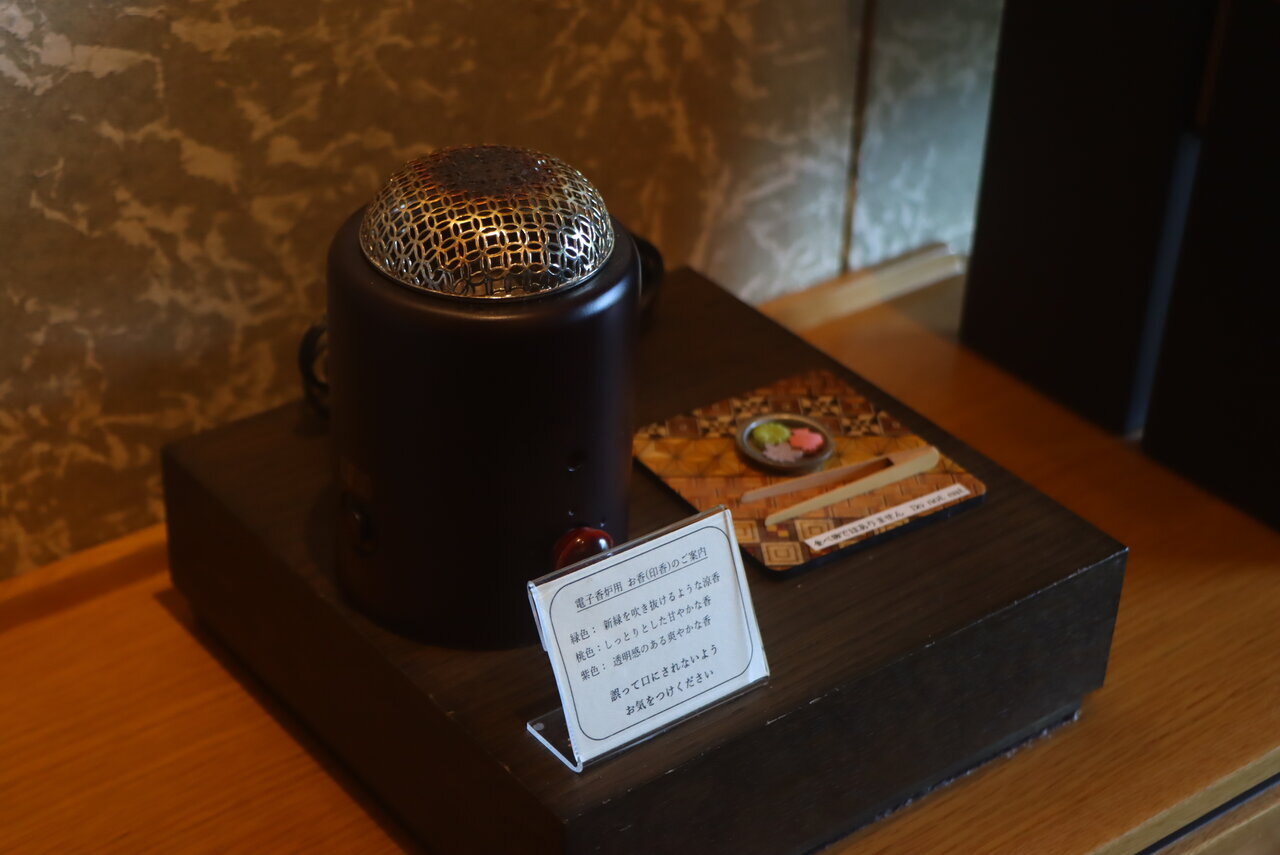
After the bath, I lit incense using the electric incense burner prepared in the room. I chose one scent from three varieties. Wrapped in the fragrance of the rising smoke, I let my thoughts drift for a while. With a body that wouldn't cool down and the scent easing me, I could just sit there without thinking of anything.
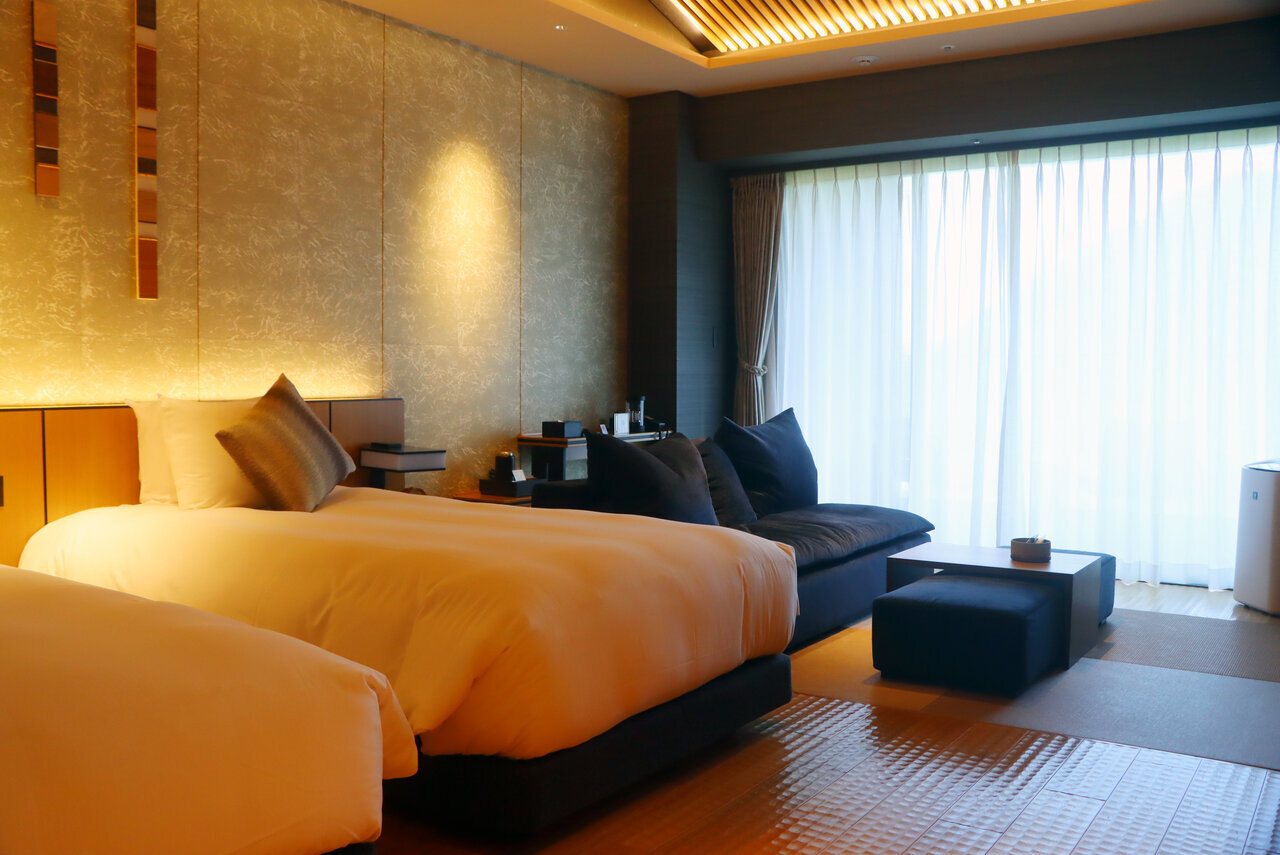
Through the window, the greenery outside faintly appeared. As I sat on the adjacent sofa, which blended seamlessly with the space, I noticed that it was designed so that the mountain ridge perfectly aligned with my eye level. It probably wasn't a coincidence. The choice of seating, the direction of my gaze, how light entered. It made me feel a bit strange to think that someone had quietly calculated all of that in advance.
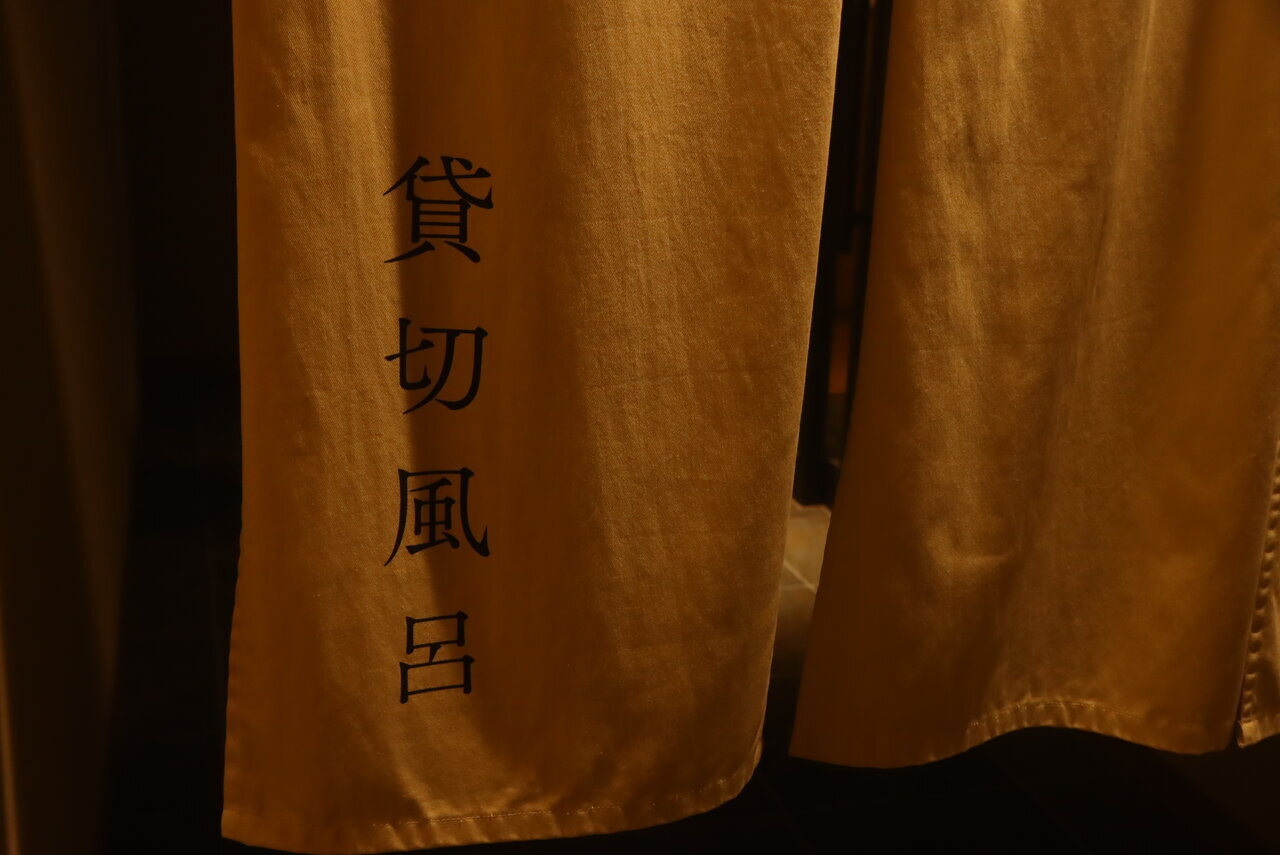
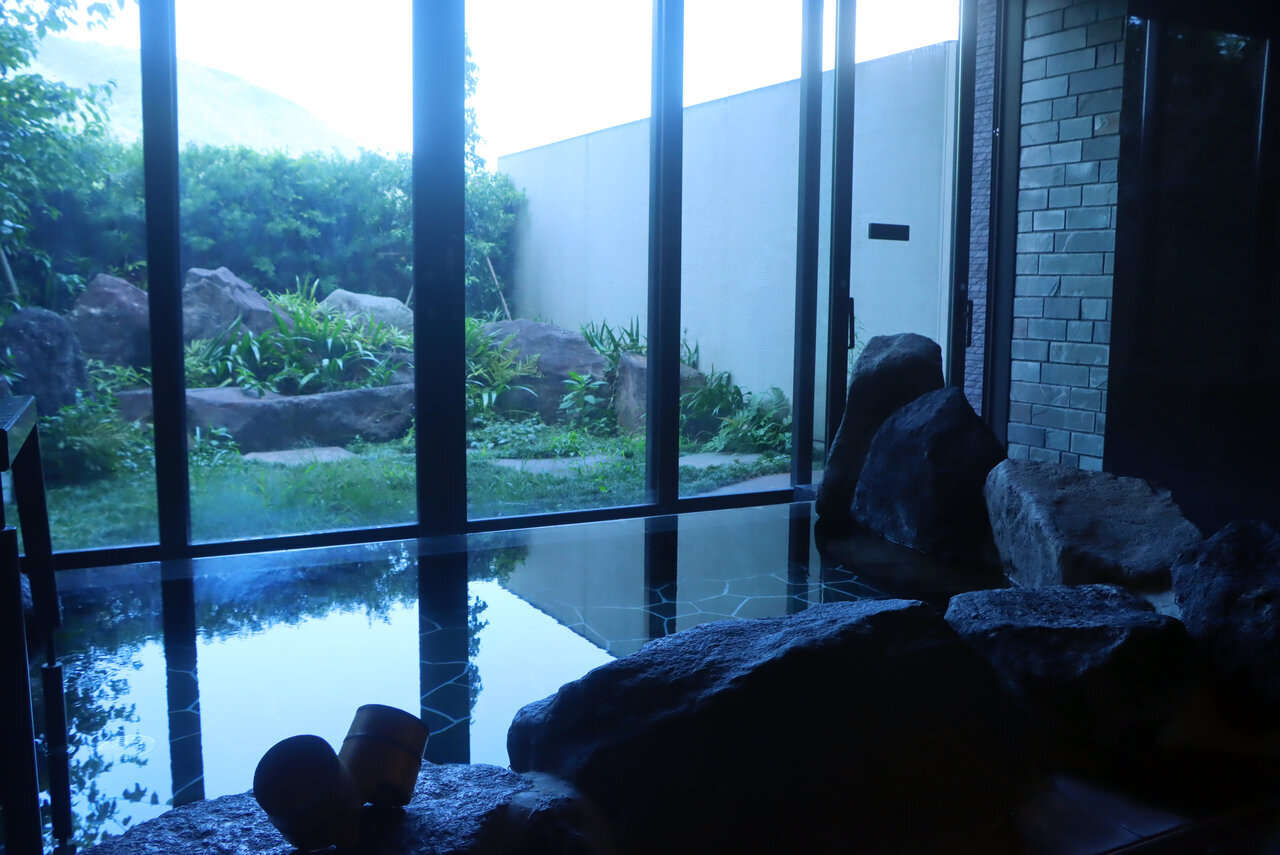
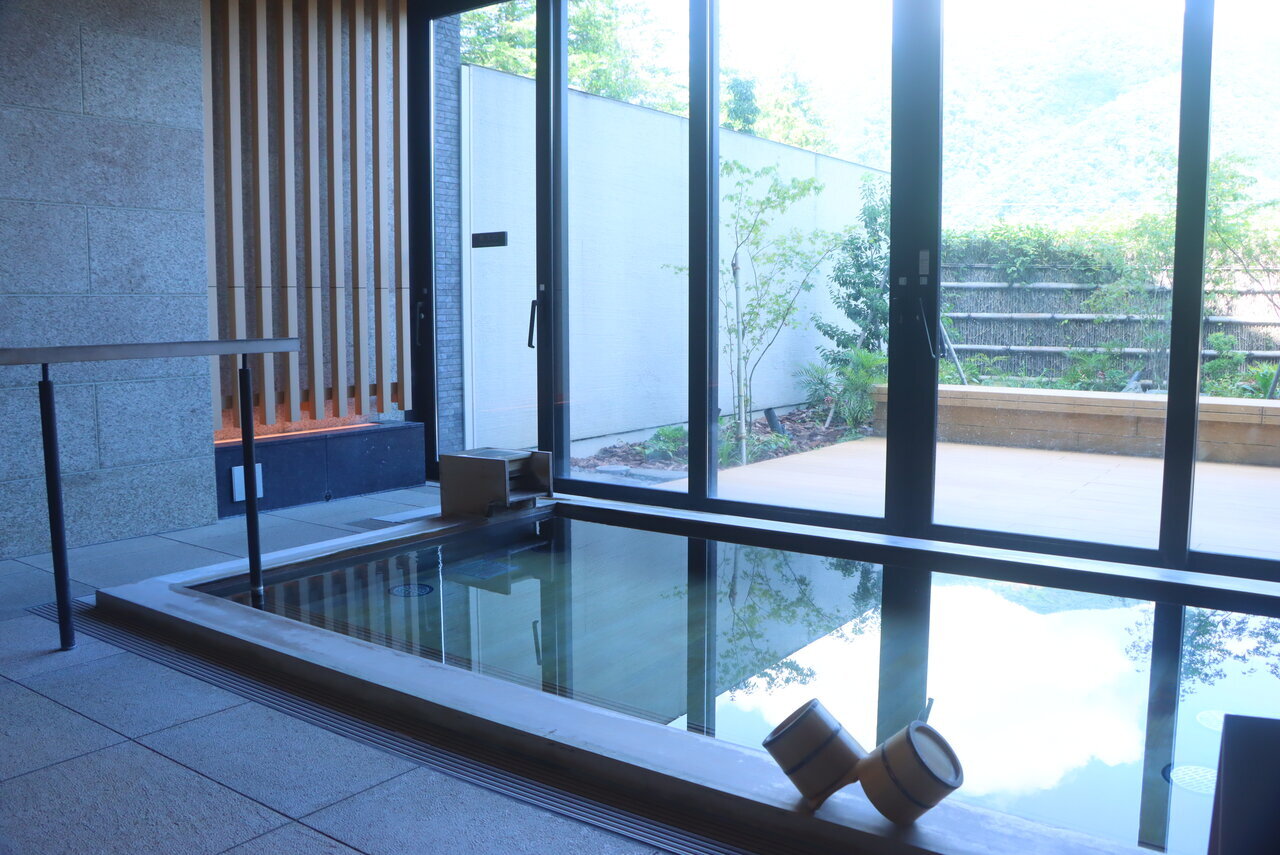
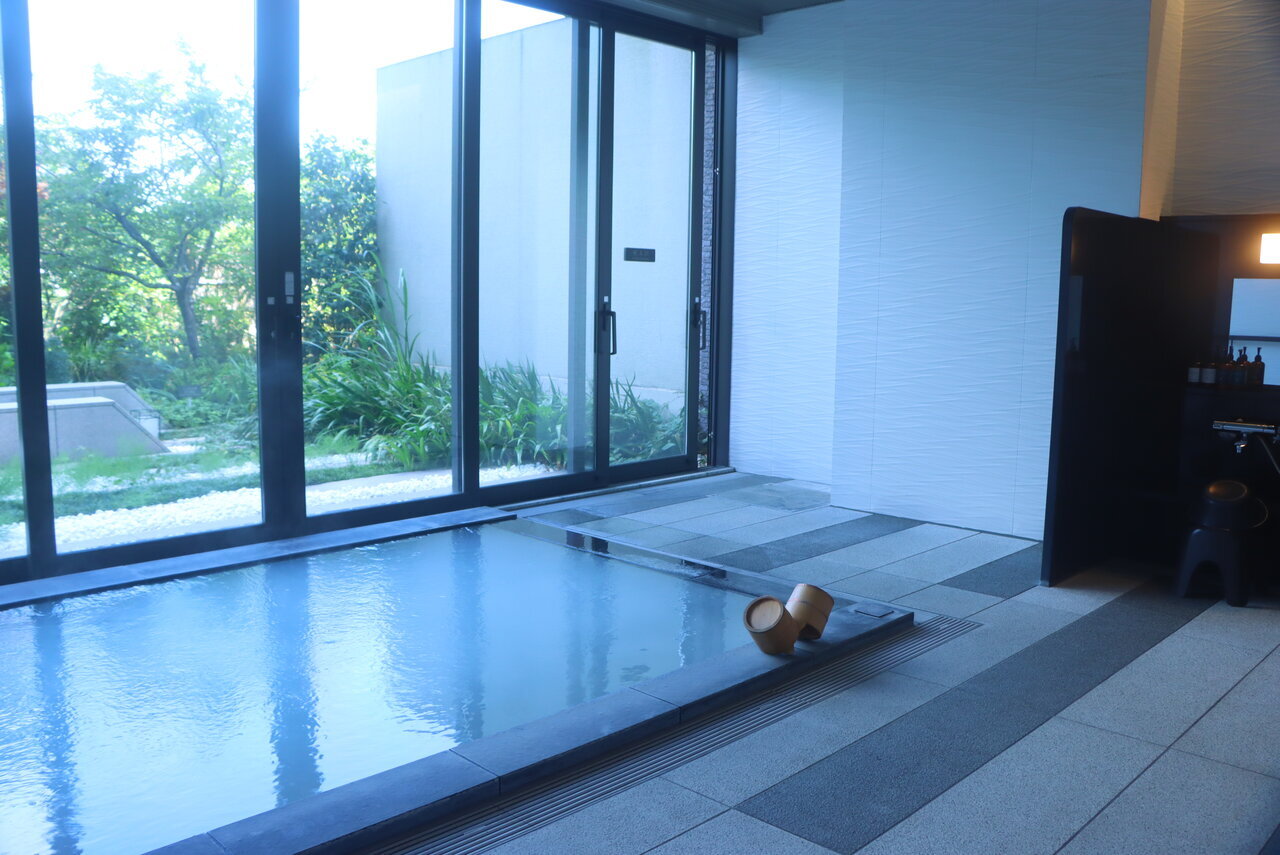
Inside the facility, there are three private baths, each with smooth waters like cypress, rock, and silk. It seems that I can monopolize each one, which has its own unique atmosphere, by reservation.
A room filled with light, plates carrying the seasons
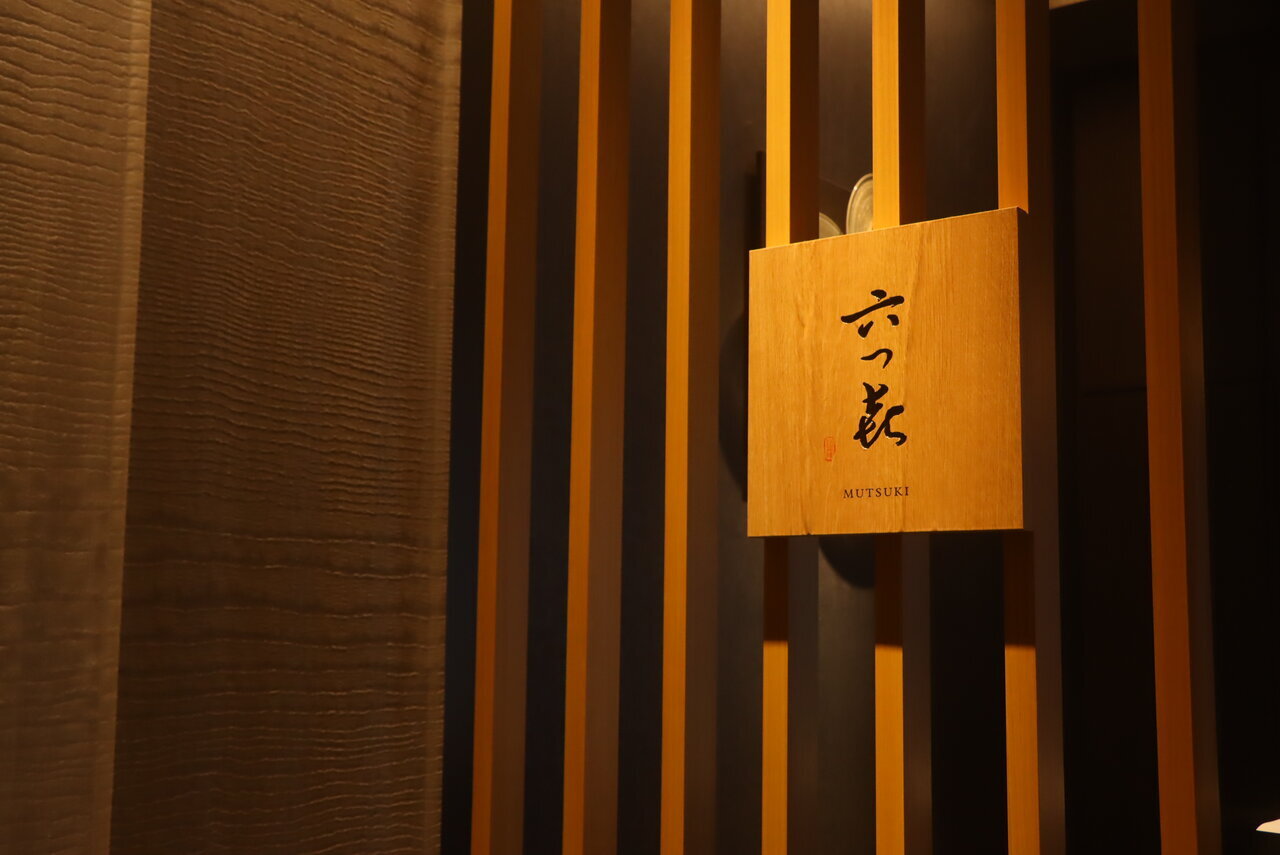
For dinner, I enjoyed a kaiseki meal at "Mutsuki" (六つ喜).
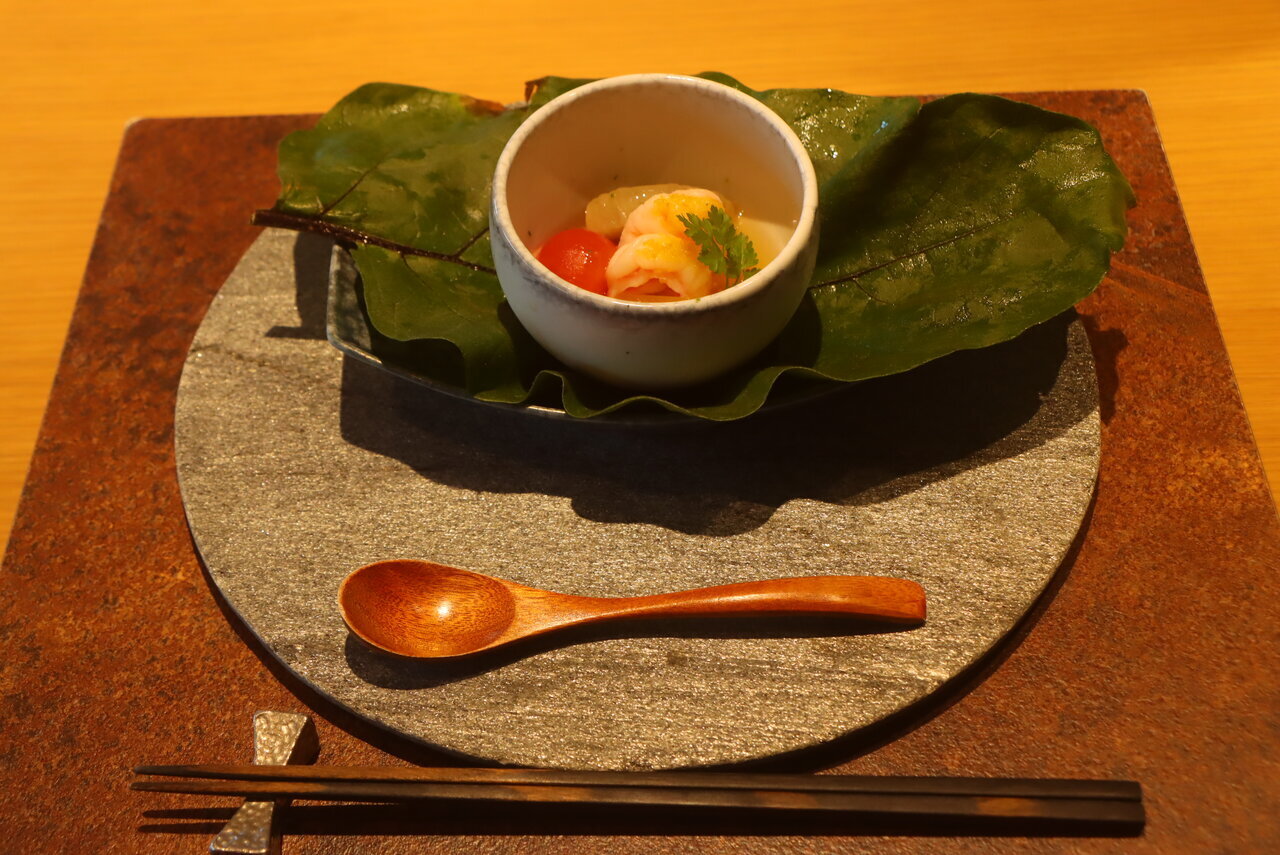
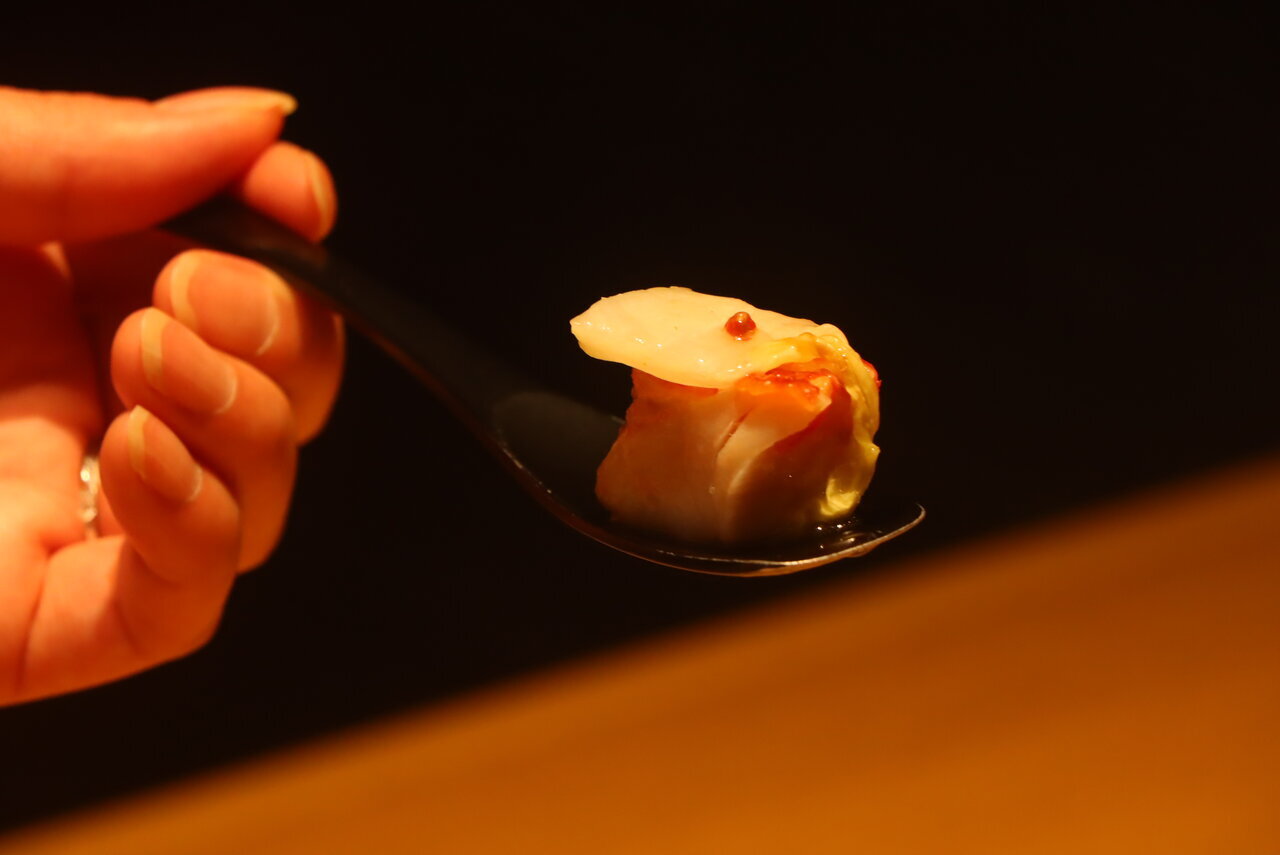
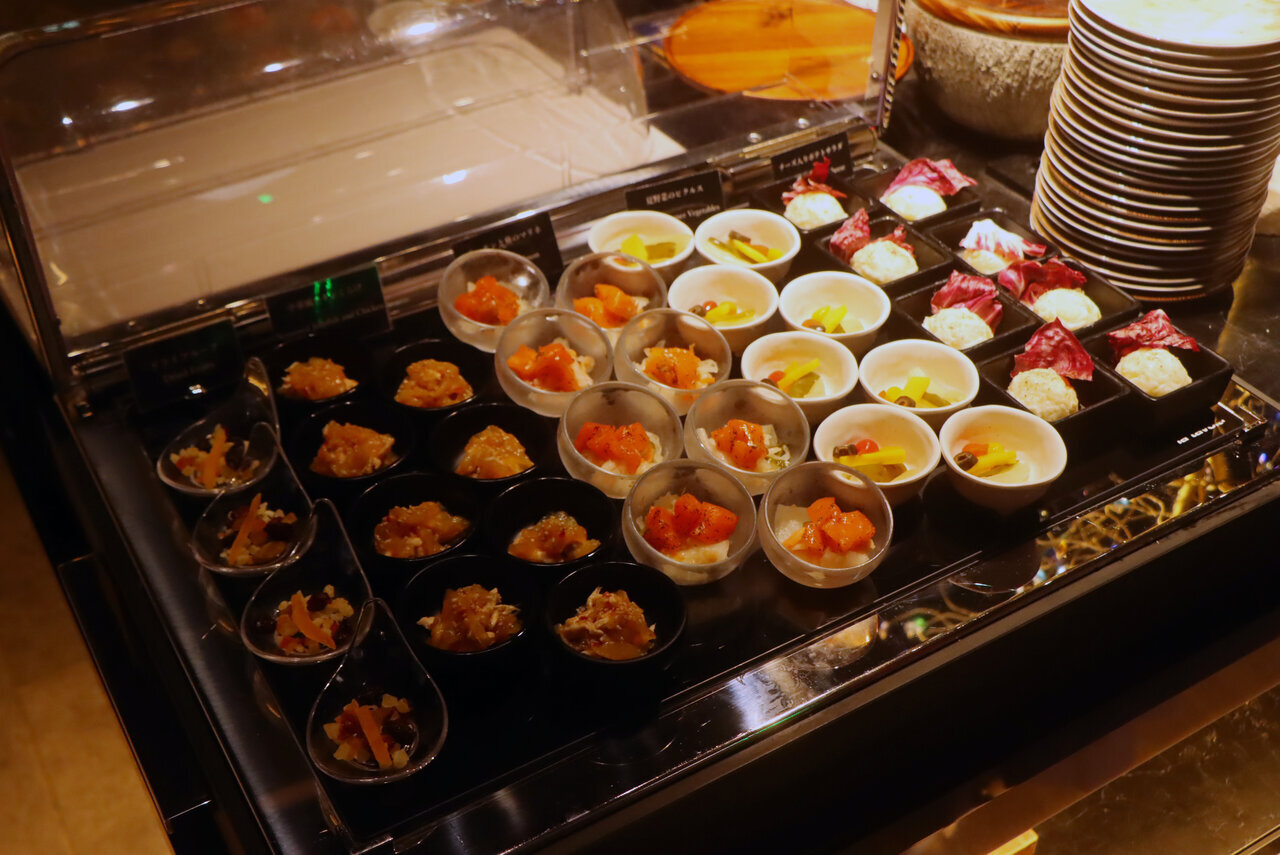
The first dish is a plate of tender shrimp coated with karasumi. Winter melon, white eggplant, and cherry tomatoes are submerged in a pale yellow sauce, with a light fragrance of grated yuzu wafting up.
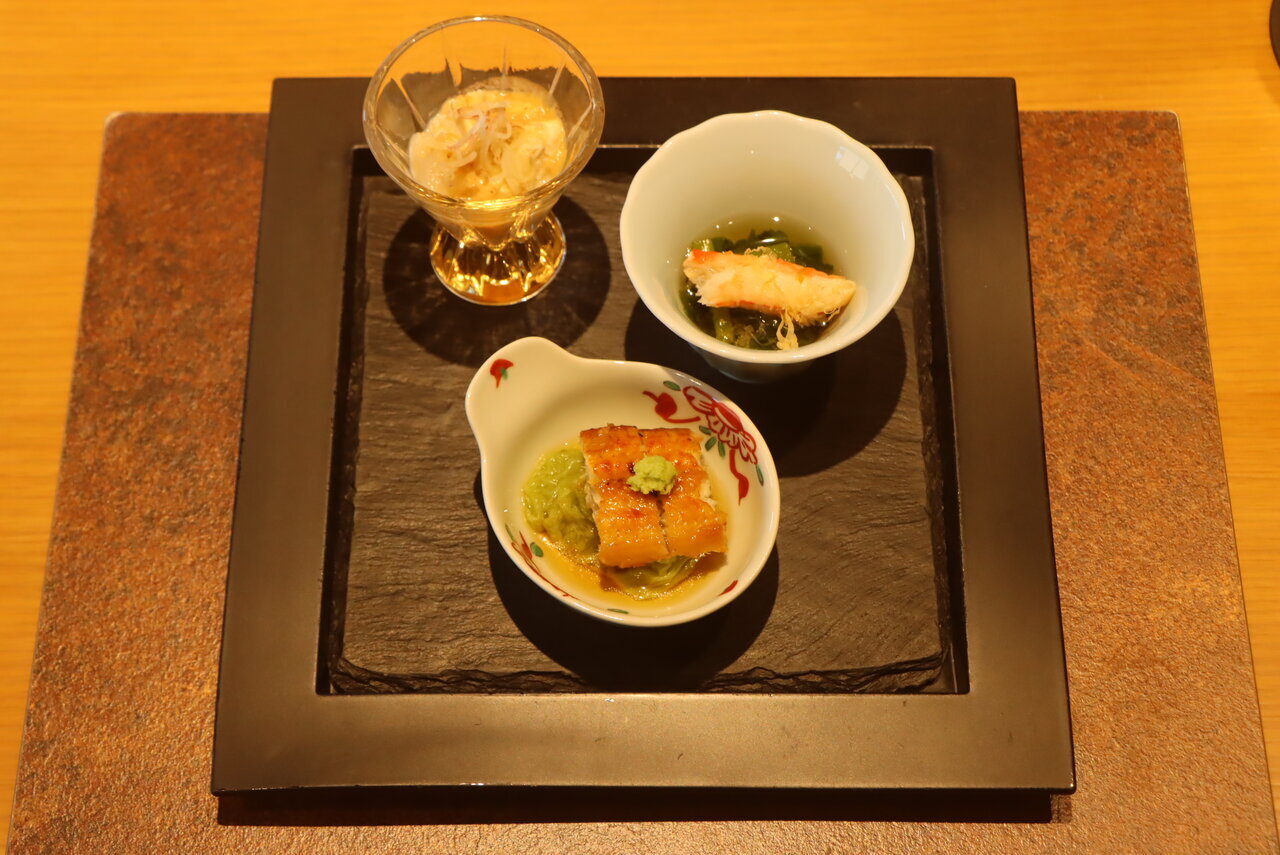
The appetizer consists of three items. A small bowl with matsutake mushrooms and chrysanthemum greens lightly dipped in dashi, garnished with shavings of dried bonito. The grilled eel is served with wasabi, drenched in amber-hued dashi. Another dish features freshly made yuba and white wood ear mushrooms, dressed in a sesame vinegar blend. Even with three dishes of similar colors lined up, each bite reveals a completely different season.
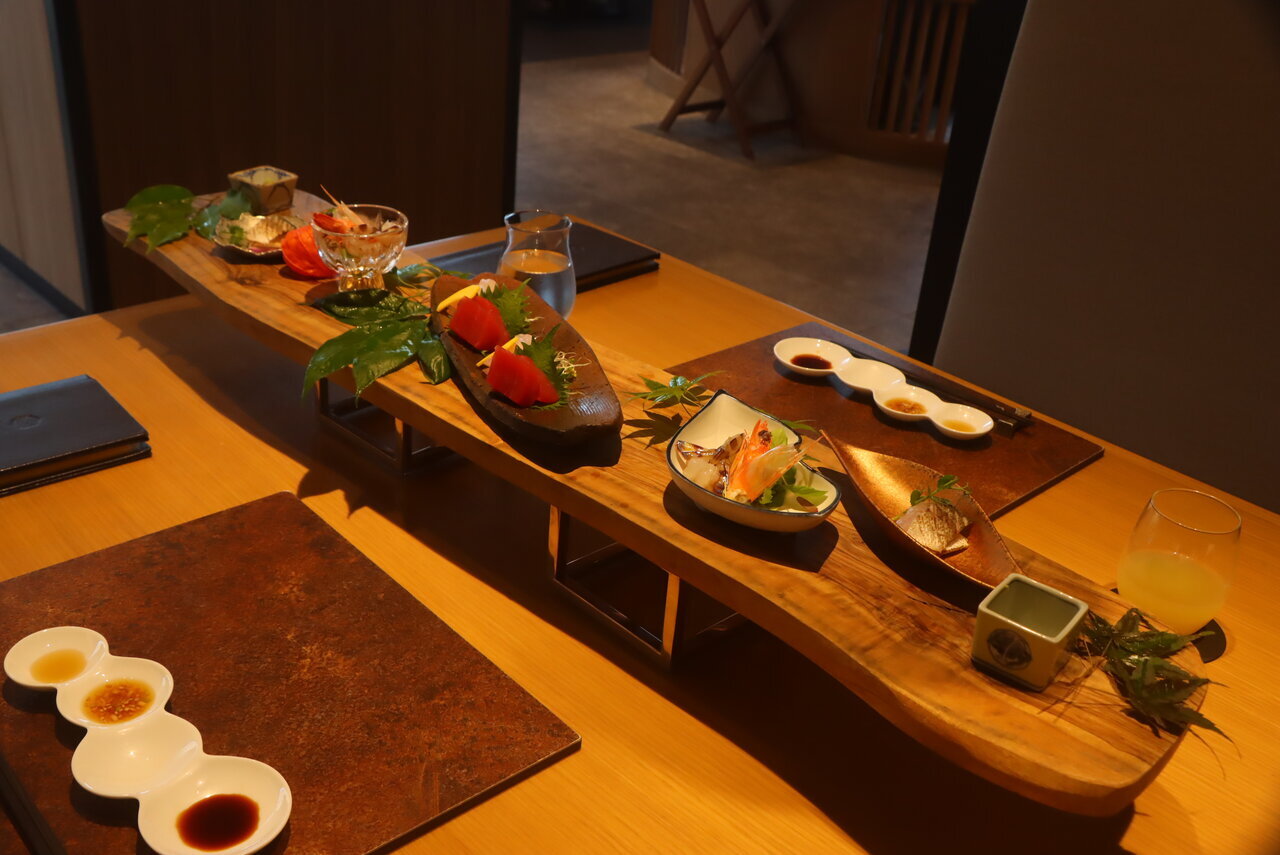
The sashimi showcases fish sourced that day. There are three types of soy sauce: Tosa soy sauce, a soy sauce with sesame, ginger, and green onion accents, and a grilled sake made with plum and kelp dashi. Just by using these three types of soy sauce, the same sashimi presents itself in entirely different ways.
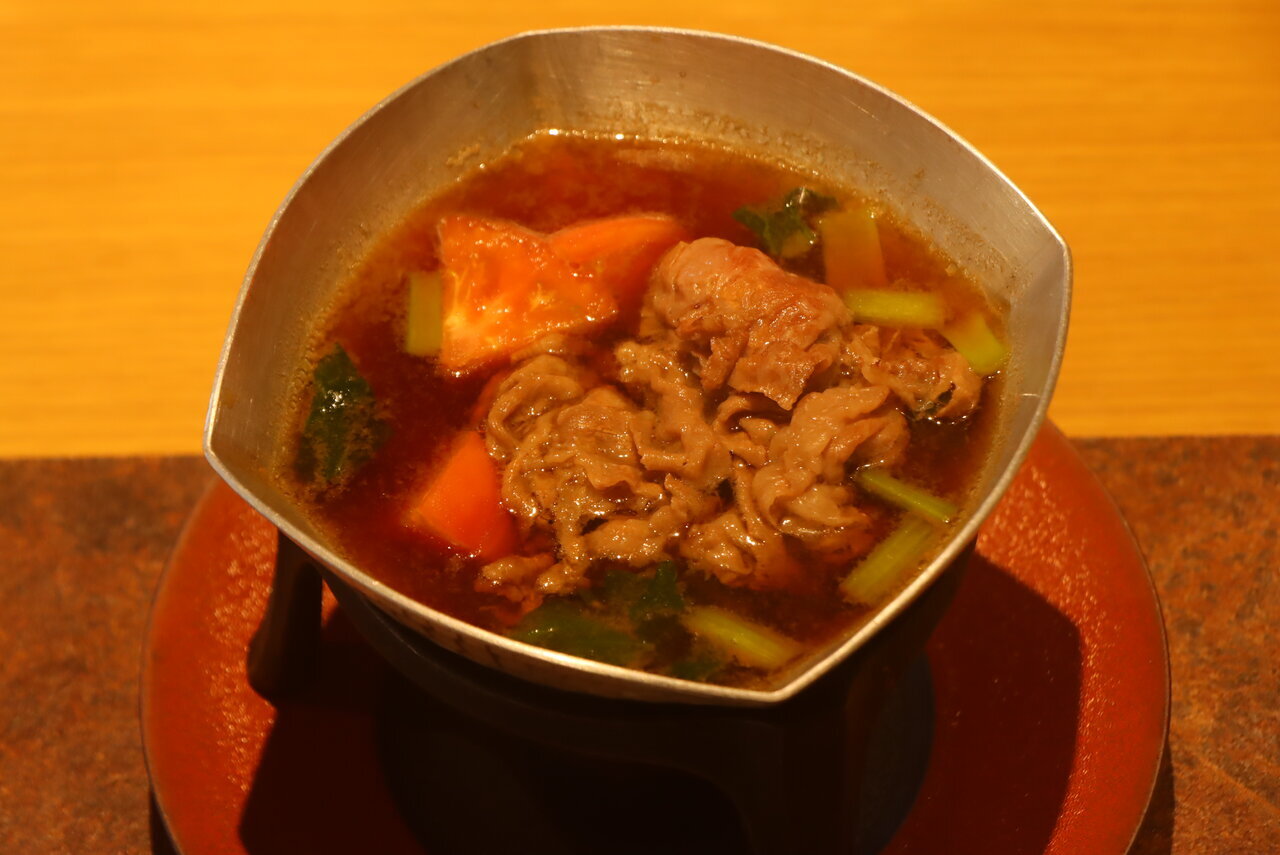
For the first dish, I chose sukiyaki made with thinly sliced wagyu beef and tomatoes in a sweet and savory dashi. Dipping it in whisked egg, the contours of the meat gently dissolve beyond the steam.
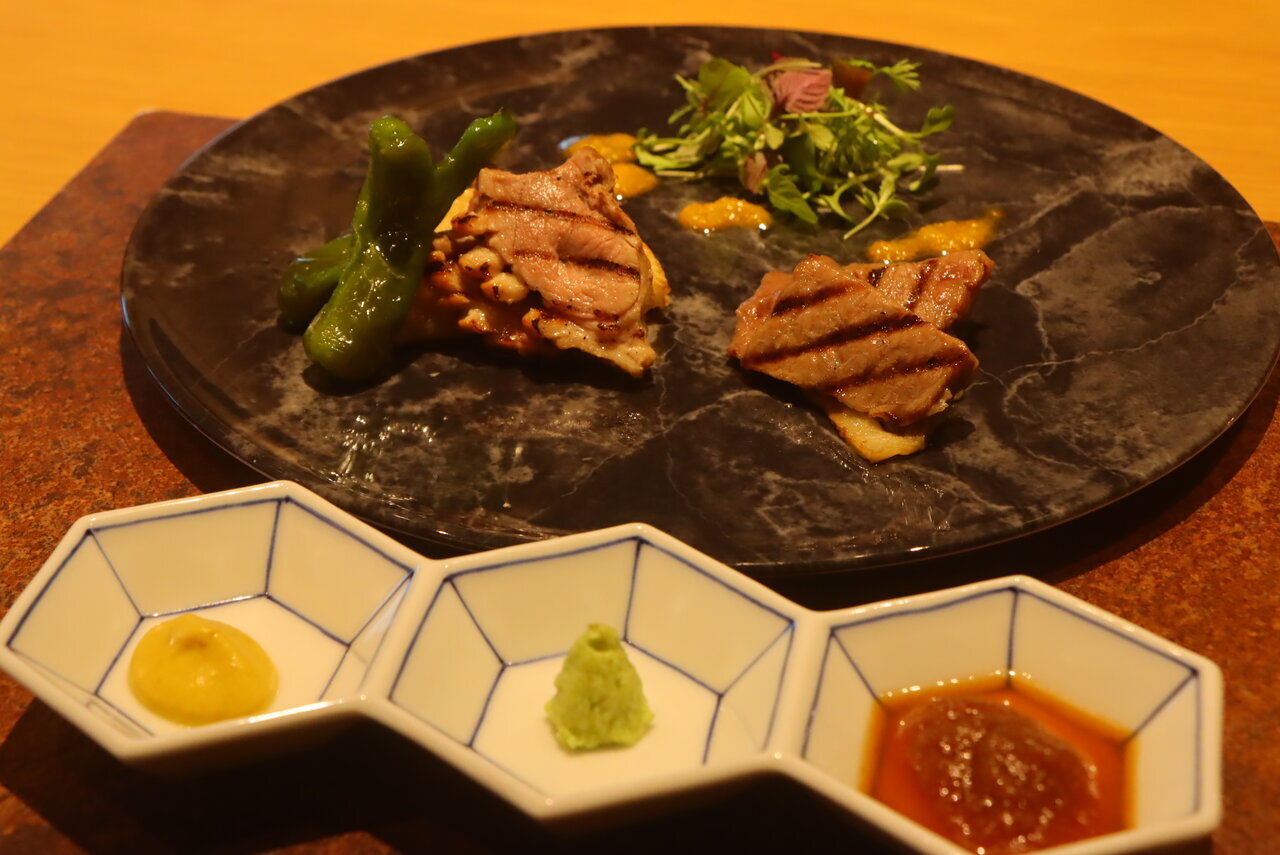
The second dish features seared black-haired wagyu and roasted Kyoto duck. Accompanied by Florentine-style eggplant and fried potatoes, along with shishito peppers, it comes with three types of condiments—mustard, wasabi, and grated daikon—that can be adjusted to personal preference. Just the ability to change the intensity of the sauce allows the same meat to transform into multiple flavors.
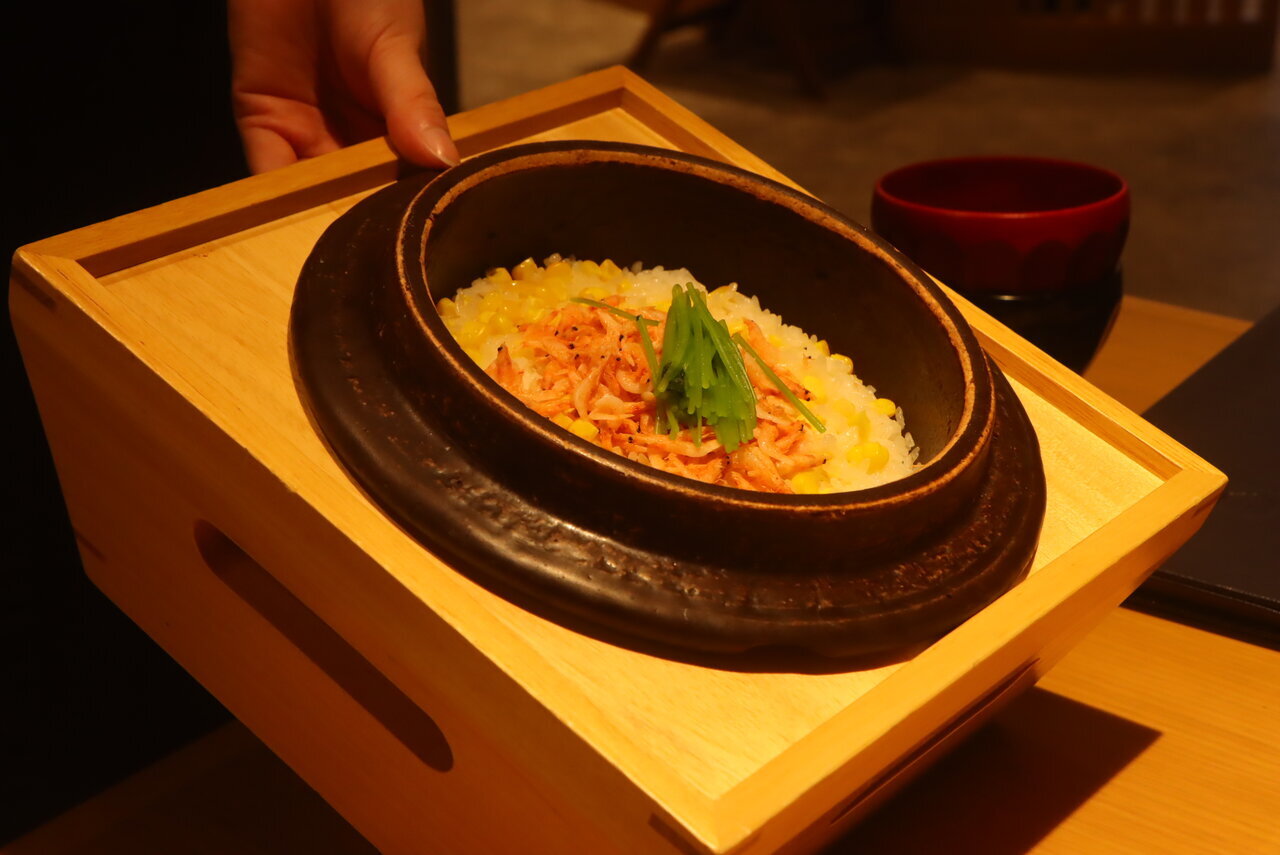
The meal consisted of rice cooked with corn and sakura shrimp, accompanied by red miso soup and pickles. For dessert, white peaches, raspberries, and limes were elegantly arranged.
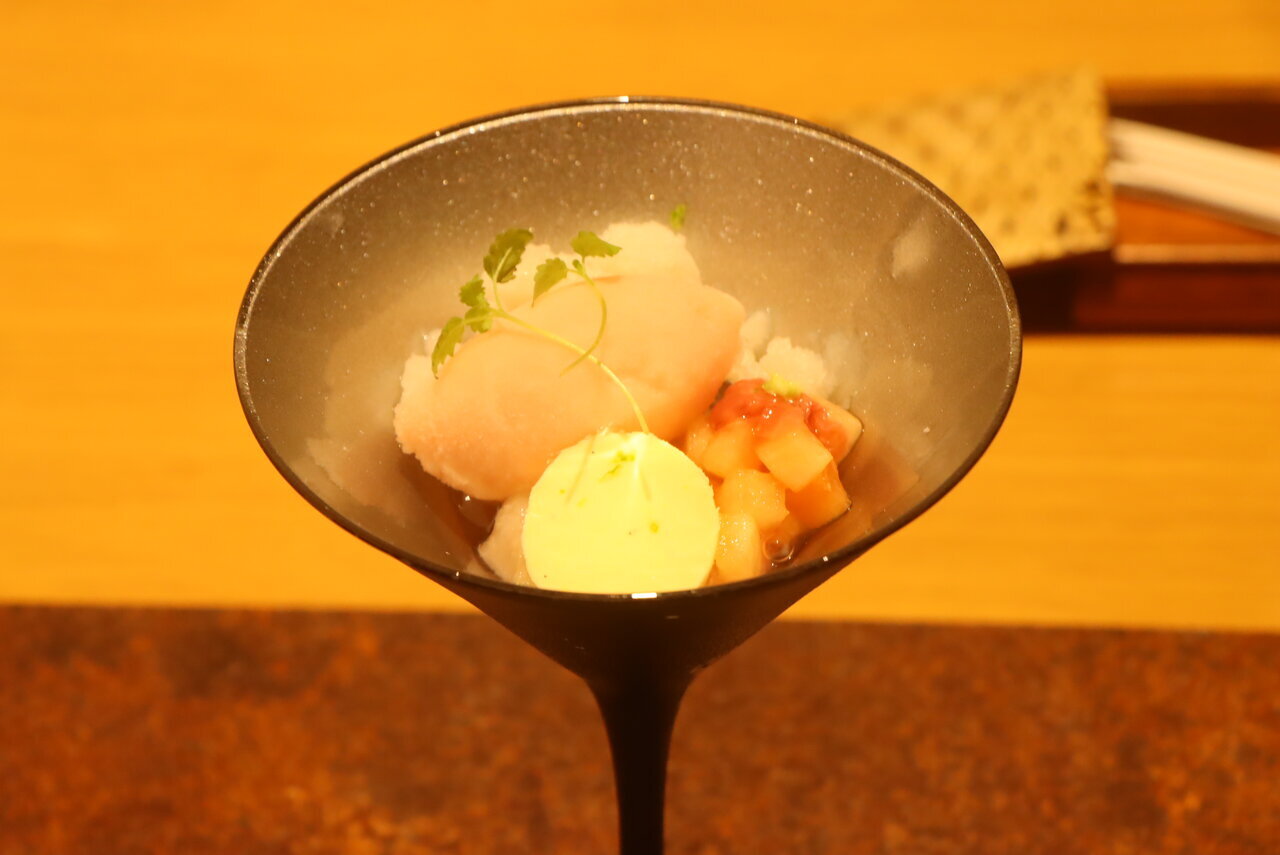
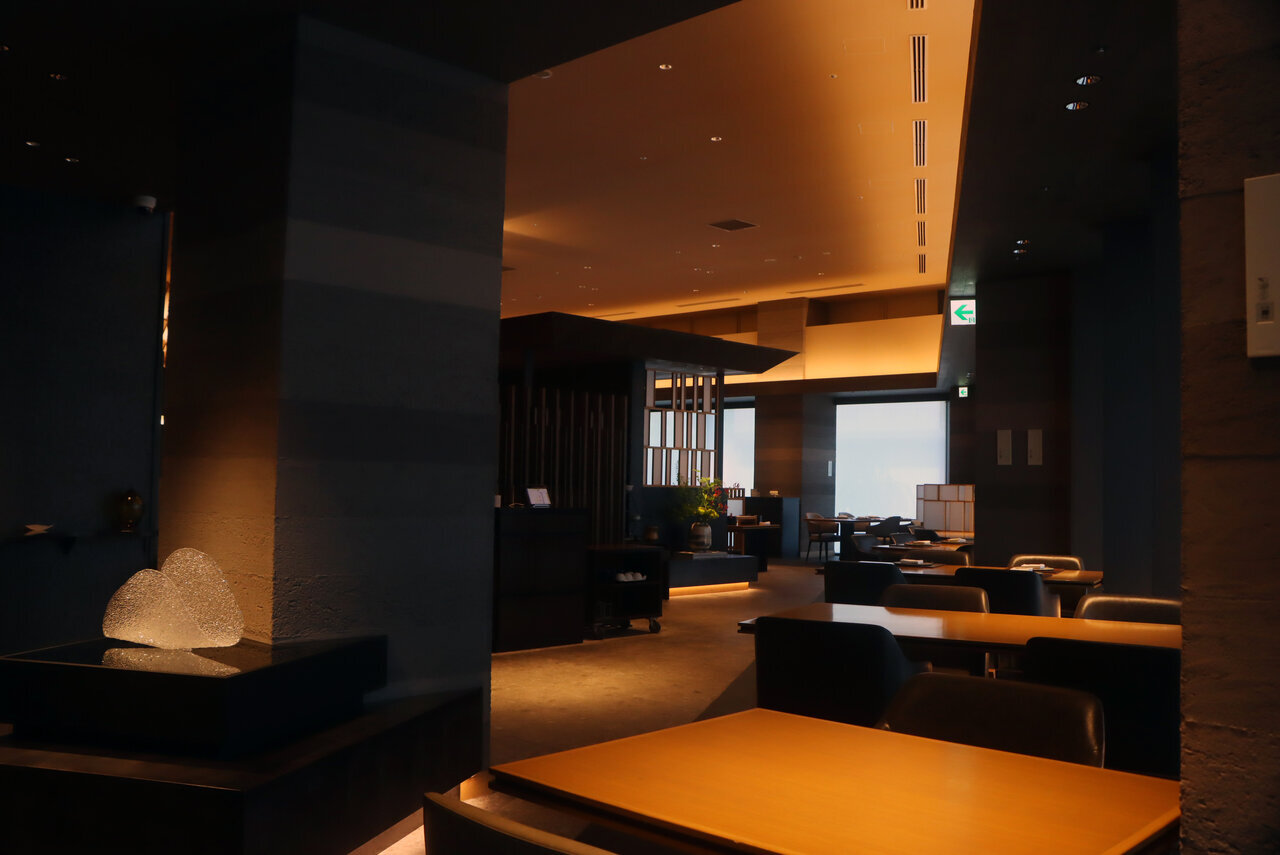
Outside the window, it was already completely dark, and only the sound of the dishes and chopsticks echoed quietly in the dimly lit room. The intervals between each plate were leisurely, and there was no sense of being rushed while waiting for the next dish.
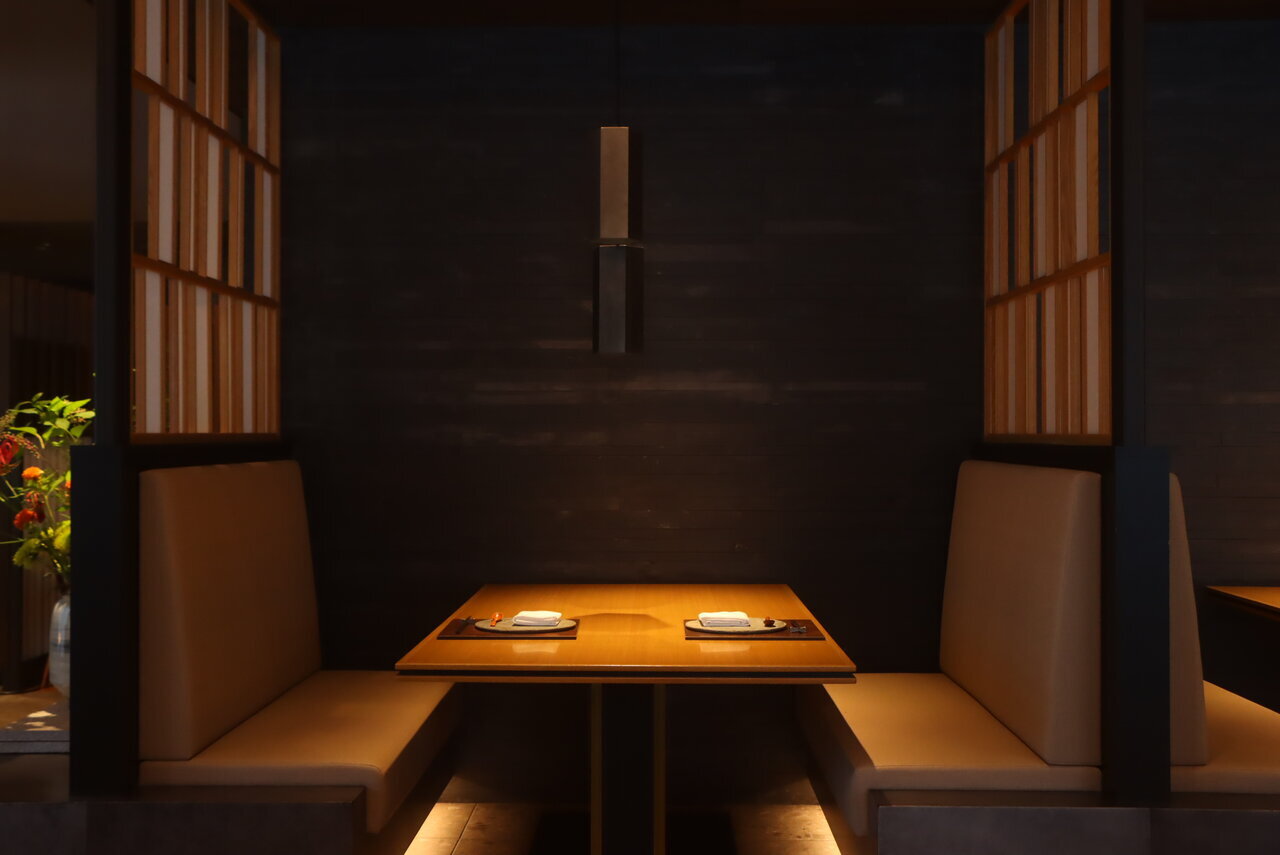
After the meal, I also ventured into the shop & gallery. In the small space filled with dishes and small items, I didn’t intend to buy anything, just walked between the shelves. Because it was a trip without a packed schedule, I could spend time on such detours.
The next morning, the character “大” emerged from the mist beyond the open-air bath.
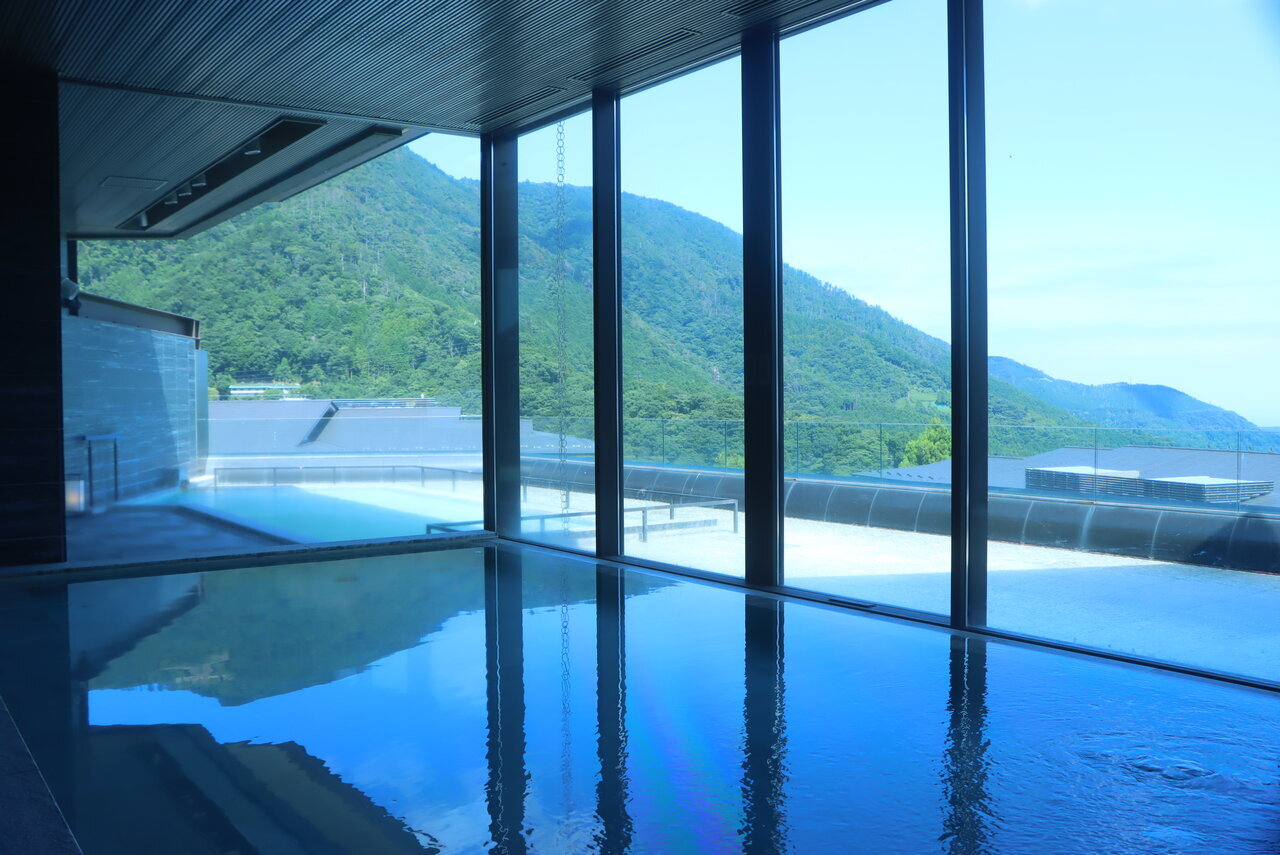
The next morning, I woke up before the sky had brightened and headed to the bath again. This time, not to the room's bath, but to the observation open-air bath.
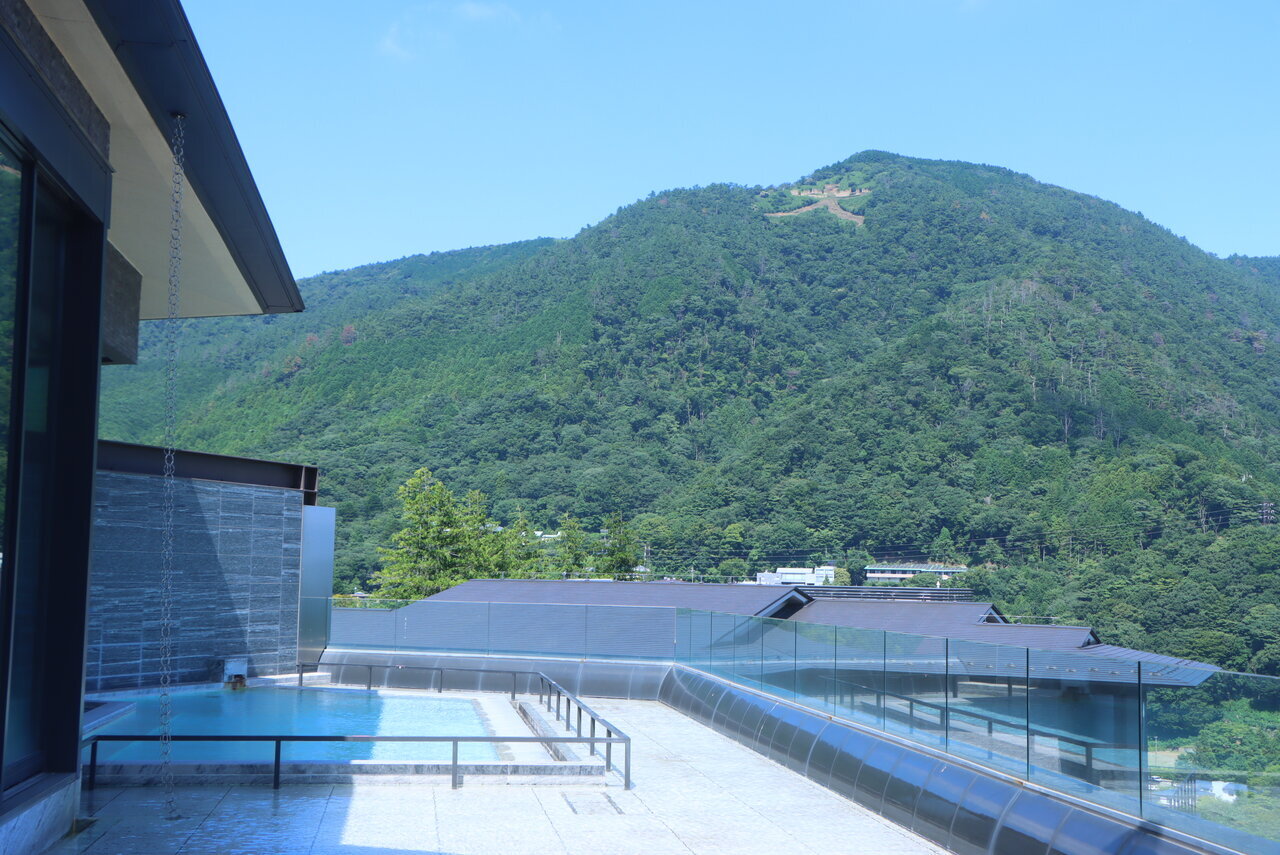
On the slope of the mountain, a large "大" character faintly floated into view. It’s said to be that character mountain, known as a summer sight in Gora. The morning mist flowed through the valley, making the outlines of the character almost invisible at first. As I waited quietly soaking in the hot spring, the mist gradually thinned, and the "大" character drawn on the mountainside slowly revealed itself.
It’s a scene that captures my gaze without anyone having taught me to appreciate it. By the time the character is completed beyond the steam, the sky has brightened completely.
It’s a scene that captures my gaze without anyone having taught me to appreciate it. By the time the character is completed beyond the steam, the sky has brightened completely.
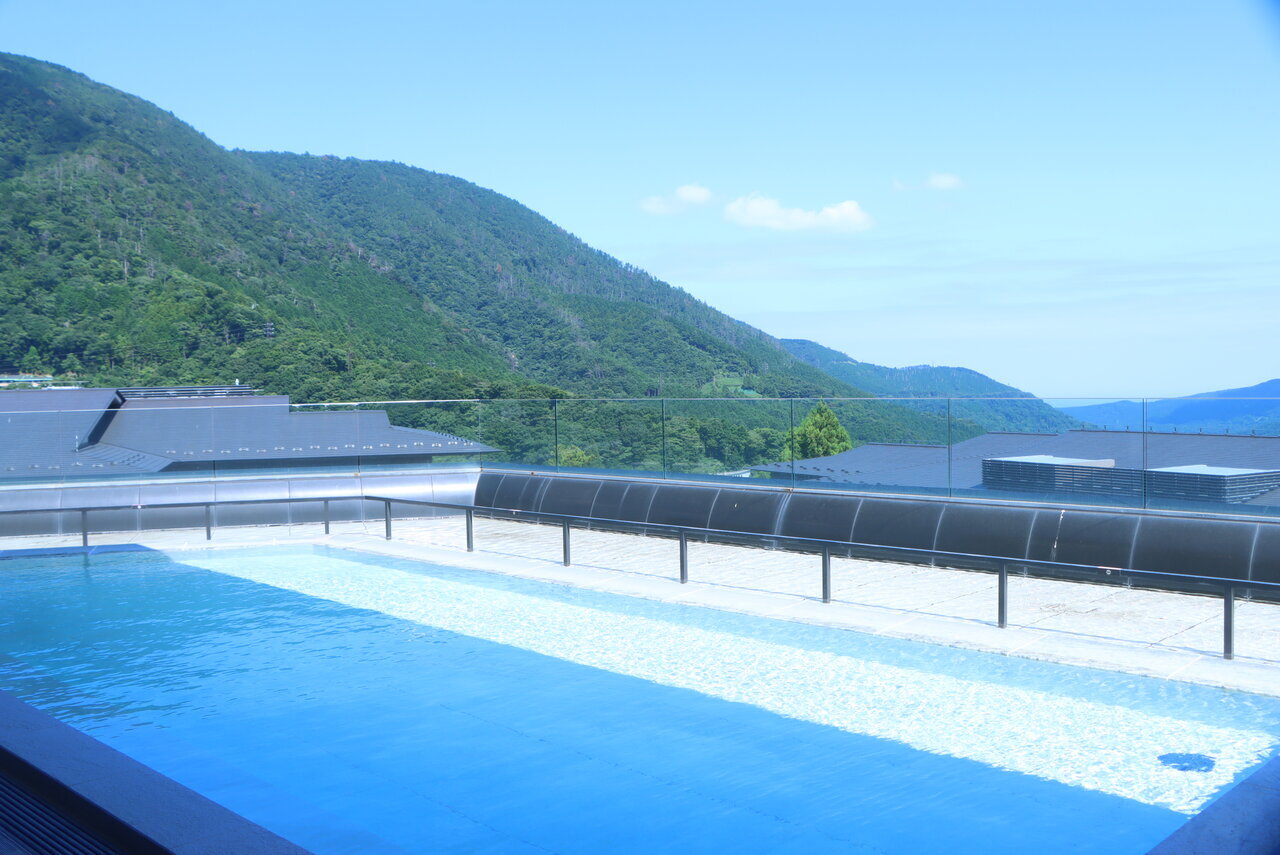
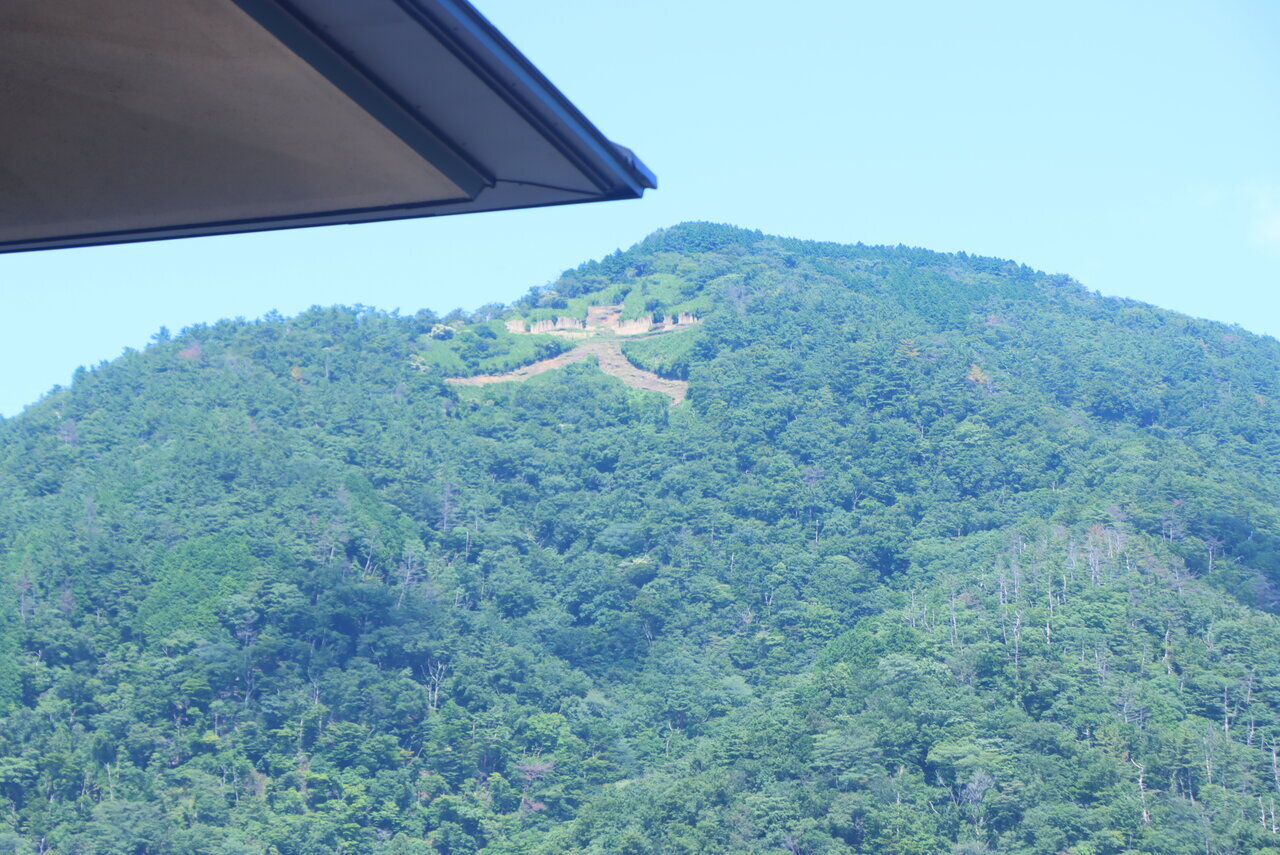
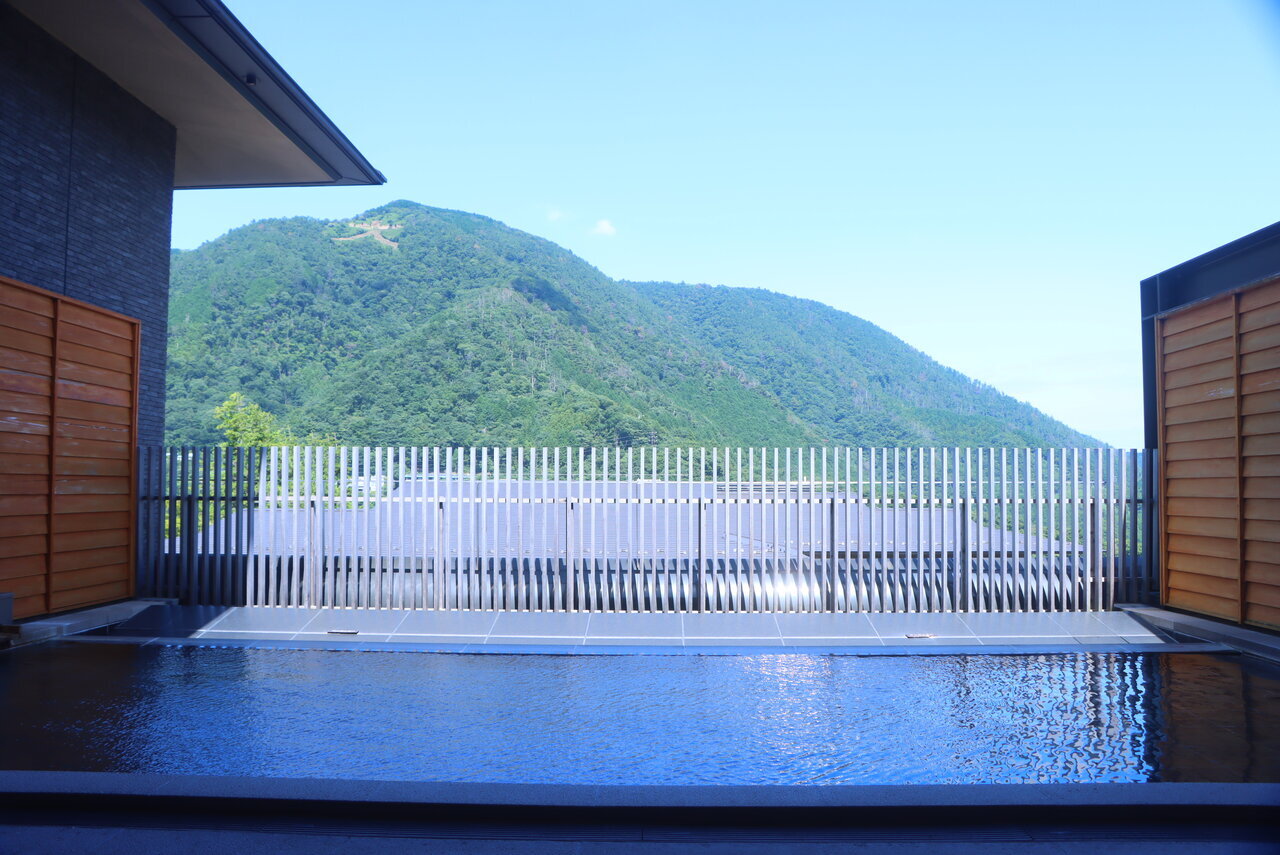
By the way, there are two types of open-air baths available, with gender rotations depending on the time. If the timing is right, you can enjoy both views during a single stay.
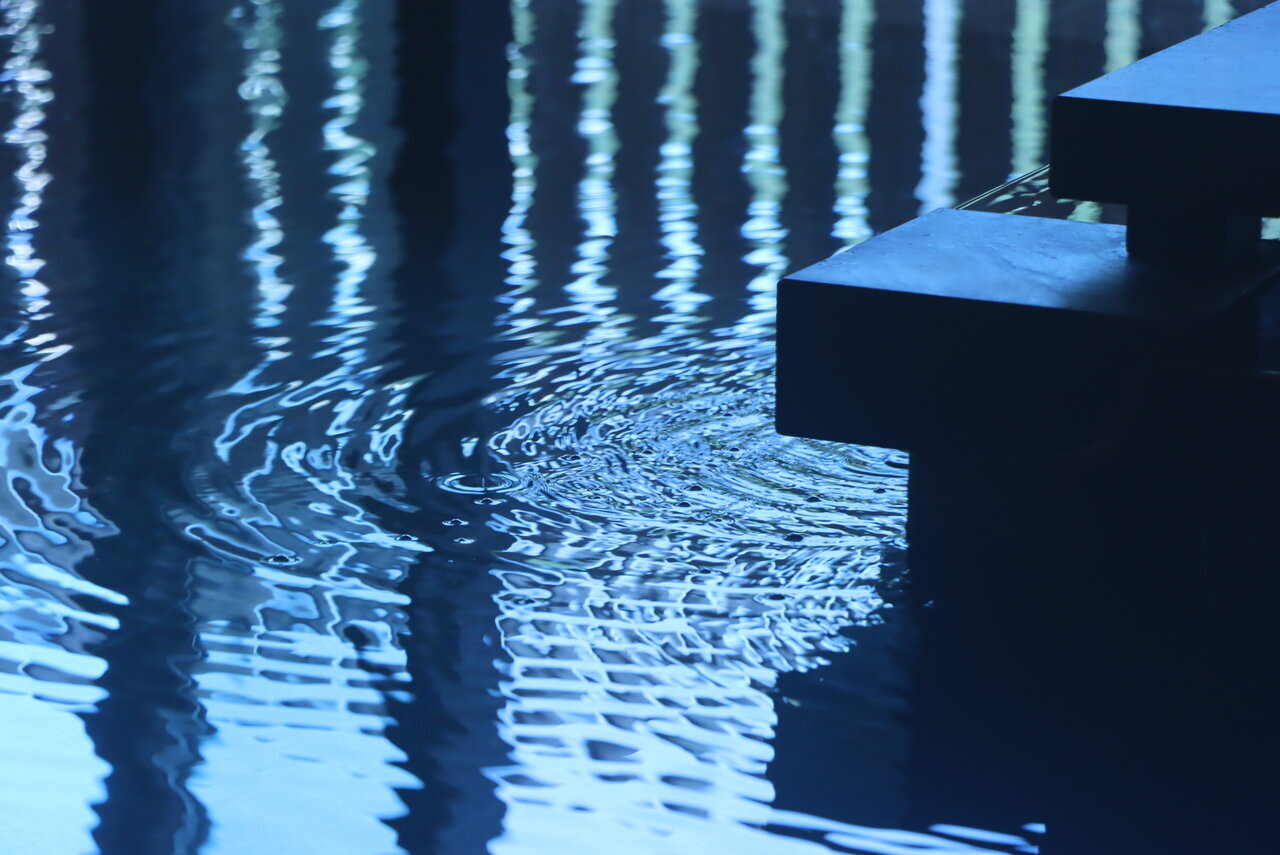
I had breakfast at "Rokutsuki," just like the night before. The sounds of dishes clinking and tea being poured echoed. No one spoke loudly. Outside the window, droplets of water that the crows had bathed in sparkled as they caught the light one by one. When I cupped the steaming bowl with both hands, I felt as if the temperature of the morning's hot water still lingered somewhere in my fingertips.
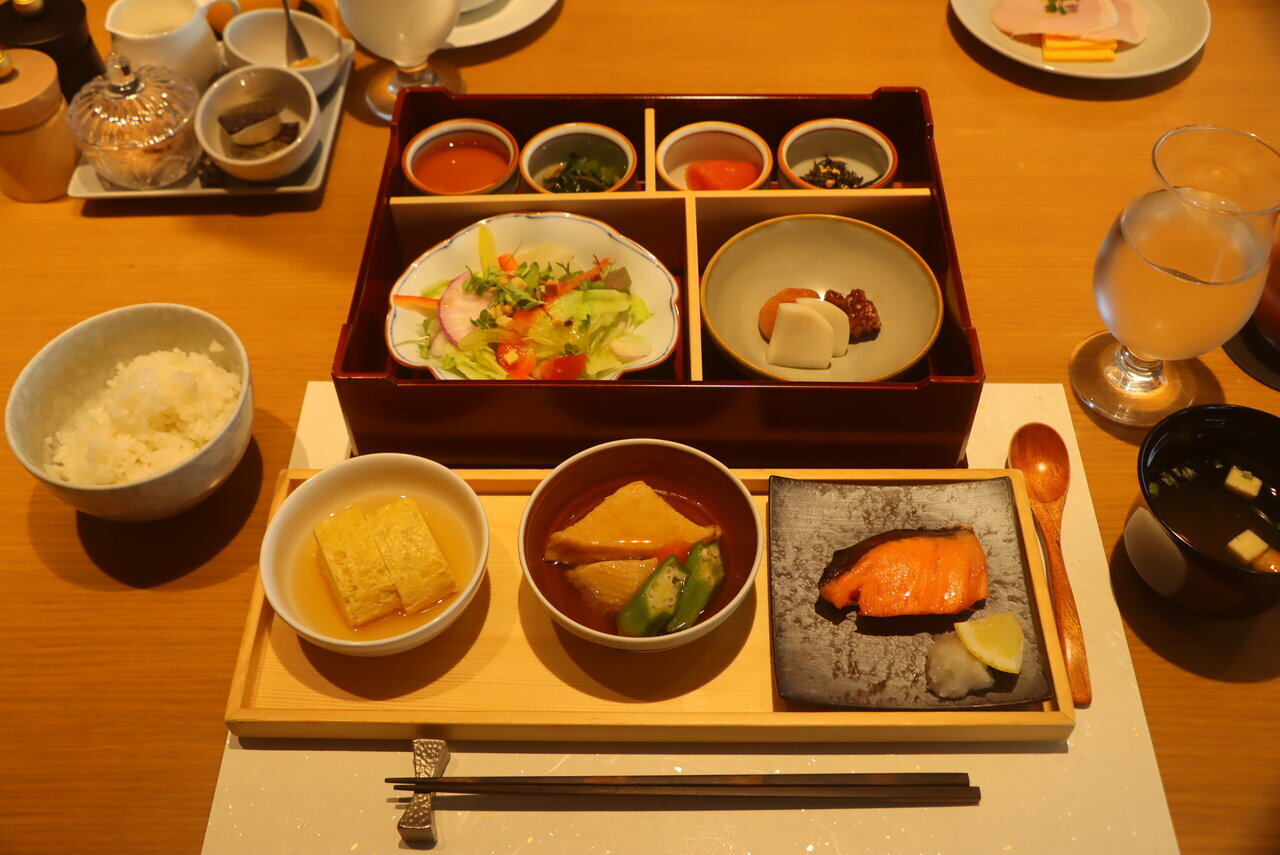
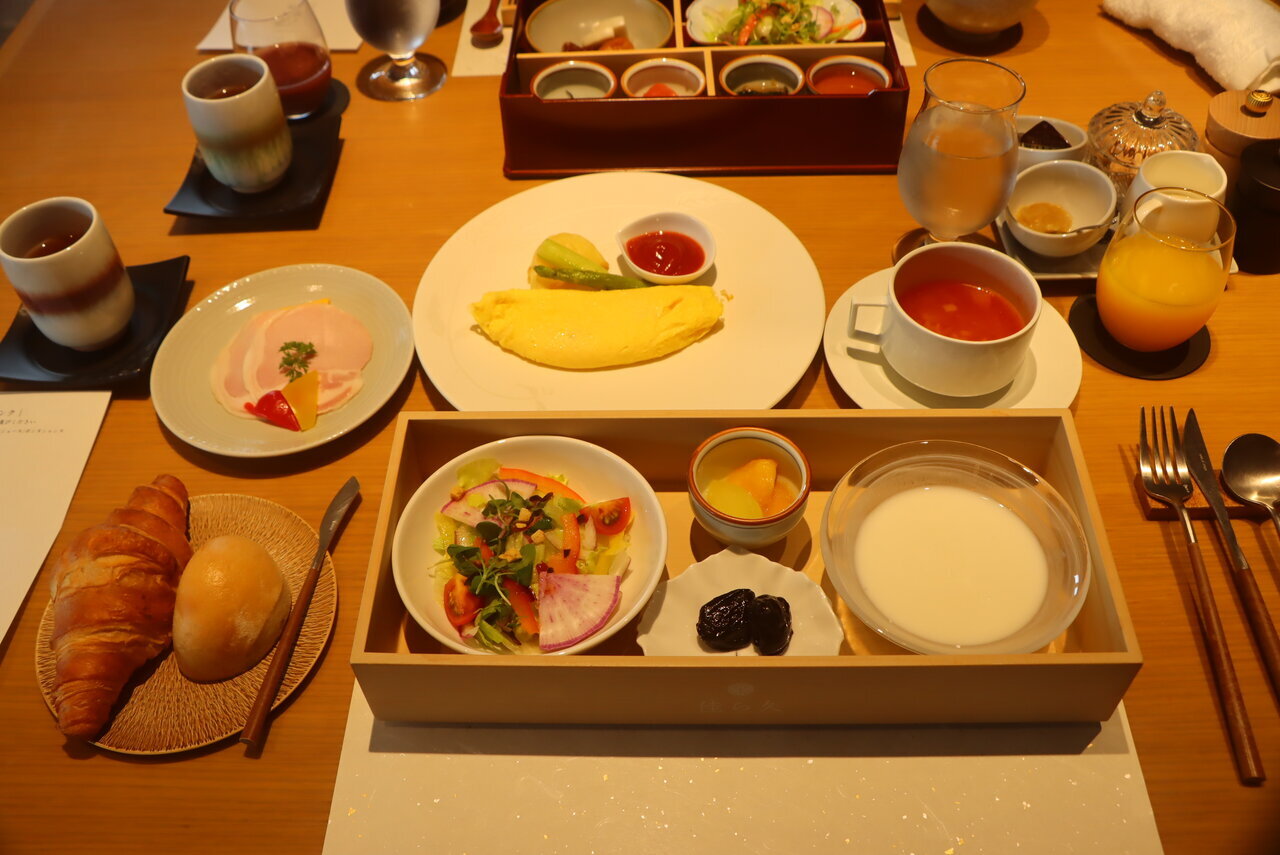
Breakfast can be chosen from Japanese or Western options. If you choose Western, they apparently prepare an omelet right in front of you. The omelet, which was on the hot plate until just before reaching the plate, reportedly bursts with runny yolk the moment it’s cut. Accompanied by ham, a croissant, and red soup, it presents a morning face that is completely different from the Japanese-style tray.
Even though I had only spent one night, I felt a slight sense of familiarity with this place compared to yesterday.
At the bottom of the forest in Sengokuhara, the quiet Pola Museum of Art
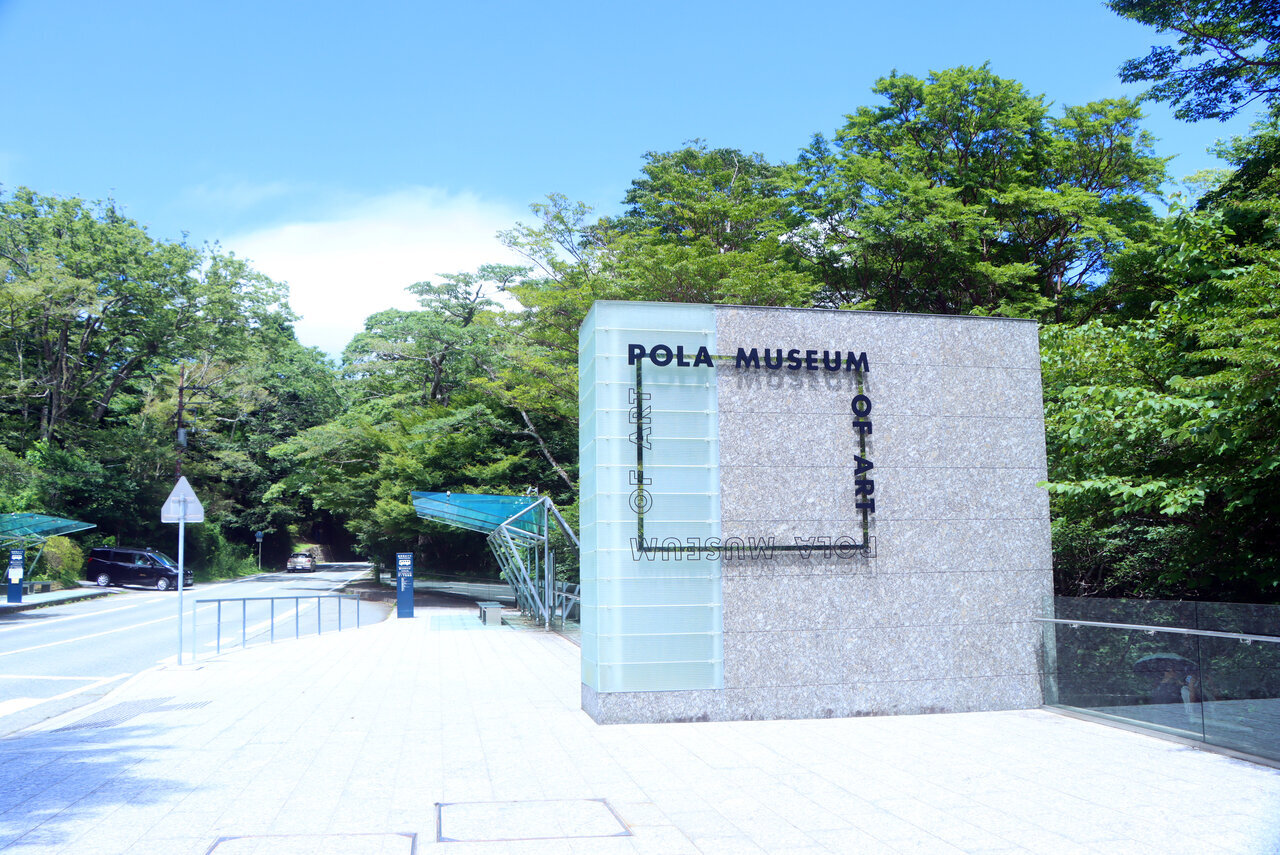
The first destination was the Pola Museum of Art located in Sengokuhara. Even as you get closer, no building-like structure comes into view. The outlines dissolve among the beech trees, which are over 300 years old, and the beautifully textured Himeshara trees. The height of the above-ground section is only 8 meters. This structure, built as if sinking into the ground, is said to float above the ground thanks to seismic isolation devices. It is a clever design to protect the artworks from both earthquakes and humidity.
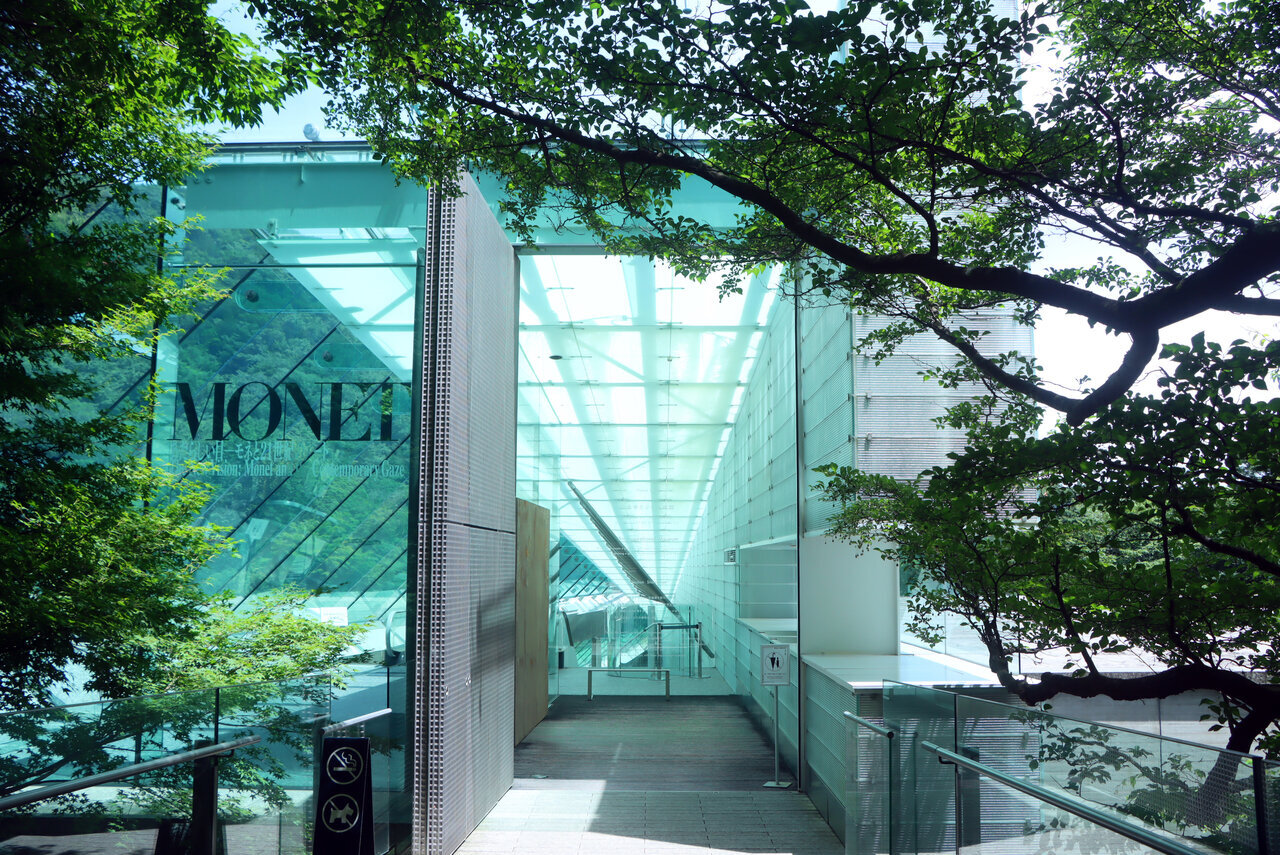
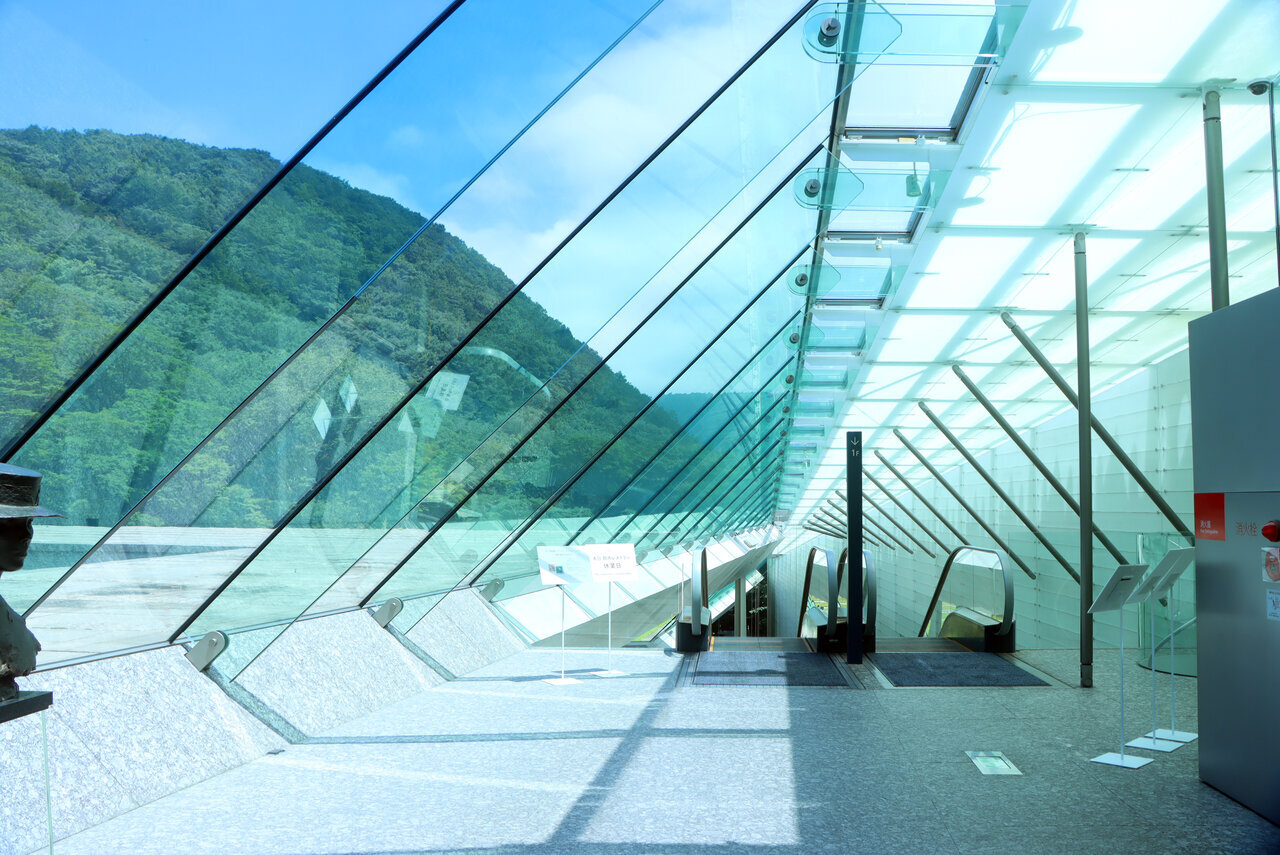
Crossing the bridge and passing through the glass entrance, the view suddenly opens up. The airy lobby can be seen down to the second basement floor, revealing a depth unimaginable from the outside. Light quietly falls from above. Even the sound of voices here naturally becomes softer.
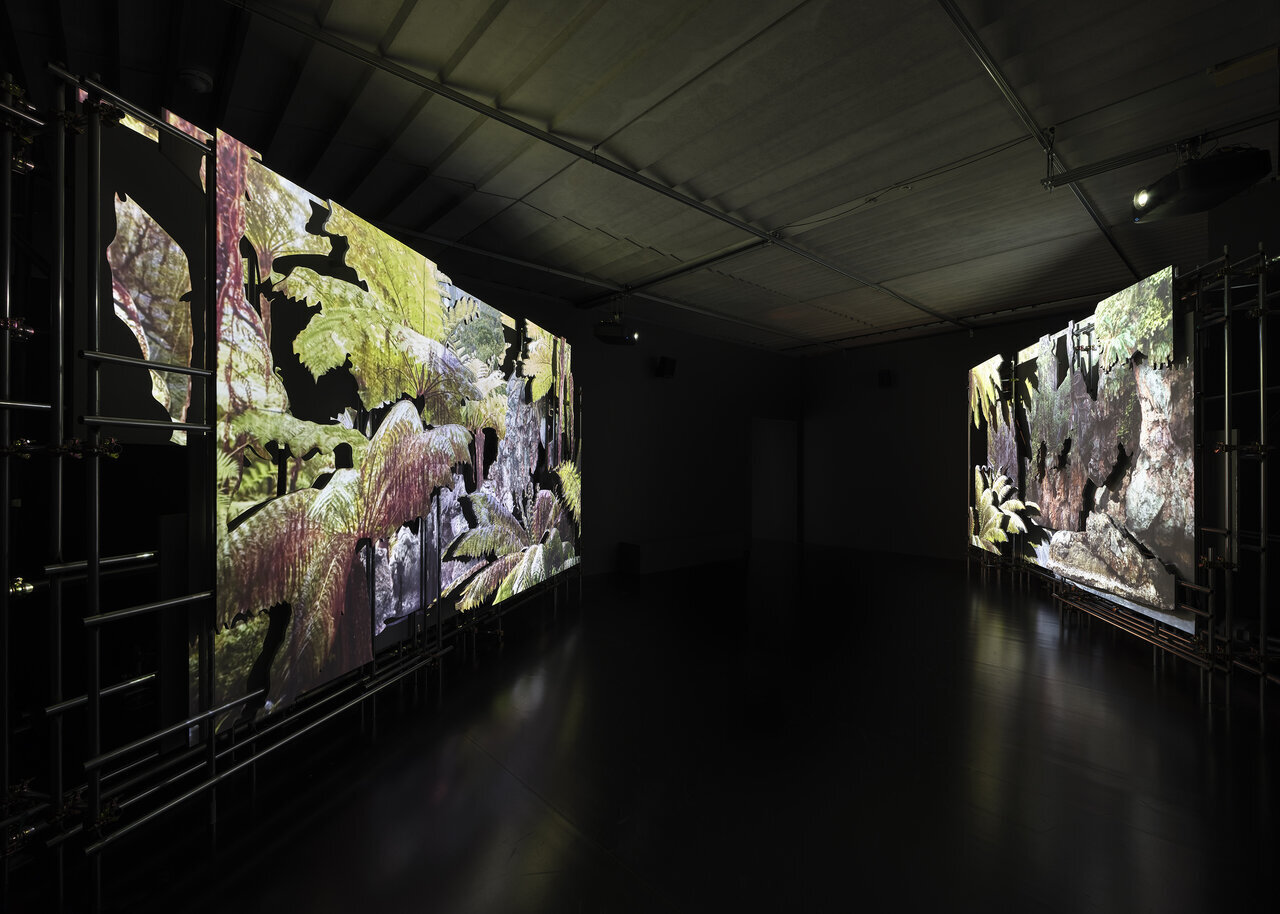
Exhibition scenery: "New Eyes - Monet and 21st Century Art" Pola Museum of Art, 2026,
Photograph: Shū Nakagawa ©Noémie Goudal Courtesy of the artist, Edel Assanti and Artangel
The first room I stepped into on this day’s exhibition was completely dark. Screens, unevenly cut at their edges, lined one wall, projecting images of ferns and moss-covered rock surfaces. In the works of the artist Noémie Goudal, it remains unclear for a while where the real rocks end and the images begin, even as you get closer.
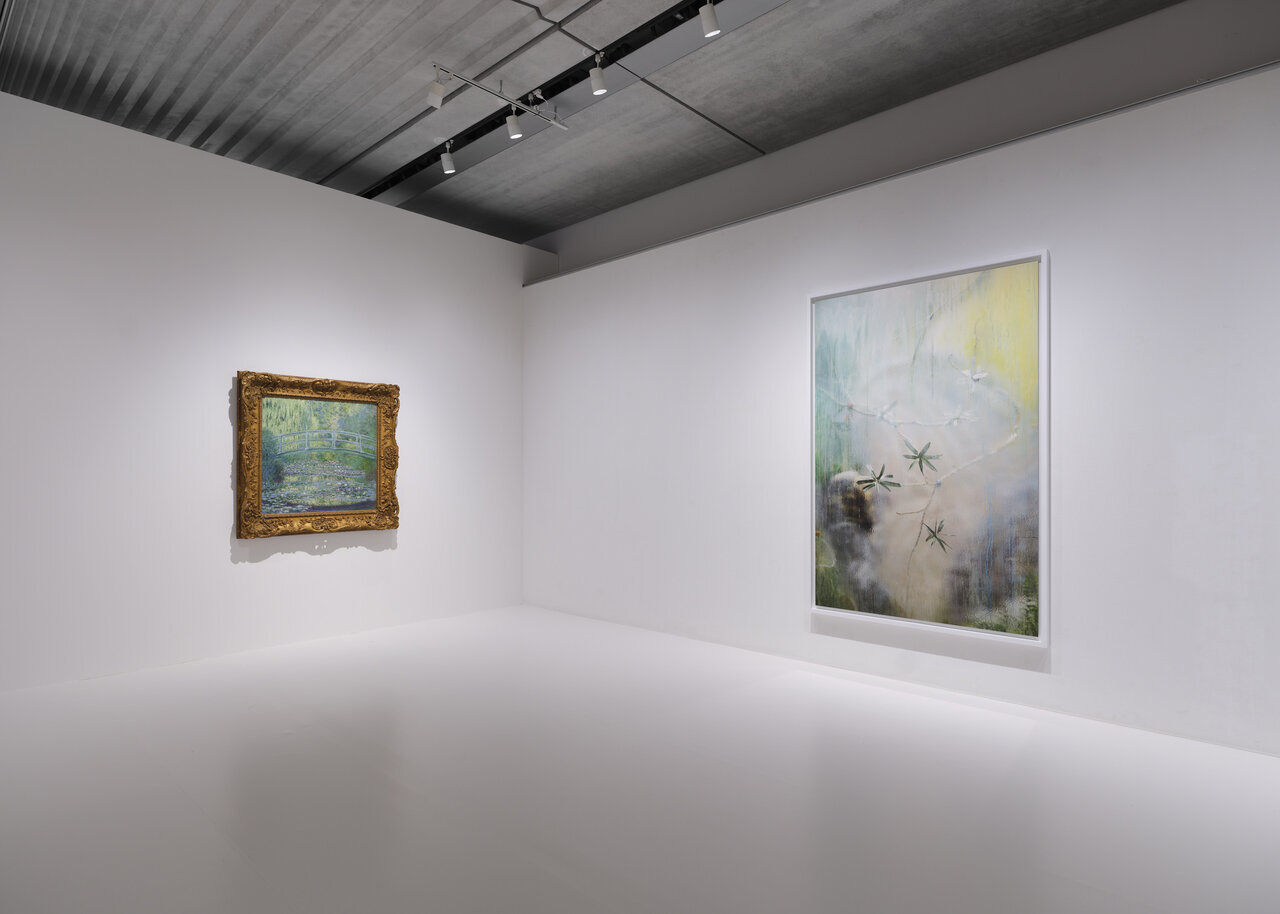
Photography: Shu Nakagawa ©Noémie Goudal Courtesy of the artist and Edel Assanti
As I moved through the exhibition room, next to Monet's paintings of bridges and water lilies, there were works from a completely different era displayed. Monet's green, framed in a golden frame, and beyond that, a single piece that spreads across the entire wall, shrouded in mist. This too is said to be a work by Noémie Goudal. Viewed from a distance, it appears that a similar haze rises from both.
When I think that a selected Monet piece is displayed alongside a work born decades later, the order of time suddenly seems to sway.
When I think that a selected Monet piece is displayed alongside a work born decades later, the order of time suddenly seems to sway.
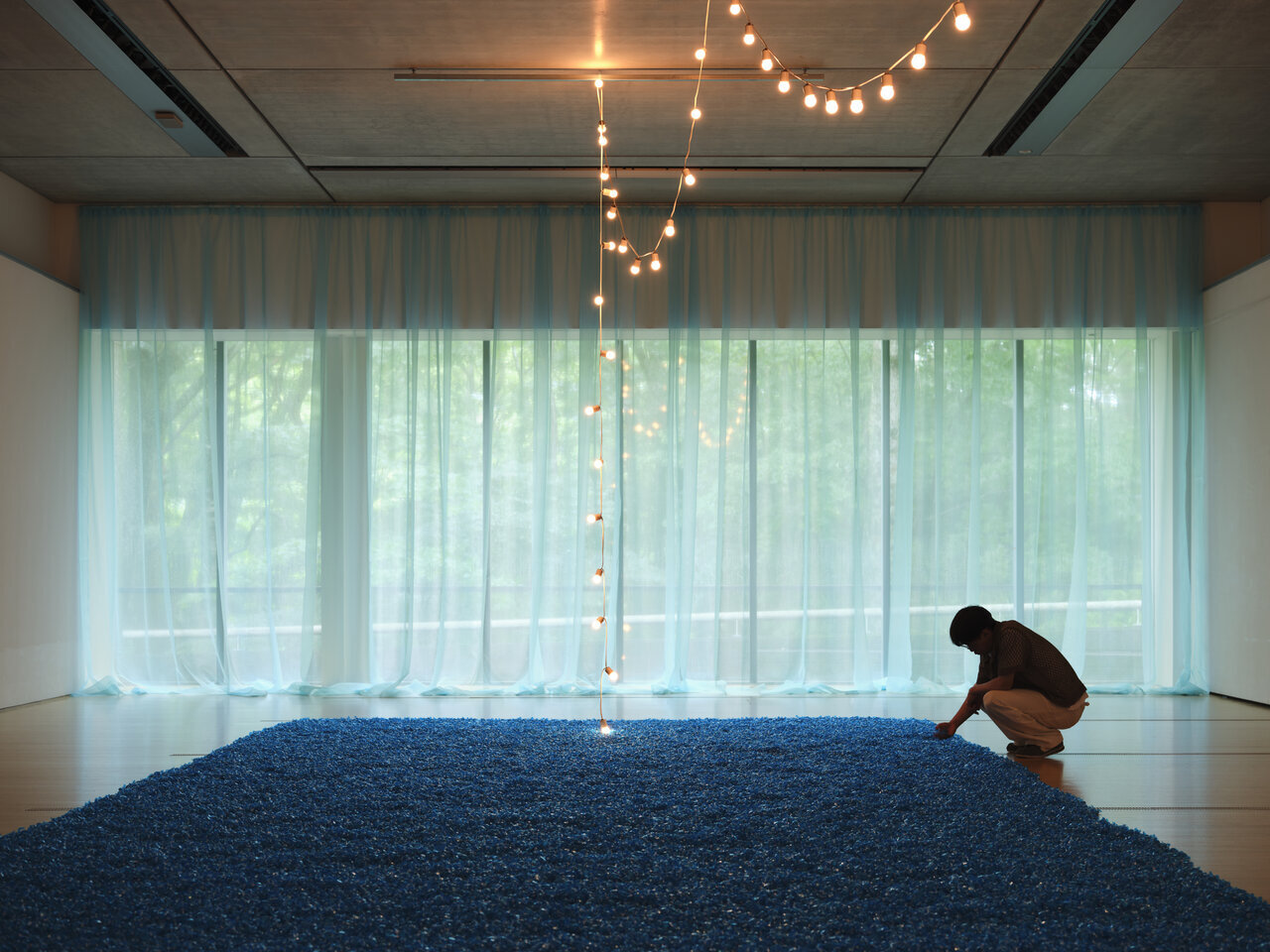
Photography: Shu Nakagawa Courtesy of Felix Gonzalez-Torres Foundation
In the back room, a single cord of bare light bulbs quietly hung from the ceiling above a floor covered with blue-wrapped candies. It felt less like an artwork and more like a room you’d stumbled into, a fragment of someone’s memory.
In this exhibition, these candies are likened to icebergs floating in the Seine River, the curtains at the window represent the freezing north wind, and the light bulb installation resembles a setting sun. Felix Gonzalez-Torres expressed the life and body of a loved one using materials like candy and light bulbs. The total weight of the candies is equal to the weight of deceased individuals, and viewers can take one home.
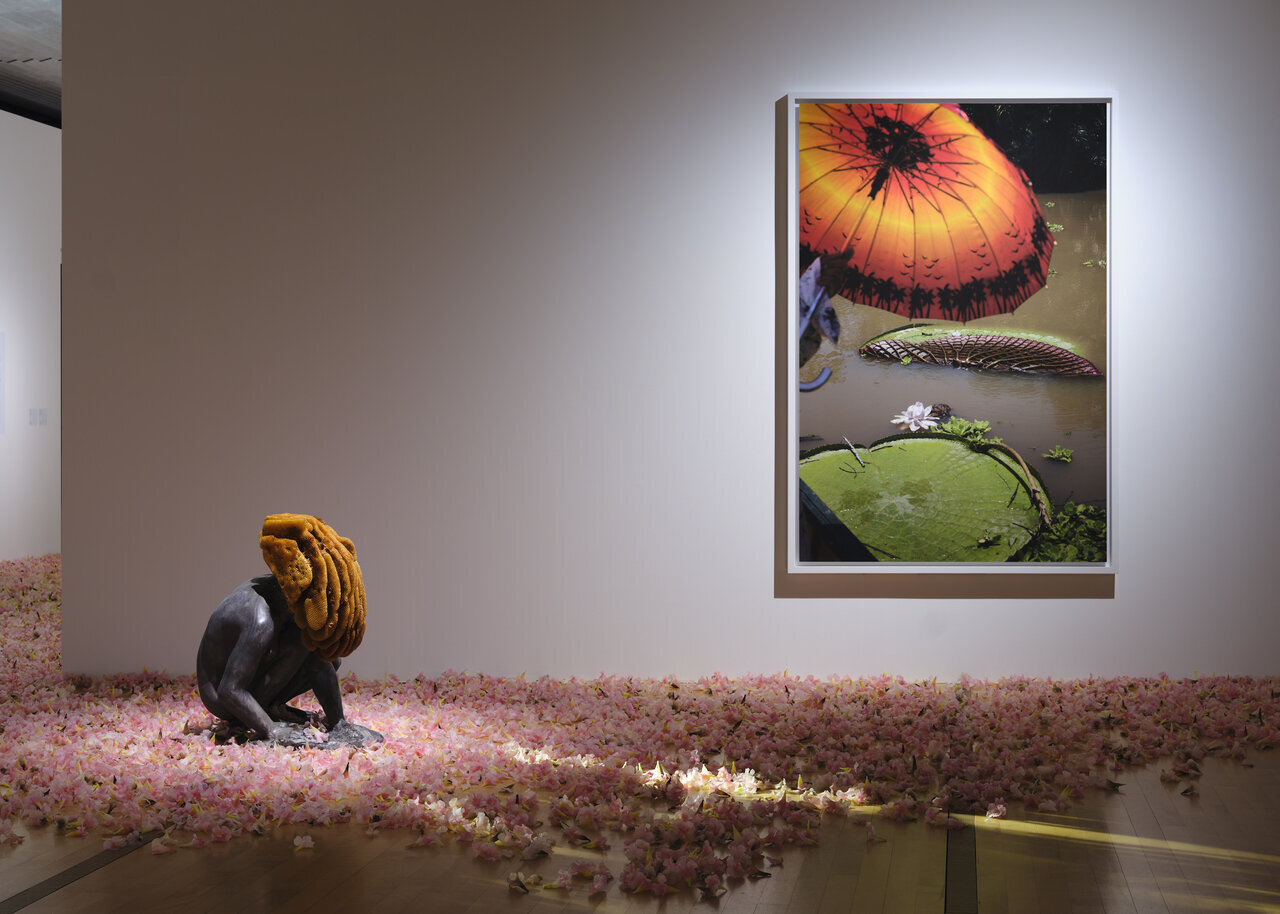
Photograph: Nakagawa Shu
Further ahead, I entered a room filled with pale pink petals scattered across the floor. It was a work titled "Grafting" by Alora & Kalsadir. On the wall, a quote from Proust about the gardens of Giverny was displayed. Among the petals, a small bronze figure with a honeycomb-like head was curled up. It was a quiet room that needed no words.
The lighting was dimmed, creating a sense that light was concentrated solely on the painting. The time spent standing in front of the painting, without a conversation partner, unexpectedly lingered on.
Carrying back the coolness gathered over two days
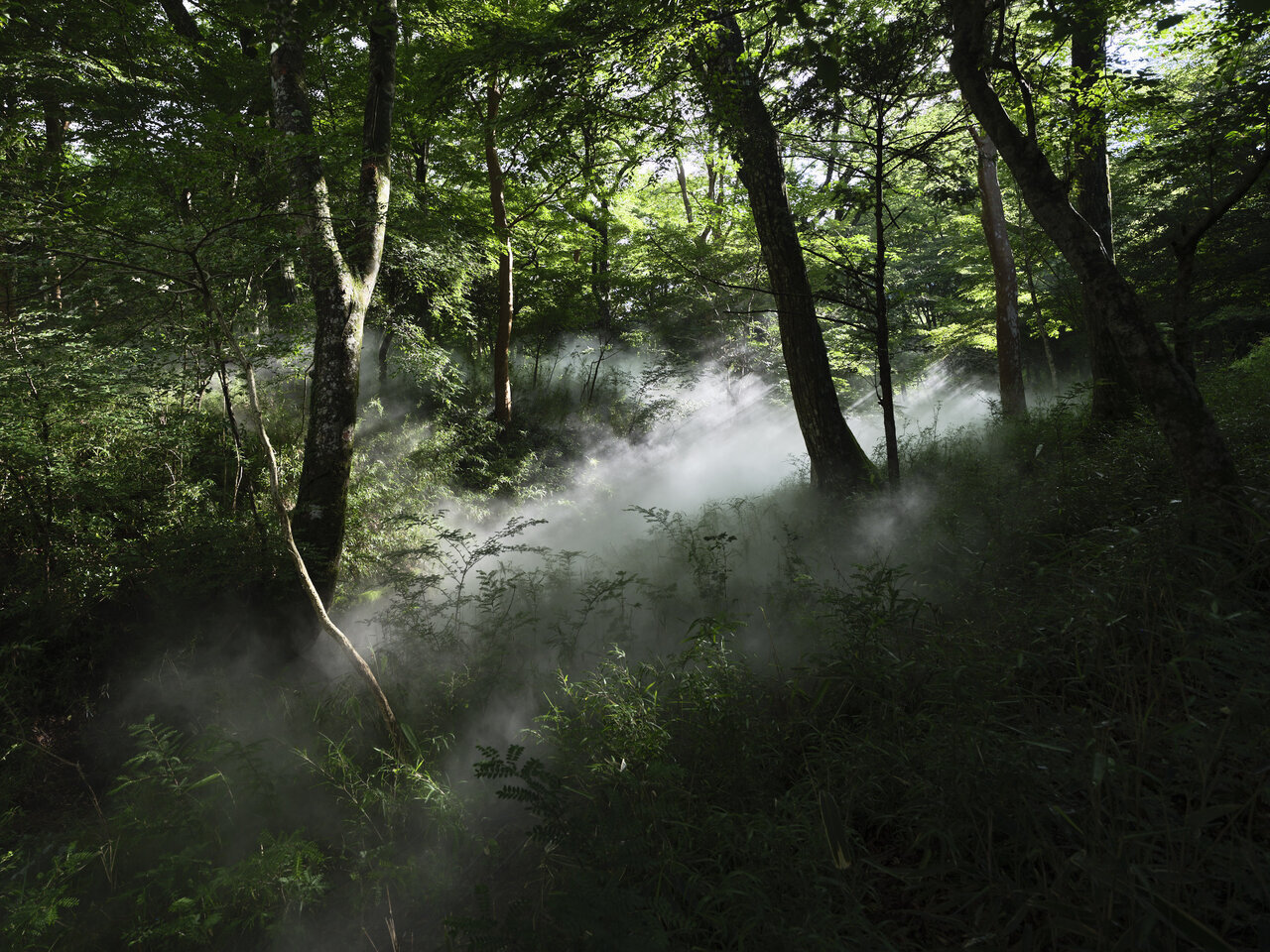
After finishing the indoor exhibition, I went outside to walk along the "Forest Path." It is a narrow path that stretches about 1 km and winds through the trees. Dappled sunlight creates patterns on the ground, moving with each step I take.
After walking for a while, I saw a white mist slowly rising from the depths of the woods. It is said to be a sculptural work by Fumiko Nakaya, made from the mist itself. Fine mist constantly ascends and drifts between the trees, disappearing as it goes. Whether it's natural mist or mist as a work of art, it’s hard to distinguish even when you get closer. This morning, the mist enveloping the "Great" character I saw while soaking in the hot water looked somewhat similar.
As I rode the bus down the slope, I took the scenery in more slowly than when I arrived. Perhaps the feeling of coolness is not a number on a thermometer, but a sensation remembered by the ears and skin. The colors of the sunset reflected on the water's surface. The sound of water slipping off the edge of the basin. The "Great" character emerging from the morning mist. The scent of the forest and the patterns of dappled sunlight.
When I return to Tokyo, the muggy heat still awaits. Even so, somewhere in my body, it felt like the coolness I had gathered over the past two days would linger for a while.
Just before passing through the Shinkansen ticket gate, I looked back once more. The mountains were already hazy, hiding the place I had just been. I carried home with me the sensations that seemed like they might spill out if put into words. Even though nothing had been added to my bag, my hands felt somehow full as I boarded the train.
Hakone・Gora Kogetsu
Location: 1300-8 Gora, Hakone Town, Ashigarashimo District, Kanagawa Prefecture
TEL: 0460-83-8860 (Accommodation reservation inquiries 10:00~18:00)
Location: 1300-8 Gora, Hakone Town, Ashigarashimo District, Kanagawa Prefecture
TEL: 0460-83-8860 (Accommodation reservation inquiries 10:00~18:00)
Polaris Art Foundation, Pola Museum of Art
Location: 1285 Kozukayama, Sengokuhara, Hakone Town, Ashigarashimo District, Kanagawa Prefecture
TEL: 0460-84-2111
Location: 1285 Kozukayama, Sengokuhara, Hakone Town, Ashigarashimo District, Kanagawa Prefecture
TEL: 0460-84-2111
Research cooperation: Hakone・Gora Kogetsu, Pola Museum of Art
- SHARE



![[Hakone Ekiden] Announcement tomorrow! Section entries and highlights for this year’s record-seeking tournament.](https://cdn.clipkit.co/tenants/1046/articles/images/000/027/604/large/8f606be3-a82e-40bf-b03a-7f90f7c2241d.jpg?1766869324)



![[Midnight Drive] I wanted to cool off a bit, so I went for an adult night stroll at the retro vending machine corner in Sagamihara.](https://cdn.clipkit.co/tenants/1046/articles/images/000/032/887/large/a1bf17cd-06d0-4ad5-8236-8fd2970728e5.jpg?1787522426)
![[Interview] Bongo Brownie ✕ VAN LIVING What is the concept of living space that can be enjoyed with simple DIY?](https://cdn.clipkit.co/tenants/1046/articles/images/000/029/348/large/1669c7fe-4dba-4cc5-b0a3-7defa56bc0c0.jpg?1774904732)
 FASHION
 OUTDOOR
 WATCH
WATCH CAR & BIKE
 SNAP
SNAP DINING
 LIFE
LIFE GADGET
 GOLF
GOLF