
![[Interview] Bongo Brownie ✕ VAN LIVING What is the concept of living space that can be enjoyed with simple DIY?](https://cdn.clipkit.co/tenants/1046/articles/images/000/029/348/large/1669c7fe-4dba-4cc5-b0a3-7defa56bc0c0.jpg?1774904732)
CAR & BIKE
2026.03.31
[Interview] Bongo Brownie ✕ VAN LIVING What is the concept of living space that can be enjoyed with simple DIY?
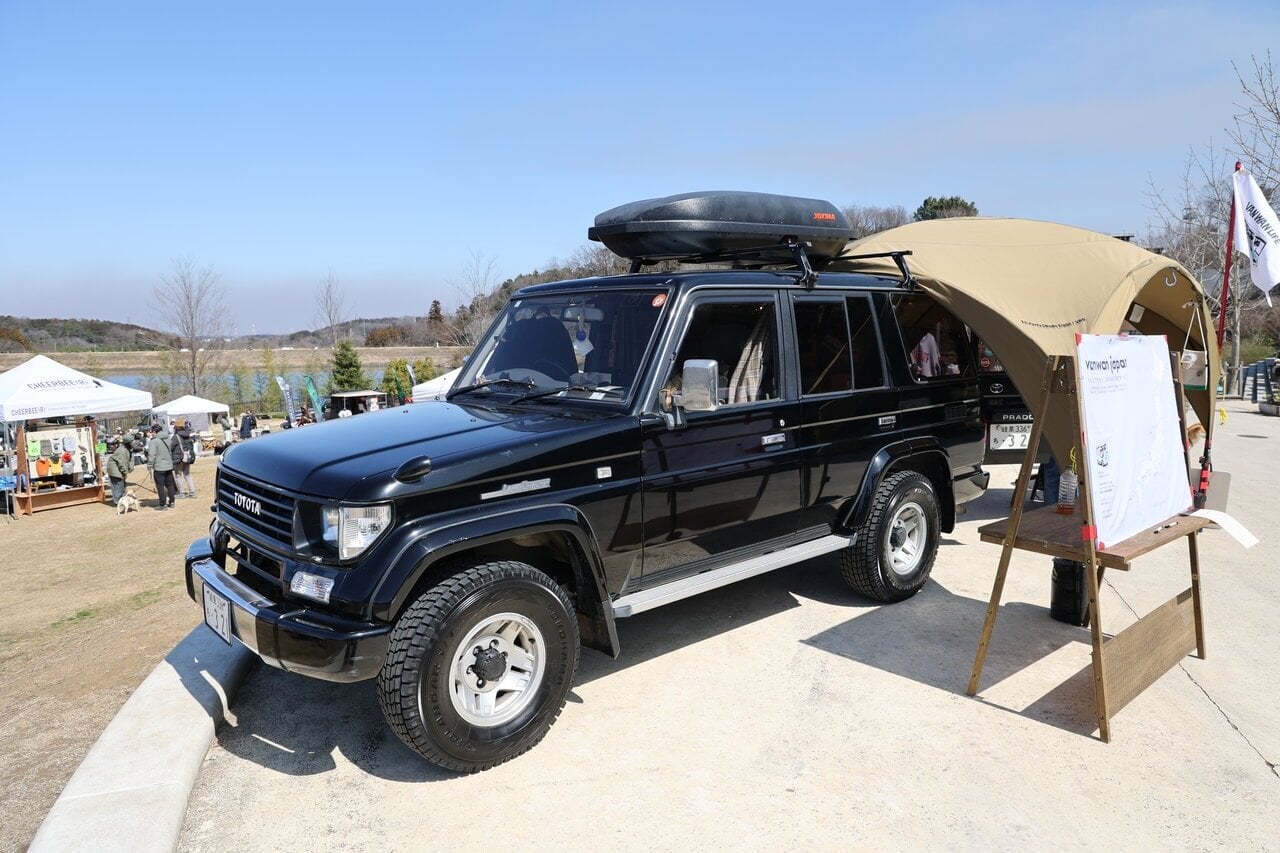
In March, a van camping event called "VAN WAN LIFE" (Van Wan Life), which can be enjoyed with dogs, was held over two days at "Metsa RV Park" in Hannō City, Saitama Prefecture. What is the idea that Ishiwatari Yoshihiro's vehicle, which participated in and exhibited at the event, is a "living room" rather than the typical bedroom found in vehicles designed for camping?
A simple Bongo Brawny that fills a creative heart

Mr. Yasuhiro Ishiwatari, also known among friends as "Karman." This nickname comes from the Volkswagen Karmann Ghia he drove in his 20s. It was given to him by a senior, and before he knew it, about 40 years have passed, and now that nickname has become well established.
*Volkswagen Karmann Ghia = A coupe produced in the 1950s to 70s.<
*Volkswagen Karmann Ghia = A coupe produced in the 1950s to 70s.<
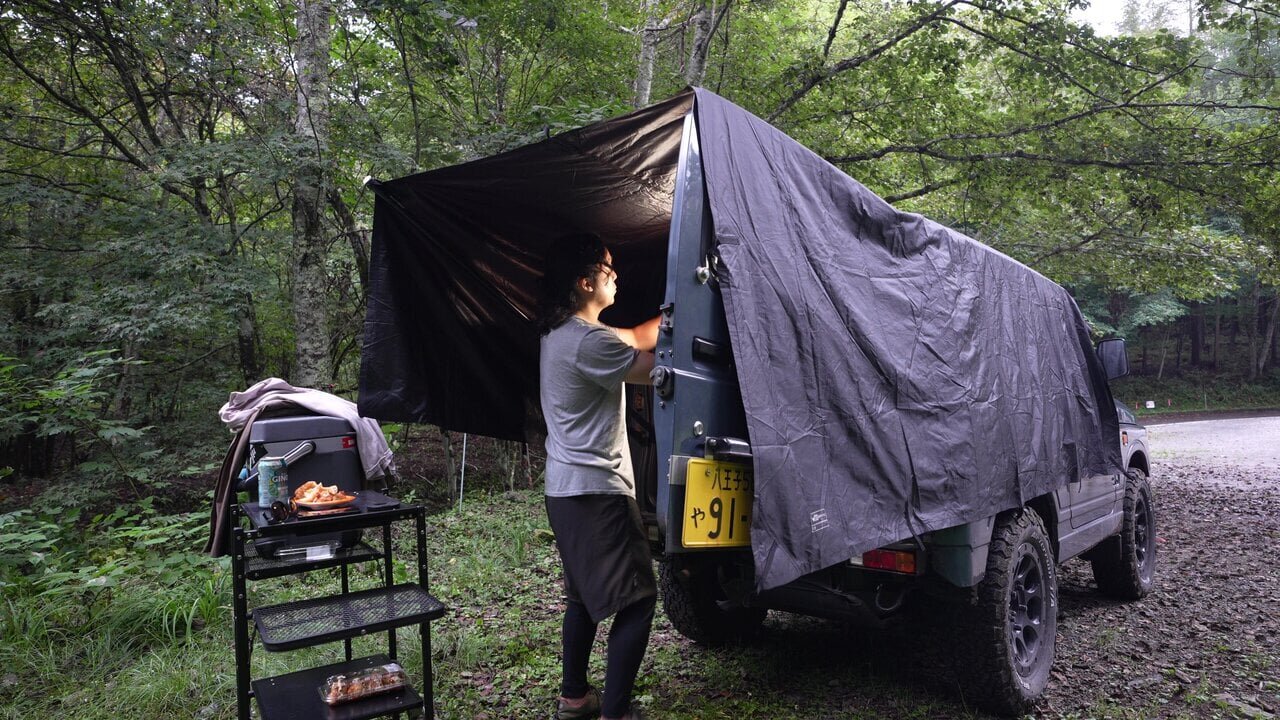
Mr. Ishiwatari's current partner is a 2007 Mazda Bongo Brawny. This car, which he started using as a second-hand vehicle, has been with him for 7 years and embodies a free concept that is not bound by the traditional idea of “camping car specifications.” First, we asked him how his beloved car came to be in its current form.
Mr. Ishiwatari: "Starting with the Karmann Ghia in my 20s, I’ve always loved cars, including driving American vans. At one point, I spent about 10 years running an apparel store in the city, during which I had to let go of my car and didn’t drive."
"Why did you end up here in this Bolognese dish?"
Mr. Ishiwata: "When I moved to Saitama Prefecture, I thought, 'I should buy a car after all.' It was also around the time when I wanted to experience something like VAN LIFE. At first, I wanted to find a Volkswagen Type 2 bus, but I was shocked by the prices (laughs). I thought it was way too expensive to acquire, and you can't really DIY modifications on a car like that."
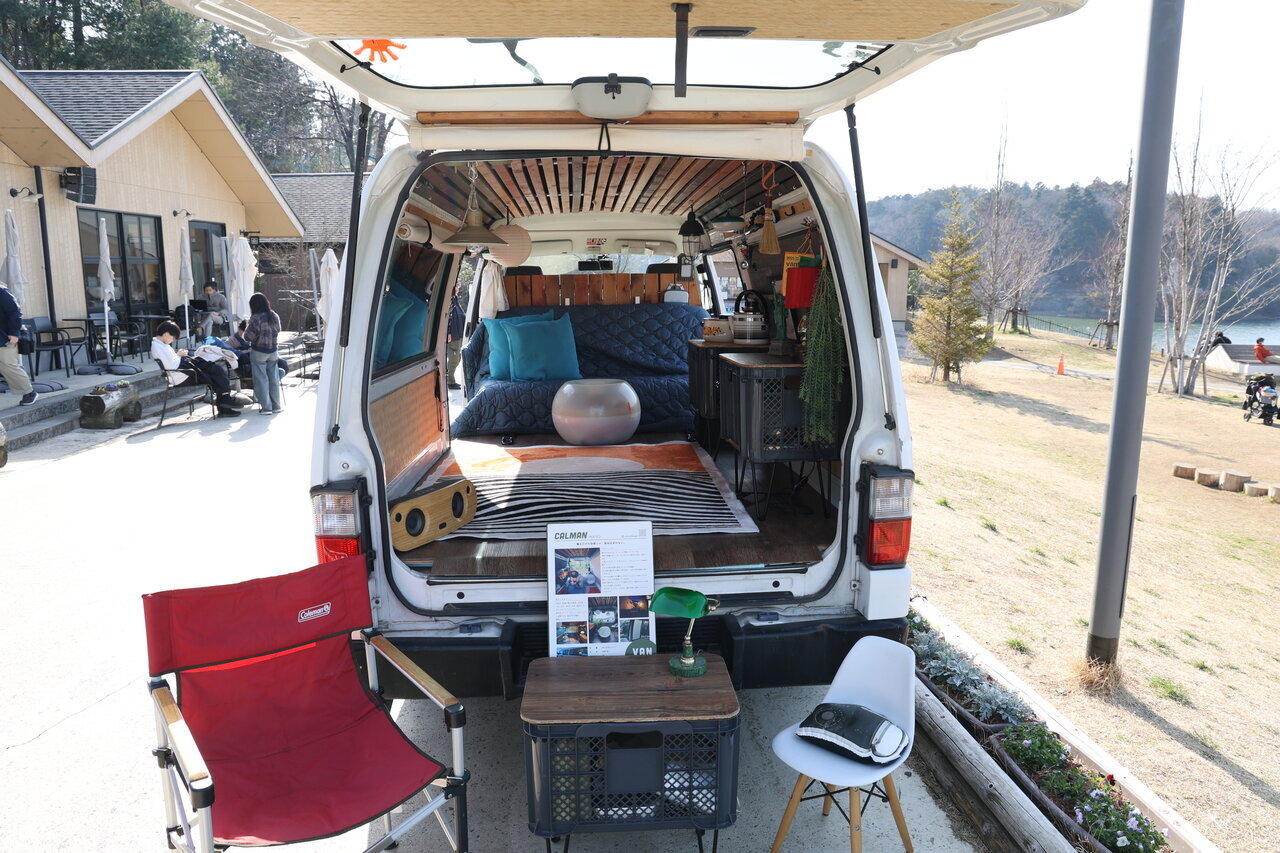
“So you focused on domestic commercial vehicles, right?”
Mr. Ishiwatari: "Yes. I was searching for something as close as possible to the shape of a Volkswagen Type 2, and I ended up finding the Bongo Brawny. I diligently searched for a used car dealership and finally found a good one in Nagoya."
"It was a store that mainly dealt with commercial vehicles, so when I said I was going to use it for personal purposes, they were surprised (laughs). However, the owner of the store was incredibly nice; after inquiring by phone, he sent me detailed videos and photos. When I expressed my preference for a diesel vehicle, he recommended this one as the best, and I bought it without seeing the actual car even once."
"By the way, how much did you buy it for?"
Mr. Ishiwata: "At that time, the starting price was around 700,000 yen."
― That price is attractive, isn't it? I heard you bought it in Nagoya and drove it back home just like that; what kind of impression did you have of the car?
Mr. Ishiwata: "When I first drove it, I thought the noise was 'loud!' (laughs). But since I originally drove a Karmann Ghia, I didn't dislike the engine sound. With the engine under the rear, it was loud and hot. I thought that was interesting and made it feel like a real car."
<
<
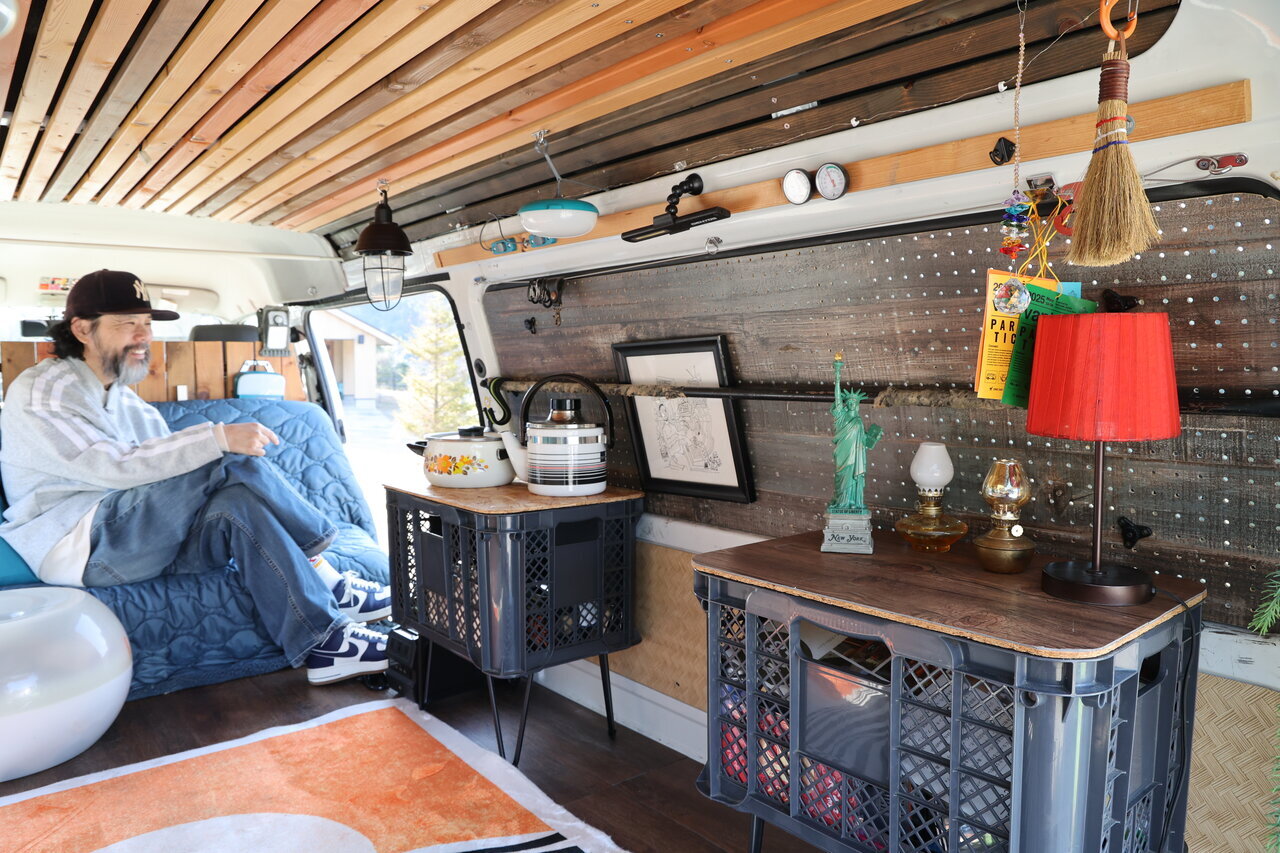
Started with making holes, a DIY beginner's van life.
― Did you start customizing this Bongo Bloorini right after buying it, and did it go well from the beginning?
Ishiwatari: "Until then, I had never done any DIY with a car. I started with the ceiling customization, but I couldn't make a hole in the body’s steel plate. At that time, all I had was a toy-like electric drill from IKEA."
"I was already thinking, 'How many years will this take to complete?' and started to wonder, 'Could it be the tools that are the problem?' Once I bought a proper drill, it made holes easily (laughs). That was really the level I was starting from."<
"I was already thinking, 'How many years will this take to complete?' and started to wonder, 'Could it be the tools that are the problem?' Once I bought a proper drill, it made holes easily (laughs). That was really the level I was starting from."<
― What kind of interior did you have at that time?
Ishiwatari: "At first, I followed the theory and made a foldable bed, created a water area, and built shelves. However, when I went to events, people would praise me by saying, 'That’s amazing,' while also saying, 'I could never do that.'"<
― It seems that the harder you tried, the less realistic it appeared.
Mr. Ishiwatari: "Yes, I felt like my car was raising the bar for VAN LIFE. So, I thought I should lower the threshold, and temporarily removed everything I had created."
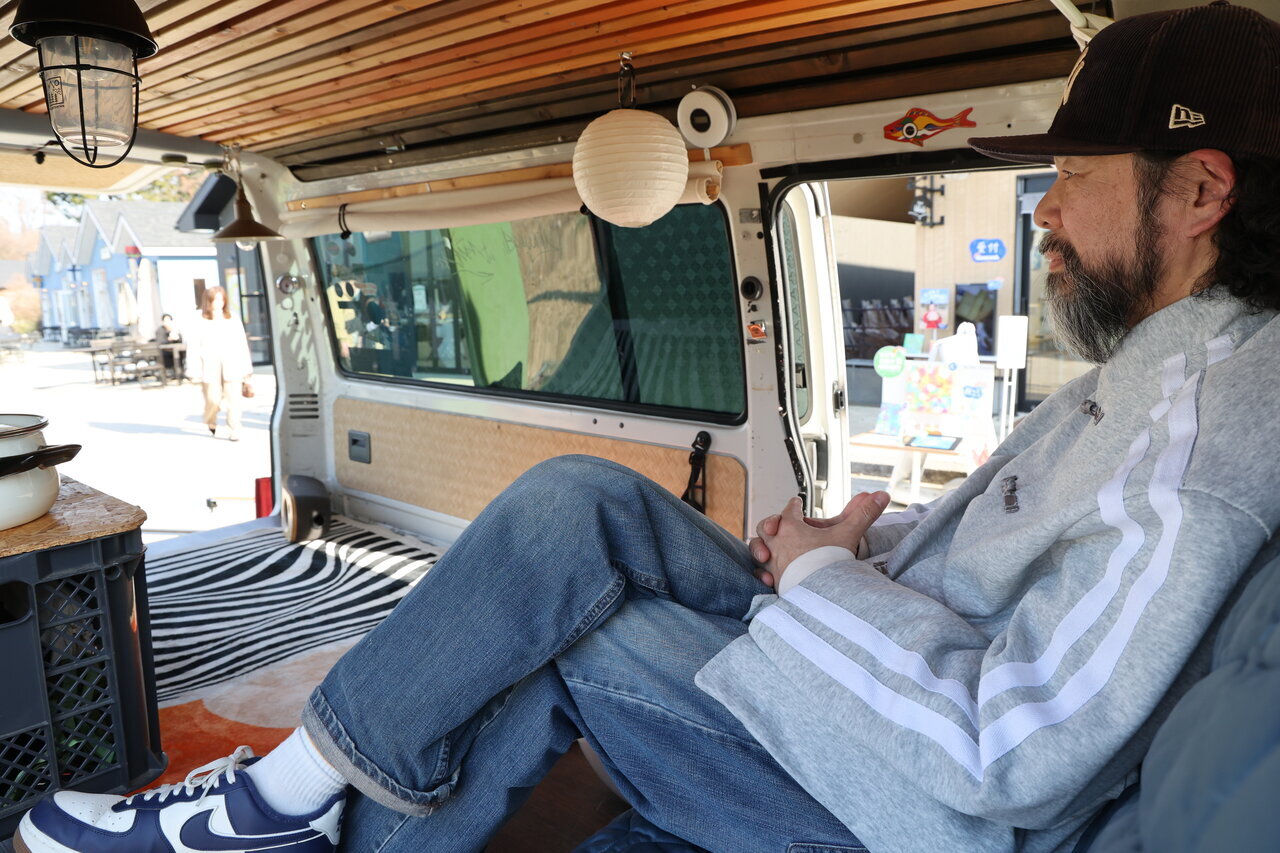
The trigger for wanting to create a "living room" instead of a bedroom
At this event, Mr. Ishiwatari's Bongo Brody proposed a way to enjoy "VAN LIVING." Instead of a comfortable "sleeping" bedroom, the idea was to make it a relaxing living room inside the vehicle. Let's ask Mr. Ishiwatari about VAN LIVING.
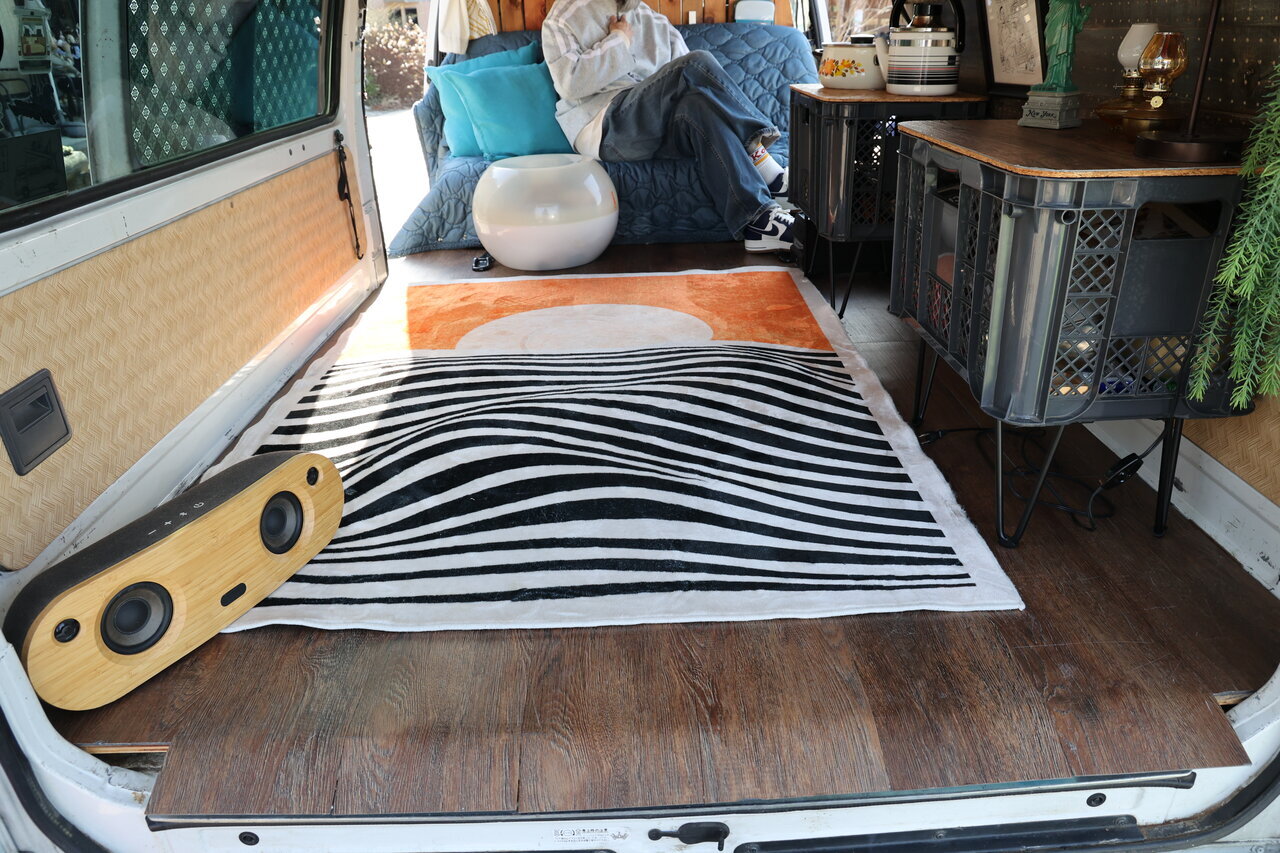
― After you removed the bedroom that you worked hard to create, what did you do?
Mr. Ishiwatari: "I started putting in a camping cot and a sofa from my house, and began to communicate that you can enjoy van life without necessarily doing a lot of DIY."
― Did the style of VAN LIVING emerge around that time?
Ishiwatari-san: "That's right. At events, I often say, 'Please come inside,' but it feels kind of strange if that's the bedroom. I work as an office worker during weekdays, and I don't live in my car, and I only sleep for a few hours. It's a waste to use the room only as a bedroom, and it’s clear that if I invite people (customers), it’s better not to use the bedroom. So, I decided that 'let’s make it a living room.'" <
― It's a simple yet wonderful idea, this VAN LIVING concept.
Ishiwatari-san: "I started saying it on my own (laughs). The items in this living room are just things anyone can make, like turning harvest baskets used by farmers into tables with lids and legs. I want to keep the layout of the car flexible like that." <
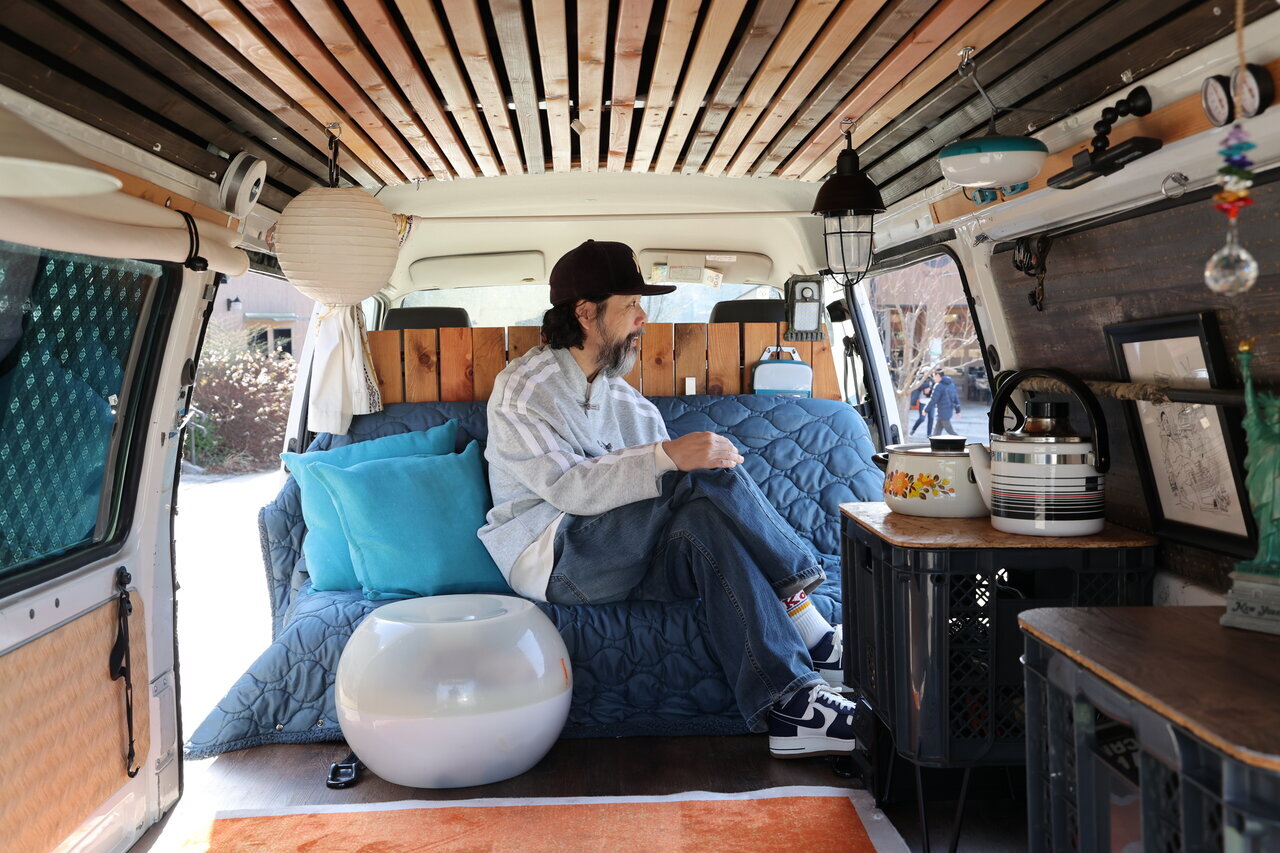
― The flat floor also adds to the living room feel, right?
Mr. Ishiwatari: "I chose the model with small-diameter double tires for this Bongo Brony. There are no protrusions from the tire houses, so the floor is flat from the start. If you lay down a carpet, the furniture surprisingly doesn't move much while driving, and as long as you don't slam on the brakes, you can maintain the living room's condition. Since it’s originally a commercial vehicle, it doesn’t accelerate much either (laughs)."
"Have you finished all the DIY projects for now?"
Mr. Ishiwatari: "After trying various things from the initial car camping configuration, I've taken everything off for now, and I'm not really thinking about doing something new at the moment. However, since I get bored easily, I can always change it again if I get tired of it."
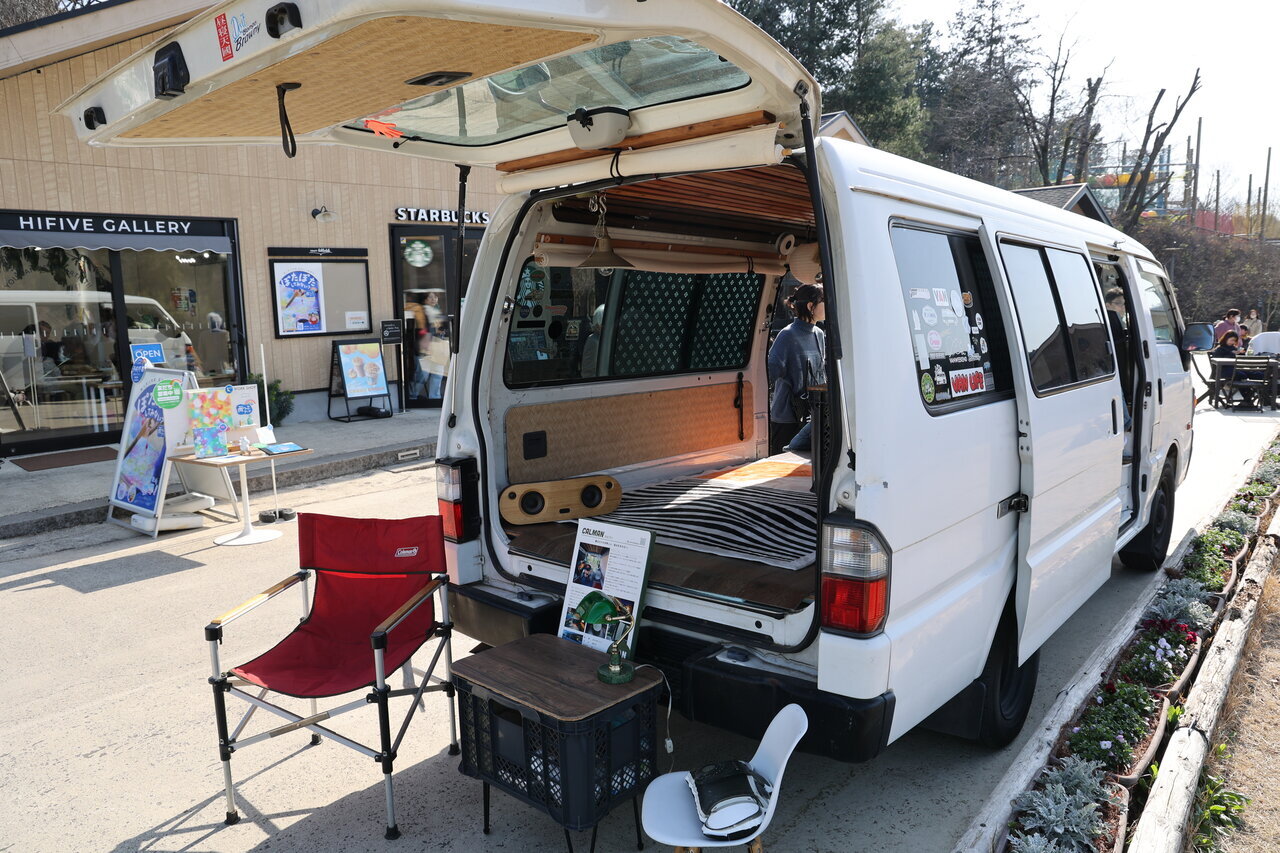
VAN LIFE that allows you to go anywhere and enjoy any situation.
At this VAN WAN LIFE event, along with the exhibition of Bongo Bronnie, Mr. Ishiwatari also held a workshop under the shop name "Makimodoshi." Participants were able to create keychains and card cases using cassette tapes (imitation), which some generations may find nostalgic.
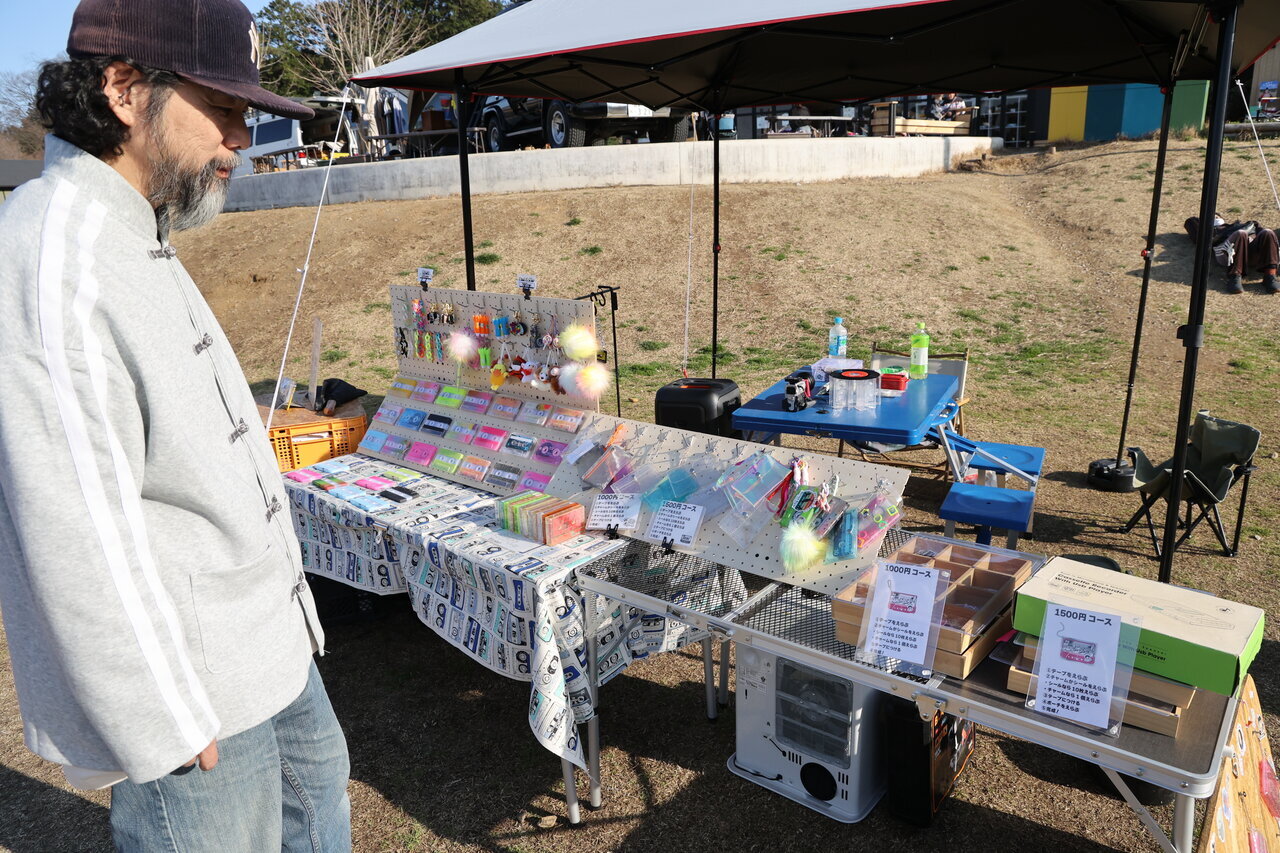
Ishiwata-san: "I've always loved music and I'm from a generation that grew up with analog records and cassette tapes. The shape of a cassette tape is cute, isn't it? It started with the thought of how I could use it for something, and that's how this workshop style came about."
― It seems the Bongo Broonie will be helpful for carrying items to set up the workshop.
Ishiwata-san: "You can pack a lot of stuff in it, and it's convenient to take anywhere."
― How does it feel to drive long distances?
Ishiwatari-san: "The farthest I've gone is Saga Prefecture in Kyushu. I think a cruising speed of 80 kilometers on the highway is best; at that speed, it's not too noisy, and since I’m the type that likes to drive leisurely, it’s just right for me."
― "You have a car with over 160,000 kilometers on it, but haven’t you experienced any engine or other car troubles?"
Ishiwatari-san: "No, I haven't. When I went to Kyushu, there was heavy rain and the Kanmon Straits were blocked, which was quite tough, but with this car, I can sleep anywhere. It's not really a trouble, but before sleeping, when I filled up with light oil at a service area, it seems I forgot the fuel cap at the station. I thought it smelled like light oil for a long time, and it turned out I was driving without the cap on."
― "You sound just like an American (laughs). It seems that Japanese commercial vehicles are really sturdy."
Ishiwatari-san: "However, since last year, the motor that blows the air for the air conditioner has broken. It seems they no longer produce it and there are no parts available, so it can't be easily fixed. I'm planning to somehow get it repaired by this summer."
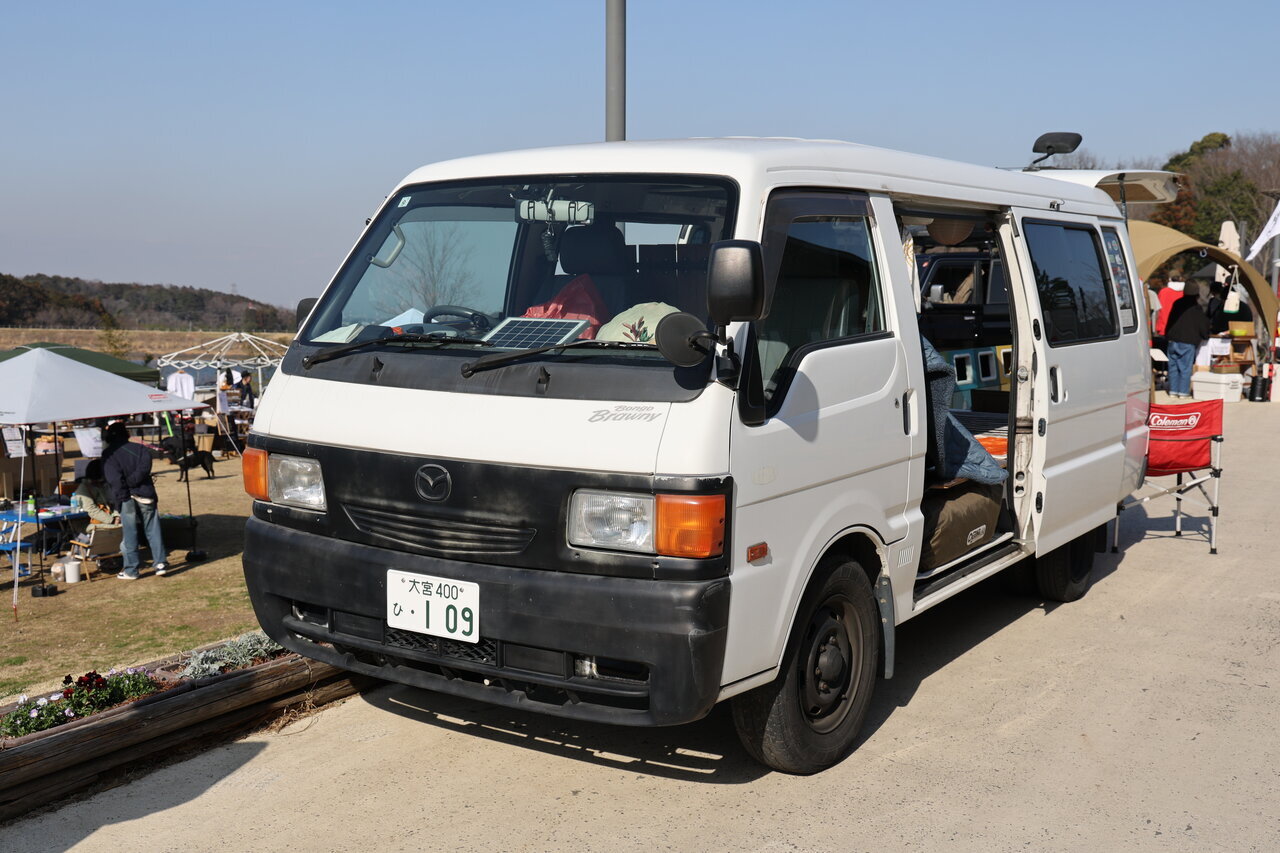
Ishiwatari's VAN LIFE, which has no sense of pressure at all. While traveling across Japan with "VAN LIVING," this comfortable space seems likely to gradually change its appearance to match Ishiwatari's mood in the future.
Photography / Masashi Kakino
- SHARE







 FASHION
 OUTDOOR
 WATCH
WATCH CAR & BIKE
 SNAP
SNAP DINING
 LIFE
LIFE GADGET
 GOLF
GOLF