
DINING
2026.10.22
In the residential area of Yokohama, I enjoyed traditional ramen at "Chinese Restaurant Ichiban," which appears in the neighborhood.
After walking down the slope, I savored a gentle soy sauce ramen at a street Chinese restaurant with yellow walls. A simple flavor loved by locals for over 50 years is here!
Every time I passed by in the car, I was curious about the yellow wall of "Chūka Hanten Ichi-Ban"
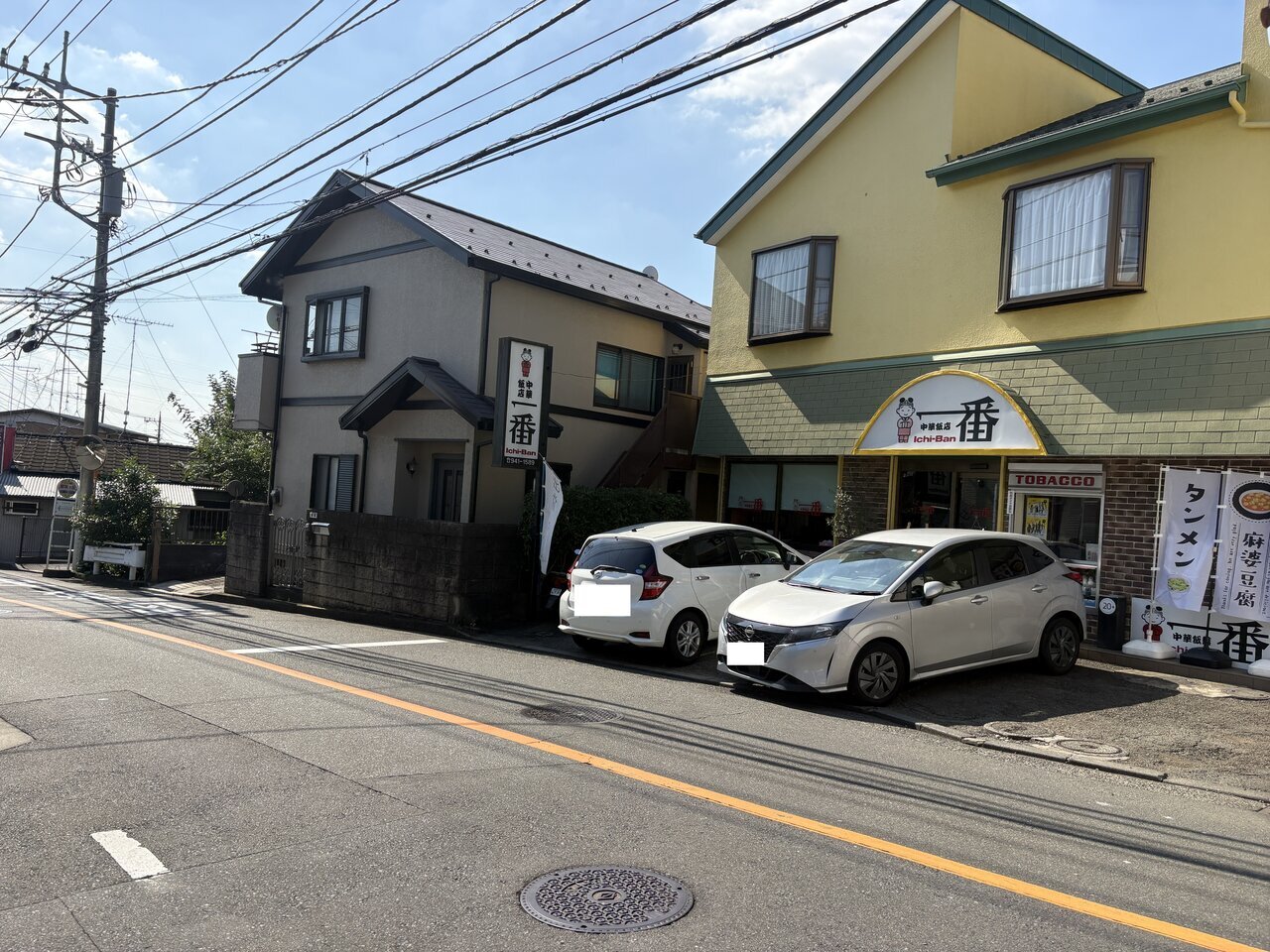
This neighborhood Chinese restaurant is located in the residential area of Kawawa-cho, Yokohama City, Kanagawa Prefecture. "Chūka Hanten Ichi-Ban" always caught my attention with its green roof and yellow wall whenever I drove by in front of the store. Many locals, who mentioned that they had been coming here since childhood, wrote in reviews that on Sundays, customers would visit one after another by car.
It was a place I had never entered until now, but I decided to take a 30-minute walk from home to visit for the first time. My target was the classic ramen. I headed there with high expectations for the taste of a restaurant frequented by locals for a long time.
It was a place I had never entered until now, but I decided to take a 30-minute walk from home to visit for the first time. My target was the classic ramen. I headed there with high expectations for the taste of a restaurant frequented by locals for a long time.
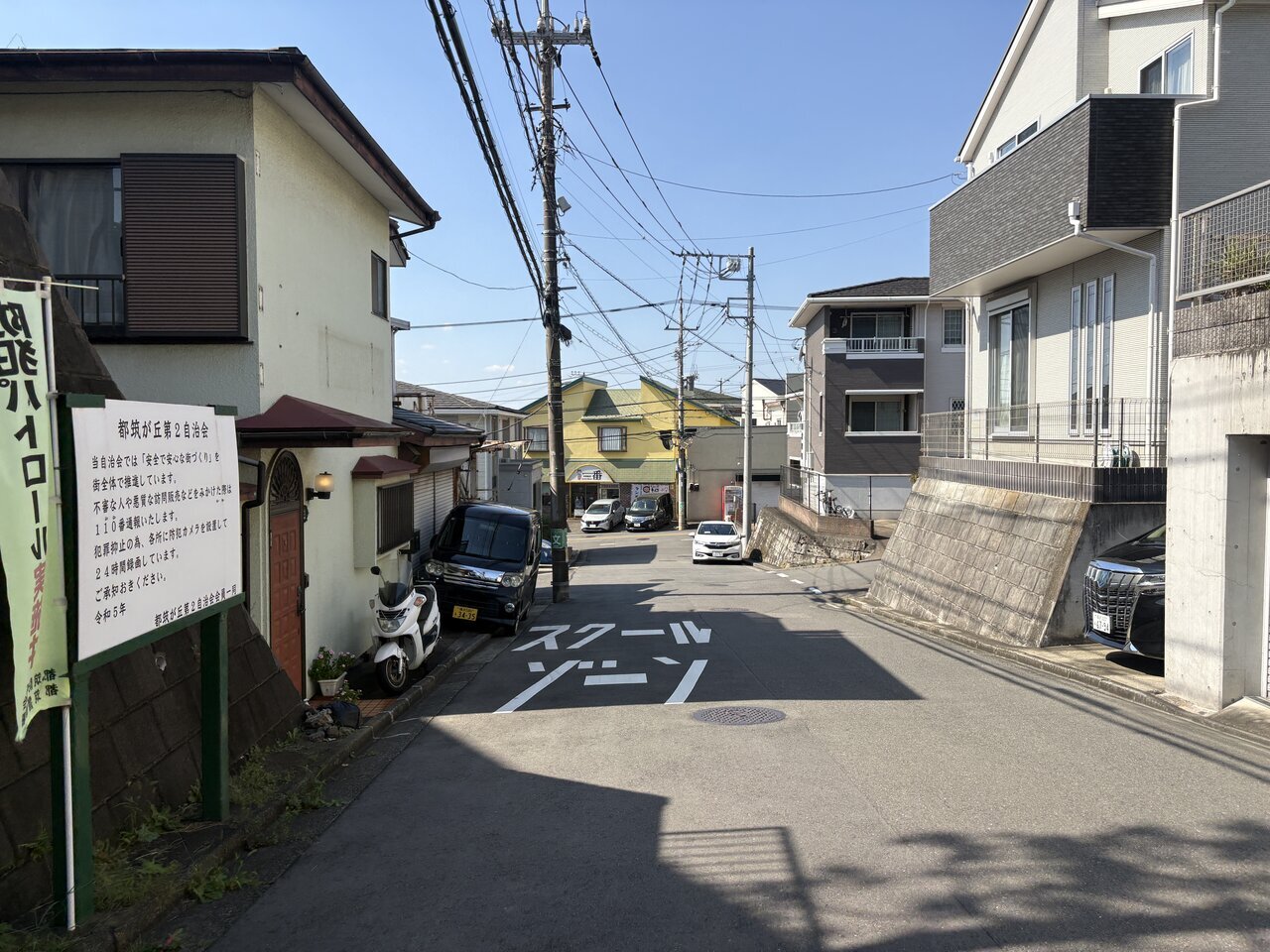
As I walked, I found it at the bottom of a slope in the residential area. Since it's a residential neighborhood, houses lined both sides, and from the top of the slope, I could see the distant cityscape. Just before reaching the bottom of the slope, there was a large sign that read "School Zone."
I could see the green roof and yellow wall across the road, and I couldn't help but say, "That's it." The joy of finally reaching the building I had always passed by made my steps light naturally.
I could see the green roof and yellow wall across the road, and I couldn't help but say, "That's it." The joy of finally reaching the building I had always passed by made my steps light naturally.
Standing in front of the store for the first time, there was a tobacco shop at the entrance
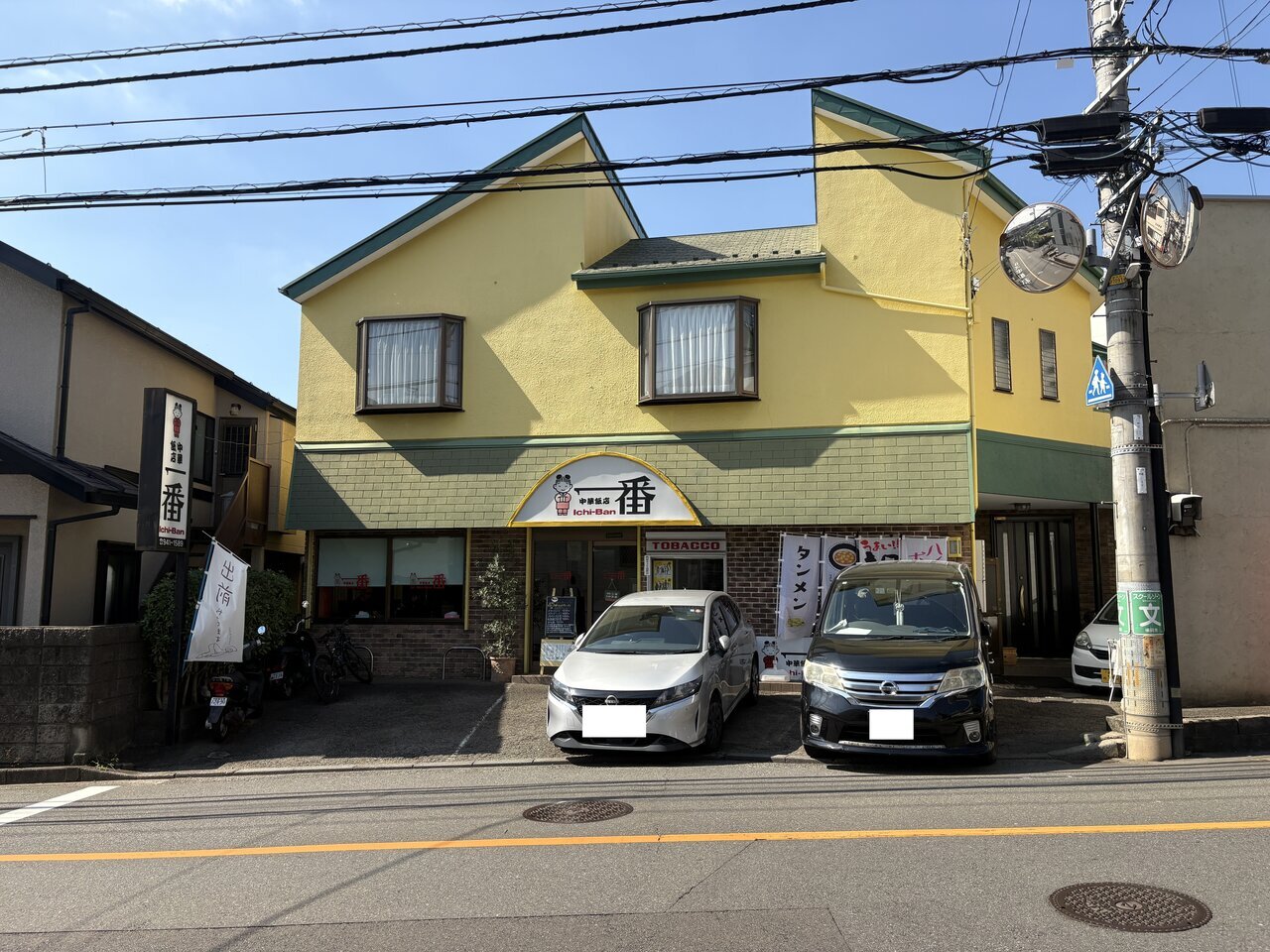
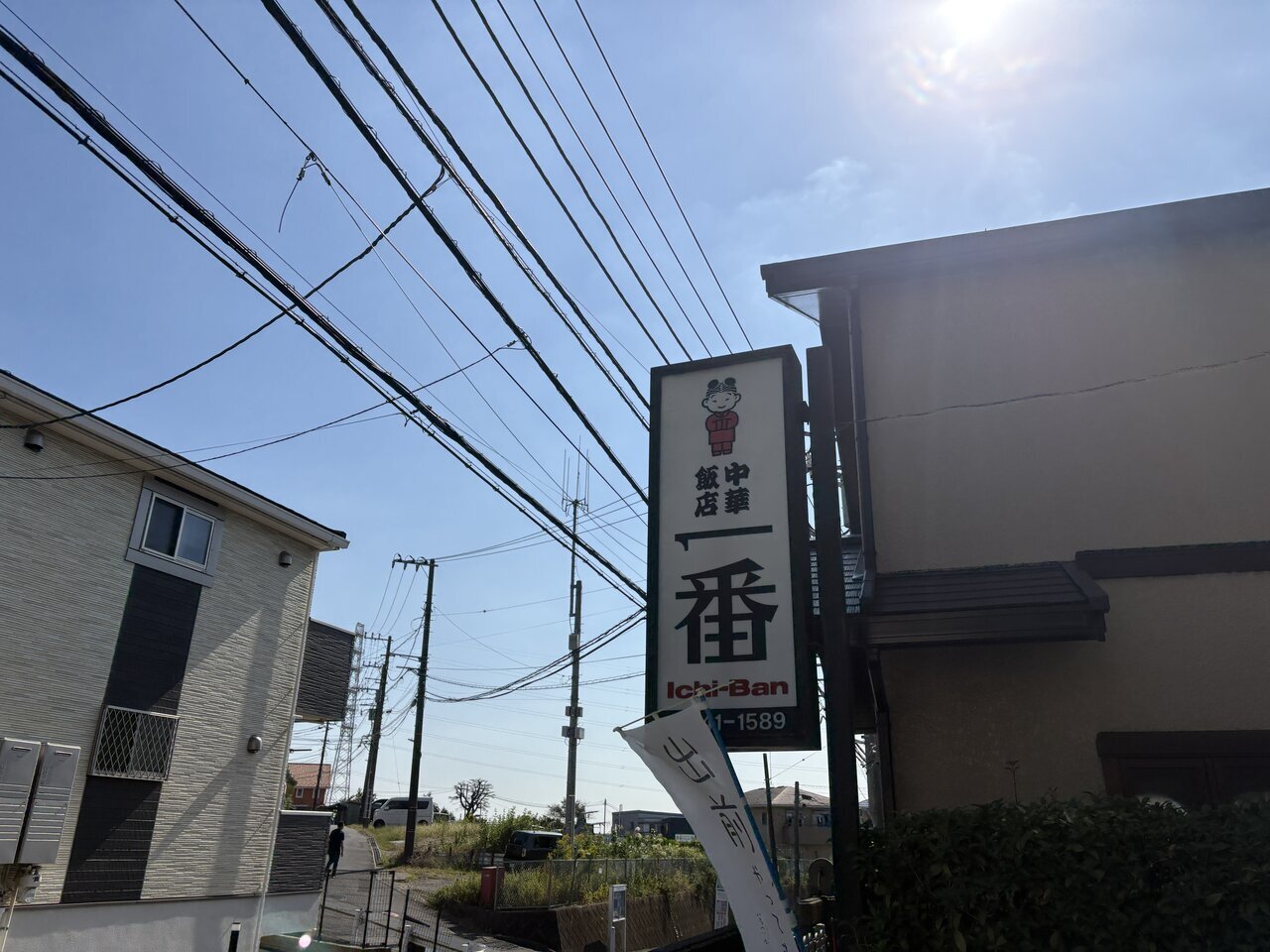
As I approached the store again, it was a two-story building with a green roof and yellow wall, and the sign featured a character in red clothing along with the words "Chūka Hanten Ichi-Ban."
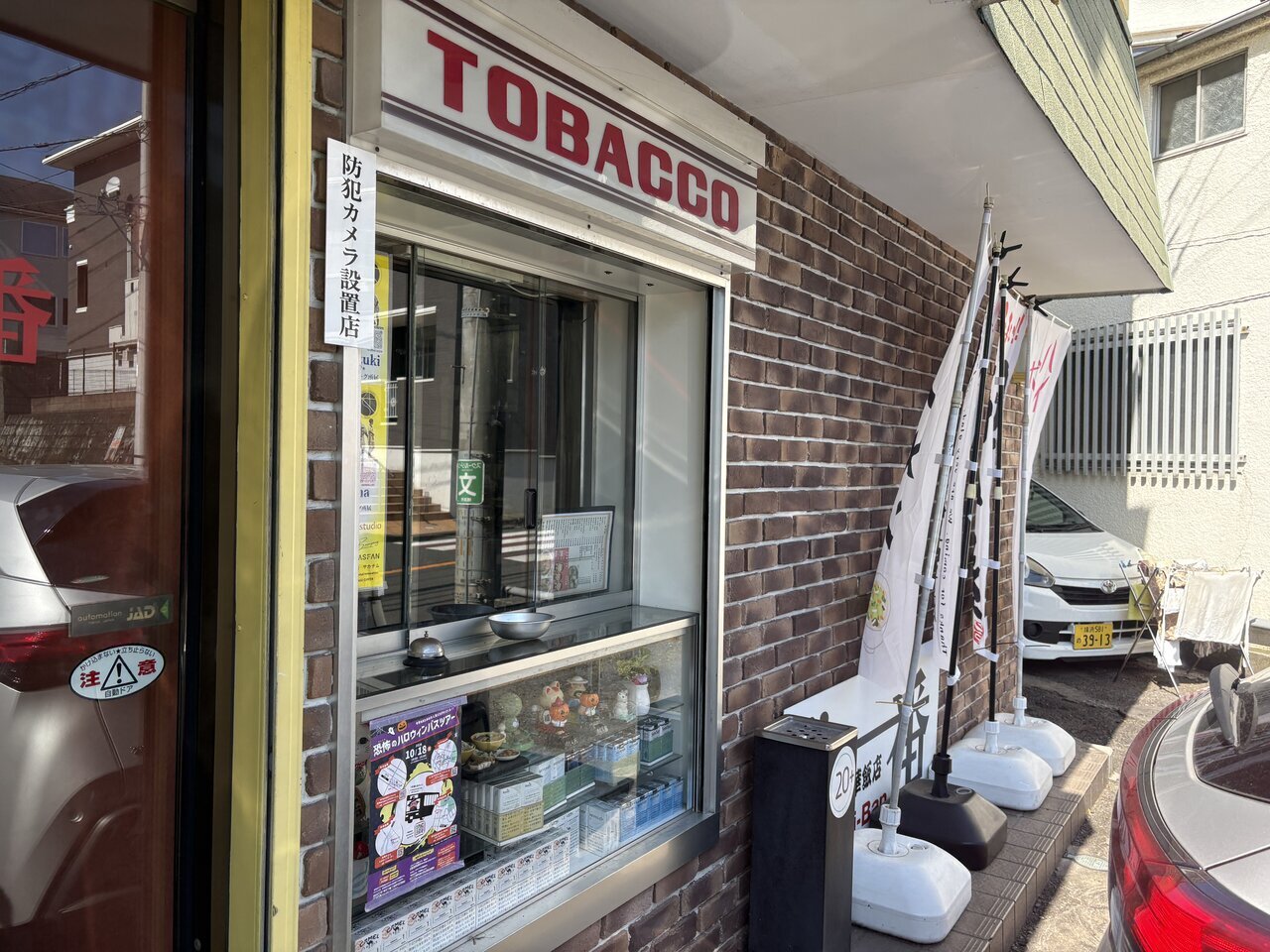
And next to the entrance, there is a tobacco shop with "TOBACCO" written in red letters. It has a traditional small window, with tobacco lined up in a glass case behind the window. There are small Halloween decorations like pumpkins and ghosts, and next to the window, there is a stand ashtray, making it easy to imagine locals taking a smoke in front of the shop.
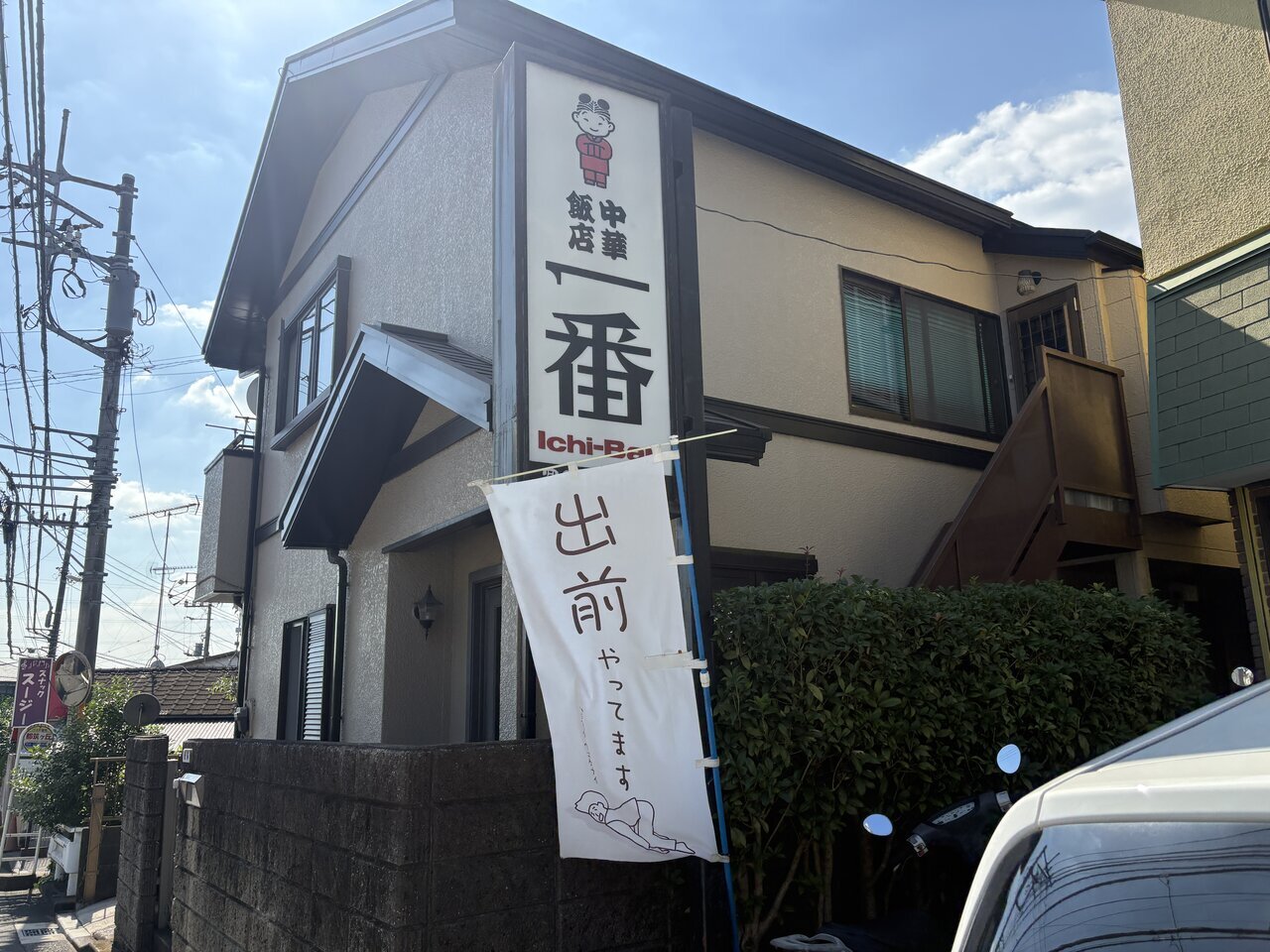
In front of the shop, there is parking space for about three cars. On this day, two cars were parked there. A flag that says "We deliver" was also standing, giving the impression that this shop is rooted in local life.
The menu seems to be well-stocked with set meals.
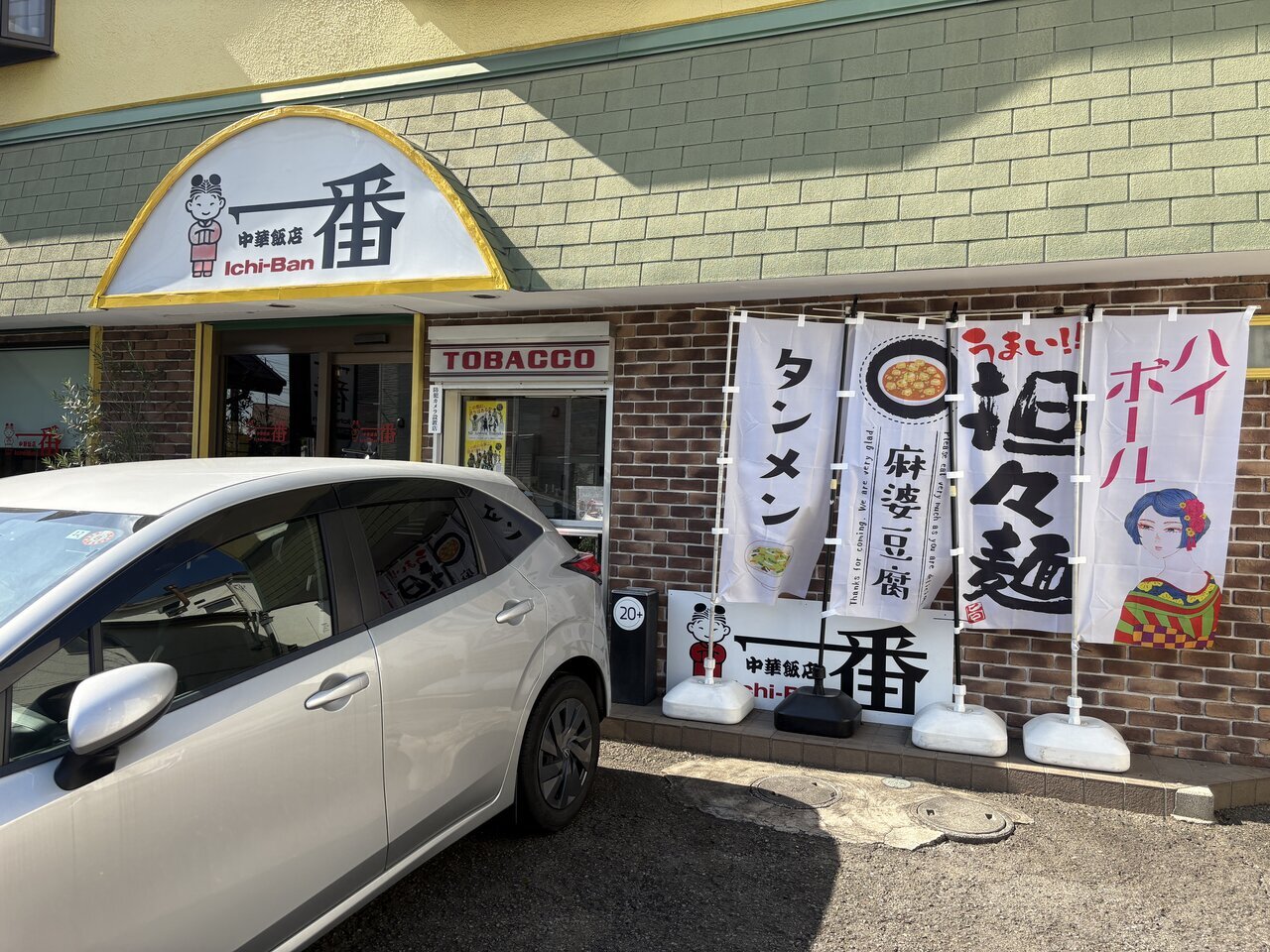
Four flags read "Tantanmen," "Mapo Tofu," "Delicious!! Dan Dan Noodles," and "Highball." Among the banners for Chinese cuisine, there was a highball banner decorated with an illustration of a woman with blue hair, which caught my eye. It seems like there might be people enjoying Chinese drinks in the area.
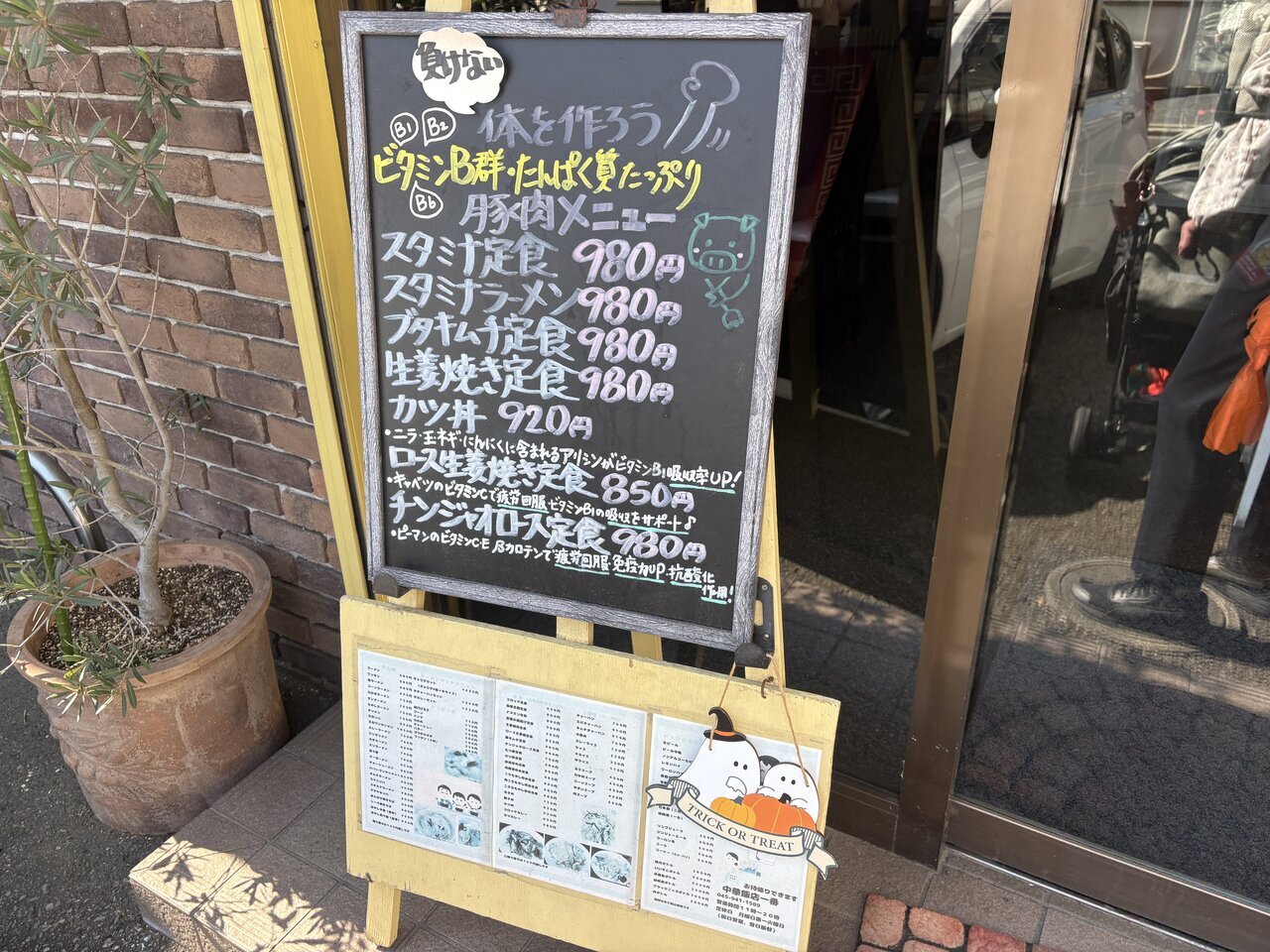
On the blackboard next to the entrance, there was a heading "Let's build our bodies" along with a list of pork menus. There were stamina set meals, stamina ramen, pork kimchi set meal, ginger pork set meal, and so on. Handwritten descriptions of the ingredients used, like chives, garlic, and cabbage, were also carefully added.
Halloween ghost decorations were hanging down, providing a handmade warmth that suits the season. It seems takeout is also available.
Halloween ghost decorations were hanging down, providing a handmade warmth that suits the season. It seems takeout is also available.
During lunchtime on a weekday, the inside of the restaurant was lively with groups occupying the tatami and table seats.
When I opened the door at exactly 12:30, the three tatami tables were filled with groups, possibly on their work lunch breaks. Out of the six tables, two had guests already seated, making it a busy time. It seemed like a family-run establishment, with women handling customer service and men in the kitchen.
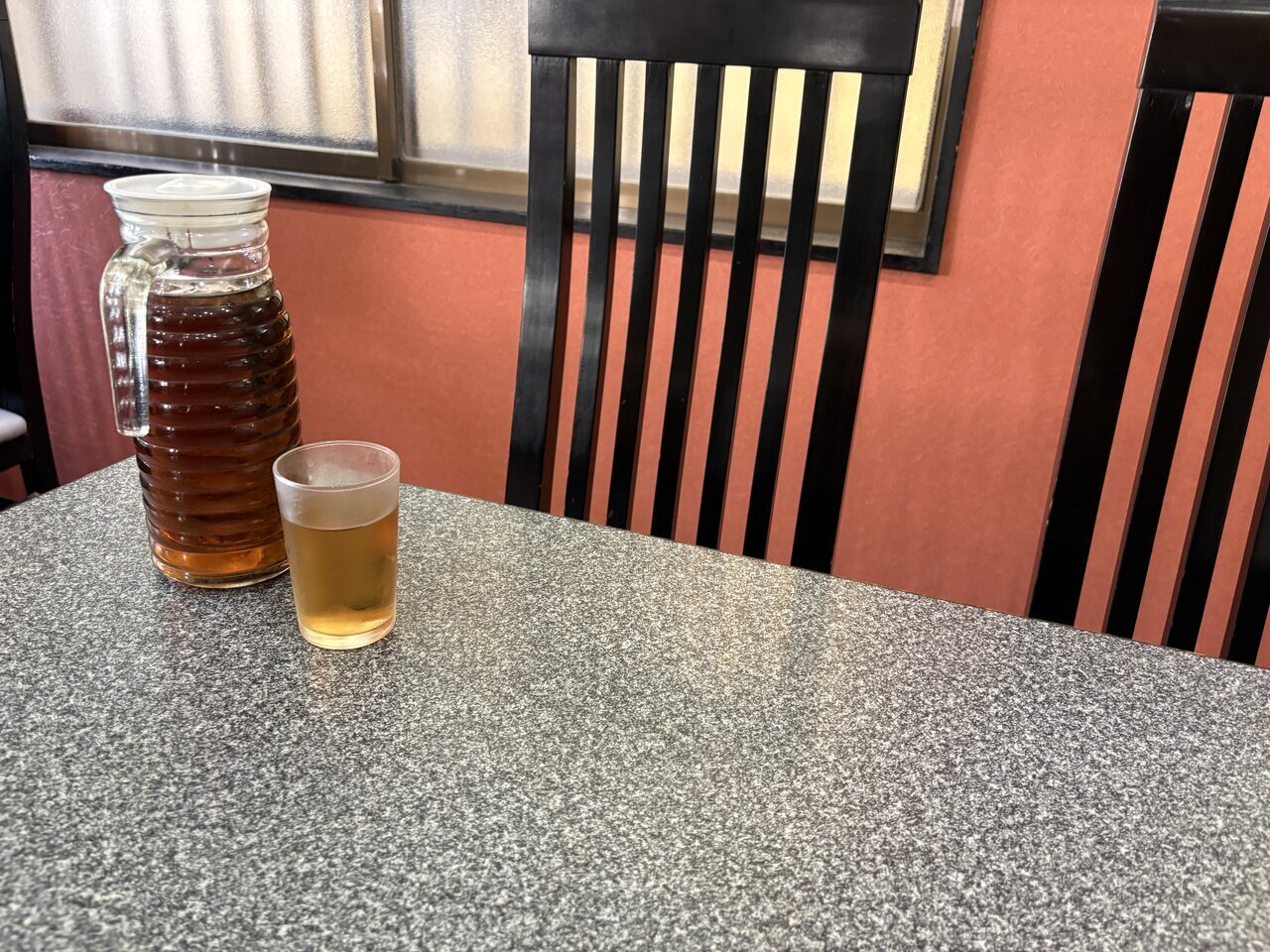
Once I sat at an available table, the staff brought me a glass pitcher filled with cold tea and a cup. After pouring the cold tea into the glass and taking a moment to relax, I quickly ordered ramen.
The walls were a reddish-orange typical of local Chinese eateries. There was a bookshelf with newspapers and manga placed on it. Whether waiting for the food to arrive or while eating, I felt a certain nostalgic atmosphere.
My ramen arrived in about five minutes, leaving me no time to flip through the pages, but I sensed that this was a place where locals could enjoy a leisurely time.
The ramen arrived five minutes after ordering, and there it was, the traditional-style ramen before me.
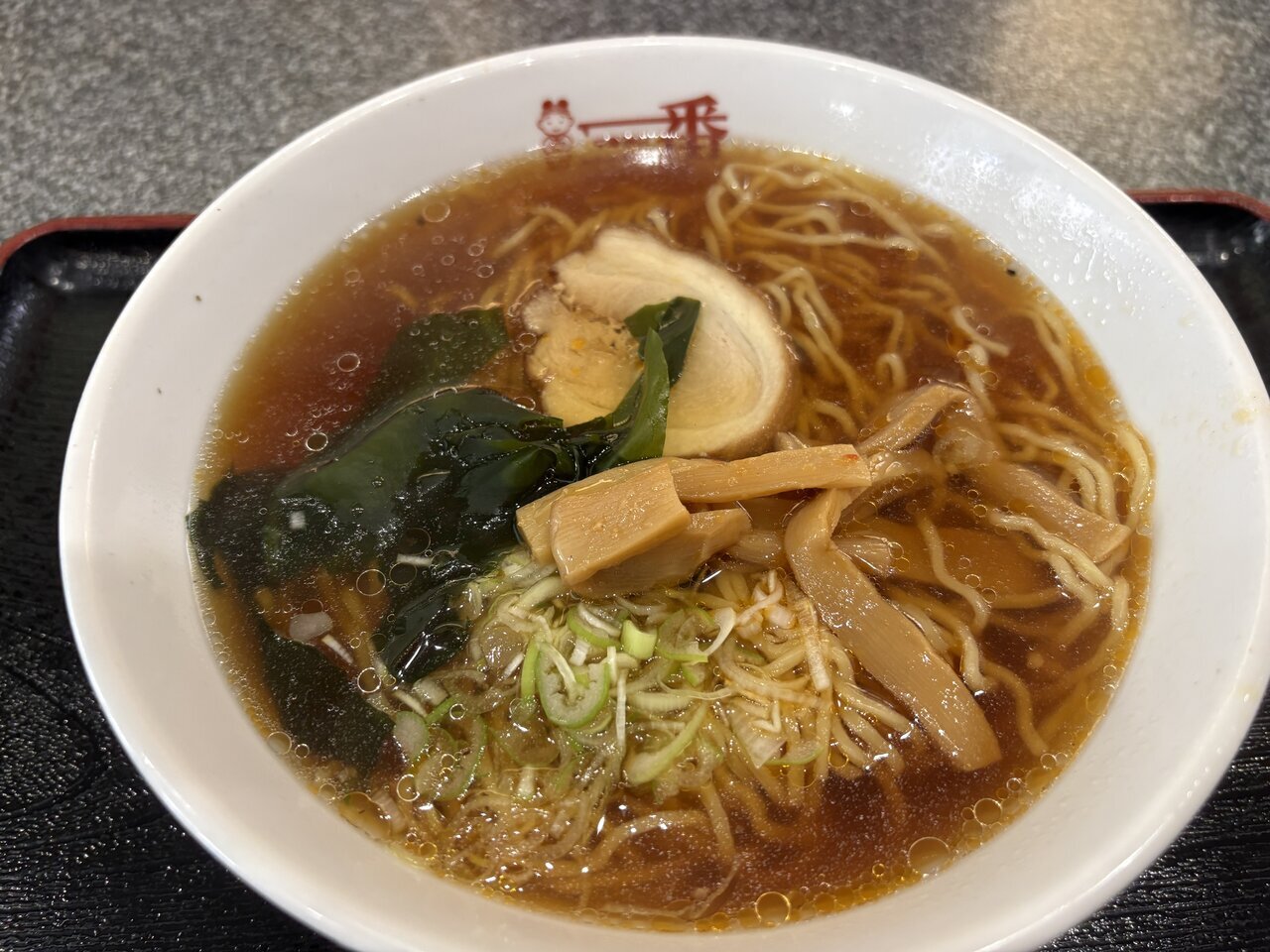
I ordered the ramen (580 yen). It took about five minutes for it to arrive.<
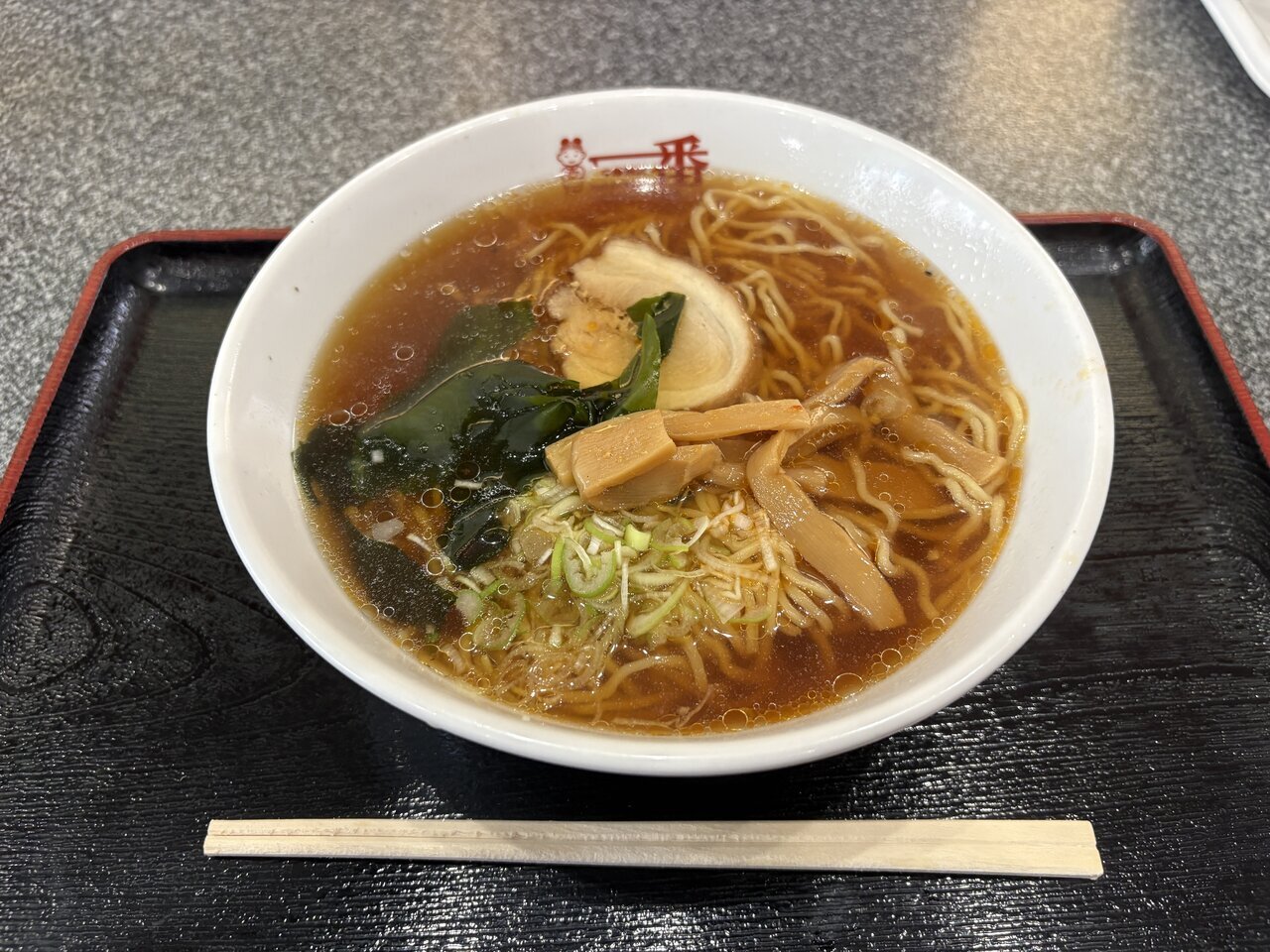
The rim of the white bowl was decorated in red with the same character as the sign and the words "Ichiban." The clear soy sauce-colored broth had small flecks of fat shimmering on the surface, topped with seaweed, chashu, menma, and chopped green onions.
It wasn't a flashy presentation; it exuded the essence of traditional local Chinese cuisine. To get all of this for 580 yen is a truly appreciated price. My anticipation surged as I looked at the soy sauce-colored soup visible through the steam.
It wasn't a flashy presentation; it exuded the essence of traditional local Chinese cuisine. To get all of this for 580 yen is a truly appreciated price. My anticipation surged as I looked at the soy sauce-colored soup visible through the steam.
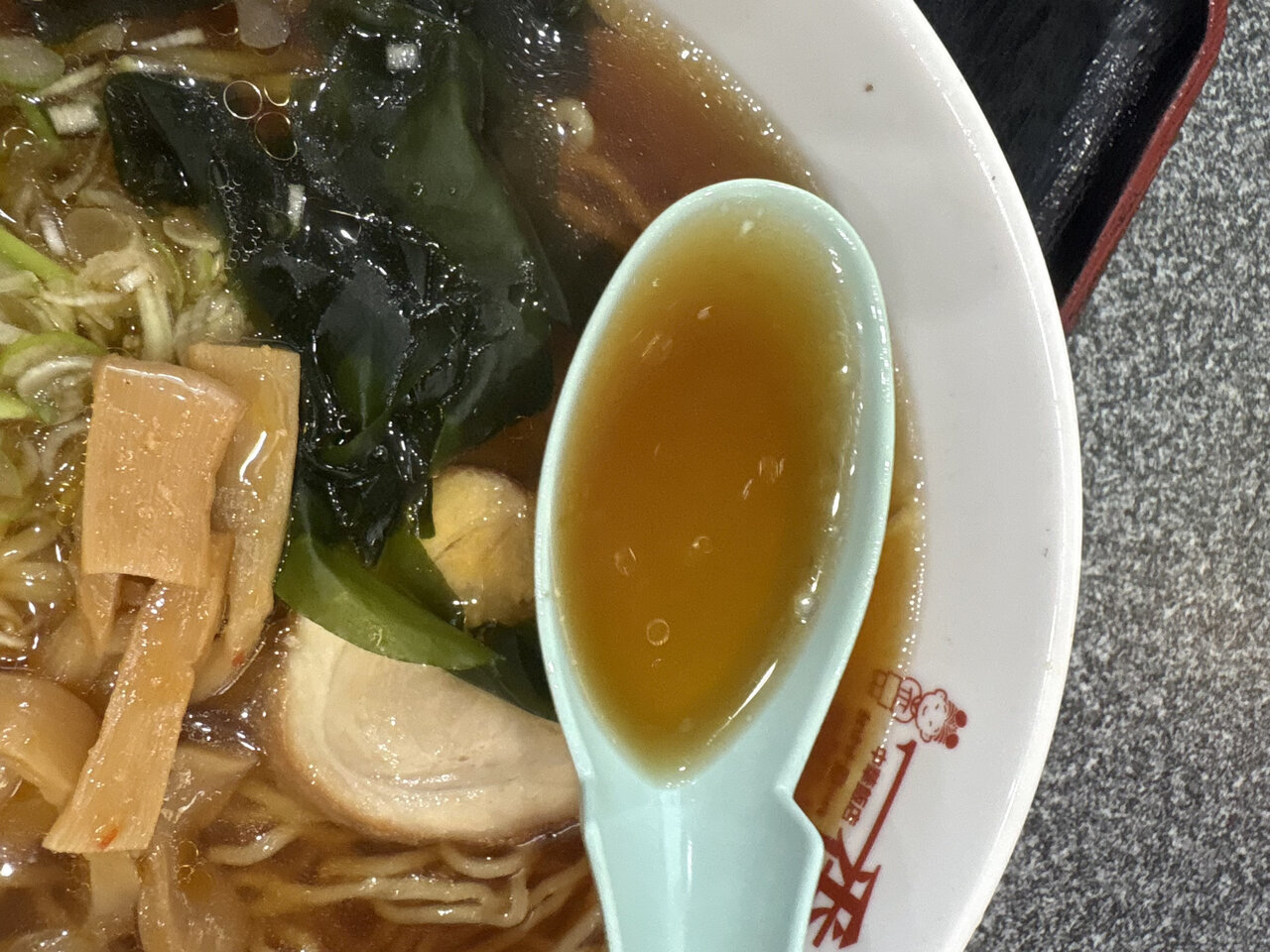
First, I took a sip of the soup with a ladle. The soup on the spoon is a transparent amber color, clear enough to see the bottom. When I took a mouthful, the aroma of soy sauce gently rose, and a smooth, mellow flavor spread out. It doesn't overpower the senses, and the gentle taste gradually melds with the body the more you drink.
With the lack of flamboyance, there is a sense of reassurance that I could eat it every day. I found myself continuously taking spoonfuls of the piping hot soup, one mouthful after another.
With the lack of flamboyance, there is a sense of reassurance that I could eat it every day. I found myself continuously taking spoonfuls of the piping hot soup, one mouthful after another.
The char siu is a thick slice with a browned edge.
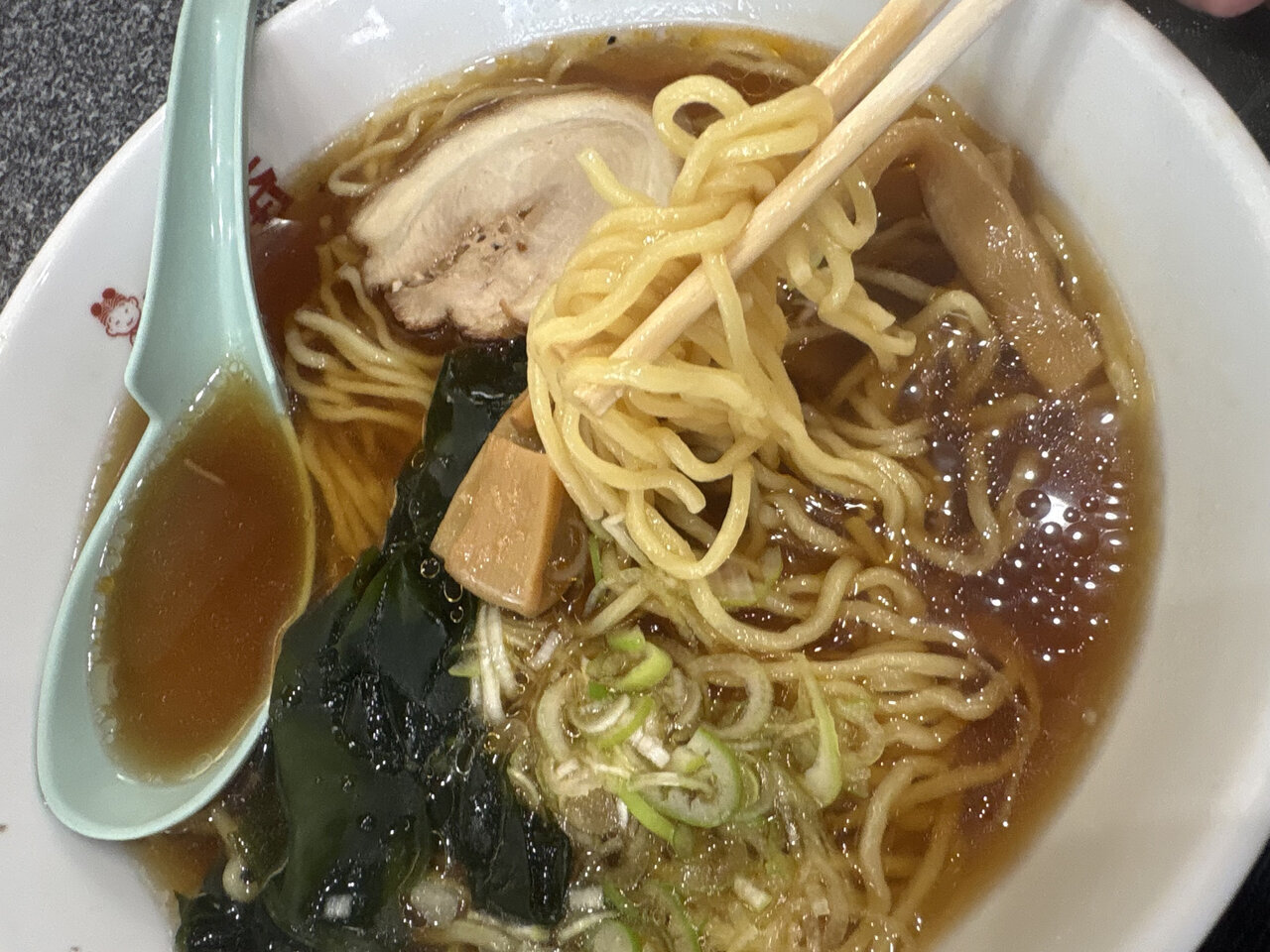
The noodles, lifted with chopsticks, are characterized by their yellow hue and gently curled shape. They are curly noodles with kansui, reminiscent of traditional Chinese soba, and they lift up well while coating themselves in the soup. I thought this curly noodle was reminiscent of old-fashioned ramen, which I appreciated.
As I slurped, the soup filled the grooves of the curly noodles, and with each mouthful, the gentle soy sauce flavor spread throughout my mouth. The noodle portion was just right, making it a satisfying bowl for lunch.
As I slurped, the soup filled the grooves of the curly noodles, and with each mouthful, the gentle soy sauce flavor spread throughout my mouth. The noodle portion was just right, making it a satisfying bowl for lunch.
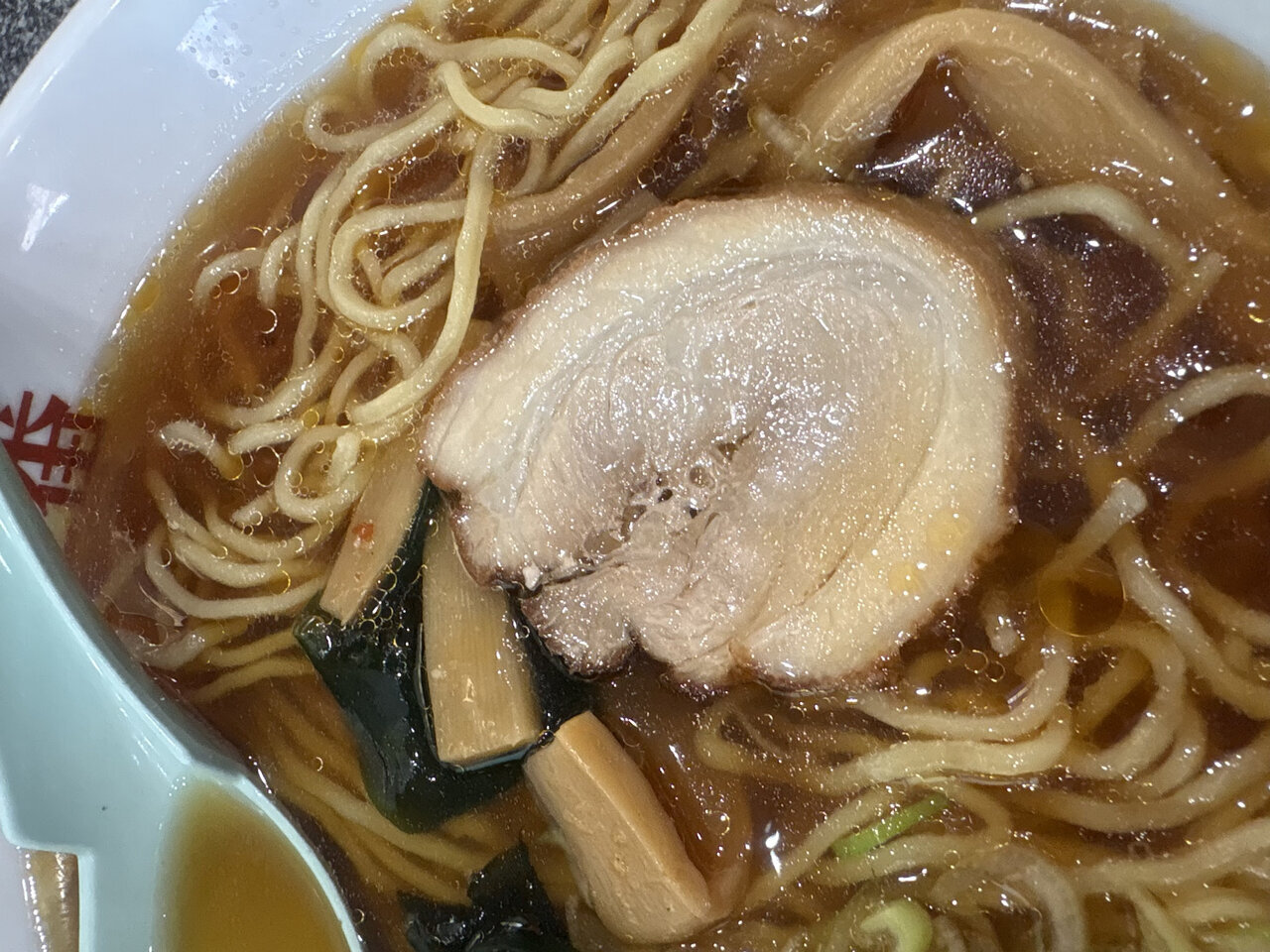
The char siu is a thick slice with a fragrant browned edge. In the cross-section, white fat and pink meat are layered in a swirling pattern.
When lifted with chopsticks, the moist texture of the meat comes through. When I tasted it, the umami of the meat gradually spread, and it paired well with the gentle flavor of the soup.
Menma is a beautiful amber color and looks like it has absorbed flavor. When I pinched it with chopsticks and brought it to my mouth, there was a crunchy texture, perfectly accenting the noodles and char siu. My hand couldn’t stop eating.
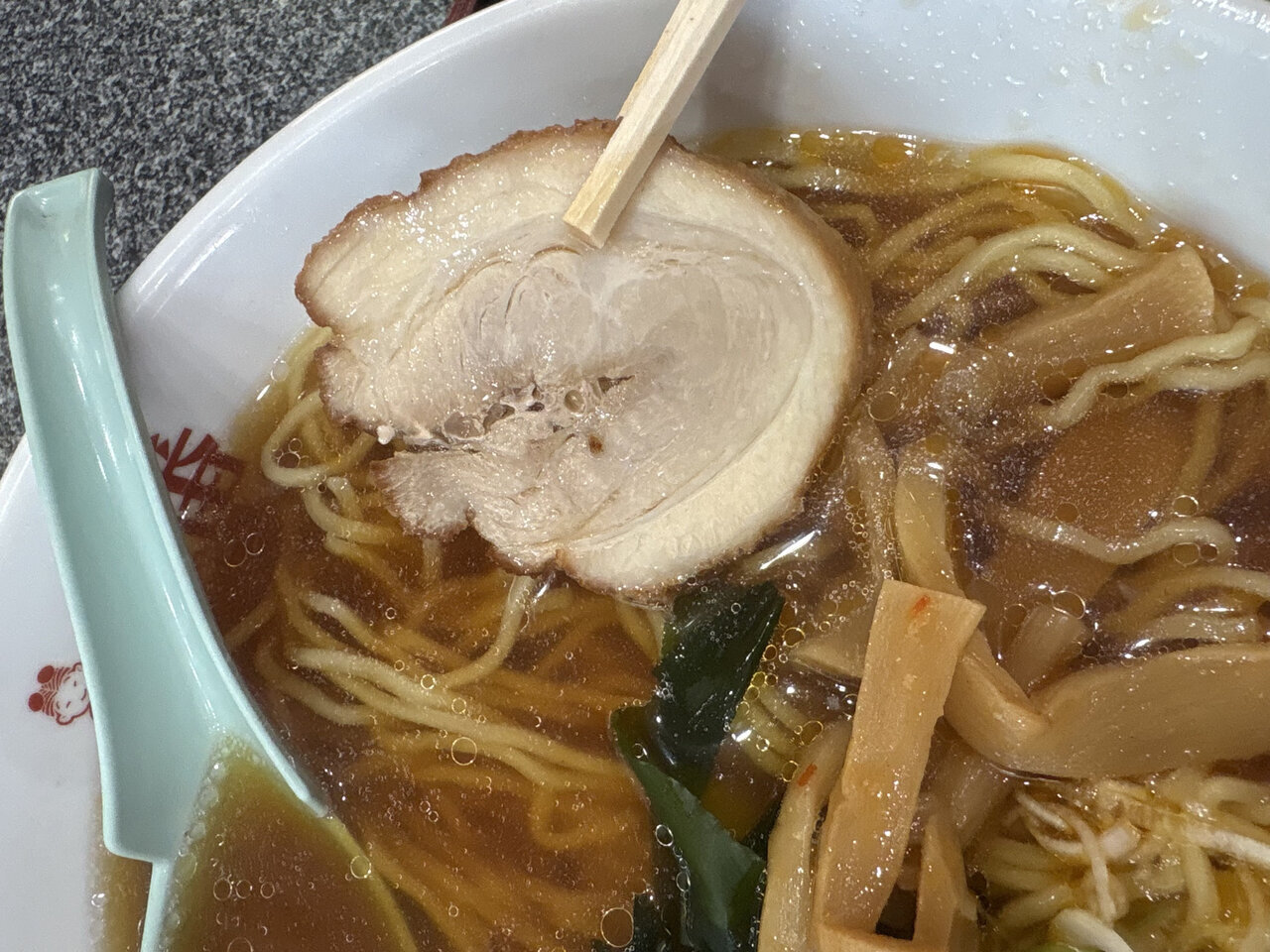
Before I knew it, I finished eating, placed my chopsticks down, and quietly murmured a thank you. I took a sip of cold tea and sighed in relief. In the lively dining area at noon, the sounds of chatter and the clattering from the kitchen resonated comfortably.
When I asked the staff during check-out, "How long have you been in business?" they replied, "For over 50 years, maybe around 60 years."
It made sense that there were locals who have been coming here since childhood, reflecting a long history. I felt I understood a bit of the reason behind the gentle flavors of the beloved establishment.
After the meal, I took a walk in a nearby park and on the greenway before heading home.
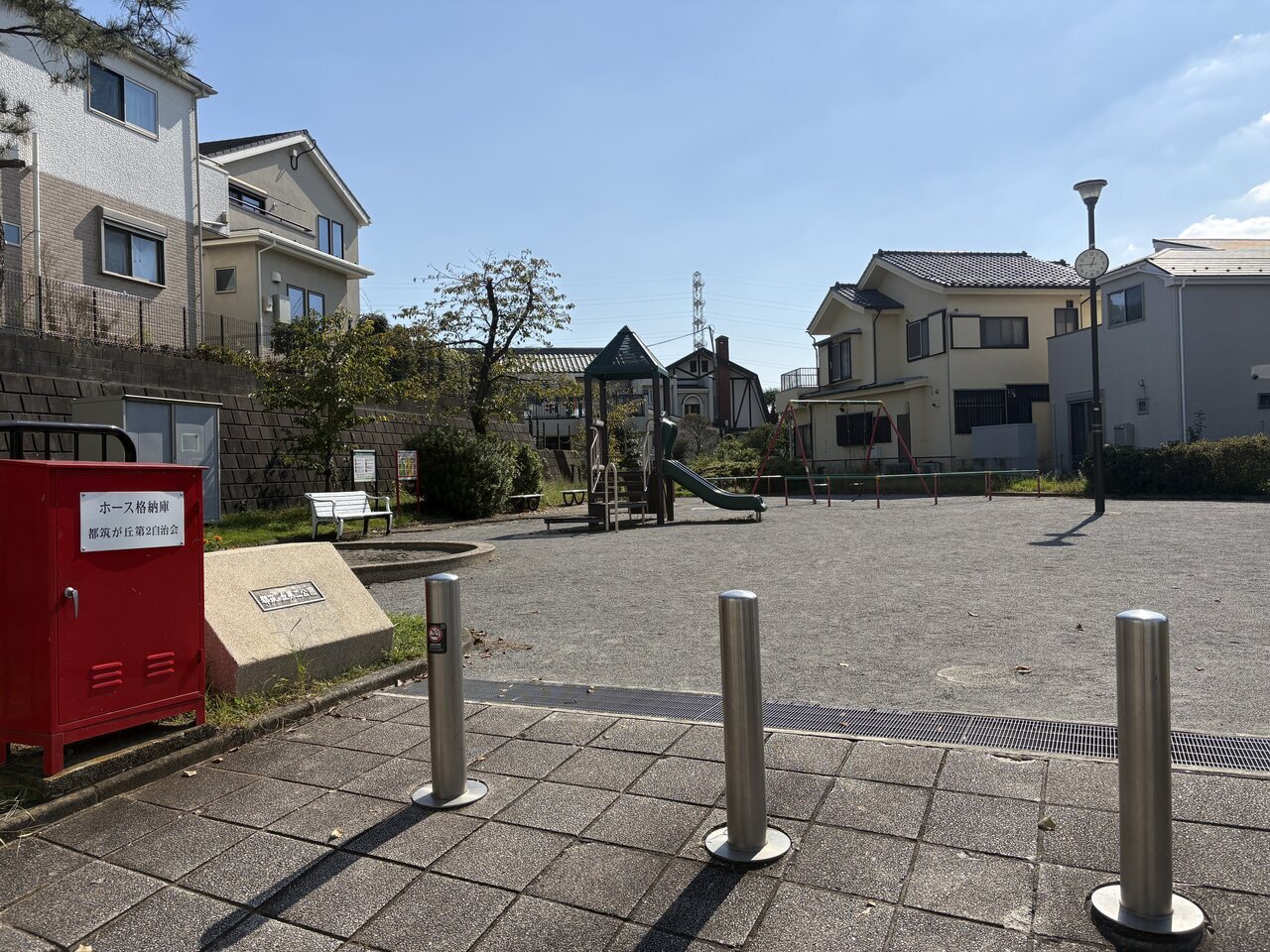
When I left the restaurant, the daylight was still bright, and I felt like walking a bit. Nearby, there was a small park with playground equipment and a stone-paved greenway that weaved through the trees. I walked home slowly along the green path in the residential area that I hadn’t noticed while driving past.
It was a walk on a weekday afternoon that filled both my stomach and heart.
It was a walk on a weekday afternoon that filled both my stomach and heart.
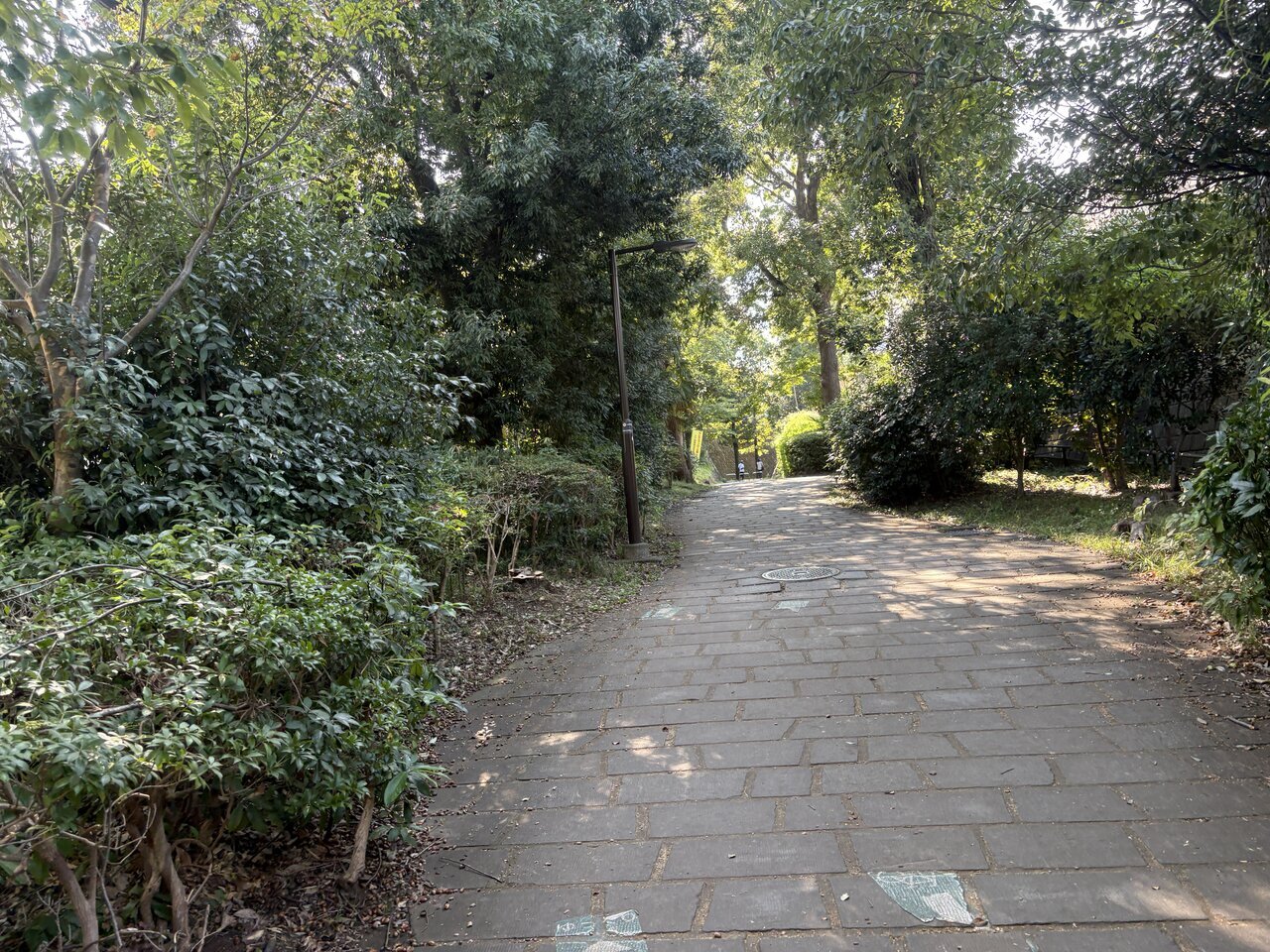
A yellow wall visible at the end of the slope, a character sign in red clothing, flashy banners, and handwritten blackboards displaying over 20 types of noodles starting at 580 yen. While eating a gentle bowl of ramen, I felt I understood a little more about why there are people who have continued coming here since childhood.
Next, I want to try the gyoza set and the stamina ramen that caught my eye on the blackboard, as well as the dan dan noodles from the banners.
Chinese Restaurant Ichiban
Location: 2297-4 Kawawa-cho, Tsuzuki Ward, Yokohama City, Kanagawa Prefecture
Business Hours: 11 AM to 8 PM, Closed on Mondays and the first Tuesday of the month
Reporting & Text by SYURI
- *Special char siu
- Chinese Restaurant Ichiban
- Kawawacho
- SYURI
- Yokohama
- ramen
- street Chinese restaurant
- SHARE







 FASHION
 OUTDOOR
 WATCH
 CAR & BIKE
 SNAP
 DINING
 LIFE
 GADGET
 GOLF