
DINING
2026.11.20
[Neighborhood Chinese Restaurant Trick] Kanagawa Prefecture, Ebina City: “Chinese Restaurant Ryomi” Edition — The shock of a 390-yen bowl of ramen! And even a gyoza set on a super-low budget
Near Sagamino Station on the Sotetsu Main Line of the Sotetsu Railway in Kanagawa Prefecture. I visited the retro名店 “Chinese Restaurant Ryomi,” tucked away in a quiet back alley. I only intended to have a single bowl of ramen, but what’s the wallet-friendly trick that lets you enjoy even a gyoza set on a budget lower than the average price of one bowl of ramen?
If you open the door to Ryomi Chinese Restaurant, your wallet’s guard begins to slip
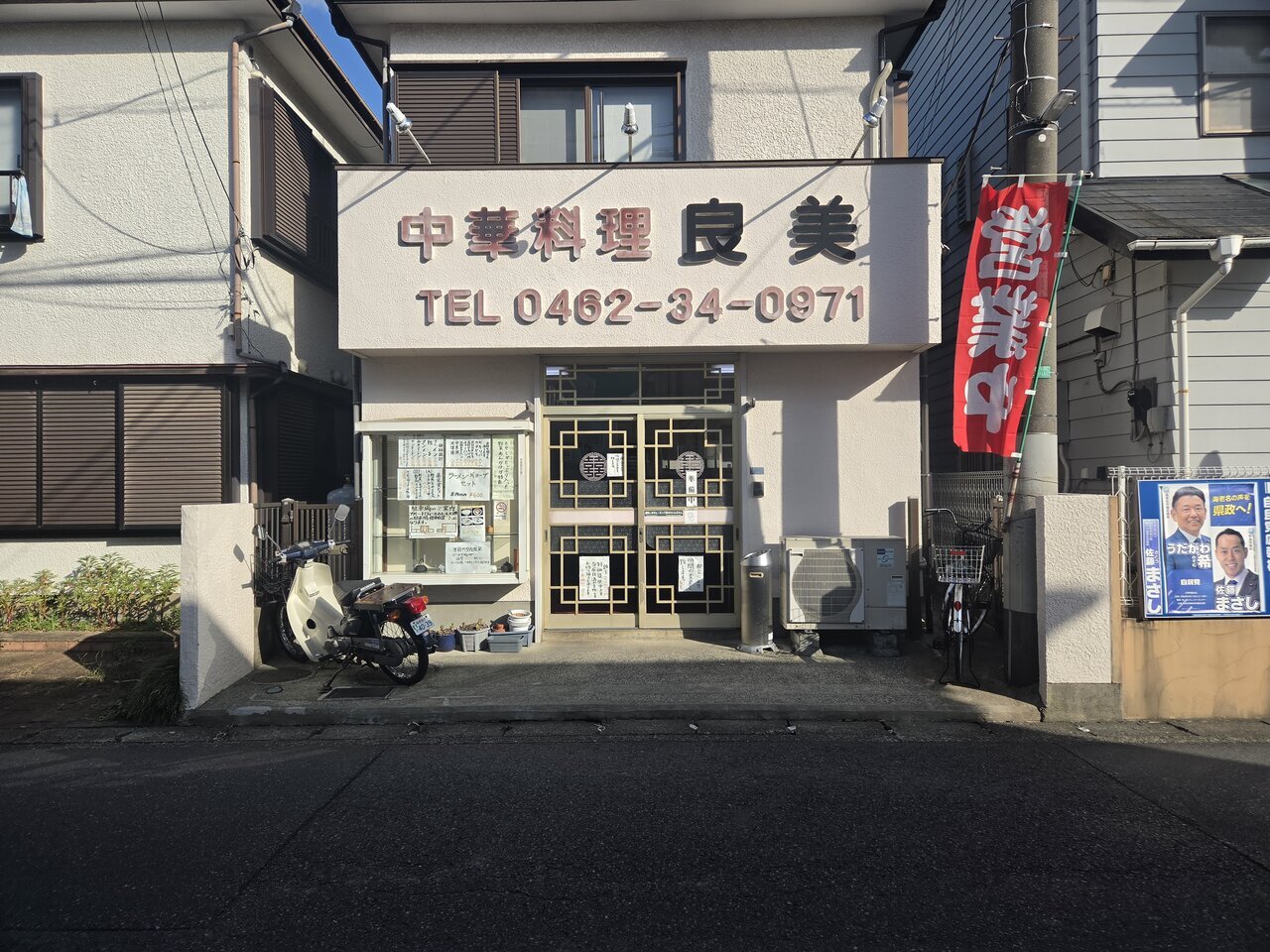
As you make your way through the residential streets of Sagamino, the large sign for “Chinese Restaurant Ryomi” suddenly jumps into view. With its homey atmosphere and the white delivery scooter parked out front, it gives off a comforting, nostalgic feeling even before you step inside.
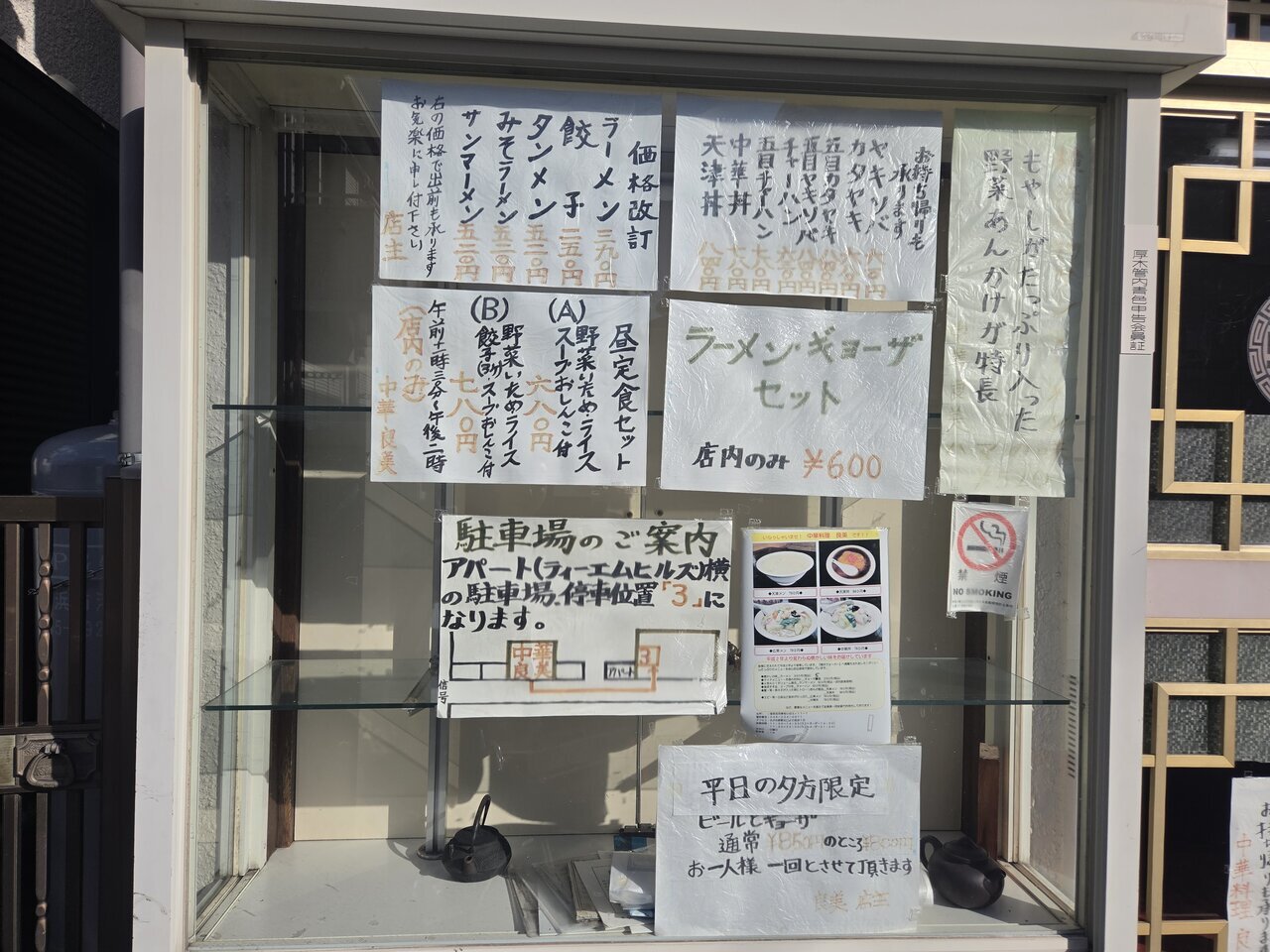
With prices continuing to rise, it’s not unusual these days to see a bowl of ramen cost over 1,000 yen. But outside Ryomi, on a slightly sun-faded menu board, you’ll find the almost unbelievable number “Ramen 390 yen” written there.
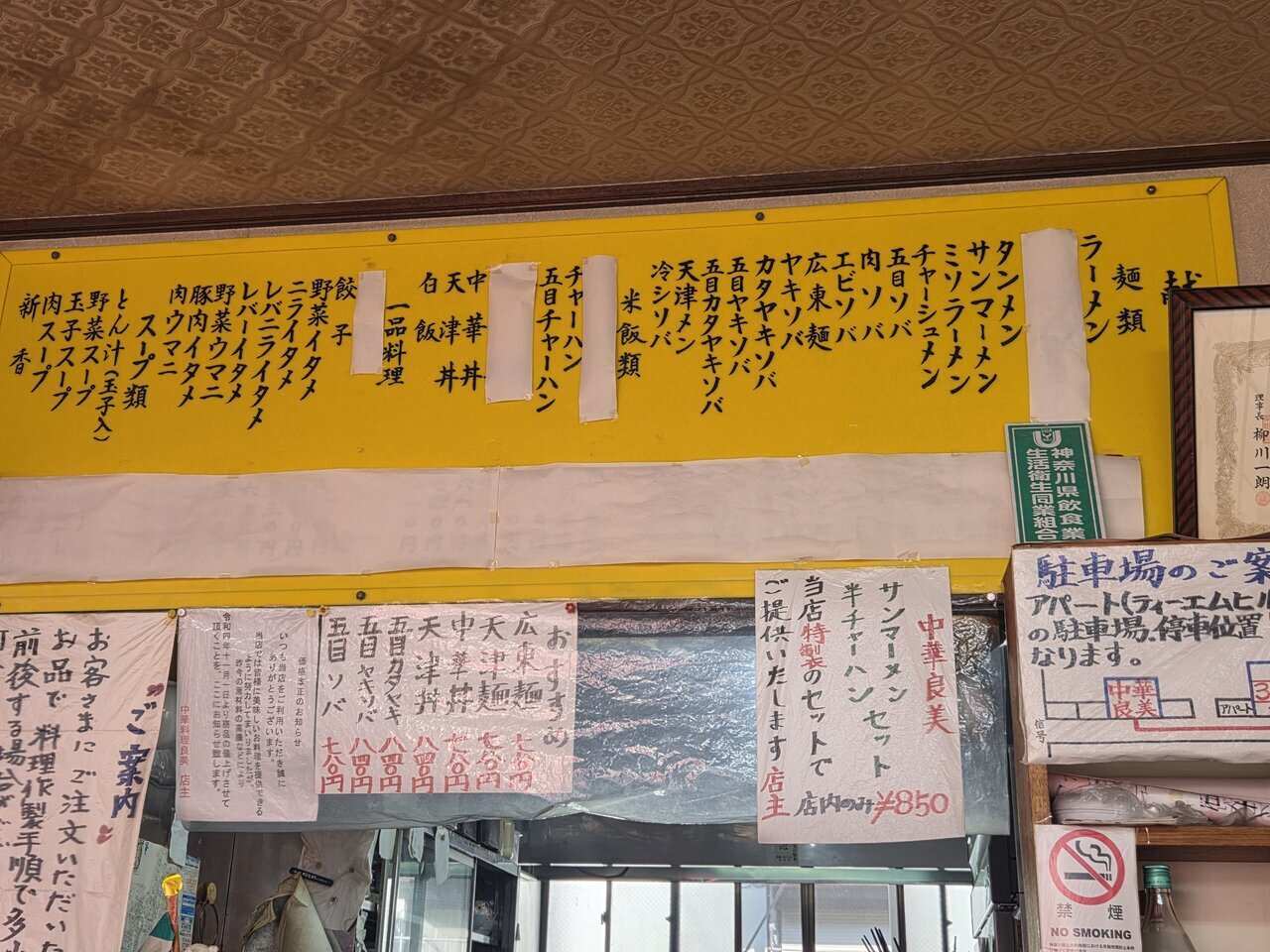
I entered the shop just in time for the lunch last order, but somehow made it in safely! After getting seated, I finally breathed a sigh of relief. Looking around the walls, I saw a historical-looking yellow menu panel with lots of items listed in a long row. However, perhaps because of repeated price revisions, no prices were written there. Wondering whether that astonishingly cheap “390 yen” I saw outside was still true, I checked the menu sheet on the table with a mix of unease and anticipation.
The moment I looked at the menu sheet on the table and saw “390 yen”
The moment I saw the menu sheet on the table, I noticed the clearly engraved price and was convinced: “It really is 390 yen!” At the same time, a very happy choice-making process began.
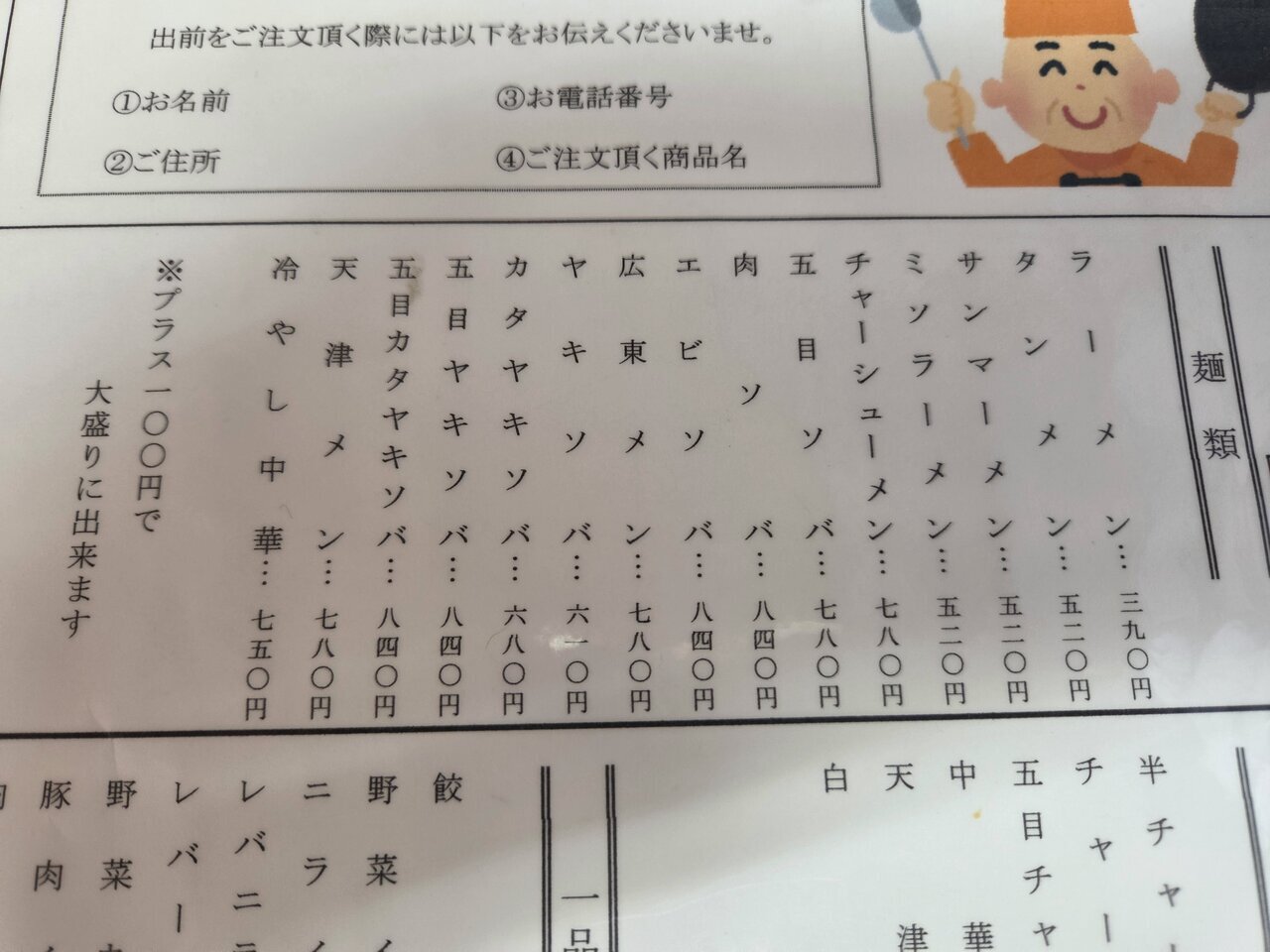
Even that alone is shockingly cheap. But here, behavioral economics’ “mental accounting” kicks in. The moment you feel like you’ve “freed up budget” compared with other restaurants, your brain’s brakes loosen.
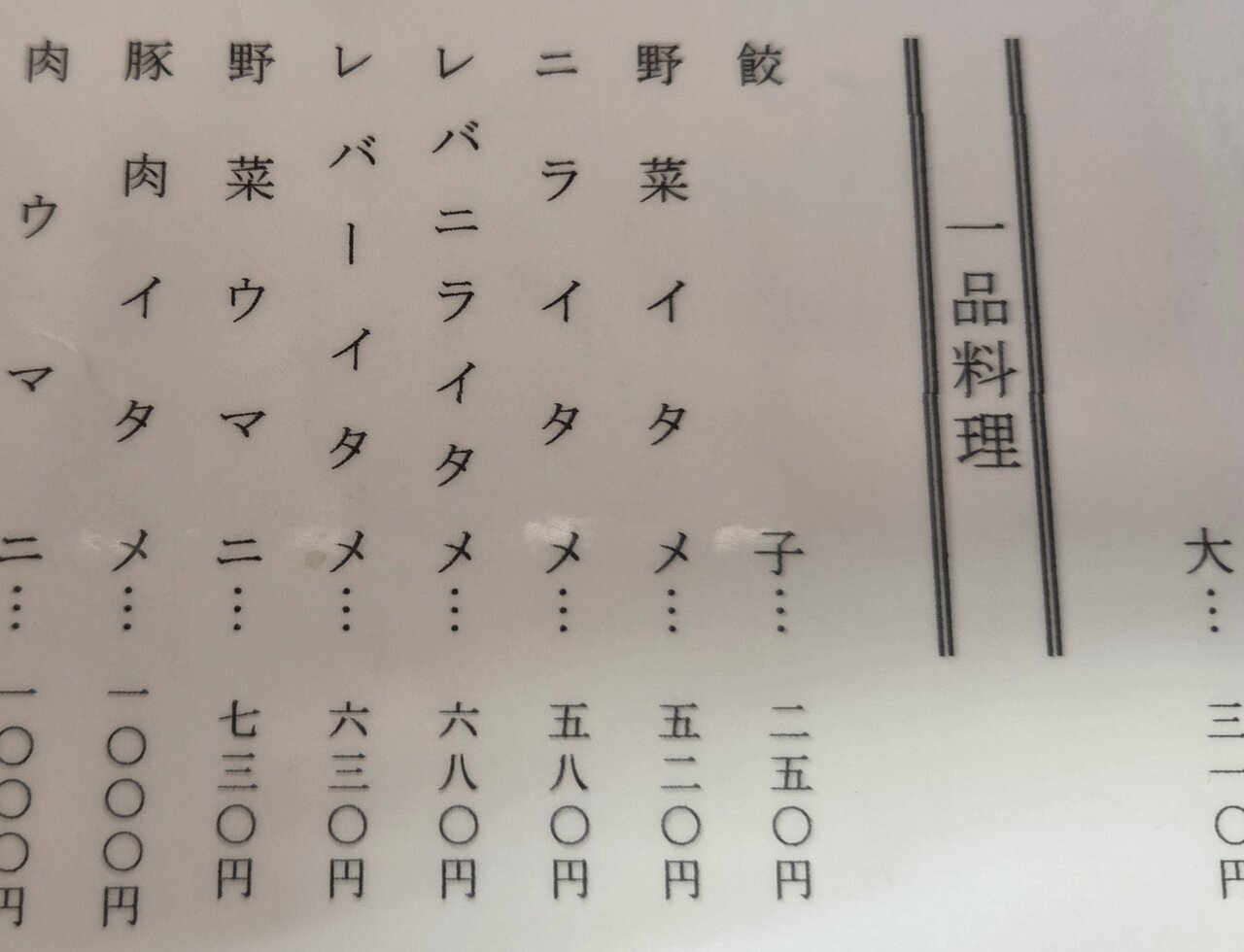
What’s more, after discovering the gyoza priced at an astonishing 250 yen, I thought, “Great, then I’ll add gyoza too!” and casually ordered each item a la carte.
The ramen and gyoza in front of me were serious-quality dishes that made me completely forget how inexpensive they were
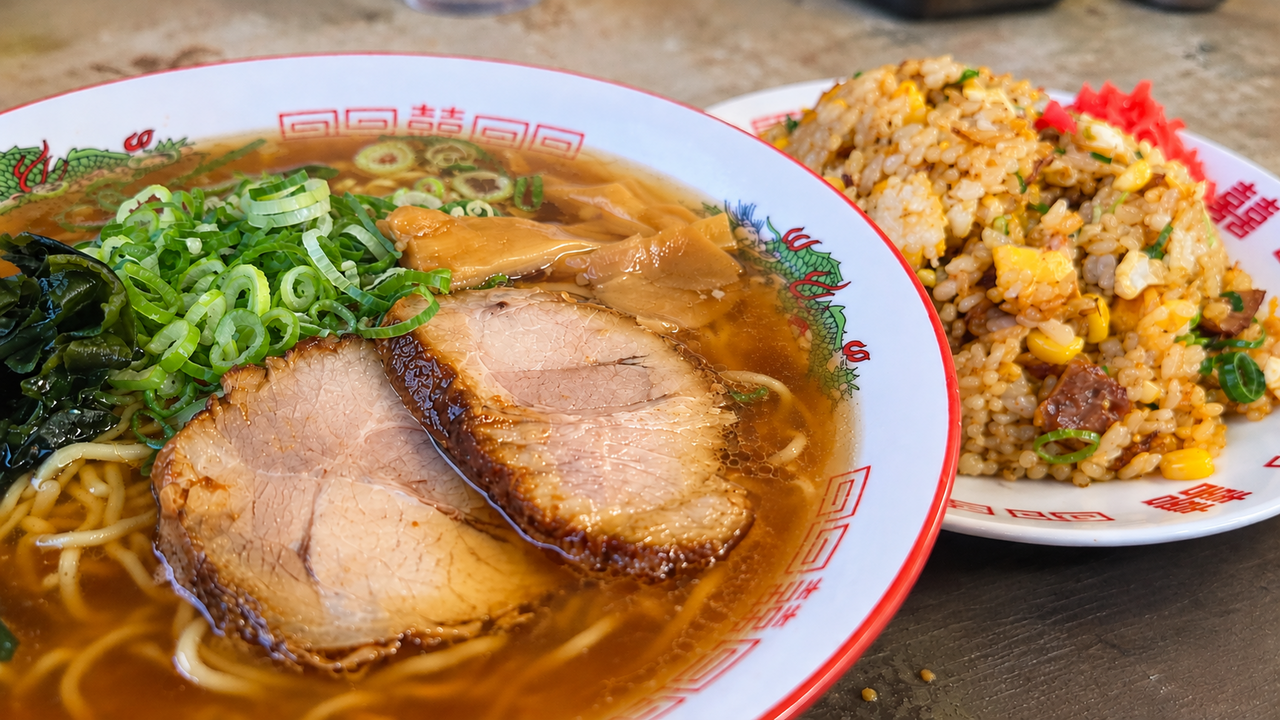
After ordering and waiting a little, piping-hot ramen and gyoza arrived, so steamy that they fogged up the camera lens. The moment I saw them lined up on the table, my growling, empty stomach let out a roar, and my mood instantly lifted.
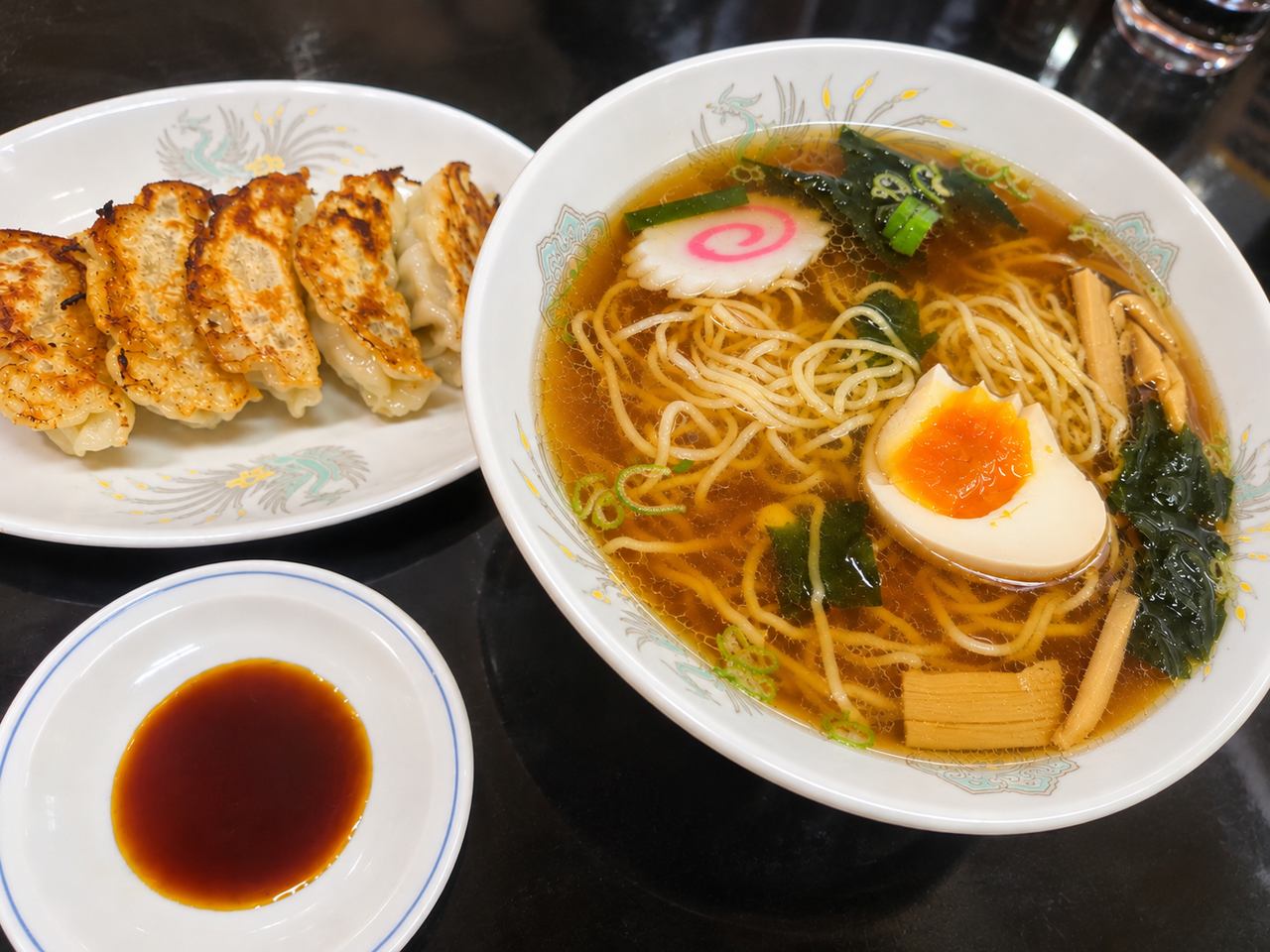
This is exactly the best view of a neighborhood Chinese restaurant I was hoping for. First, I’ll start with the 390-yen bowl of ramen I’d been looking forward to.
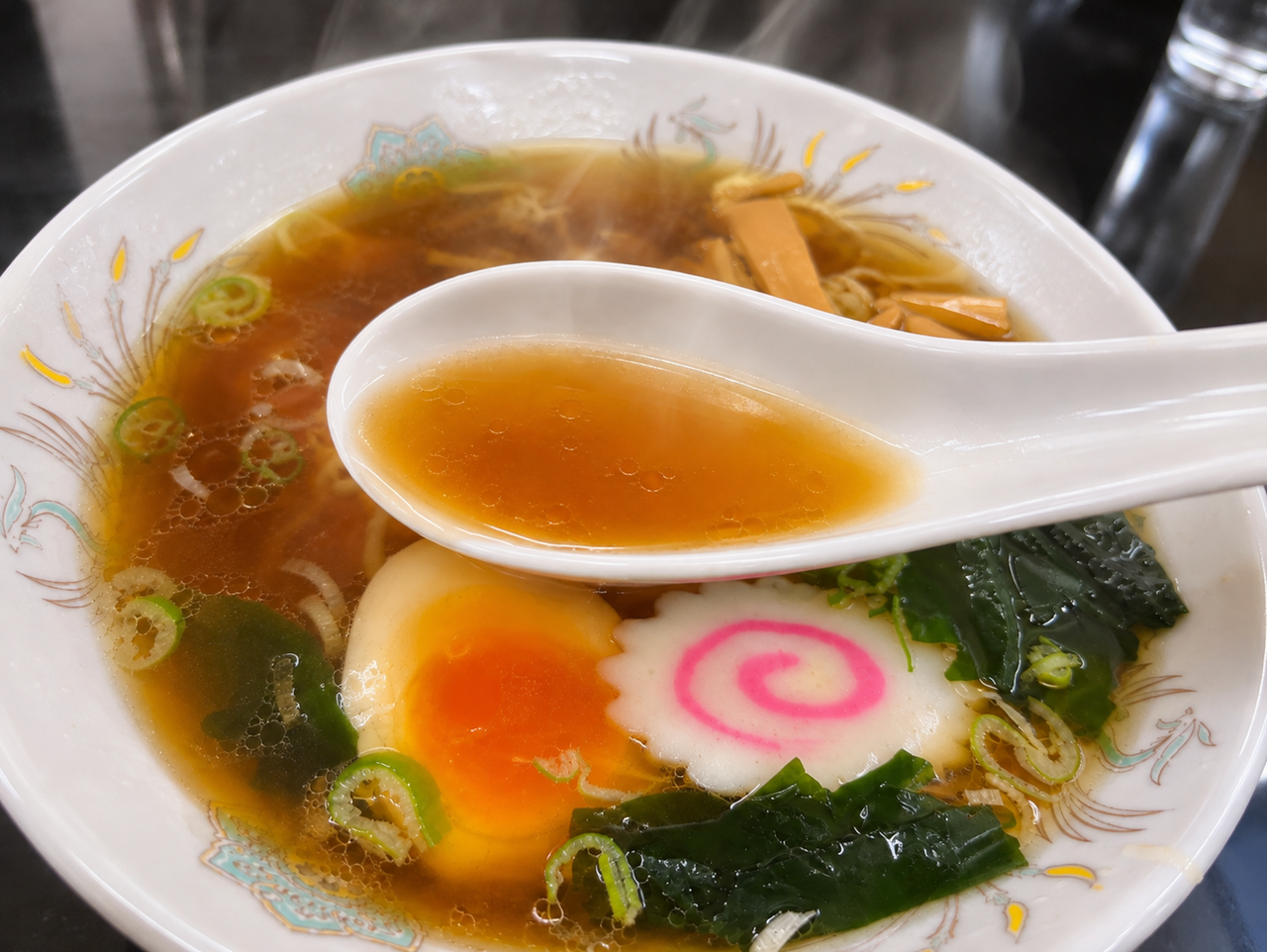
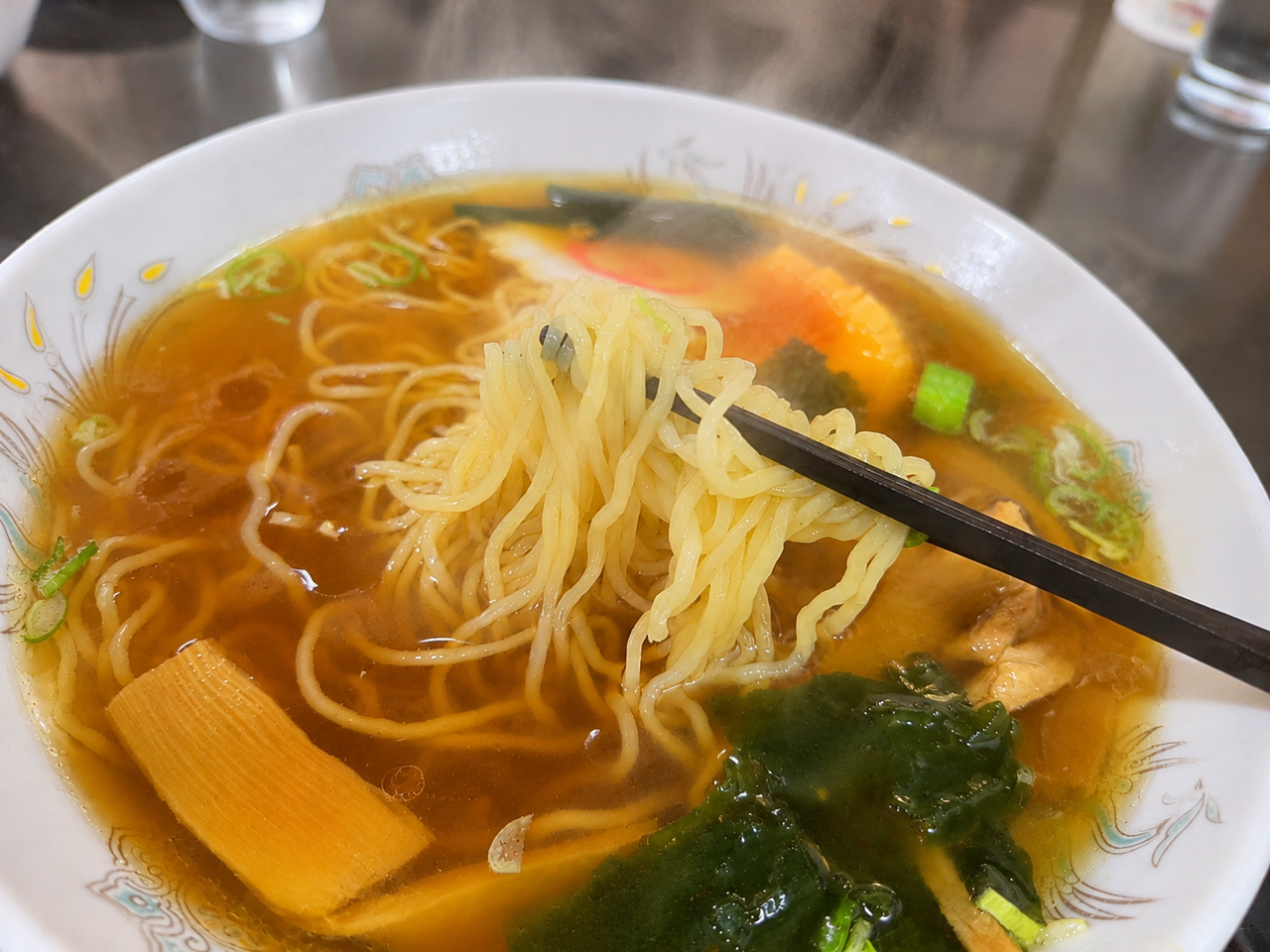
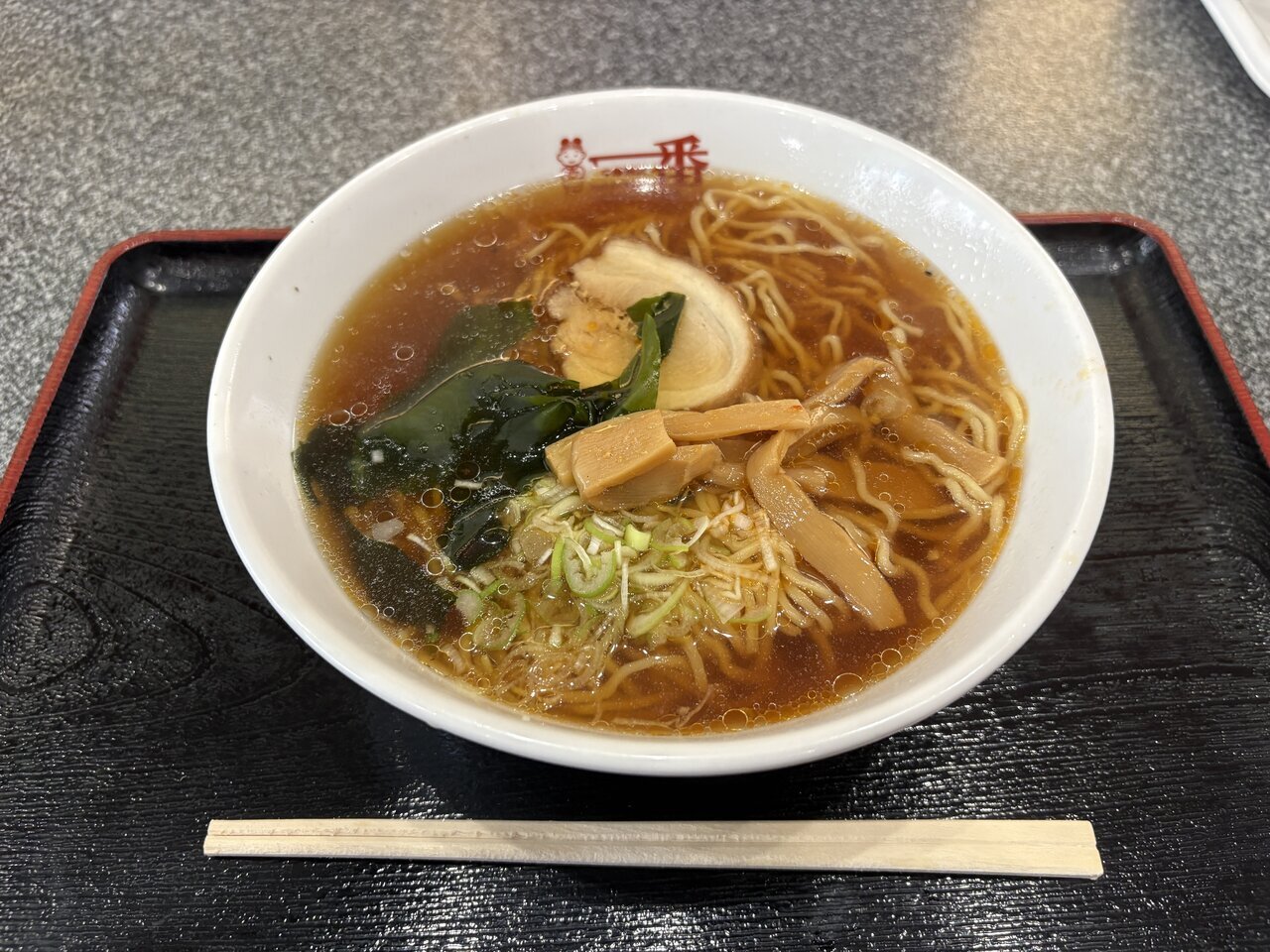
With the first sip of soup, the clean amber-colored broth’s dashi flavor gently seeps into my body. It has that unmistakable neighborhood-Chinese-restaurant feel: simple, gentle, and refreshingly light. For an empty stomach, that simplicity is irresistible!
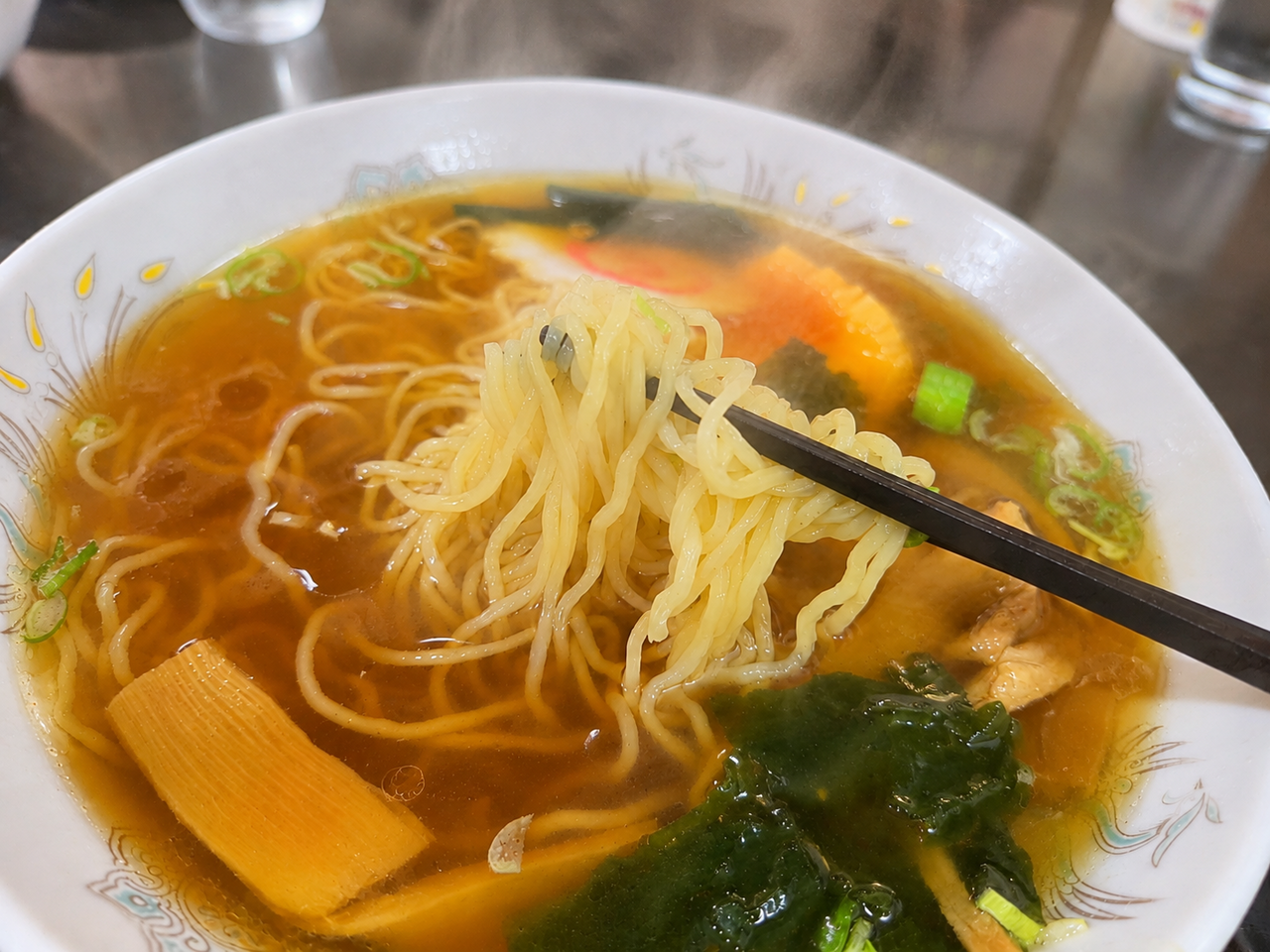
The thin, slightly wavy noodles, which pick up the soup nicely, go down smoothly, and the classic toppings such as seasoned egg, narutomaki, wakame seaweed, and menma are in perfect balance.
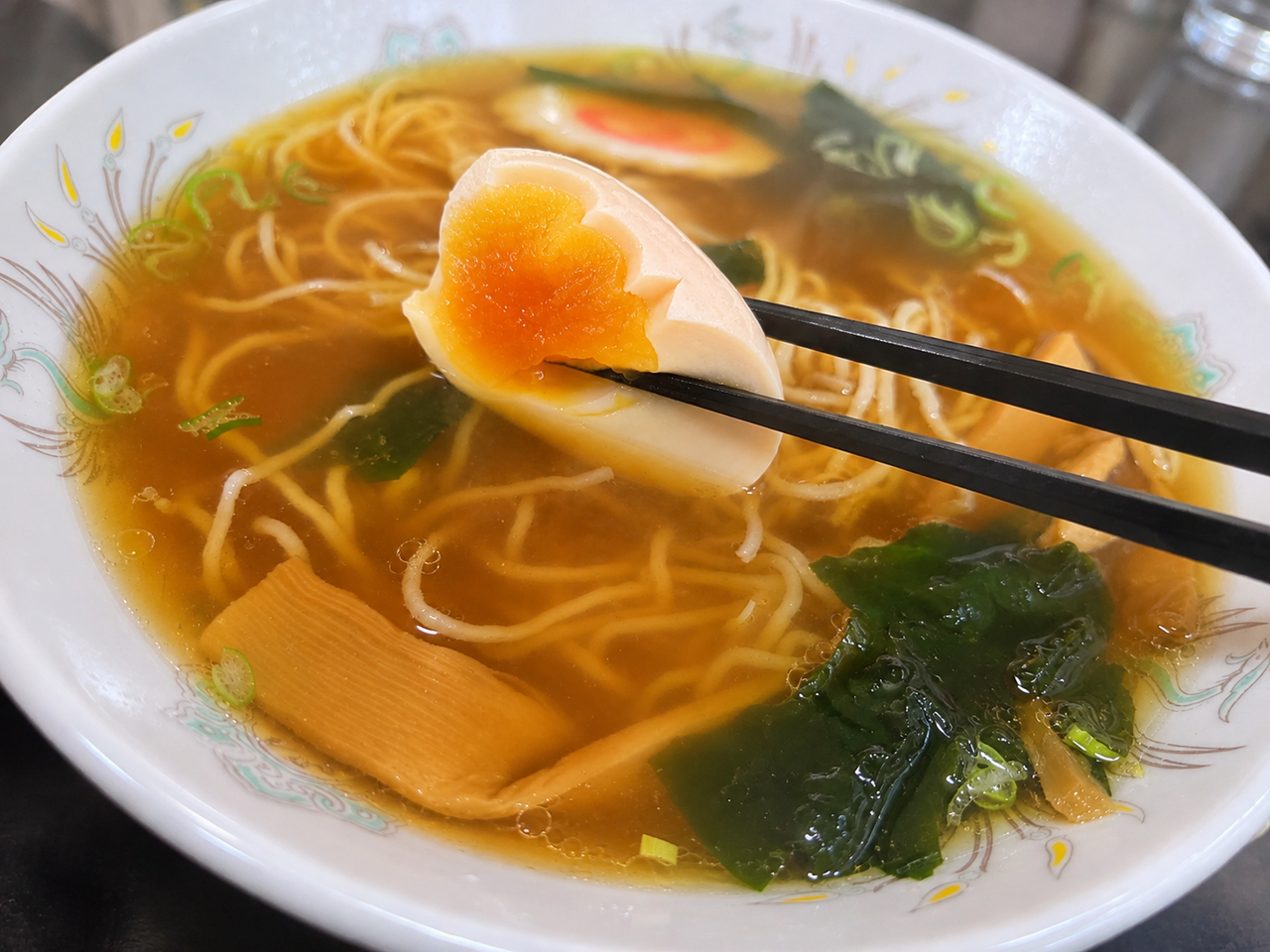
And what really caught my eye was the seasoned egg. Amazingly, it had been decorated with a cute zigzag, flower-like “ornamental cut.”
Even though it costs an astonishingly low 390 yen, this place doesn’t just slice a boiled egg in half and call it a day; you can feel the warm hospitality of a neighborhood Chinese restaurant in this kind of extra effort. The firm-boiled egg is thoroughly infused with the savory richness of soy-based dashi right through the center, and the soup clings beautifully to the uneven cut surface, making it truly delicious.
Even though it costs an astonishingly low 390 yen, this place doesn’t just slice a boiled egg in half and call it a day; you can feel the warm hospitality of a neighborhood Chinese restaurant in this kind of extra effort. The firm-boiled egg is thoroughly infused with the savory richness of soy-based dashi right through the center, and the soup clings beautifully to the uneven cut surface, making it truly delicious.
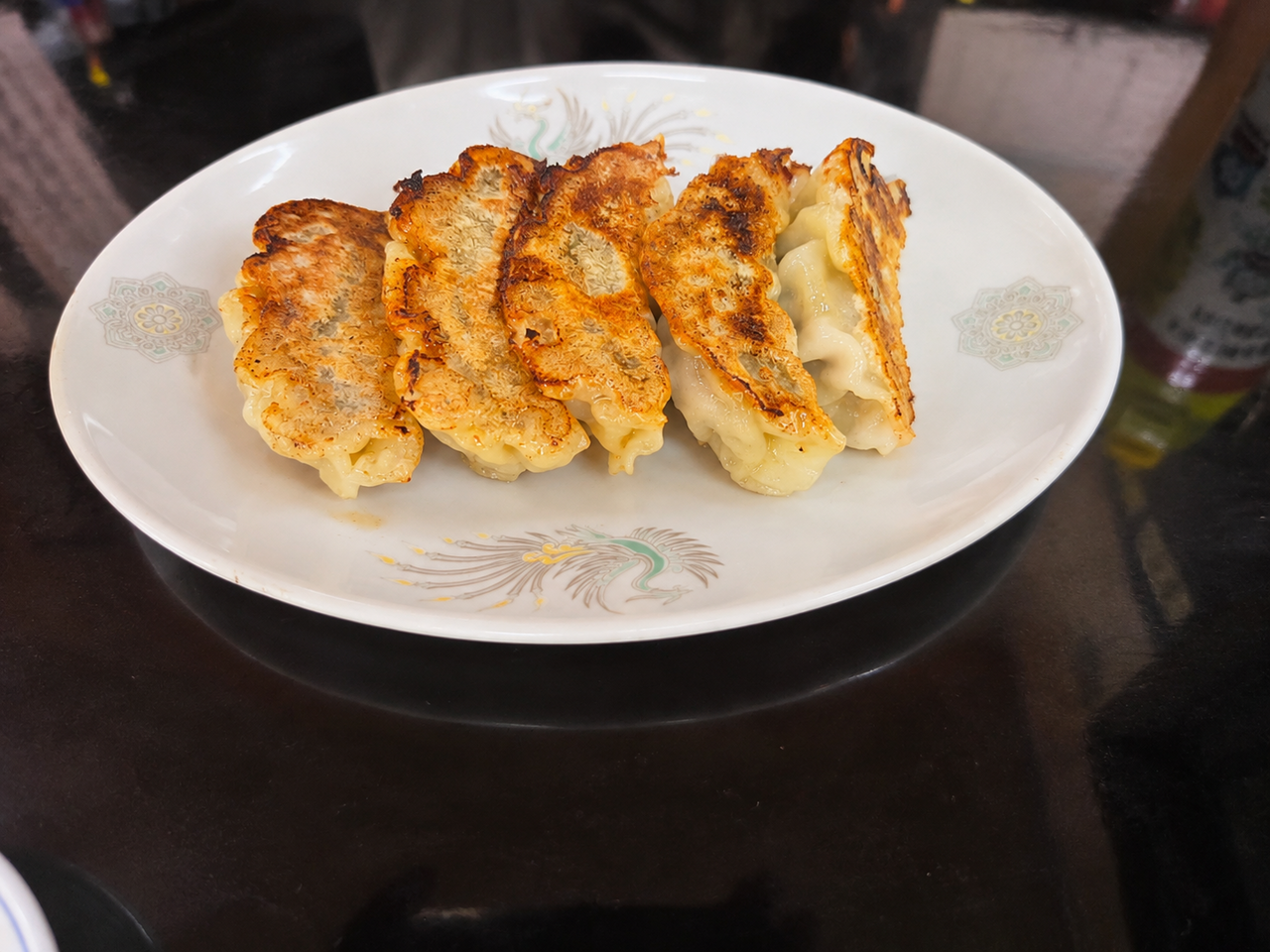
Next up is the other star I casually added: the gyoza. The browned surface is fragrant, and with one bite the filling of meat and vegetables like garlic chives is packed tightly inside, making it incredibly juicy!
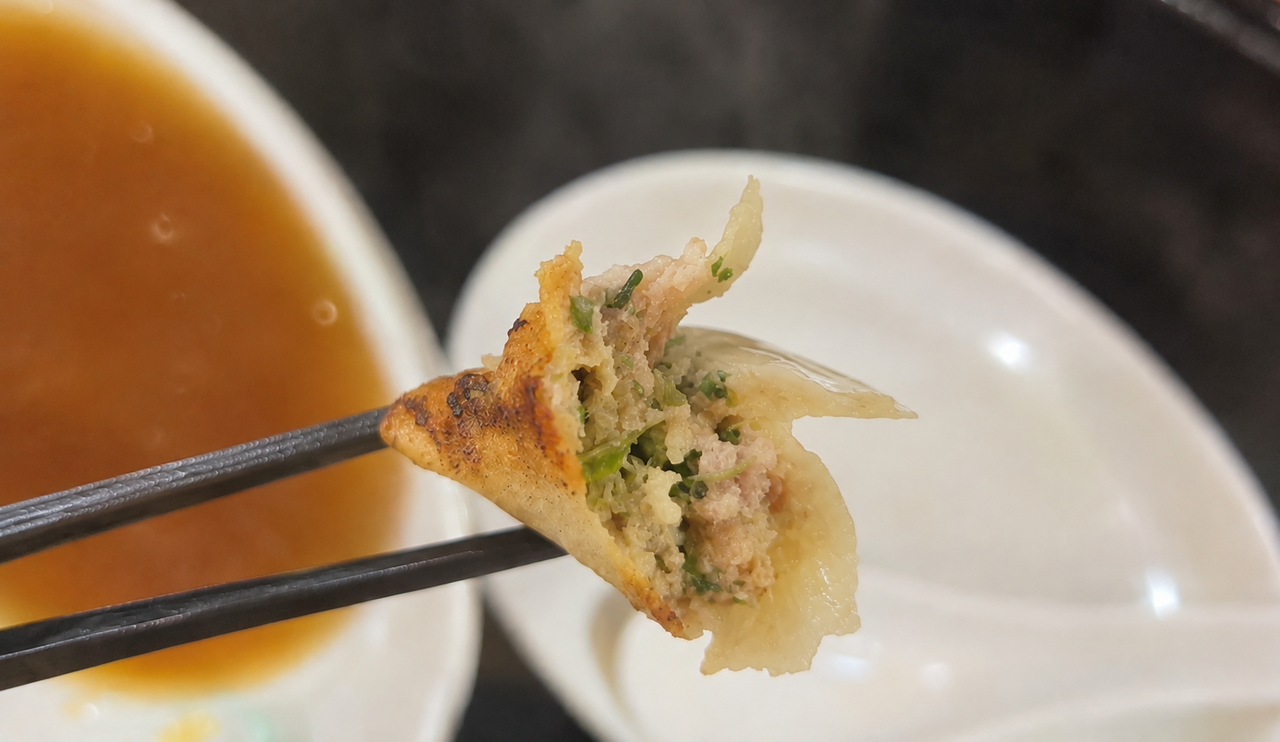
I came in thinking I’d order just “one bowl of ramen,” but the cheap price of 390 yen loosened the brakes on my “mental accounting,” and now I have an amazing gyoza dish sitting here too. For less than what many places charge for a single bowl of ramen, I’m having an unbelievably high-quality dream combo all to myself. The more I eat, the more happiness wells up from that luxurious fact. The spirit of a shop that faces each bowl with sincerity leaves both my stomach and heart more than fully satisfied.
And the bill is even cheaper? What on earth is going on?
Before I knew it, I had finished both the noodles and the gyoza, and my stomach and heart were filled with complete satisfaction.
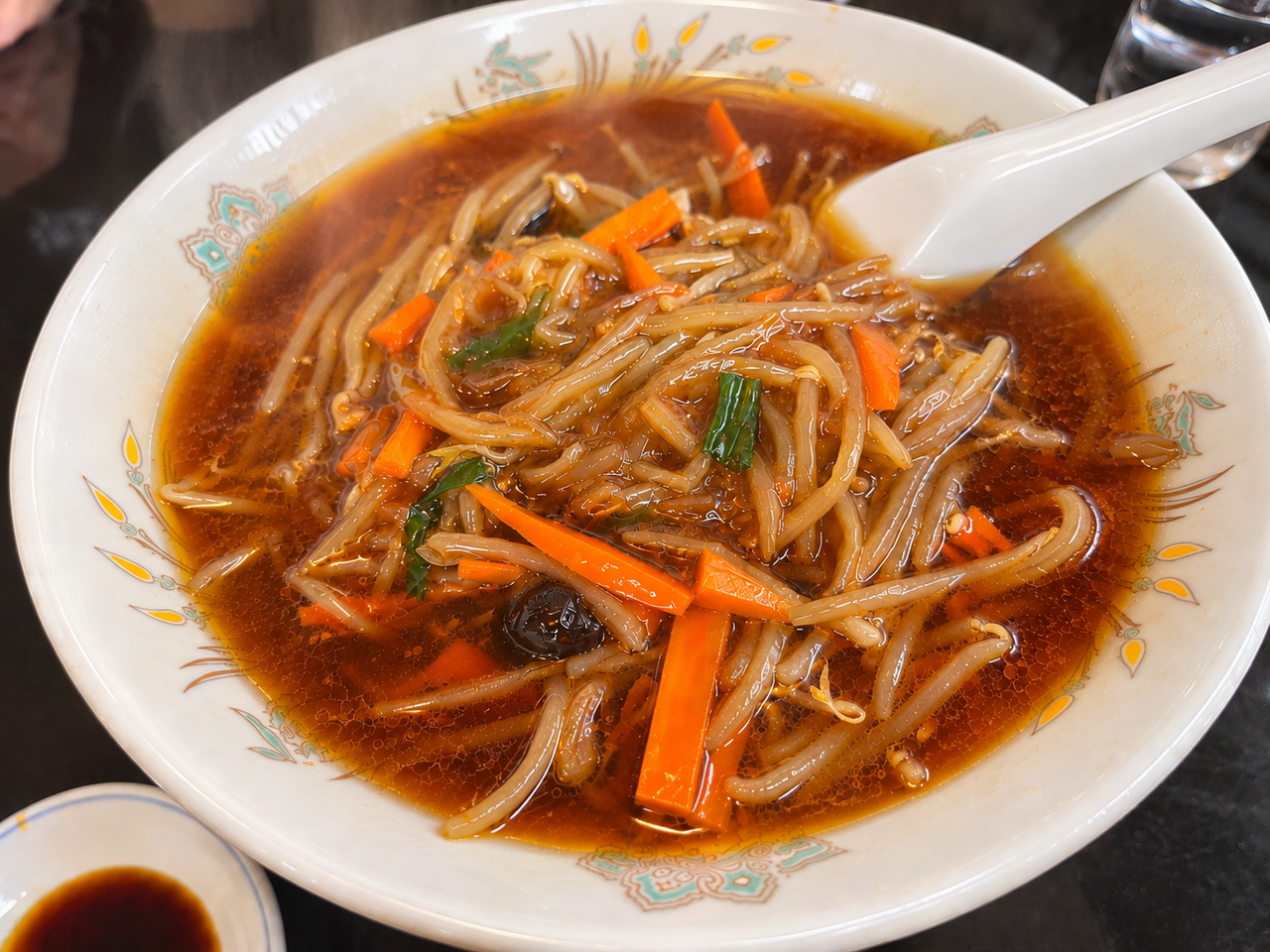
Price / 520 yen
By the way, what my husband ordered when we went together was Ryomi’s specialty, “Sanmamen.”
Just as the slightly faded menu outside the shop, weathered by years of sun, proudly still says “the taste of Hama,” this is truly a local Yokohama/Kanagawa specialty. The fragrant stir-fried crisp bean sprouts and vegetable ankake sauce coat the thin noodles so beautifully, making it piping hot and superbly delicious.
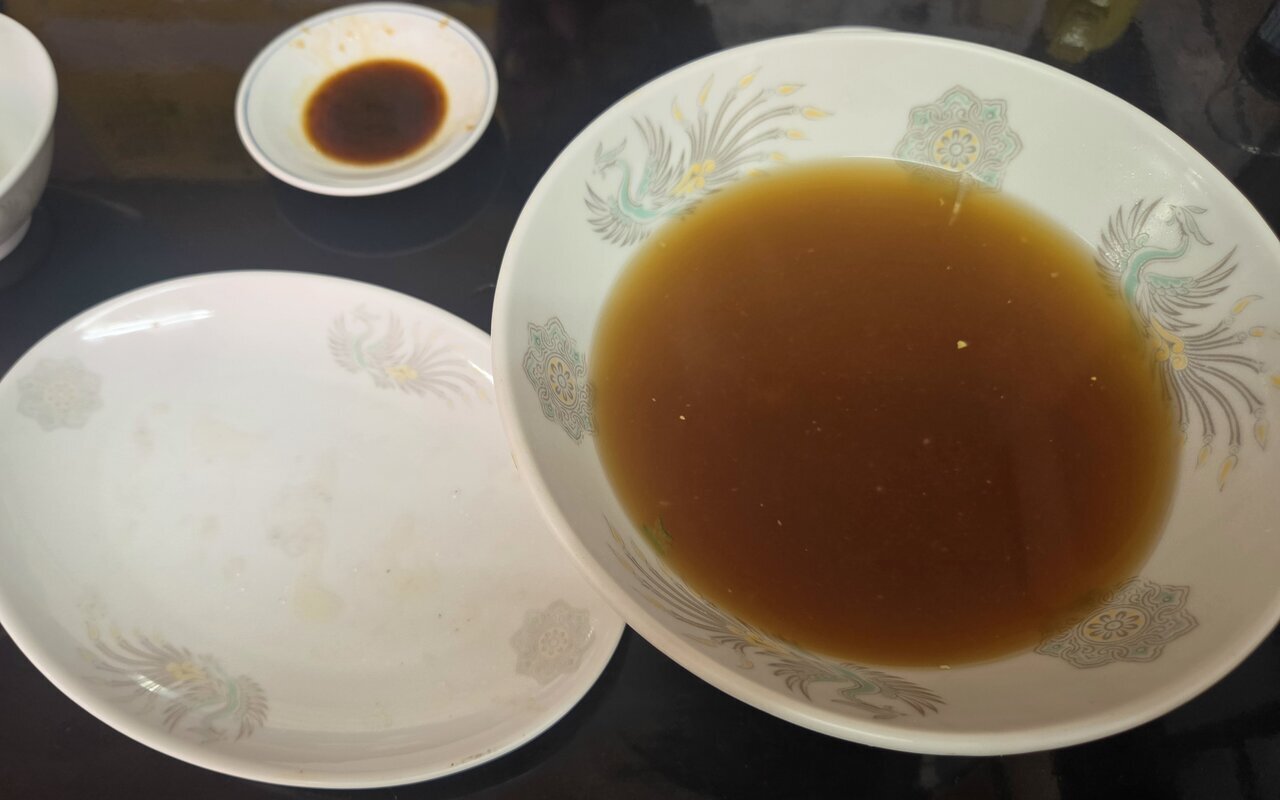
And so, the two of us finished everything with great satisfaction. I mentally prepared my wallet and headed to the register, thinking, “Ramen 390 yen, gyoza 250 yen, Sanmamen 520 yen, so the total is 1,160 yen.” But then came the final—and biggest—surprise.
The total told by the proprietress was, astonishingly, an even lower amount: “It comes to 1,120 yen.”
“Wait, not 1,160 yen?!” Wondering pleasantly, I looked more closely at the shop front and found a small pop sign that read “Ramen & Gyoza Set (600 yen)” quietly posted there. Was this a happy decoy effect set up by the restaurant? For customers who ordered each item separately, it automatically applied the “set price” so they wouldn’t lose out, making the bill 40 yen cheaper—a perfect example of the warmhearted love of a neighborhood Chinese restaurant.
“Wait, not 1,160 yen?!” Wondering pleasantly, I looked more closely at the shop front and found a small pop sign that read “Ramen & Gyoza Set (600 yen)” quietly posted there. Was this a happy decoy effect set up by the restaurant? For customers who ordered each item separately, it automatically applied the “set price” so they wouldn’t lose out, making the bill 40 yen cheaper—a perfect example of the warmhearted love of a neighborhood Chinese restaurant.
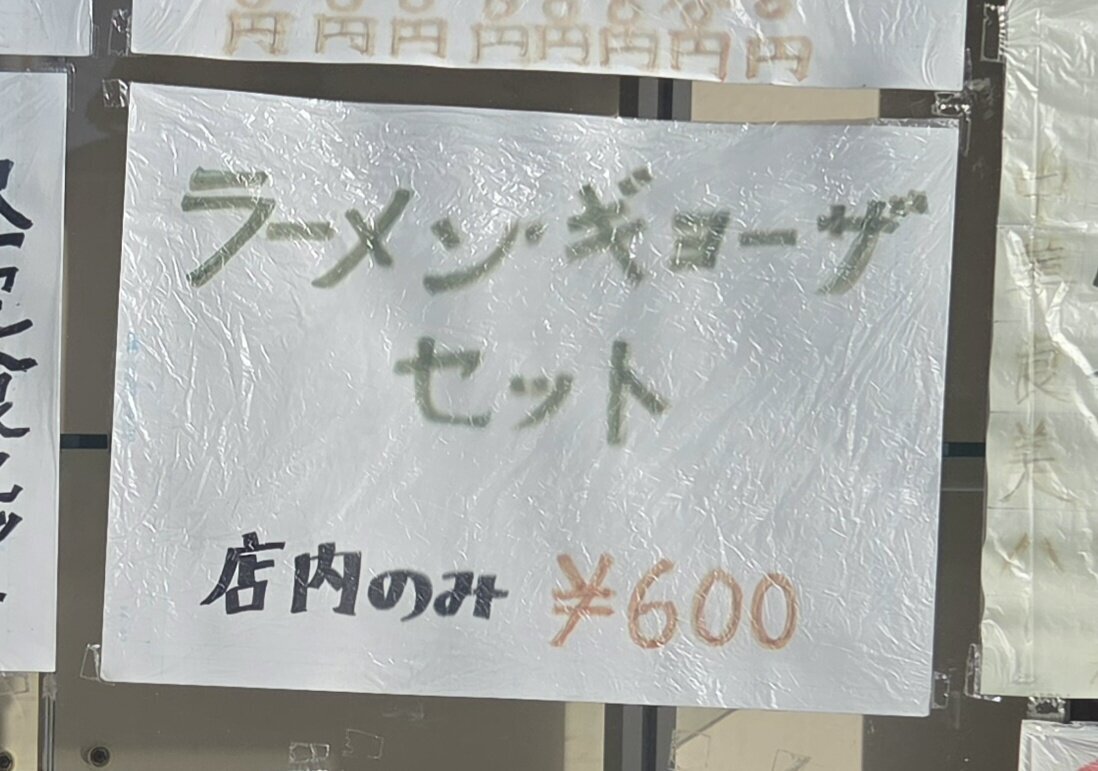
Not only cheap and delicious, but also a happy combination of “mental accounting” and the “decoy effect” that pleasantly surprises both your wallet and your heart right to the very end. After paying and leaving the shop, my stomach and heart were completely full, and I was thoroughly satisfied.
What neighborhood Chinese restaurant will I discover next, with a loving trick like this? While savoring the delicious afterglow, I’ll go search for the next great place.
What neighborhood Chinese restaurant will I discover next, with a loving trick like this? While savoring the delicious afterglow, I’ll go search for the next great place.
Reporting and text by Hara Yui
- *char siu with a story
- Ebina City
- Hara Yui
- Sotetsu Line
- neighborhood Chinese restaurant
- ramen
- town Chinese restaurant
- SHARE









 FASHION
 OUTDOOR
 WATCH
 CAR & BIKE
 SNAP
 DINING
 LIFE
 GADGET
 GOLF