
LIFE
2025.12.20
【Interview】From Salaryman to Jewelry Craftsman, and Then to Relocation - Starting a Business! Daisuke Seki's Crafting Life
Mr. Seki jumped from being a salaryman into the world of silver accessory craftsmanship. He made a big decision without hesitation, deciding on relocation and starting a business. We explored the unique store style that combines a café and workshop.
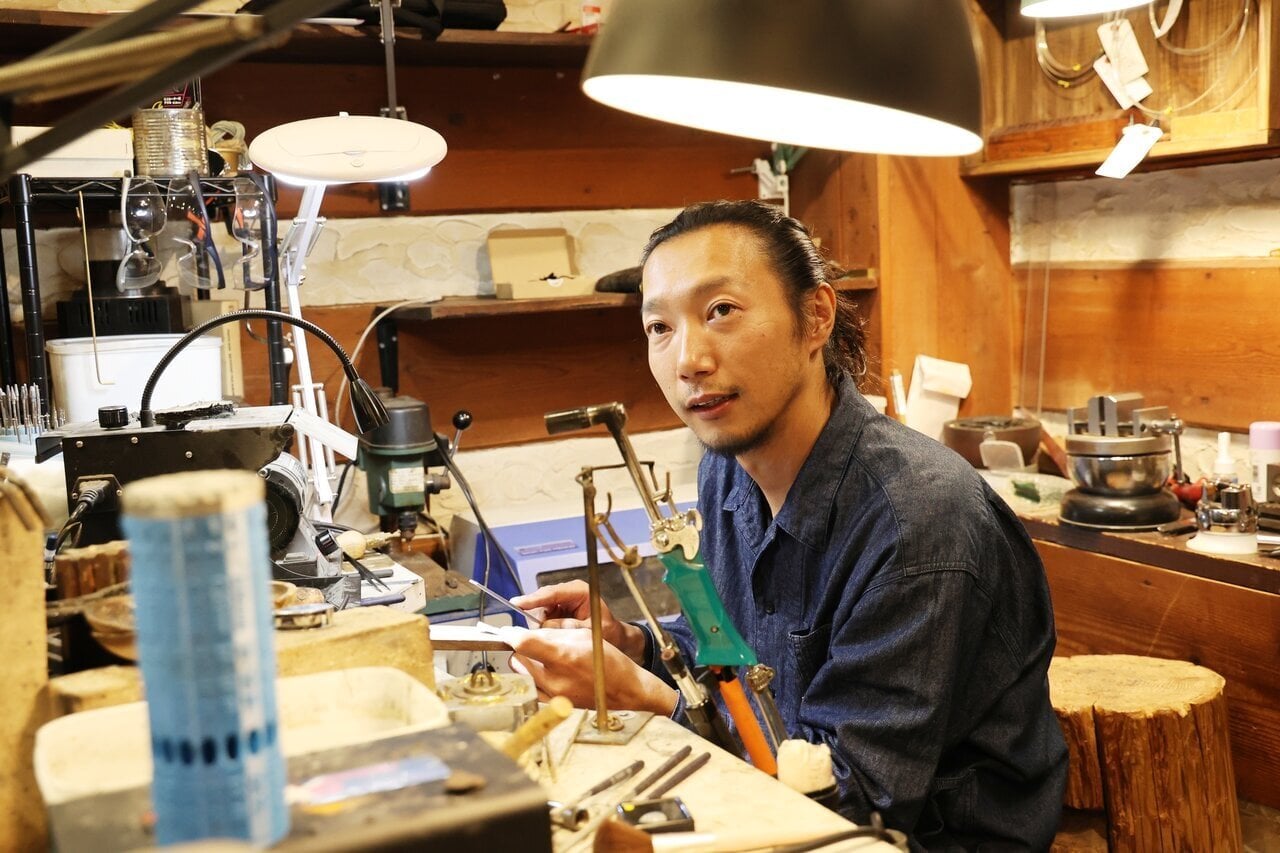
Mr. Taiki Seki
Born on August 7, 1989. From Tokyo. While working as a salaryman in the construction industry, he encountered the craft of engraving through participating in motorcycle events as a hobby, and started working part-time at a silver accessory shop. Later, he worked as a full-time employee there. After becoming independent, he started his business in April 2015, operating solely as a workshop without a storefront. About five years ago, he moved with his family to Okutama, and opened the current "Alsomitra Jewelrycraft & Cafe" in October 2024.
Born on August 7, 1989. From Tokyo. While working as a salaryman in the construction industry, he encountered the craft of engraving through participating in motorcycle events as a hobby, and started working part-time at a silver accessory shop. Later, he worked as a full-time employee there. After becoming independent, he started his business in April 2015, operating solely as a workshop without a storefront. About five years ago, he moved with his family to Okutama, and opened the current "Alsomitra Jewelrycraft & Cafe" in October 2024.
Driven by a passion for manufacturing, I transitioned from a company employee to a craftsman.
Seki: "Before I started this job, I was a company employee. I studied architecture when I was a student, so I worked at a manufacturer that made residential equipment like floor heating. At that company, they said, 'It's okay to have a side job.'"
Seki, who was an employee in the residential equipment industry and had a passion for manufacturing, began working part-time at an accessory shop. The skills he acquired in metalworking ultimately led him to pursue a career as a craftsman.
Seki: "I was in my early twenties at that time. I was still single, but with the Great East Japan Earthquake, the company I worked for was struggling, and I felt that I couldn't continue as a company employee anymore."
Seki: "So, I started working part-time on weekends. I did that for about a year, and eventually, I quit the company I was at and made the accessory shop my main job. I think I stayed there for about another year. In total, it was a little over two years, and during that time, I learned a lot, so I thought I might try going independent and doing it on my own."
"It's impressive that you decided to become independent in just two years.
Sekai: 'It was kind of an impulsive decision. Since I could create something myself, I wanted to try making something original, and I had this desire to put out my own name.'
- Did you have an interest in becoming independent while you were still a company employee?
Sekai: 'When I was a company employee, I didn't really think about it that much. It was just that I didn't have any (clear) goals. But after trying out (being a goldsmith), I felt that this suited me much better.'
- It's very interesting that changing your position led to new goals and a shift in mindset."
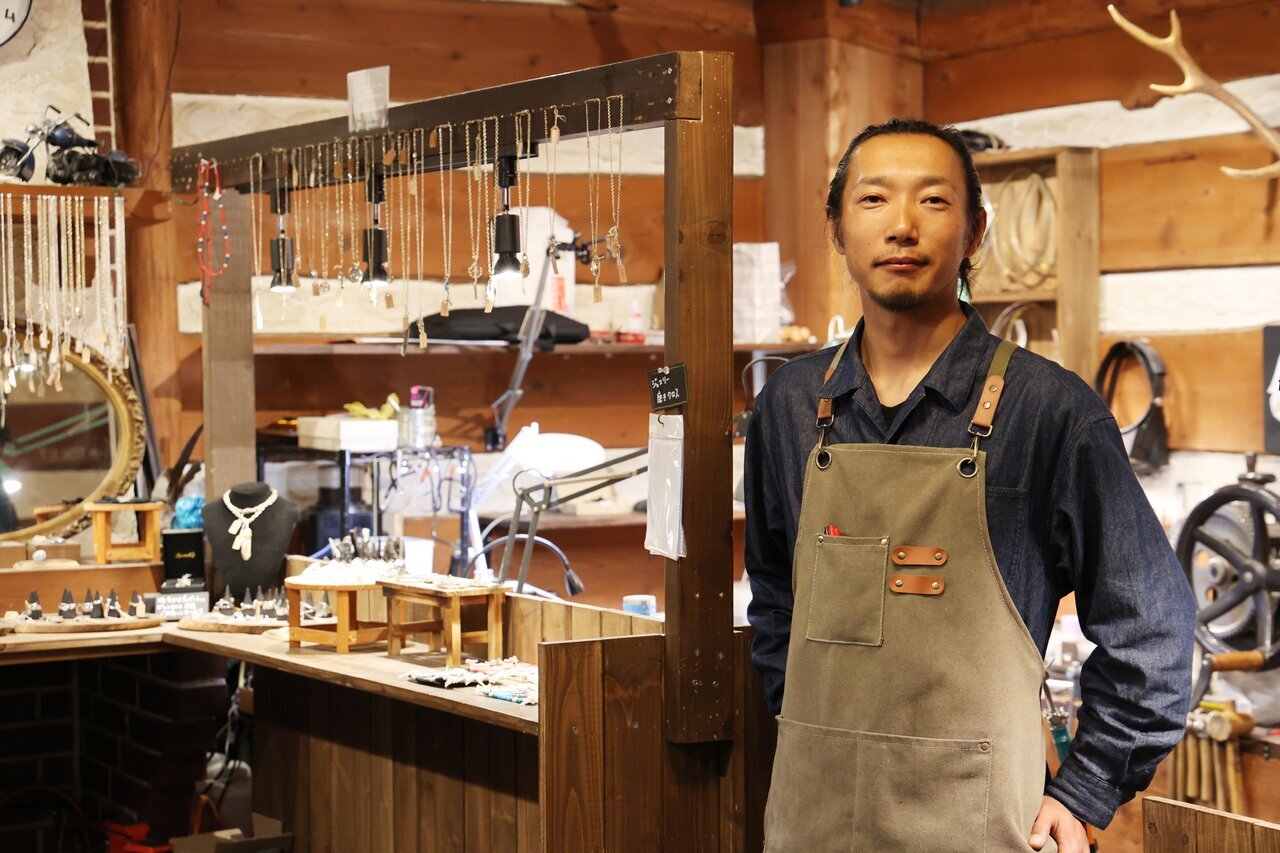
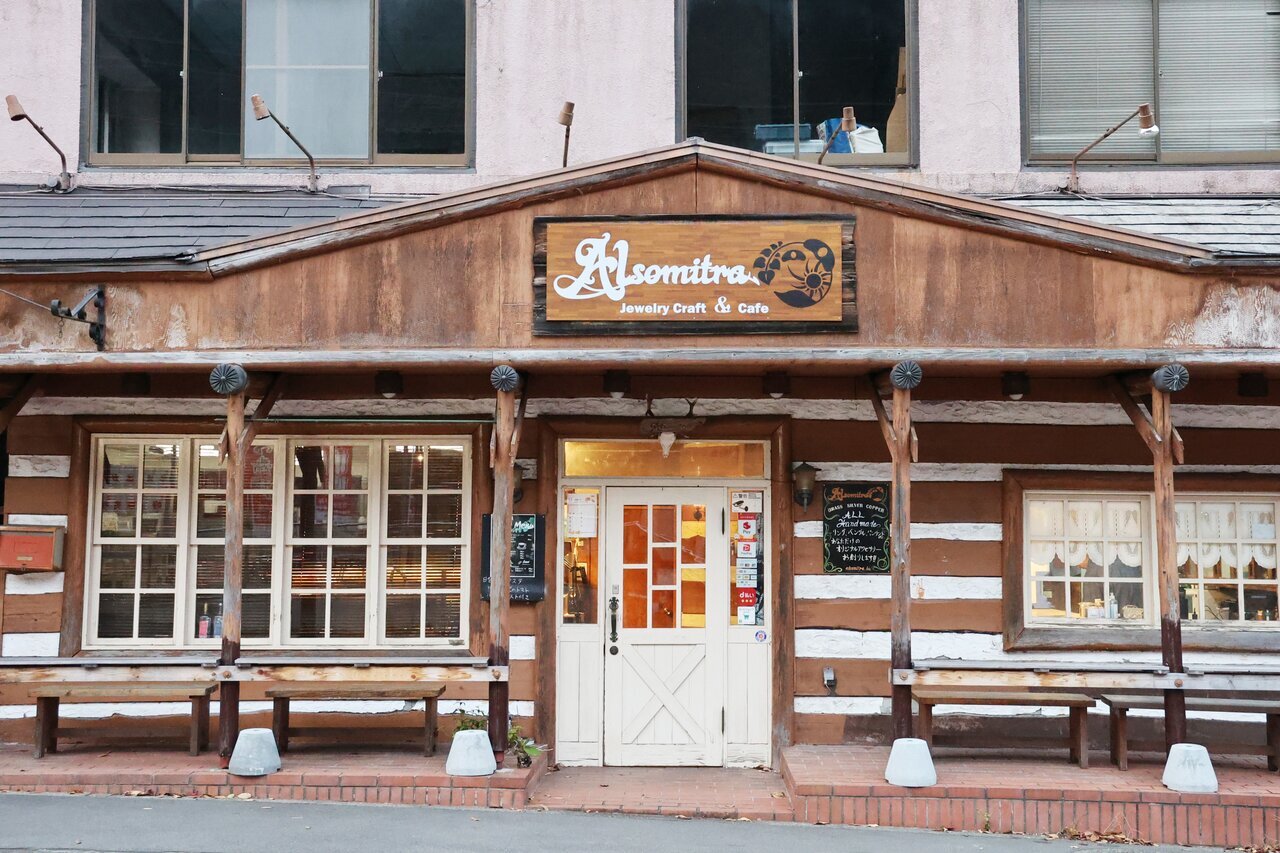
The "Chokinkin Kobo Arsomitora," which opened in Okutama, is a unique space that combines a workshop and a café.
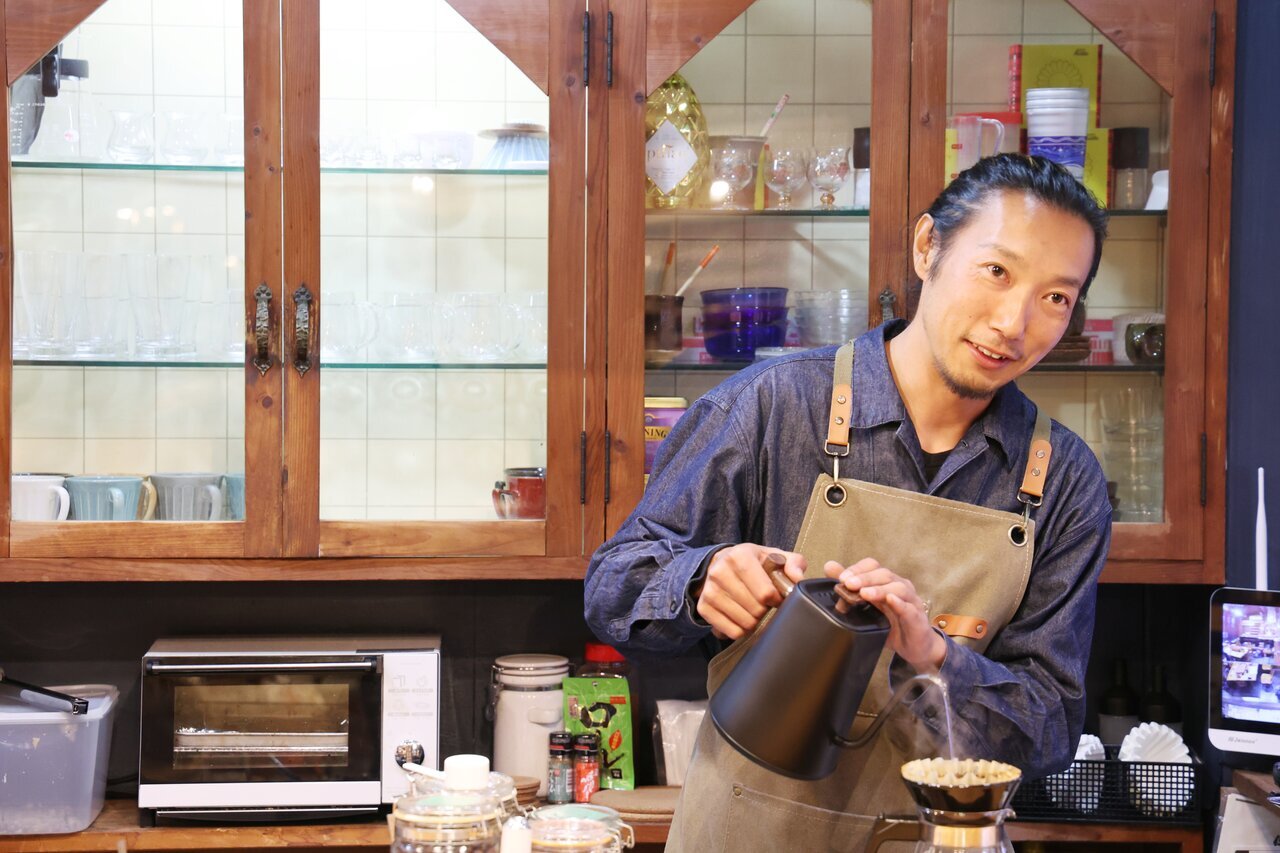
It seems that the decision to establish a store in Okutama stemmed from learning about the migration system. Around the same time that they became independent, they got married and had a child, which made their apartment feel cramped, triggering the move.
Seki: "When I consulted with the city hall, I learned about a system where you can get a property in Okutama for free after living there for 15 years. At that time, someone suggested, 'Why don't you apply?' So I applied, and I ended up winning. Well, once I won, it felt like, 'Shall we move here?'
Kange: "I never had the mindset of 'it absolutely has to be here.' I feel like I've lived quite a bit like that up until now. If Plan A doesn't work, then there's Plan B, that kind of feeling. So, there's no insistence that 'this property is the only one that will do' for the shop either; it just happened that this place became available. It's close to Okutama Station, it's a bit spacious, and there's a second floor, so it feels good."
The impression that many people make decisions on significant matters easily may stem from their flexible thinking without being overly attached to specifics. As Mr. Seki said, the phrase "If Plan A doesn't work, then I'll go with Plan B" is also memorable.
"Was the concept of a store style that combines a jewelry workshop, shop, and café present from the beginning when you opened?"
Sekiguchi: "We had the idea of wanting to do experiential workshops from the start. However, since we have a kitchen and an eating space here, I thought, ‘We can also have a café.’ The concept of the store came after we found the property."
―For dog lovers, this kind of lifestyle might be great, right?
Seki: "Ah, that’s true. It was nice to be able to be with (my dog) all the time. Nature is close for walks, and there are rivers and mountains."
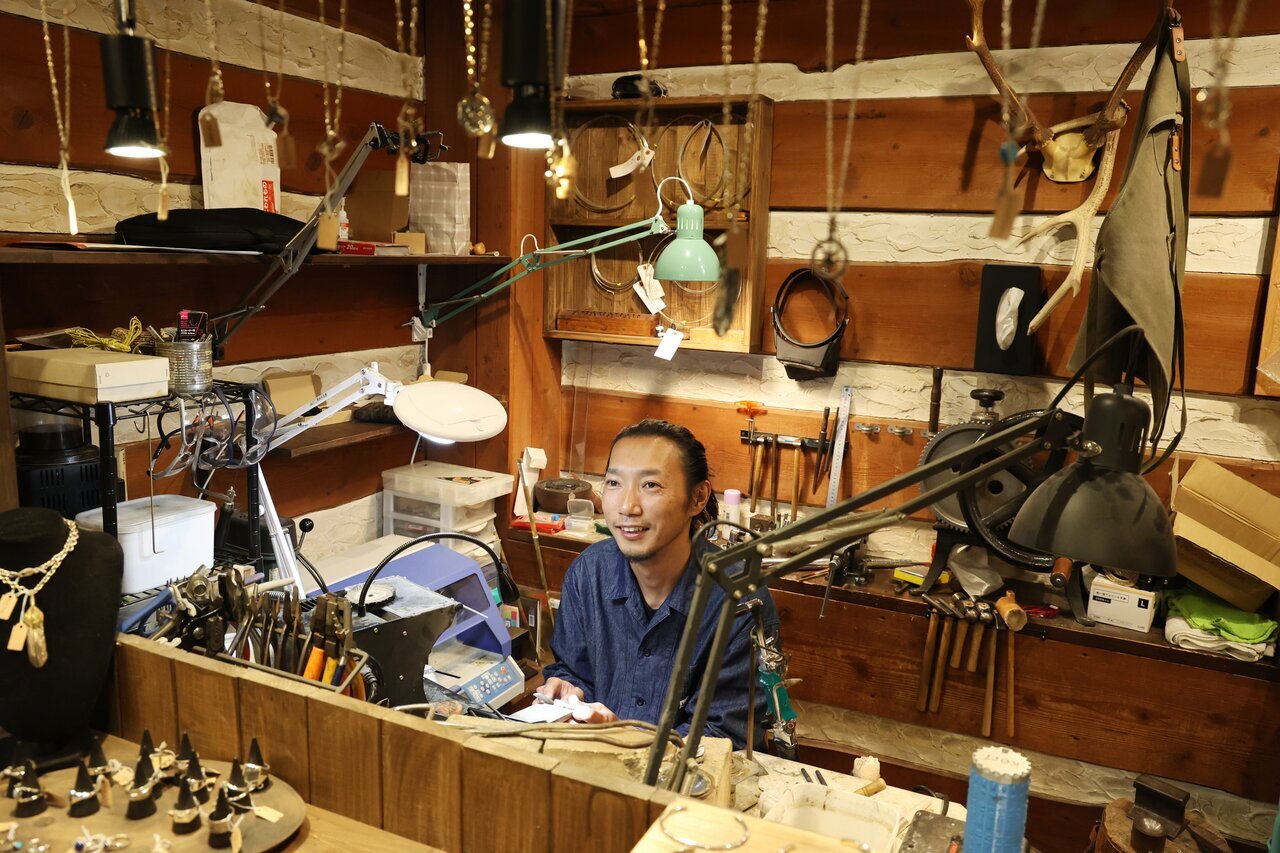
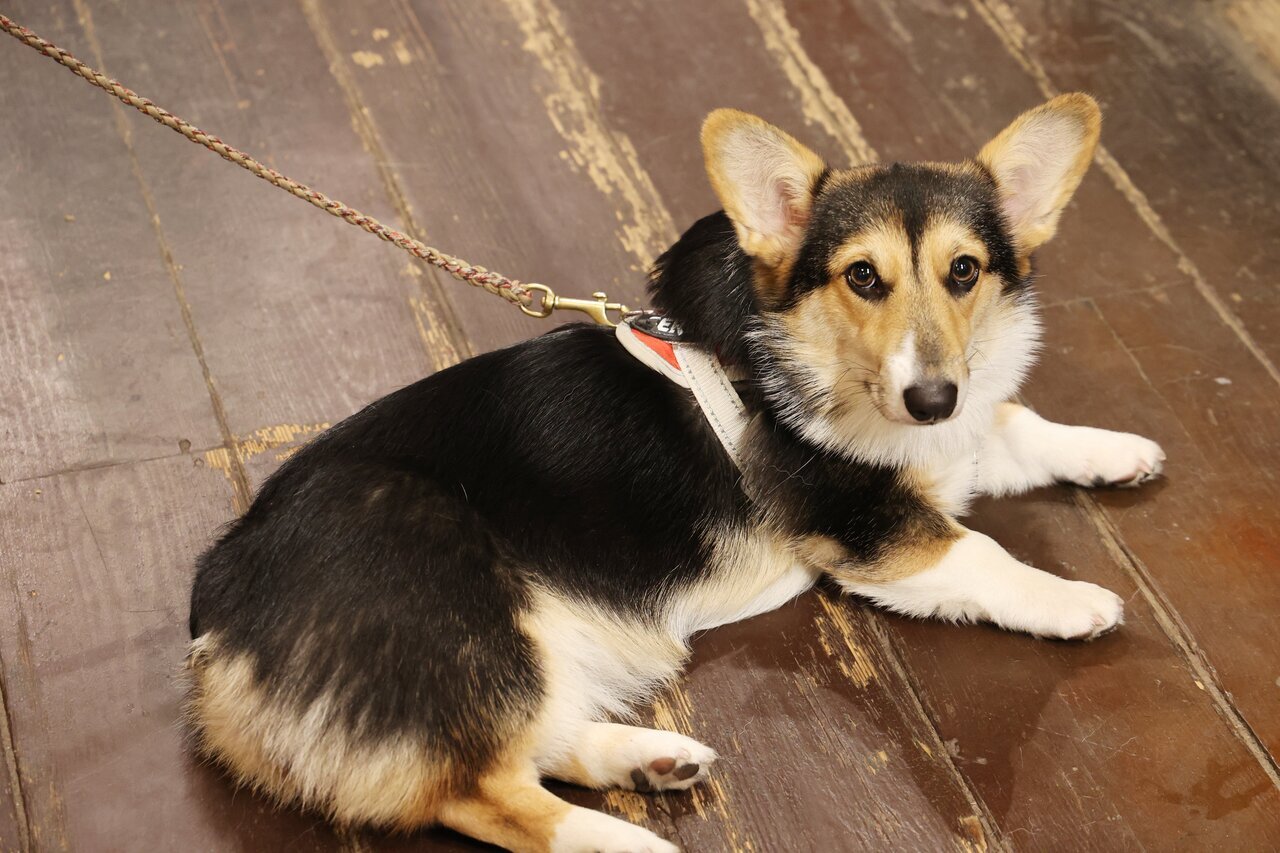
A wonderful space surrounded by favorite work and tools, where one can always be with their beloved dog. Even the beloved dog "Ibushi-chan" looks very happy.
Seki: "Ah, that’s true. It was nice to be able to be with (my dog) all the time. Nature is close for walks, and there are rivers and mountains."
A wonderful space surrounded by favorite work and tools, where one can always be with their beloved dog. Even the beloved dog "Ibushi-chan" looks very happy.
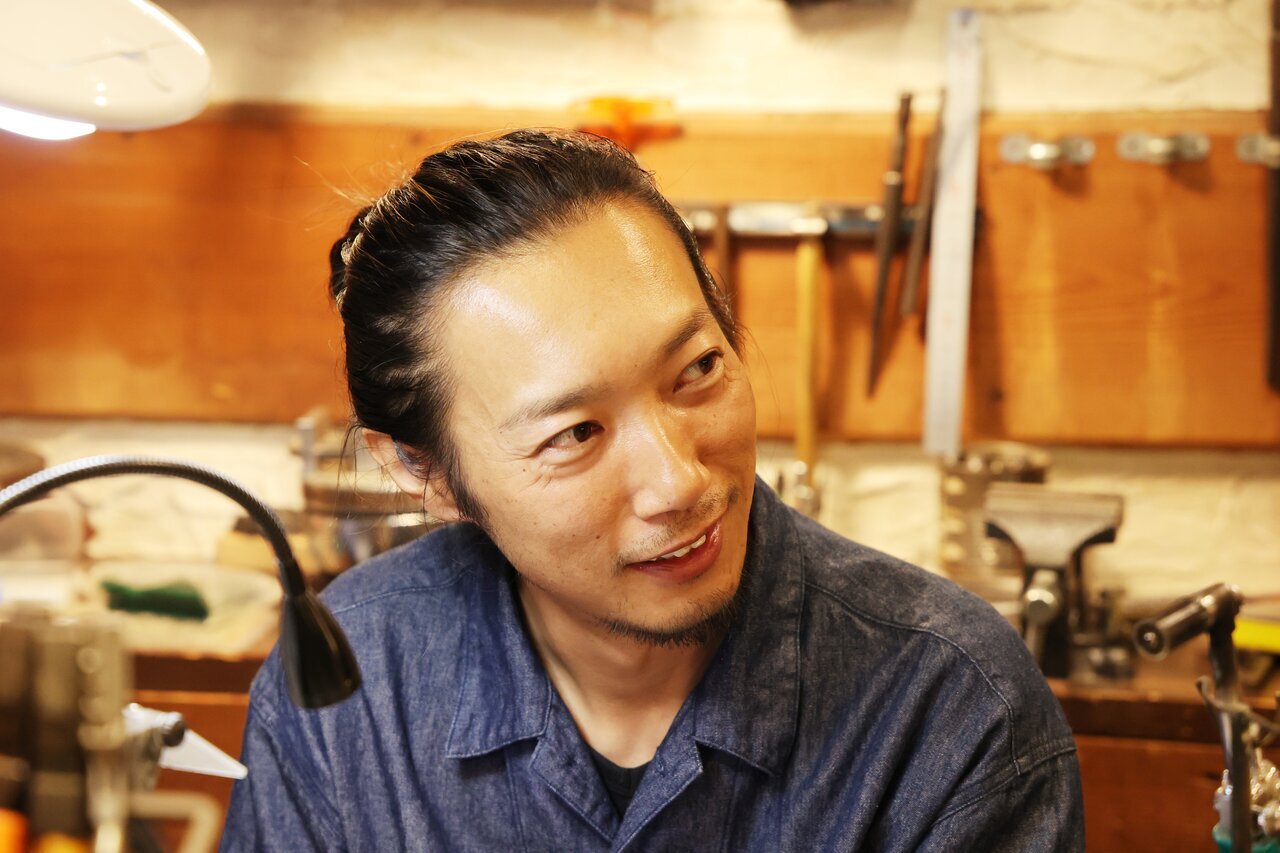
In the era when they only operated from the workshop, their business mainly focused on event participation and online sales, but having a physical store has broadened their customer reach.
Seki: "After all, I realize that there are great benefits to having a proper store. When participating in events, I had to go out myself, so it’s really nice that customers come to me. While talking with customers in the store, it sometimes leads to discussions about their gift preferences or ideas about custom orders, so having the cafe as a starting point, and in the end, customers also like the accessories and it leads to sales, is the most gratifying aspect."<
Seki: "After all, I realize that there are great benefits to having a proper store. When participating in events, I had to go out myself, so it’s really nice that customers come to me. While talking with customers in the store, it sometimes leads to discussions about their gift preferences or ideas about custom orders, so having the cafe as a starting point, and in the end, customers also like the accessories and it leads to sales, is the most gratifying aspect."<
The warm atmosphere of the store and Seki's soft demeanor, which is not typically what you’d expect from a craftsman in a good way, create a space that is satisfying even if just used for the cafe.
We also asked about the content of the experiential workshops, which is one of the purposes of starting the business, and Seki's commitment to silver.
We also asked about the content of the experiential workshops, which is one of the purposes of starting the business, and Seki's commitment to silver.
The workshops offer a hands-on experience that can be completed in two hours, too.
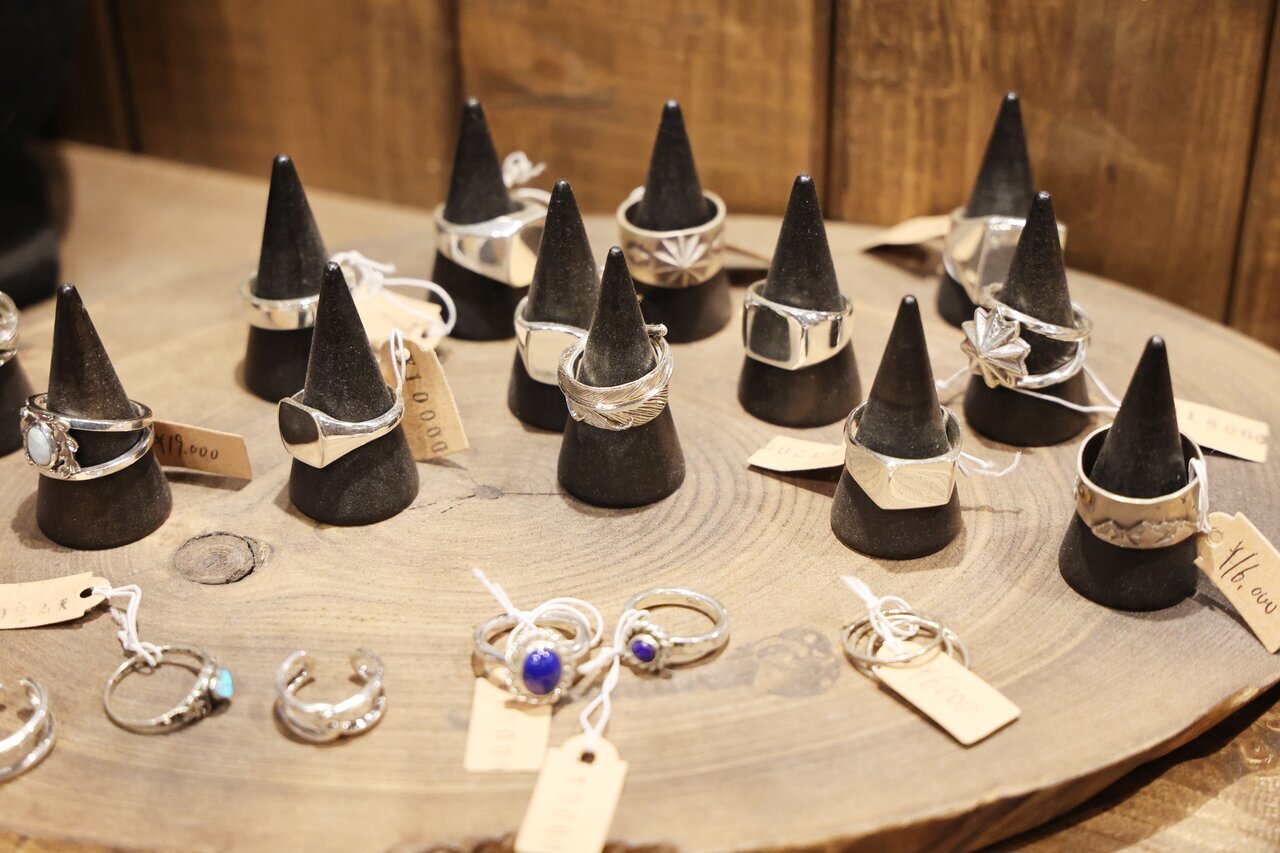
—Can you tell us about your commitment to the accessories you create?
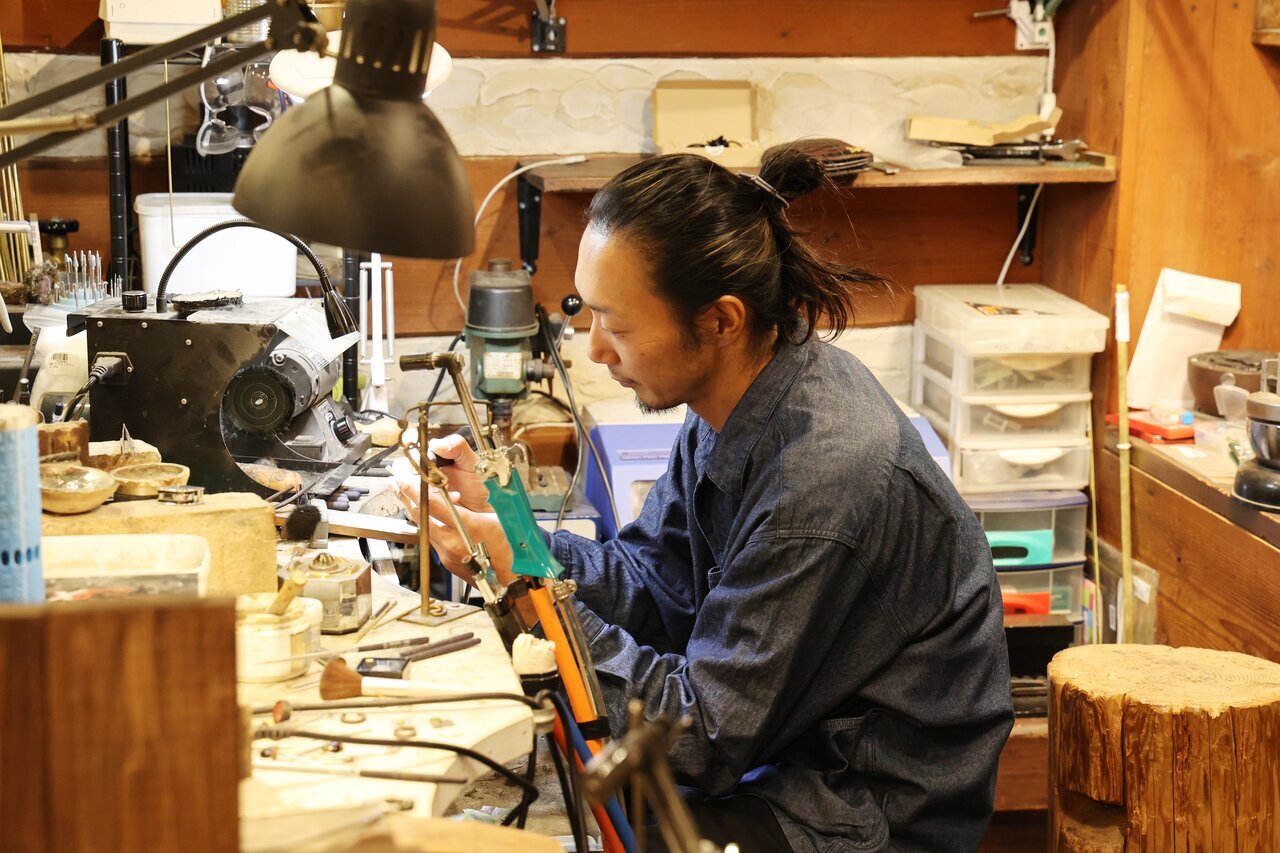
Seki: "We basically make everything by hand, so custom orders are possible. We use silver 925 as the material, and from the state of sheets or rods, we bend and carve each piece individually. This is called 'forging,' where the raw metal is processed directly, and it’s all handmade."
Seki: "We basically make everything by hand, so custom orders are possible. We use silver 925 as the material, and from the state of sheets or rods, we bend and carve each piece individually. This is called 'forging,' where the raw metal is processed directly, and it’s all handmade."
―There are many works that look like Indian jewelry.
Seki: "Indeed, many Indian jewelry pieces are also made through forging, so I think that gives a similar impression. When I made it during my experience that led me to pursue becoming a craftsman, it was also forged by processing the metal directly, so I am still following that flow."
Seki: "Indeed, many Indian jewelry pieces are also made through forging, so I think that gives a similar impression. When I made it during my experience that led me to pursue becoming a craftsman, it was also forged by processing the metal directly, so I am still following that flow."
Seki: "I create my own chisels to carve complex patterns, such as arabesque designs, and basically, for the pieces I make, I use original chisels. Also, for after-service repairs, polishing, and maintenance, anything purchased from our shop is repaired for free."
―How long does it take to make one piece of accessory?
Seki: "If it's a quick piece, it can be done in 1 to 2 hours. The experience workshop is for 2 hours, so even if two people come and a complete beginner starts making, it can be completed within that 2-hour frame, so in terms of actual working time, I think it would be about 1 hour for the customer."
Seki: "You cut the silver rod to the necessary length, carve the patterns, heat it, bend it, and weld the joints."
―Is it possible to do the same thing in the experience workshop?
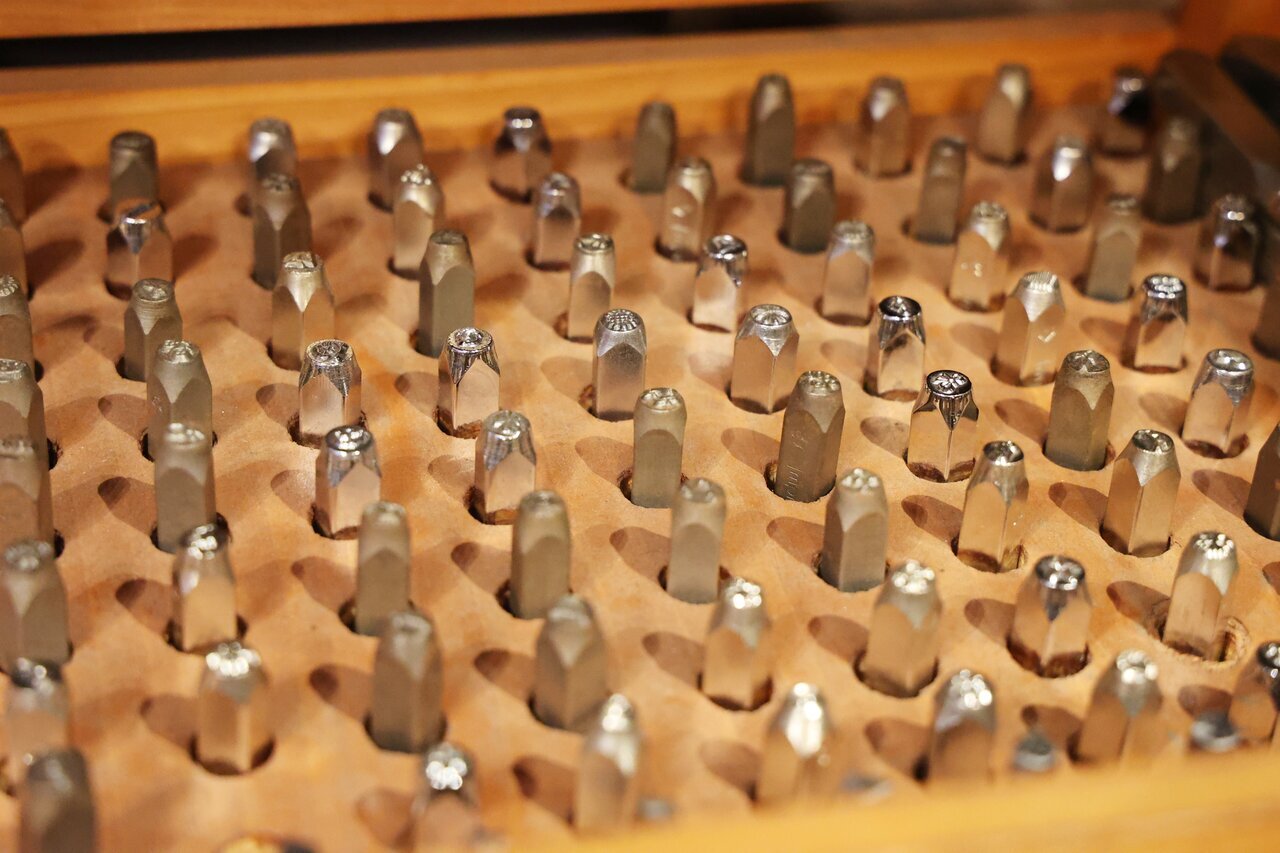
Seki: "Yes, that's the idea. There are over 100 types of stamps to imprint patterns, and you can choose from many options. The variety of stamps might be the largest among places offering workshops across Japan. However, I think it would be a bit difficult for customers to use original tools like the ones I use, so I separate the tools used in the experience workshop from those for creating my original works."
Seki: "If it's a quick piece, it can be done in 1 to 2 hours. The experience workshop is for 2 hours, so even if two people come and a complete beginner starts making, it can be completed within that 2-hour frame, so in terms of actual working time, I think it would be about 1 hour for the customer."
Seki: "You cut the silver rod to the necessary length, carve the patterns, heat it, bend it, and weld the joints."
―Is it possible to do the same thing in the experience workshop?
Seki: "Yes, that's the idea. There are over 100 types of stamps to imprint patterns, and you can choose from many options. The variety of stamps might be the largest among places offering workshops across Japan. However, I think it would be a bit difficult for customers to use original tools like the ones I use, so I separate the tools used in the experience workshop from those for creating my original works."
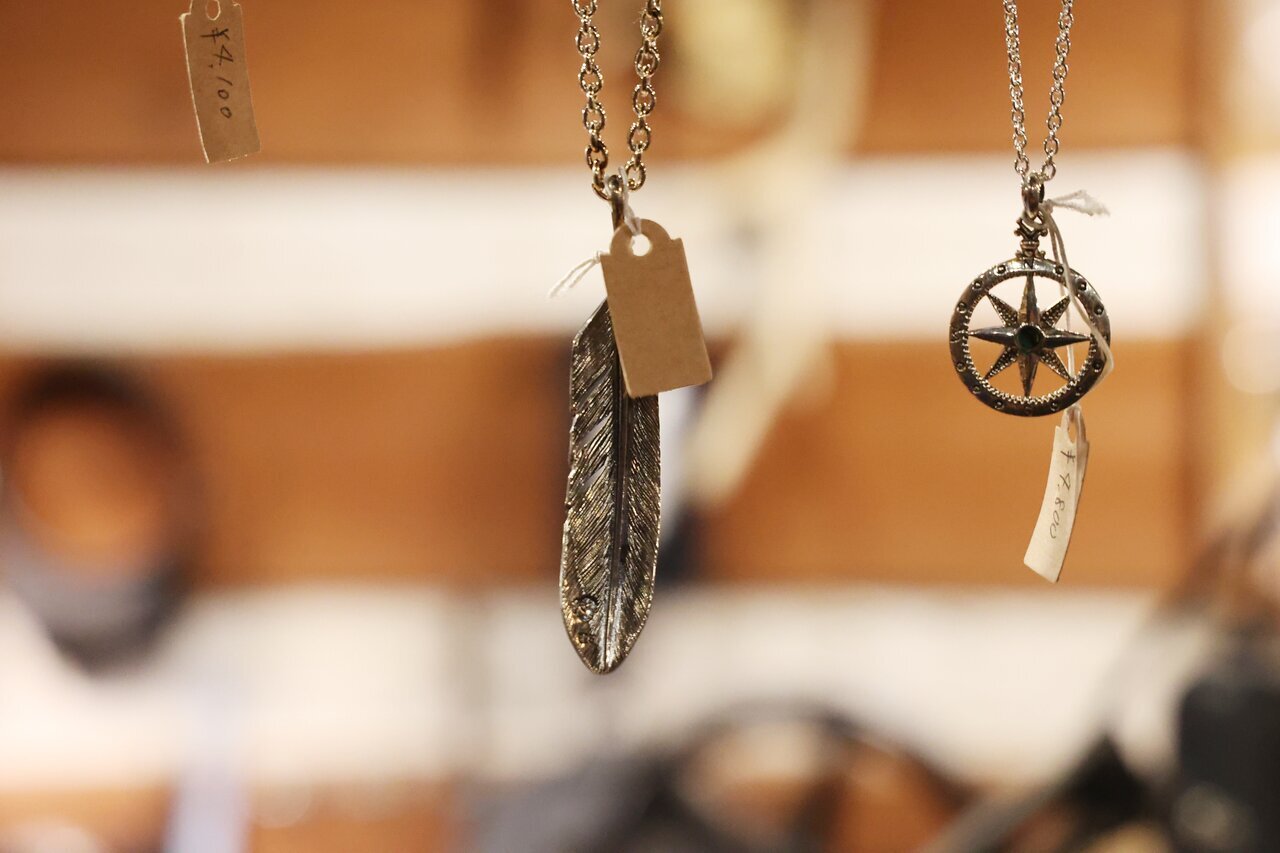
Seki: "People often say that the experience workshop is 'this authentic?' There are other places offering workshops, but many just involve hammering a piece that's already shaped into a ring to add patterns. It seems there aren't many places where you actually create from a rod state."
―Starting from a state where the completion is not visible is exciting, isn't it?
Seki: "Using a burner, I say something like 'please apply heat here.' I explain how the metal will melt and stick together at the joint while experiencing it together, so for those who love making things, this kind of technical guidance is very engaging. Even for women, it's something they enjoy."
―It seems like people who want to become craftsmen like Seki would also come here.
Seki: "We welcome such people, but they are quite rare. I hope that if such individuals exist, our shop might be a catalyst for them. When I first started out as a craftsman, it was thanks to the experience workshop. I want to convey the excitement I felt back then to others."
―Starting from a state where the completion is not visible is exciting, isn't it?
Seki: "Using a burner, I say something like 'please apply heat here.' I explain how the metal will melt and stick together at the joint while experiencing it together, so for those who love making things, this kind of technical guidance is very engaging. Even for women, it's something they enjoy."
―It seems like people who want to become craftsmen like Seki would also come here.
Seki: "We welcome such people, but they are quite rare. I hope that if such individuals exist, our shop might be a catalyst for them. When I first started out as a craftsman, it was thanks to the experience workshop. I want to convey the excitement I felt back then to others."
The experience workshop is designed with the concept that participants can experience making things in an environment identical to that of professionals, so they can gain the same 'excitement for making things' that Seki once experienced.
In winter, I want to broaden the scope of my creations
— do you have any future prospects?
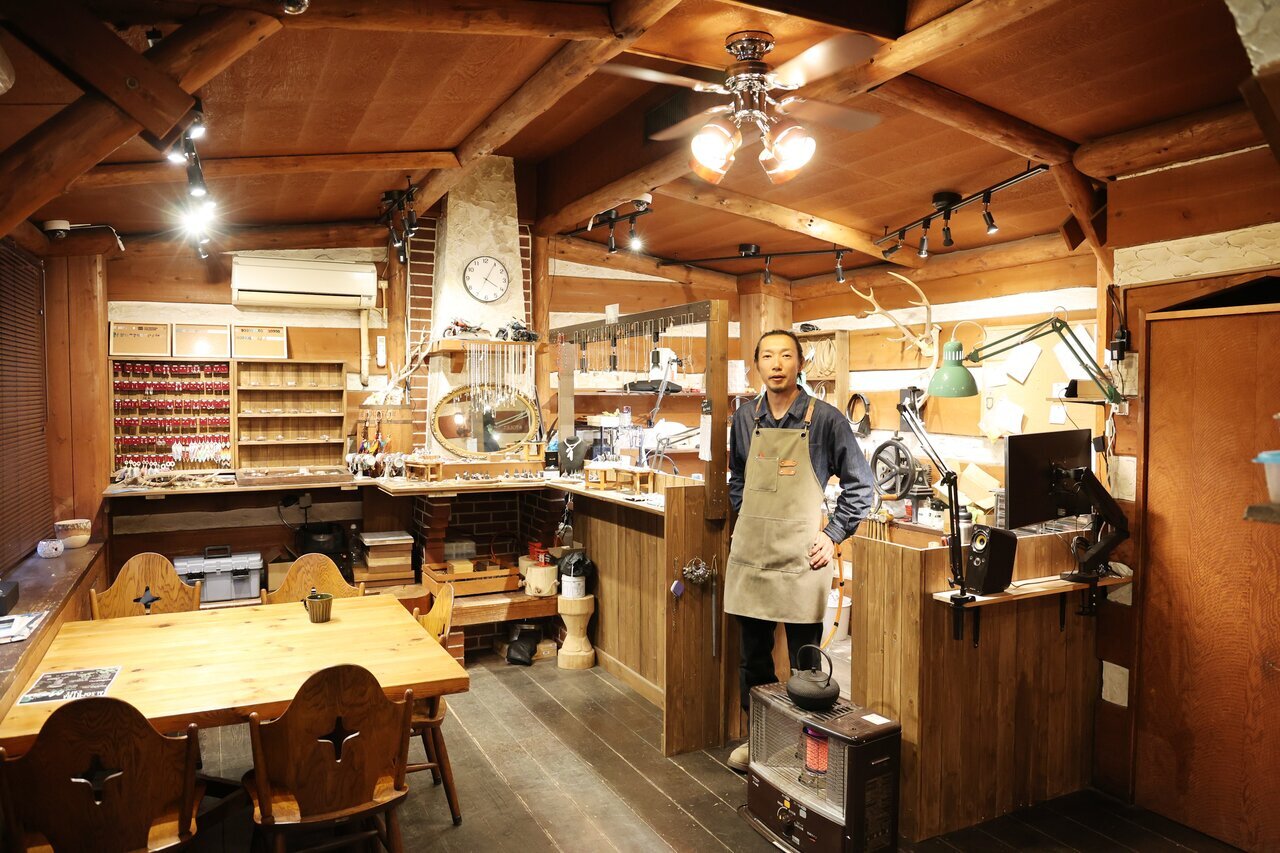
Seki: "I definitely want to expand the scope of my creations. I have gathered various equipment, and if I expand my workspace, I can do a lot of different things. (Pointing at the machine) That’s a machine for polishing raw natural stones, and if there’s always available space, I was thinking I could offer experiences like carving pendants from those raw stones. It will broaden my own creative possibilities as well."<
Seki: "I definitely want to expand the scope of my creations. I have gathered various equipment, and if I expand my workspace, I can do a lot of different things. (Pointing at the machine) That’s a machine for polishing raw natural stones, and if there’s always available space, I was thinking I could offer experiences like carving pendants from those raw stones. It will broaden my own creative possibilities as well."<
Seki: "Winter is a period when customer numbers decrease; (due to the location) there are indeed fewer people walking around in winter. So, I want to do more work that I can do even if customers don’t come. Therefore, the café that’s attached will probably become more of a workshop-style shop in the winter."<
Behind the unique store style that combines a jewelry studio and experiential workshops with a café space is the flexible and positive mindset of the owner, Seki, and a desire to convey the joy of creating things.
The store name "Alsomitra" comes from the name of a plant that has seeds with flying wings. It is said to have been named with the hope that her works will take flight and grow in various places. I feel that in the future it will become a place where artisans with dreams like Seki’s can also take flight.
The store name "Alsomitra" comes from the name of a plant that has seeds with flying wings. It is said to have been named with the hope that her works will take flight and grow in various places. I feel that in the future it will become a place where artisans with dreams like Seki’s can also take flight.
Alsomitra Jewelrycraft&Cafe
Location: 1389 Hikawa, Okutama, Nishitama District, Tokyo
Phone: 090-3545-6604
Business hours: 10:00 AM to 5:00 PM (Fridays only 10:00 AM to 3:00 PM) Closed: Wednesdays and Sundays
Parking: 2 spaces available in the parking lot of the post office across the street.
Location: 1389 Hikawa, Okutama, Nishitama District, Tokyo
Phone: 090-3545-6604
Business hours: 10:00 AM to 5:00 PM (Fridays only 10:00 AM to 3:00 PM) Closed: Wednesdays and Sundays
Parking: 2 spaces available in the parking lot of the post office across the street.
Photography / Masashi Kakino Interview & Text / Kazuma Tanaka
- SHARE



![[Midnight Drive] I wanted to cool off a bit, so I went for an adult night stroll at the retro vending machine corner in Sagamihara.](https://cdn.clipkit.co/tenants/1046/articles/images/000/032/887/large/a1bf17cd-06d0-4ad5-8236-8fd2970728e5.jpg?1787522426)
![[Interview] Bongo Brownie ✕ VAN LIVING What is the concept of living space that can be enjoyed with simple DIY?](https://cdn.clipkit.co/tenants/1046/articles/images/000/029/348/large/1669c7fe-4dba-4cc5-b0a3-7defa56bc0c0.jpg?1774904732)
 FASHION
 OUTDOOR
 WATCH
WATCH CAR & BIKE
 SNAP
SNAP DINING
 LIFE
LIFE GADGET
 GOLF
GOLF