
CAR & BIKE
2026.03.01
【Scenery at the Bottom of the Lake】Due to drought, the old road can be seen at "Miyagase Dam"! What is the reason for the emergence of this popular driving course?
Recently, the lack of rainfall has worsened the drought situation in various places. Even at the Miyagase Dam (Miyagase Lake), which is usually a popular driving course, there are reports of the old road submerged underwater appearing. I thought I would check it out for myself.
The Miyagase Dam (Miyagase Lake), one of Kanagawa Prefecture's top drive spots, is
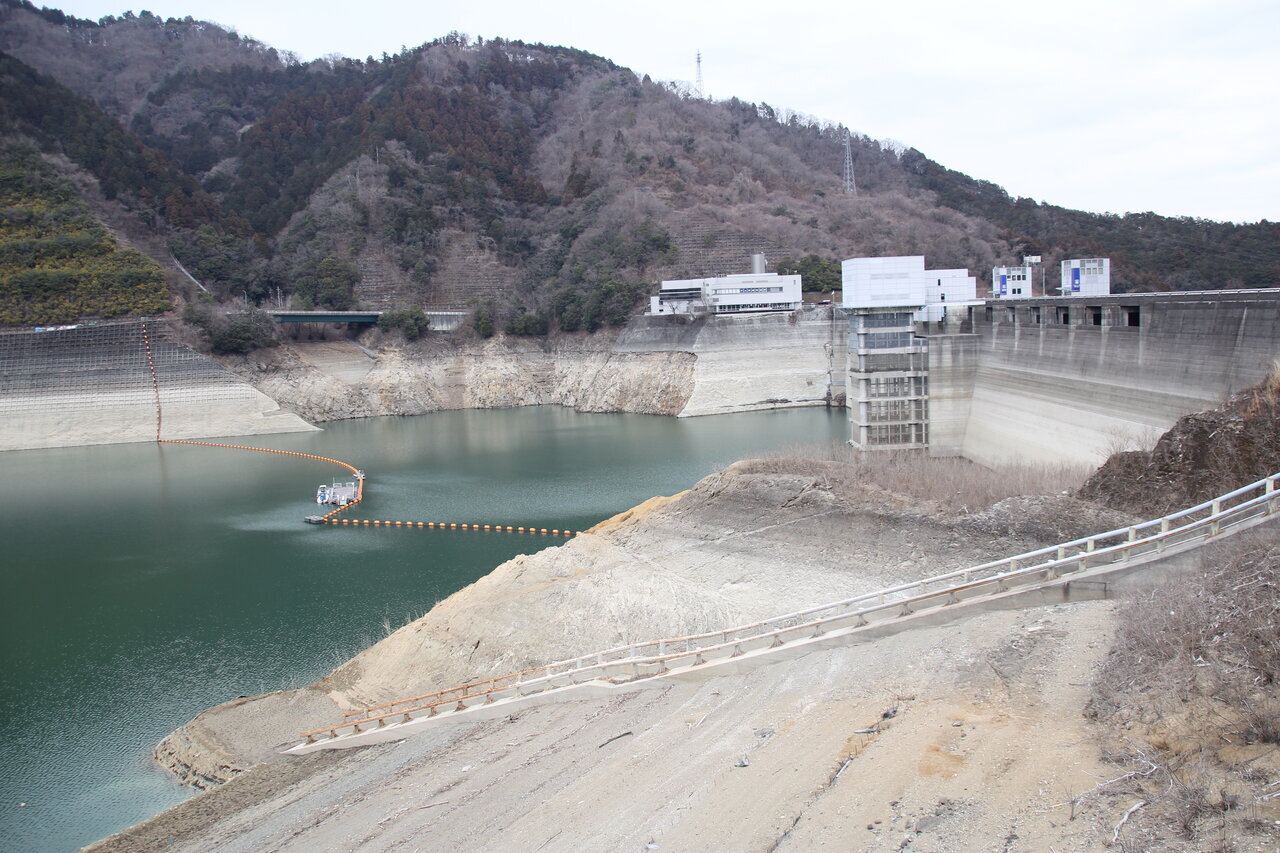
the largest dam in the metropolitan area, constructed with the aim of flood control for the Nakatsu River, securing drinking water, and generating electricity, with its construction plan announced in 1969. Construction began in 1987, and it was completed in March 2001. It has been in operation since April of the same year. The route along the lakeshore is beautiful and relatively flat, making it easy to drive, and it is popular as a driving and touring spot.
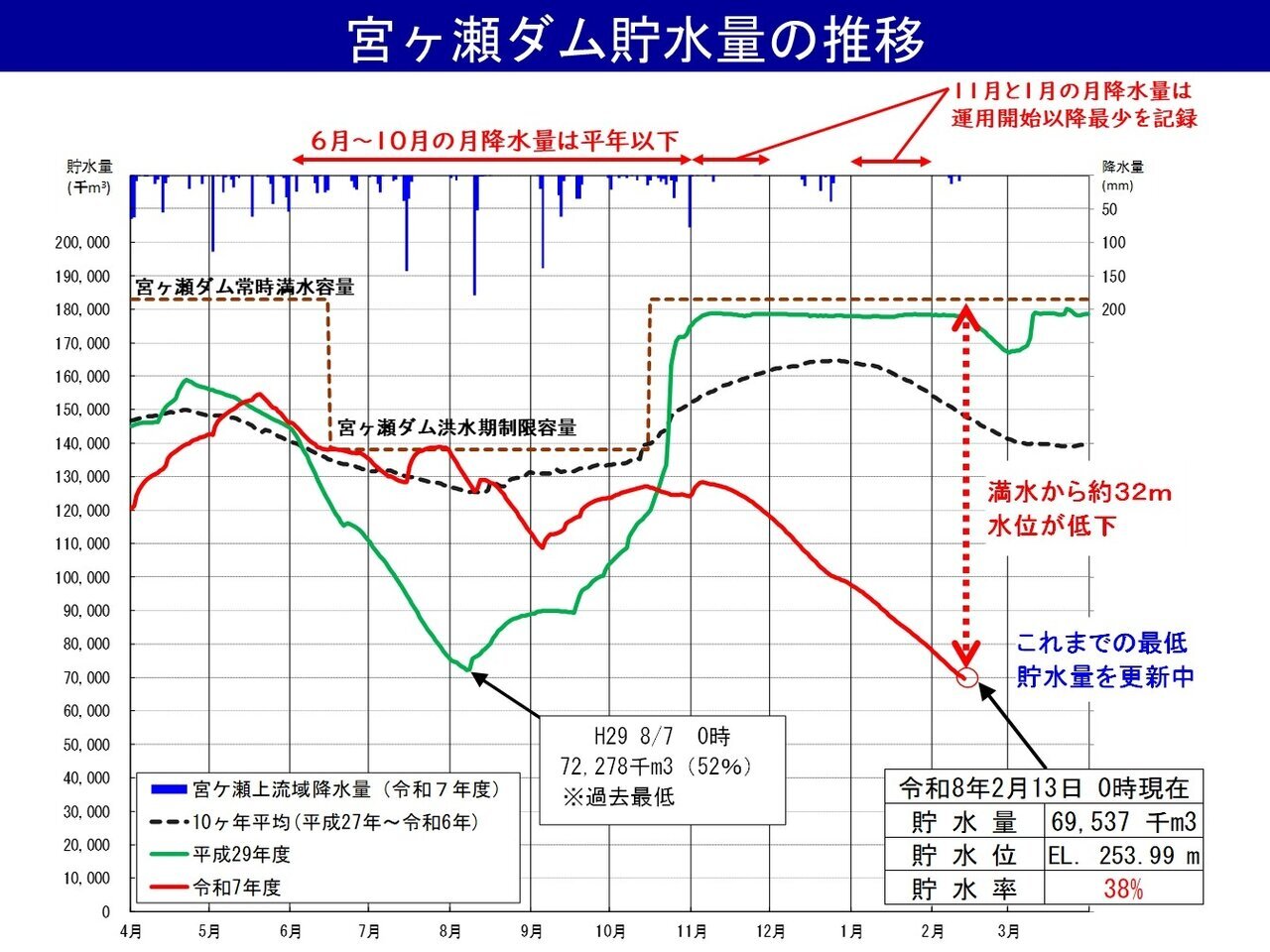
On this day, the dam set a record low water level, with a decrease of about 32 meters from full capacity, due to very low precipitation compared to previous years (as of February 13, 2026). In this unwelcome situation, various images are being posted on social media about the appearance of the "old road" that has surfaced from the lakebed.
This time, I drove to reflect on the charm and history of Miyagase Dam, as well as to actually check the "landscape of the past" that has emerged due to natural changes.
This time, I drove to reflect on the charm and history of Miyagase Dam, as well as to actually check the "landscape of the past" that has emerged due to natural changes.
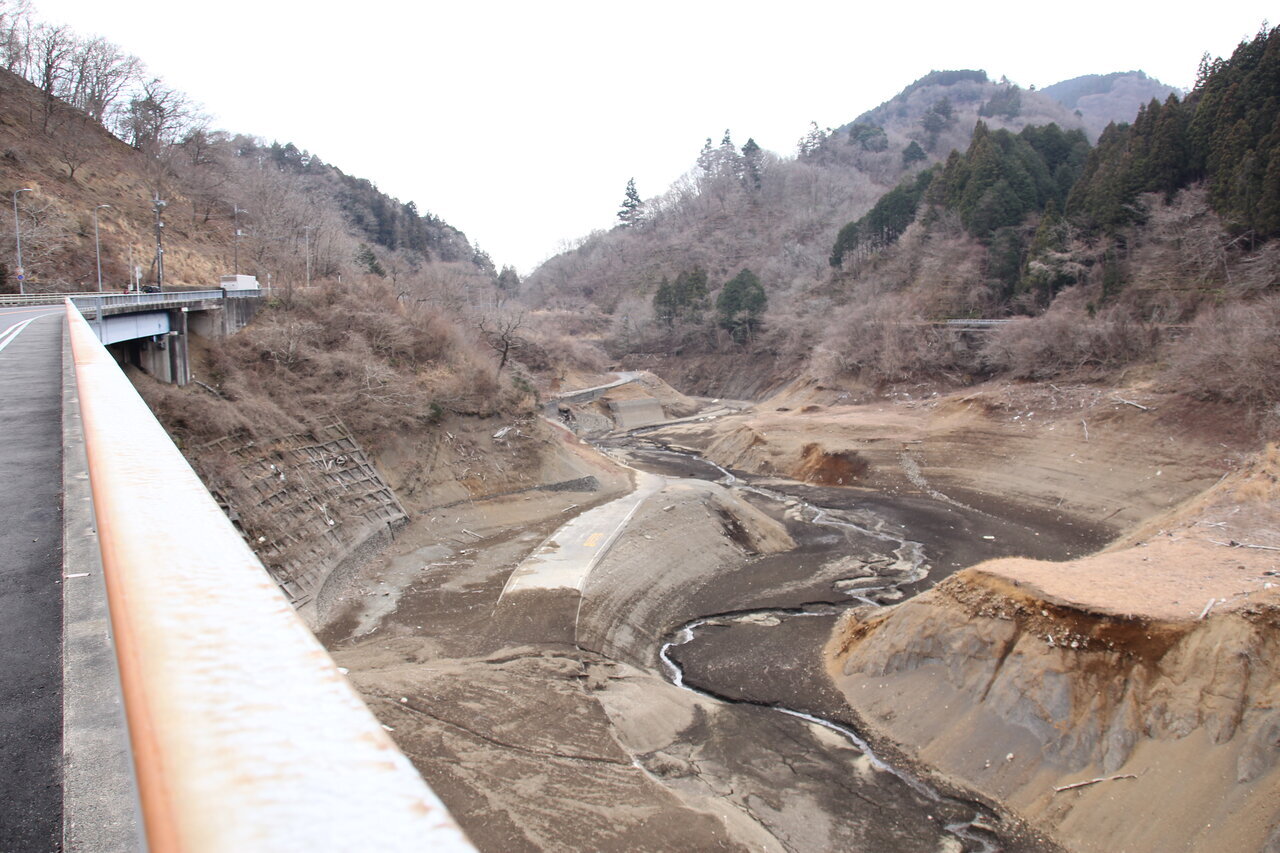
The view of the old road emerging from the dry lakebed.
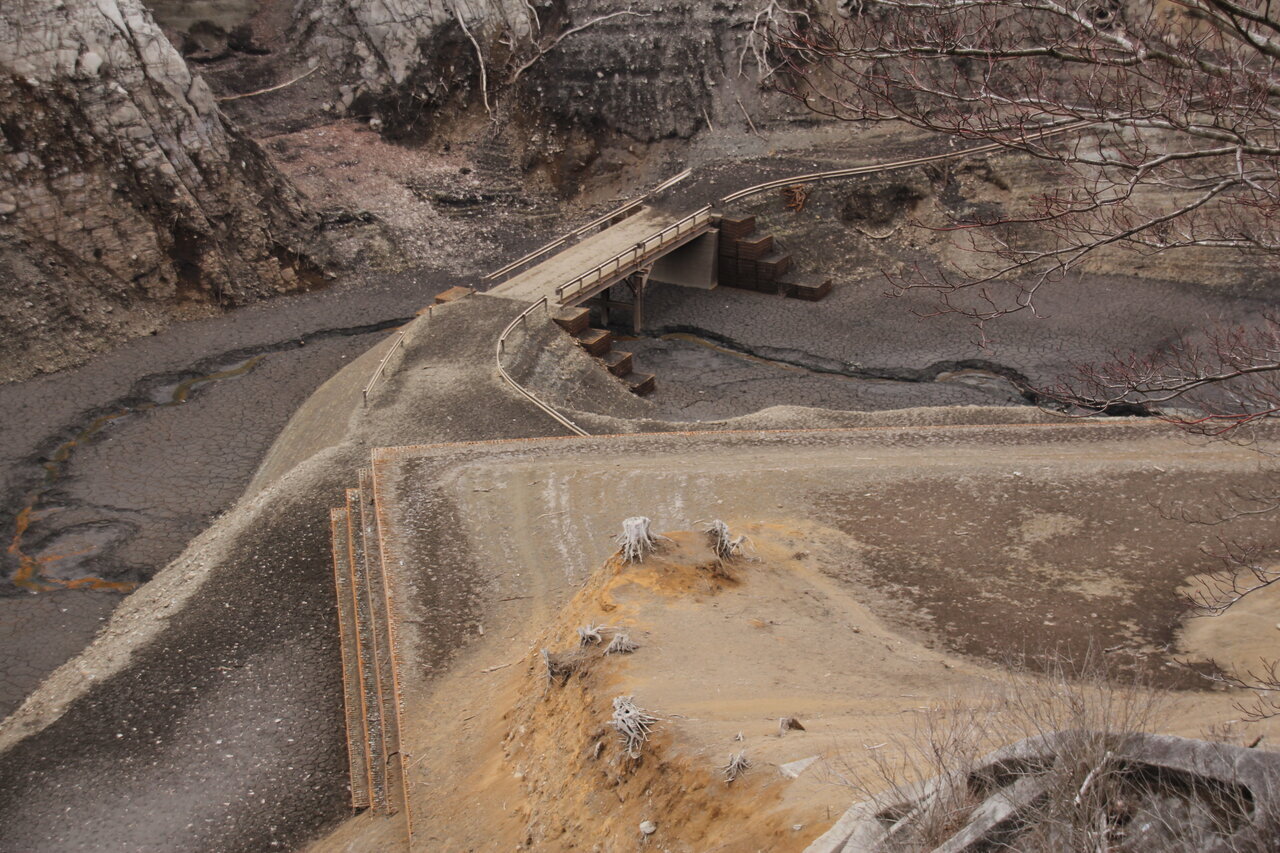
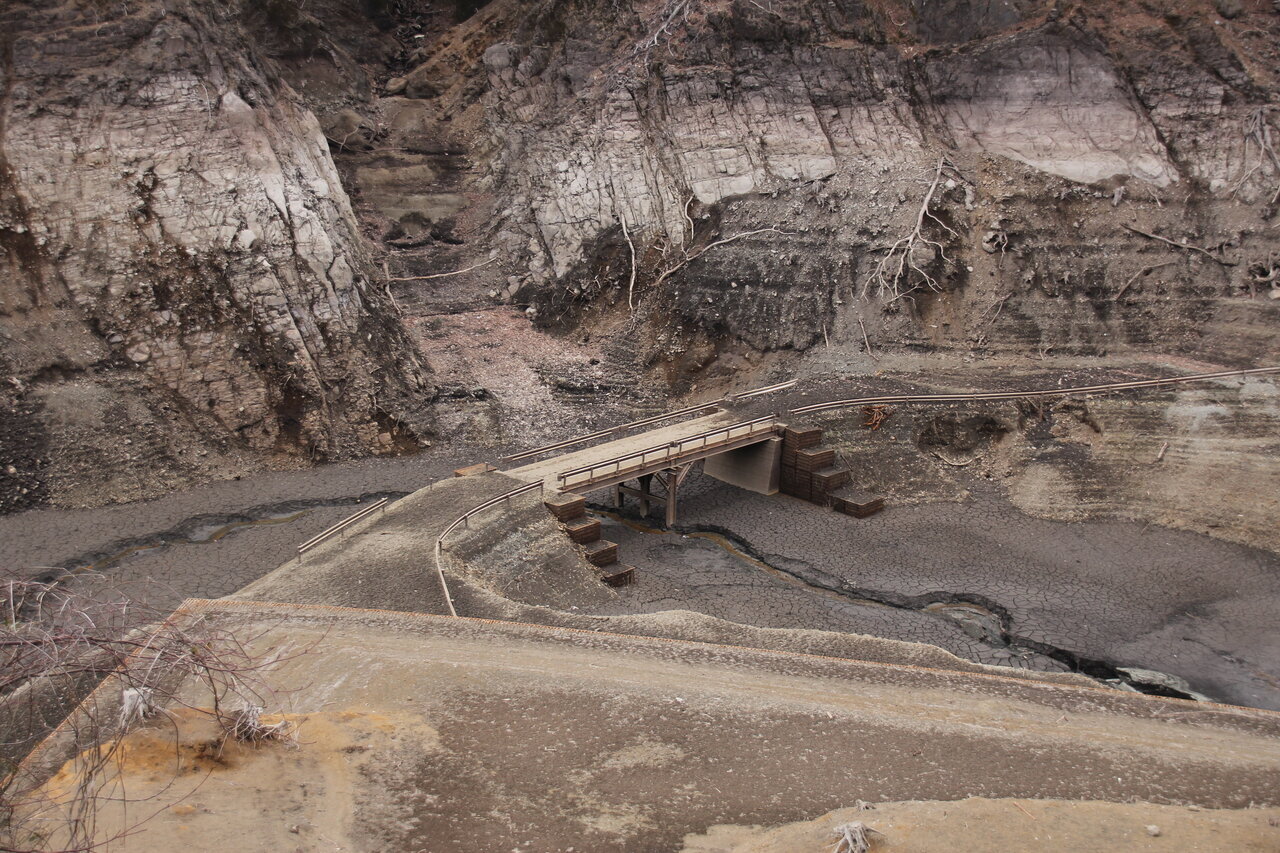
What was confirmed this time are the old roads and structures in the downstream area where the bottom of the lake has been exposed. It is surprising to see that the ruins, which sank to the lake bottom decades ago after finishing their purpose, are preserved so beautifully. Since the terrain is exposed, it feels as if the flow of the old river is becoming visible. Before the dam was built, it must have flowed under this bridge, soothing the hearts of the residents.
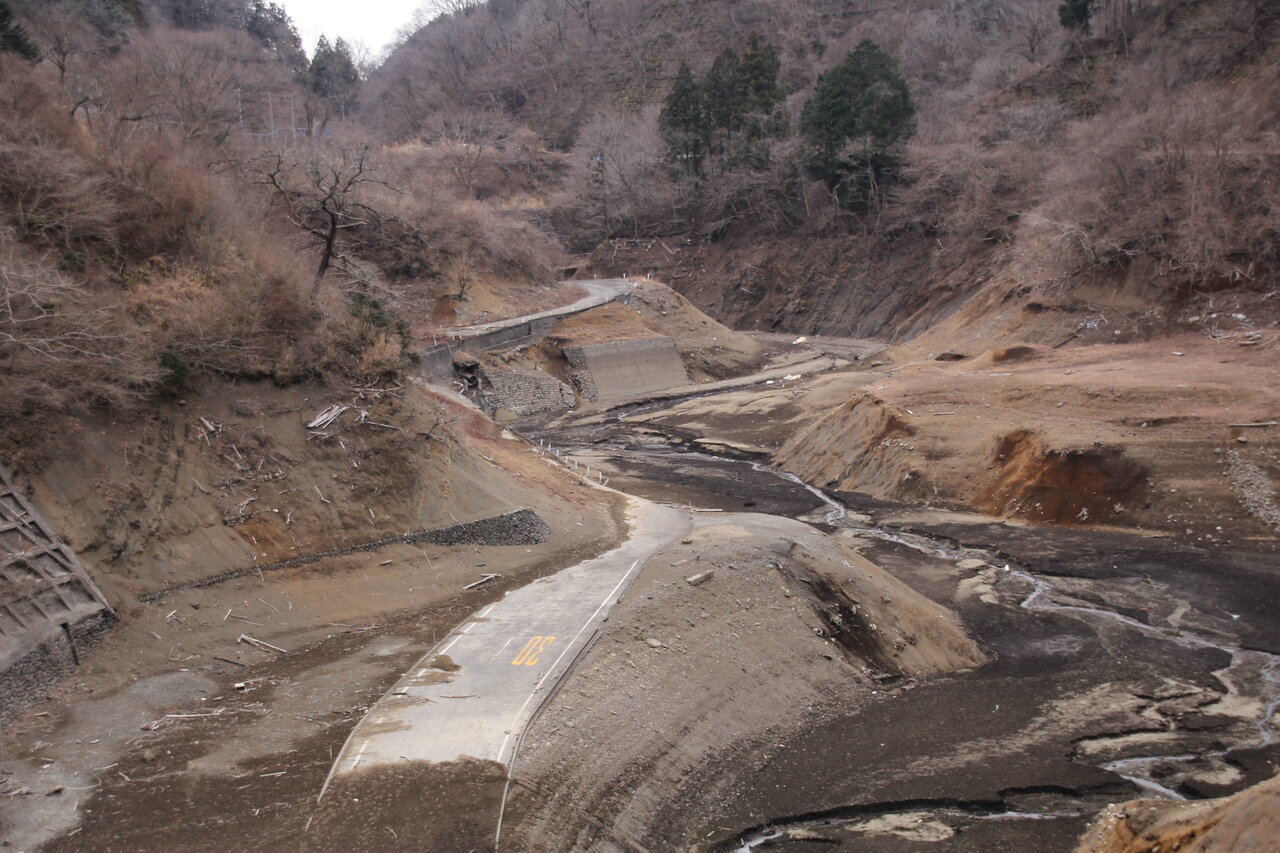
On the asphalt, you can still clearly see the yellow road markings that seem usable. The slope work beside the road is well supported, and I am simply amazed that various objects remain intact without deteriorating even in the dam lake.
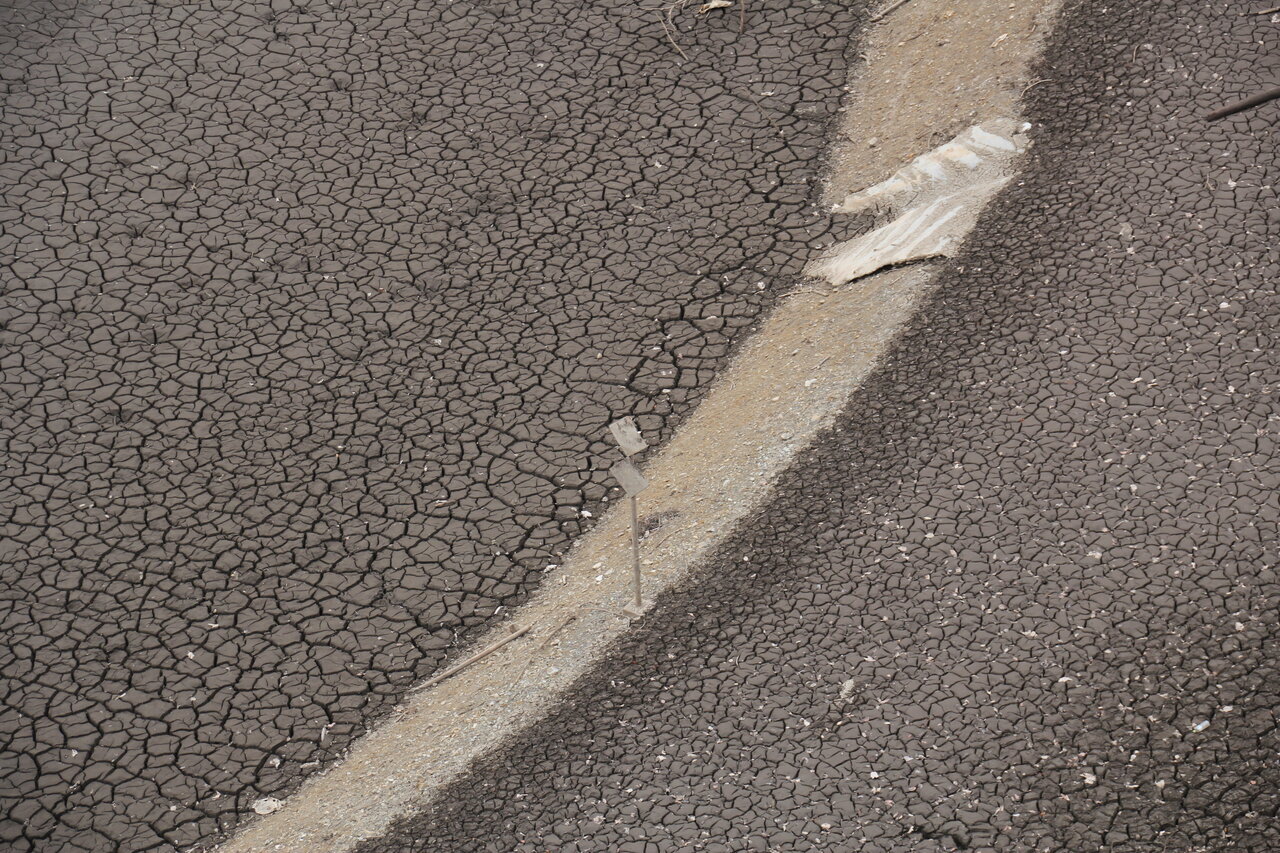
There is also a solitary road sign standing, rooted firmly on the cracked brown earth, which gives off a sense of resilience.
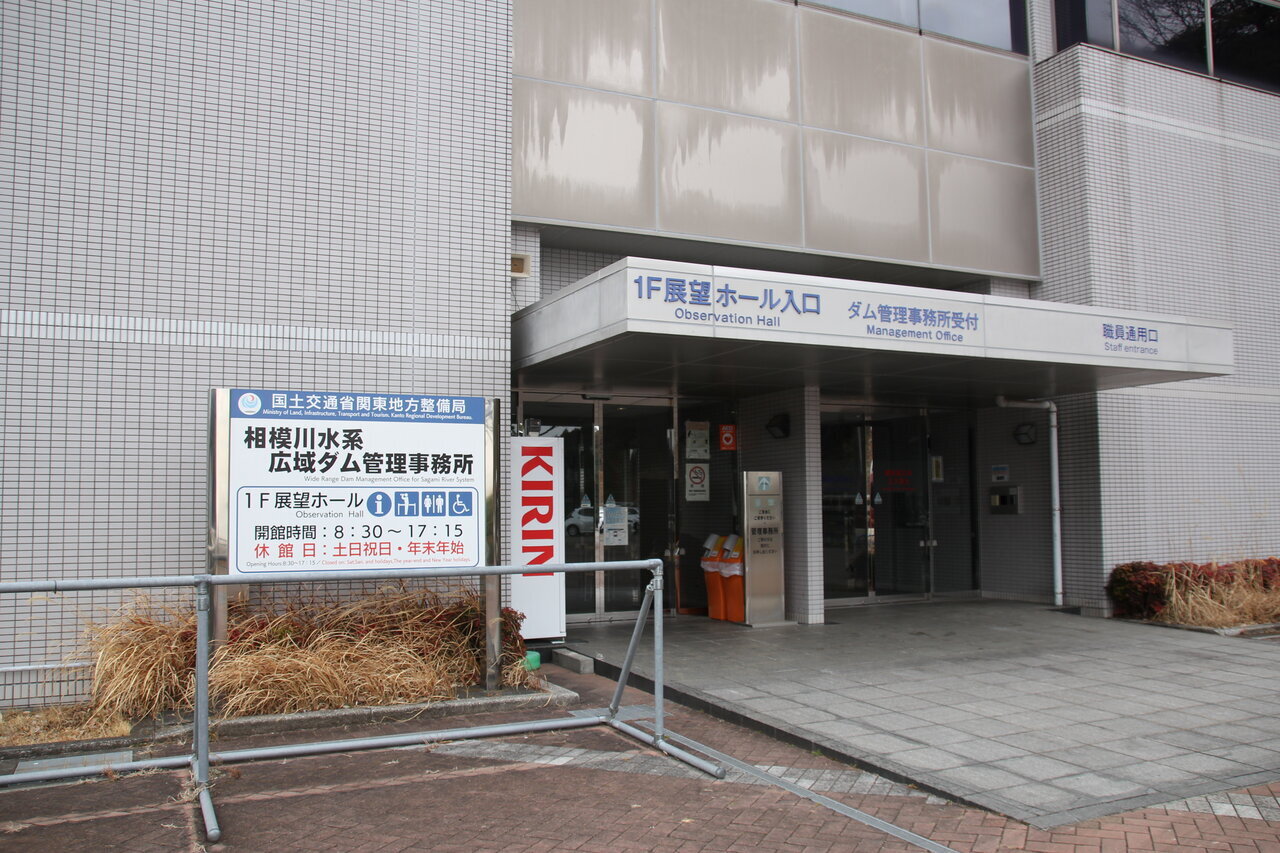
Information such as the changes in water storage mentioned at the beginning is displayed at the dam management office and can be checked on-site. Inside the management office, there is also a simple resting area, making it suitable for breaks during drives or tours.
Additionally, there was a cable car station called the "Miyagase Dam Incline" that goes back and forth between the upper and lower parts of the dam.
Additionally, there was a cable car station called the "Miyagase Dam Incline" that goes back and forth between the upper and lower parts of the dam.
A beautiful driving course was created thanks to the design that considers nature.
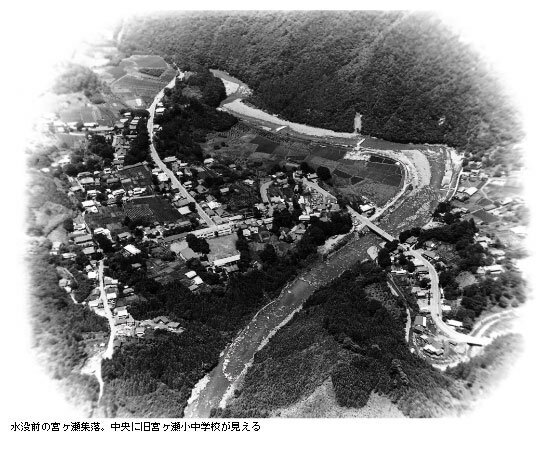
When I looked up the Kajima Corporation's website, which undertook the construction of the Miyagase Dam, it stated, "While the scale is impressive, what is particularly noteworthy is the consideration for the natural environment. The alternative roads around the dam include 16 tunnels and nearly 100 bridges, minimizing the excavation of the mountains. (Reference: https://www.kajima.co.jp/news/digest/mar_2004/kajimakiko/index-j.htm).”
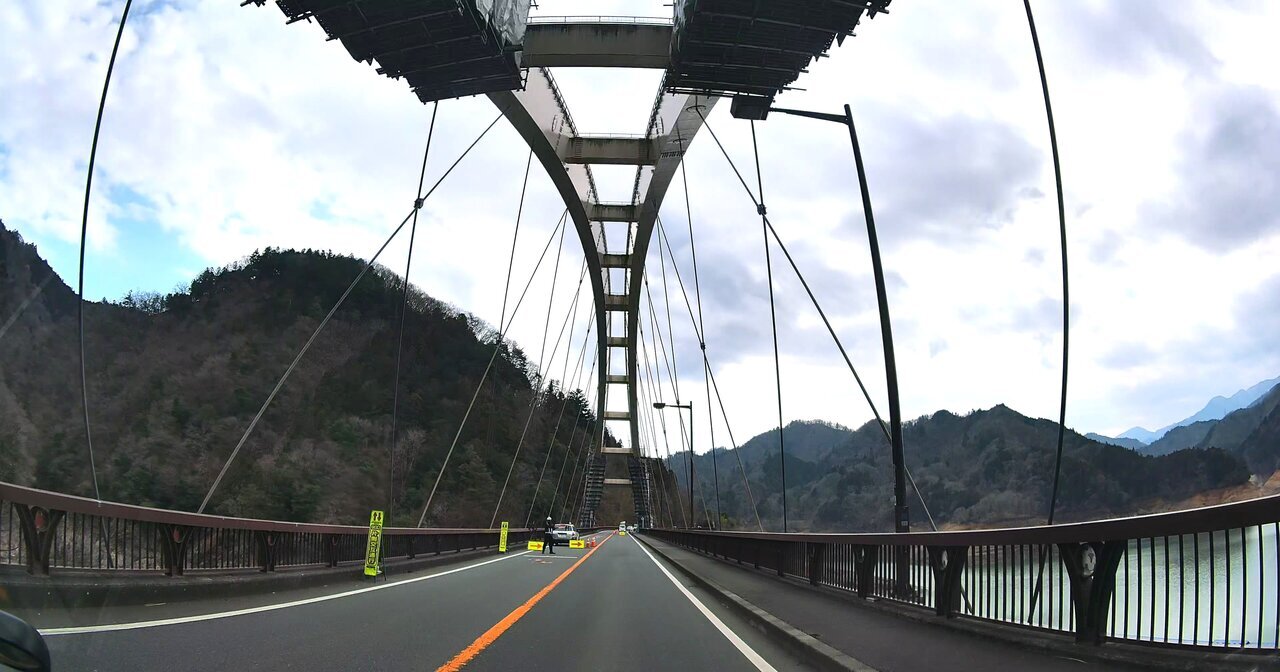
The first time I drove along this dam, I was captivated by the abundance of bridges and the beauty of the scenery overlooking the lake. I remember feeling that, for such a large lake, the surface seemed surprisingly close. This was due to the route design aimed at constructing bridges and roads while minimizing changes to the original environment.
I was able to understand, prompted by the recent drought, that this beautiful driving course attracting many people was created through the local residents' understanding, as well as the tremendous effort and exceptional skill of the builders.
On this day, it became important not only to enjoy the visible scenery before me, but also to recognize the significance of paying attention to the unseen aspects. I hope that the drought affecting the Miyagase Dam and other areas is resolved quickly, and I will head towards the next attractive spot.
On this day, it became important not only to enjoy the visible scenery before me, but also to recognize the significance of paying attention to the unseen aspects. I hope that the drought affecting the Miyagase Dam and other areas is resolved quickly, and I will head towards the next attractive spot.
Interview and text by Kazuma Tanaka
- SHARE




![[Camp Sweets] Crunchy on the outside, fluffy on the inside! The miraculous "baked chocolate" mess tin banana cake born from failure.](https://cdn.clipkit.co/tenants/1046/articles/images/000/034/641/large/d14c32aa-10b5-4c1a-89c8-1fc3b84bb7f9.png?1792184548)

![[Outerwear] Casual Jogging Habit with Workman's 1500 yen Windbreaker](https://cdn.clipkit.co/tenants/1046/articles/images/000/034/716/large/038dbbc8-ad67-403b-8f24-5252eba6724b.jpg?1792533724)




 FASHION
 OUTDOOR
 WATCH
WATCH CAR & BIKE
 SNAP
SNAP DINING
 LIFE
LIFE GADGET
 GOLF
GOLF