
CAR & BIKE
2026.03.08
【Scenery at the lake bottom】 Drive to "Ogouchi Dam" (Okutama Lake) where the remnants of the quarry can be seen due to low water levels
Due to the recent low precipitation levels, submerged structures in various dams have become visible again and are attracting attention. Last time I visited the old road at the Miyagase Dam, but this time I'm driving to see the remnants of the quarry at Ogouchi Dam (Okutama Lake).
A popular driving spot in Tokyo! What is the Okutama Dam (Okutama Lake)?
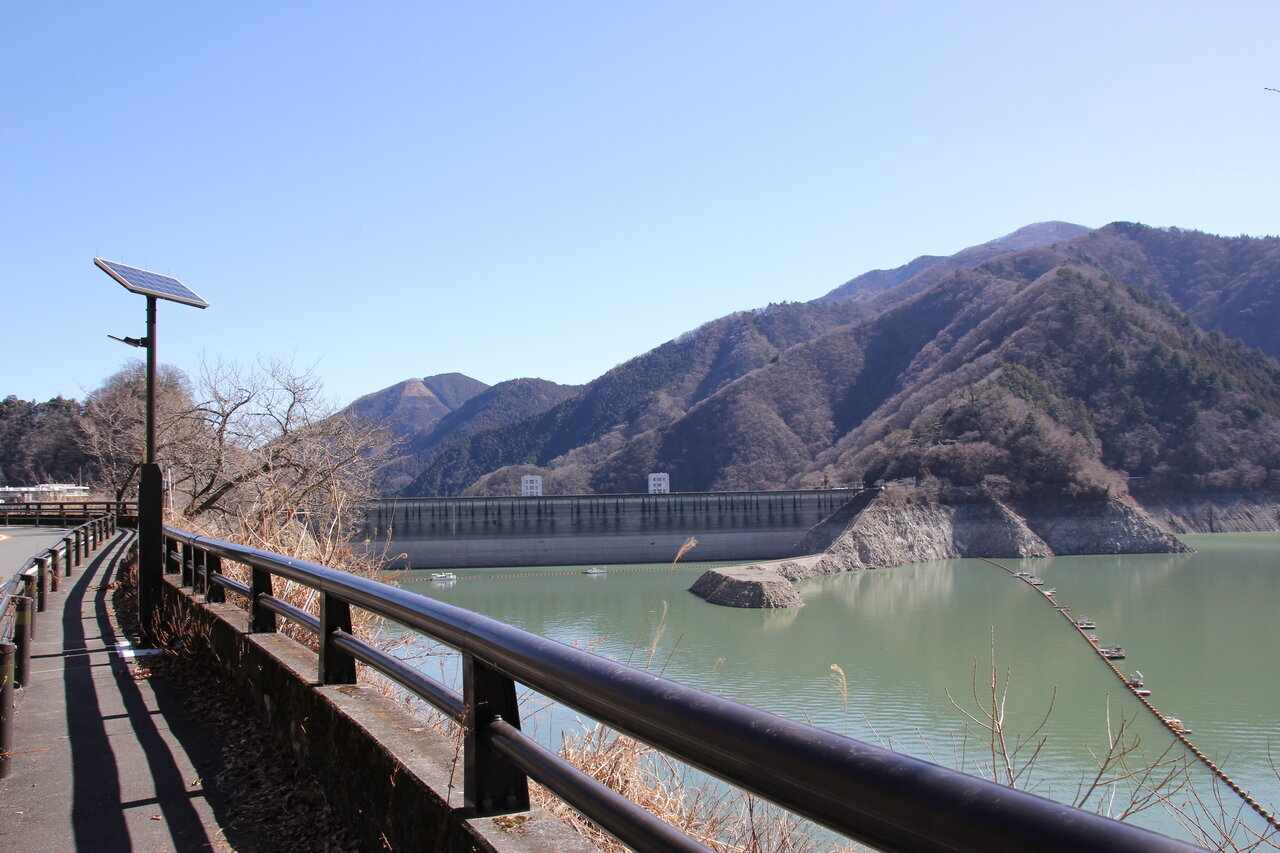
The Okutama Dam (Okutama Lake) is located in Okutama Town, Tokyo, and is the third-largest dam in the Kanto region by water storage capacity, following the Miyagase Dam, and the 24th largest in the entire country. Like the Miyagase Dam, it is constructed as a gravity concrete dam.
It is a popular driving and touring spot within the city, serving as a place of relaxation for Tokyo residents, attracting not only cars and motorbikes but also tourists such as cyclists.
【湖底の風景】渇水で旧道が見られる「宮ケ瀬ダム」へ! 人気ドライブコースが生まれた理由とは? | MADURO ONLINE(マデュロオンライン)

ここ最近の降水量の少なさにより、各地で渇水が深刻化。普段はドライブコースとして人気がある宮ケ瀬ダム(宮ケ瀬湖)でも、湖底に沈む旧道があらわれたという情報が。実際に確かめたと思い向かいました。
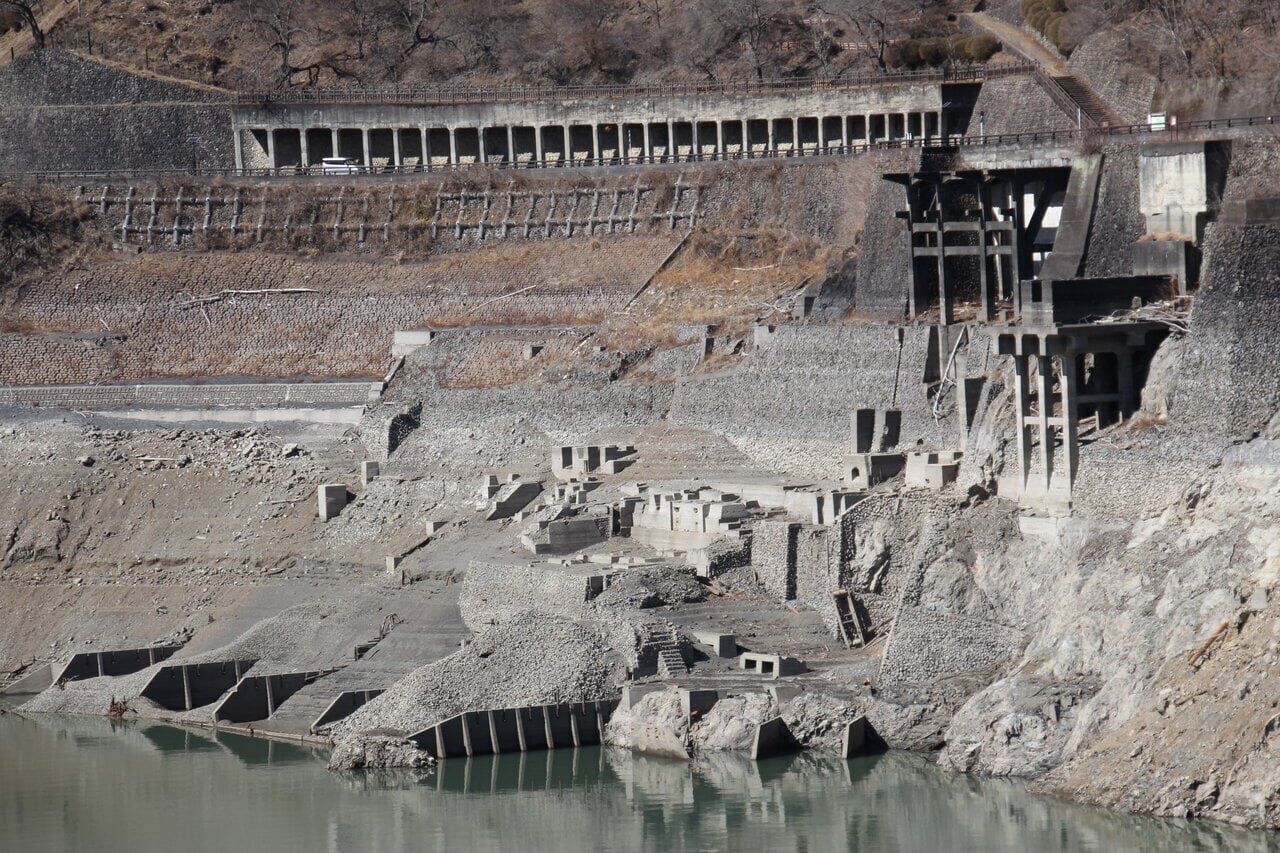
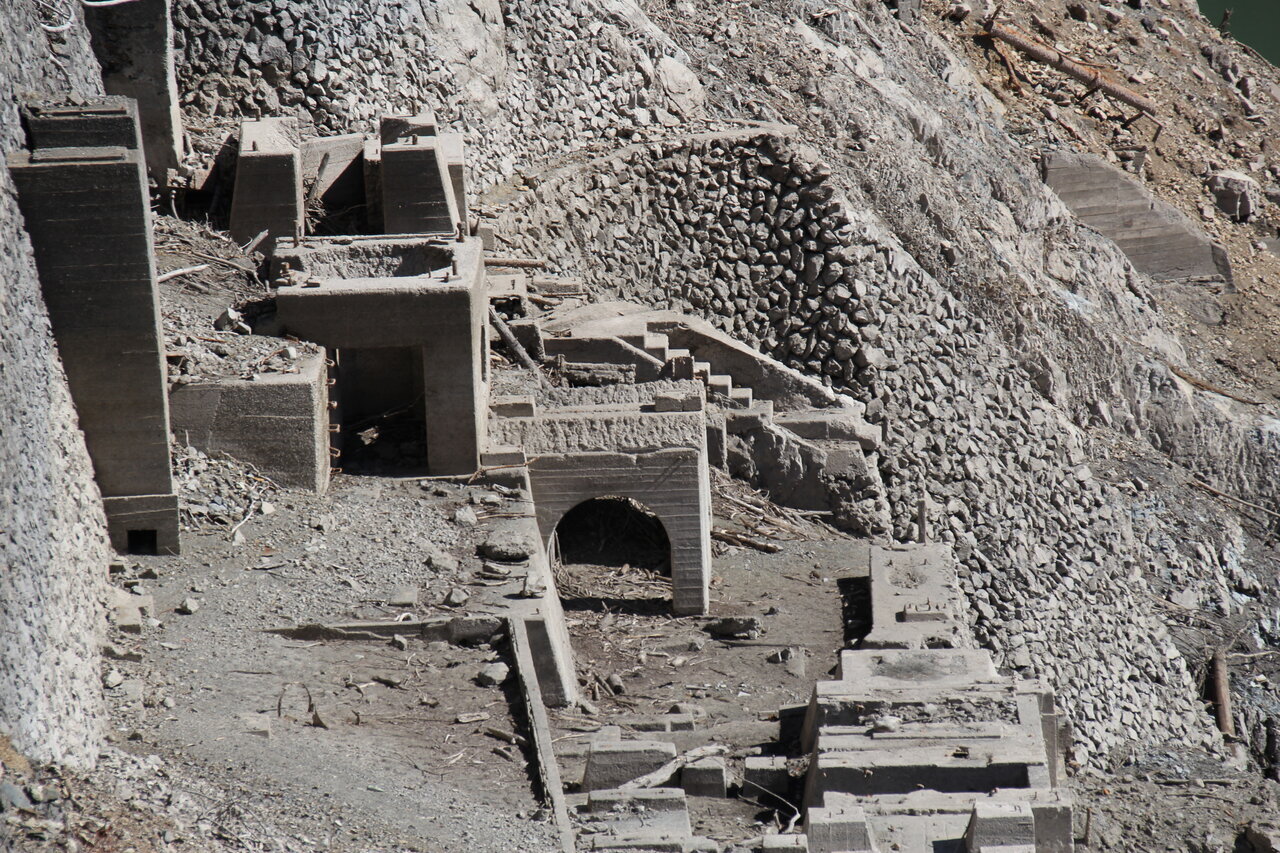
What appeared during the drought was an impressive old quarry site.
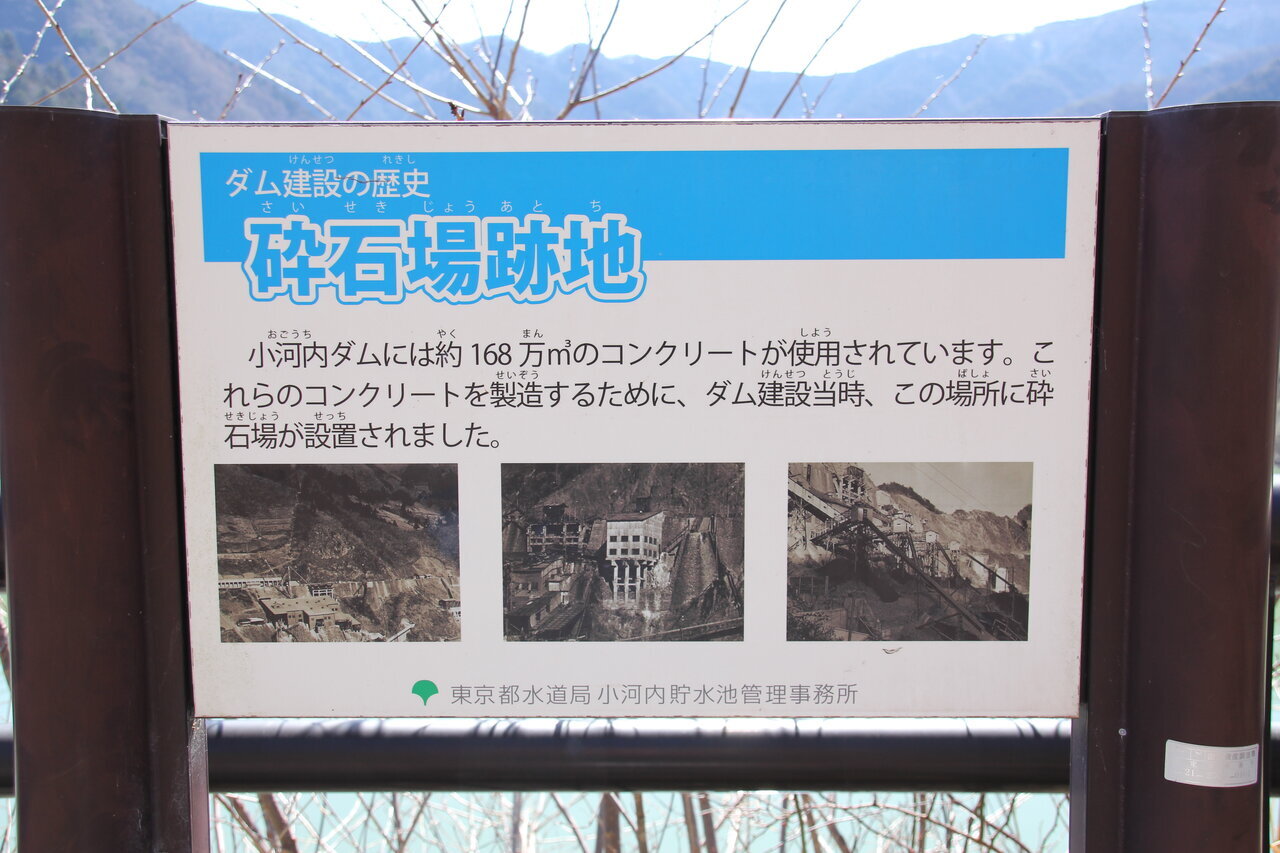
The structures that emerged due to the drought are remnants of a quarry that was used for construction. The history of the construction of the Okauchi Dam goes back a long way; it began in 1938 but was suspended five years later due to the intensification of the Pacific War. Construction resumed in 1948, and there is a difficult history of concrete pouring that continued for about nine years from that point.
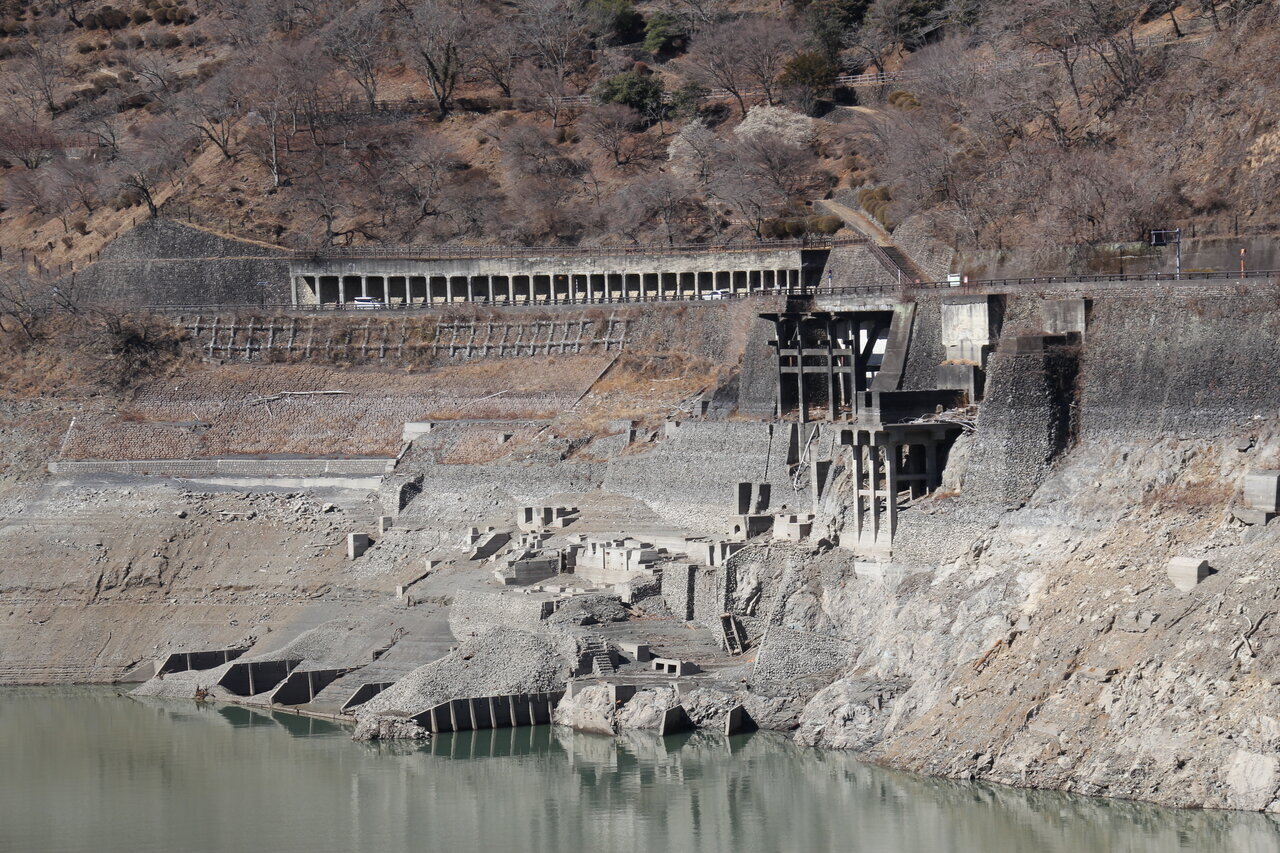
The quarry site in the image above gives an impression reminiscent of European ruins, and it is very mysterious. Even as it is submerged, the shape remains intact, allowing one to feel the remnants of the past.
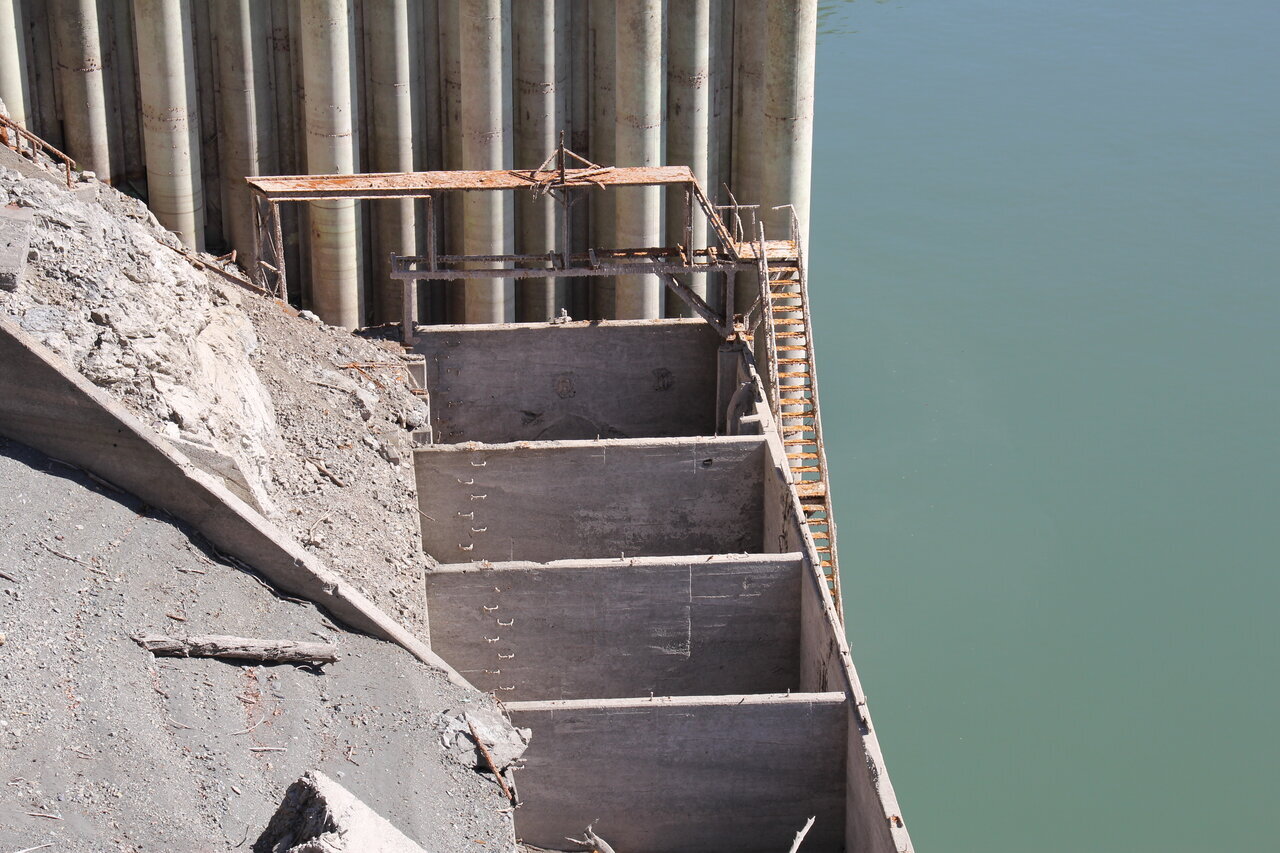
Even when viewed up close, the stairs, ladders, and the arches resembling the entrances to tunnels are beautifully preserved, and the contrast between the sunlit surfaces and the shadows is strikingly beautiful.
The metal stairs continue downward, and I can imagine many people heading towards the site at the lake bottom.
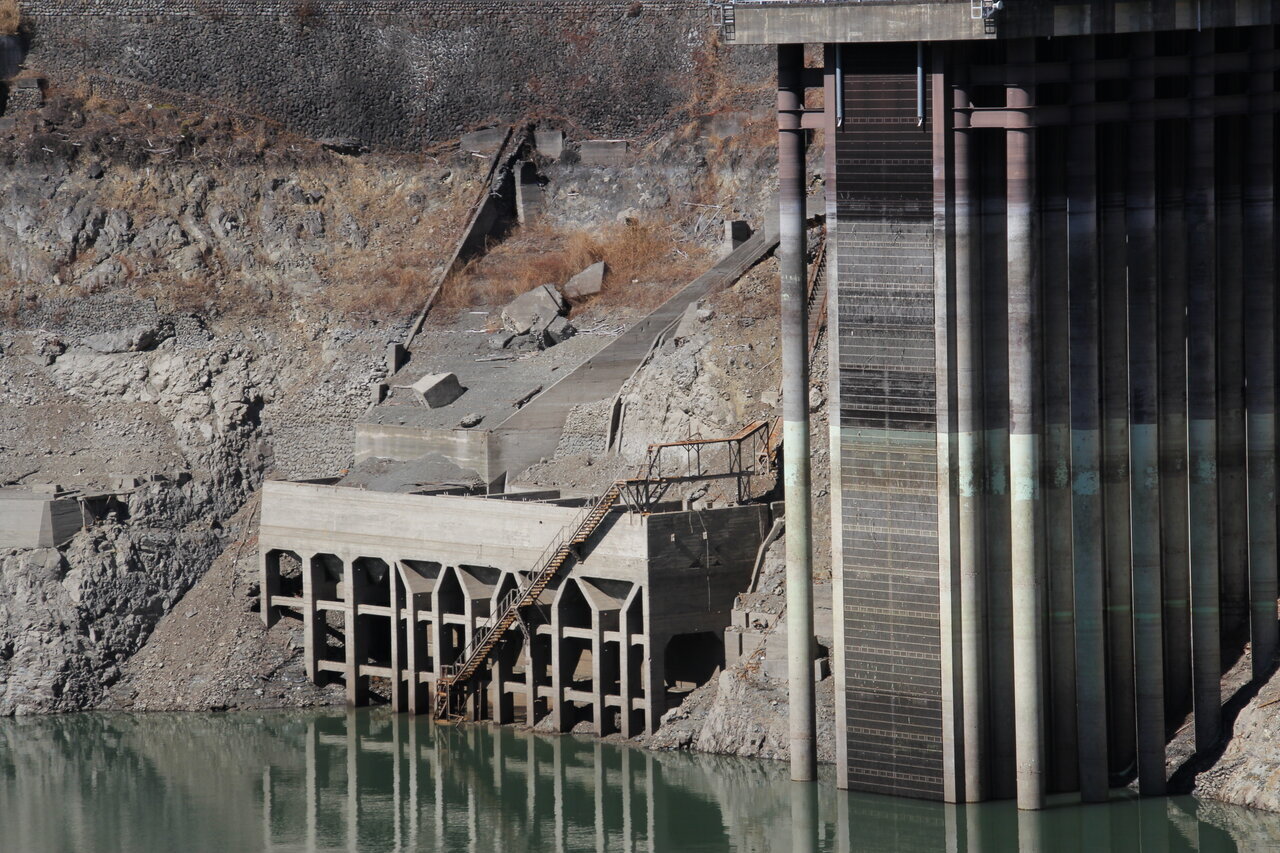
It's uncertain, but looking at the column on the right, it appears that the lower half is exposed. If this is due to the recent decrease in water levels, it brings home the serious situation of the lowest water storage since the Heisei era.
According to X on January 26 from the Tokyo Metropolitan Waterworks and Sewage Bureau, "It dropped below 86 million m3, the lowest recorded since the beginning of the Heisei era," and cooperation in water conservation is being requested.
According to X on January 26 from the Tokyo Metropolitan Waterworks and Sewage Bureau, "It dropped below 86 million m3, the lowest recorded since the beginning of the Heisei era," and cooperation in water conservation is being requested.
Understanding the history of the dam, I appreciate the value of tap water.
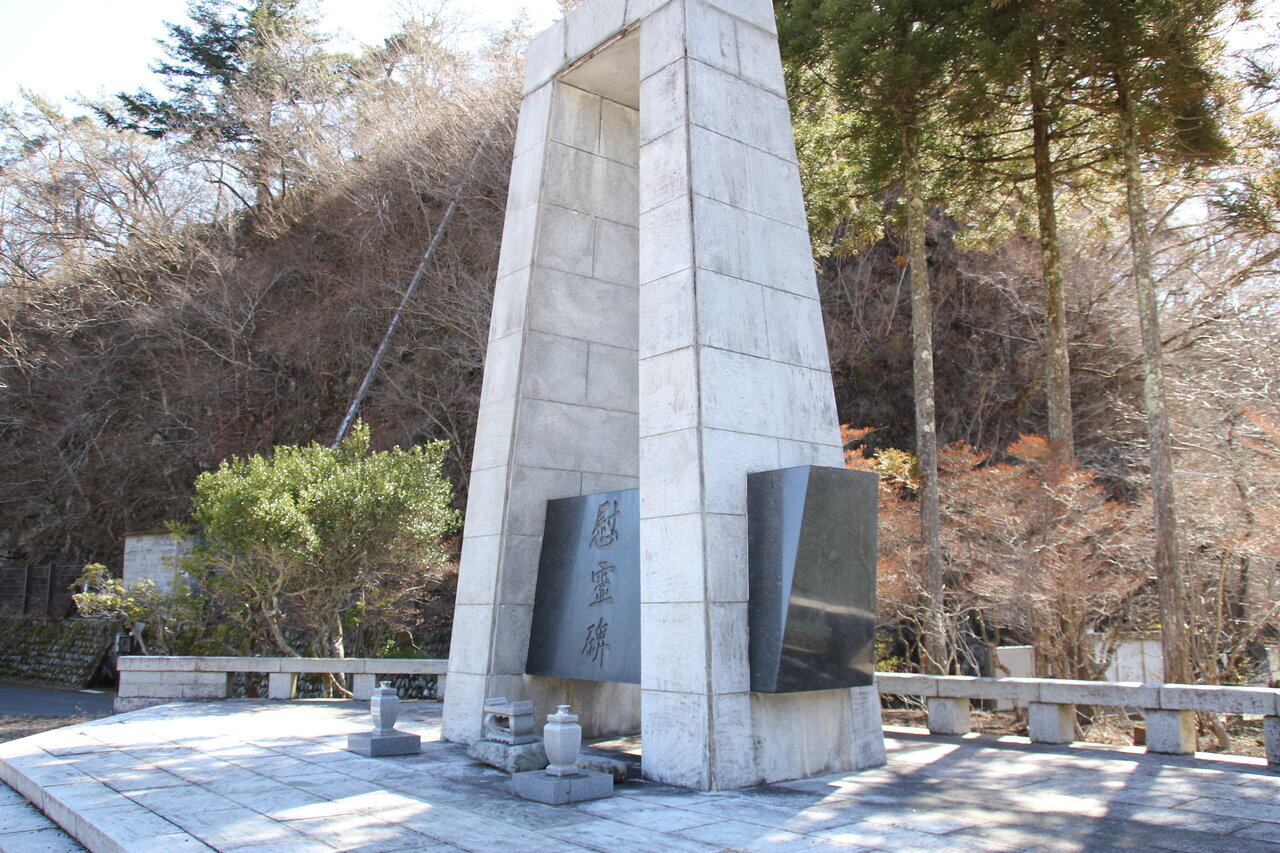
As I proceeded over the dam, there was a memorial for the 87 construction workers who lost their lives during the project. Prompted by the drought, I investigated the dam and learned about the conditions at the time and the hard work and struggles of many people. Knowing such history made me realize once again the value of tap water that is provided as if it were a matter of course.
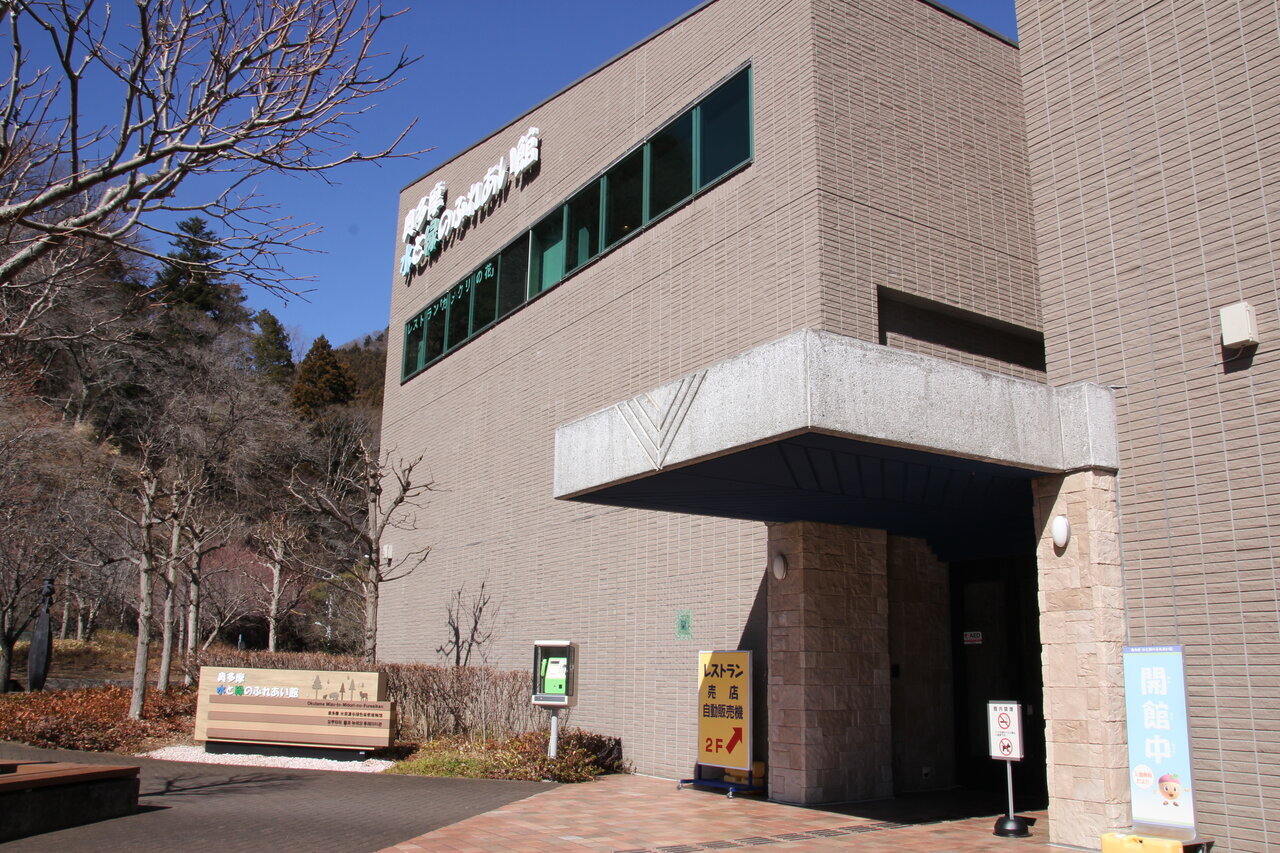
At the "Okutama Water and Greenery Interaction Center" near the dam, you can research the dam and the neighboring nature in detail and enjoy a meal at the restaurant. If you're interested, why not consider the Ogouchi Dam as a candidate for your next drive?
Reported by / Kazuma Tanaka
Facility name / Okutama Water and Greenery Interaction Center
Location / 5 Hara, Okutama Town, Nishitama District, Tokyo
TEL / 0428-86-2731
Opening hours / 9:30 AM – 5:00 PM *Restaurant 10:00 AM – 4:00 PM (last order)
Closed on / Wednesdays (the next day if Wednesday is a holiday) Year-end and New Year (from December 28 to January 4)
Location / 5 Hara, Okutama Town, Nishitama District, Tokyo
TEL / 0428-86-2731
Opening hours / 9:30 AM – 5:00 PM *Restaurant 10:00 AM – 4:00 PM (last order)
Closed on / Wednesdays (the next day if Wednesday is a holiday) Year-end and New Year (from December 28 to January 4)
- SHARE


![[Camp Sweets] Crunchy on the outside, fluffy on the inside! The miraculous "baked chocolate" mess tin banana cake born from failure.](https://cdn.clipkit.co/tenants/1046/articles/images/000/034/641/large/d14c32aa-10b5-4c1a-89c8-1fc3b84bb7f9.png?1792184548)

![[Outerwear] Casual Jogging Habit with Workman's 1500 yen Windbreaker](https://cdn.clipkit.co/tenants/1046/articles/images/000/034/716/large/038dbbc8-ad67-403b-8f24-5252eba6724b.jpg?1792533724)


 FASHION
 OUTDOOR
 WATCH
WATCH CAR & BIKE
 SNAP
SNAP DINING
 LIFE
LIFE GADGET
 GOLF
GOLF