
DINING
2026.04.23
【Aspiration for Craftsmen】I Tried Making Soba from Buckwheat Flour! A First Challenge to Make 100% Soba at Home on the Weekend
I tried hand-making 100% soba from buckwheat flour. From adjusting the water, using flour for dusting, to the difficulty of cutting it into 2mm, there’s so much that becomes clear only after trying it. But it’s surprisingly doable, which is interesting.
One day, I felt like trying to make soba on my own
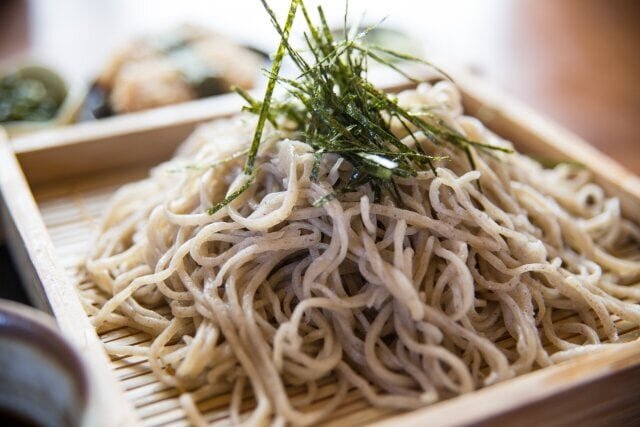
and I had ten soba at a soba restaurant I casually entered. It was thin, aromatic, and simple, yet somehow left a strong impression. For some reason, I thought on the way home, "Maybe I can make this myself," and by the next weekend, I had bought buckwheat flour.
I'm not particularly skilled at cooking, and I hadn't watched any videos of soba artisans, but at home, I had a rolling pin for making cookies, so I thought, "I can use that," and that was the only reason I decided to start.
I'm not particularly skilled at cooking, and I hadn't watched any videos of soba artisans, but at home, I had a rolling pin for making cookies, so I thought, "I can use that," and that was the only reason I decided to start.
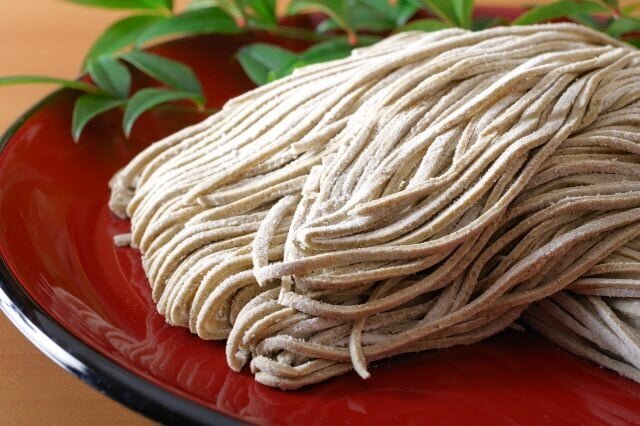
I aim to create zaru soba like in the image above. Thin and uniformly shaped, elegantly piled up on the zaru, I think I've set a high goal for myself.
I only prepared buckwheat flour and water
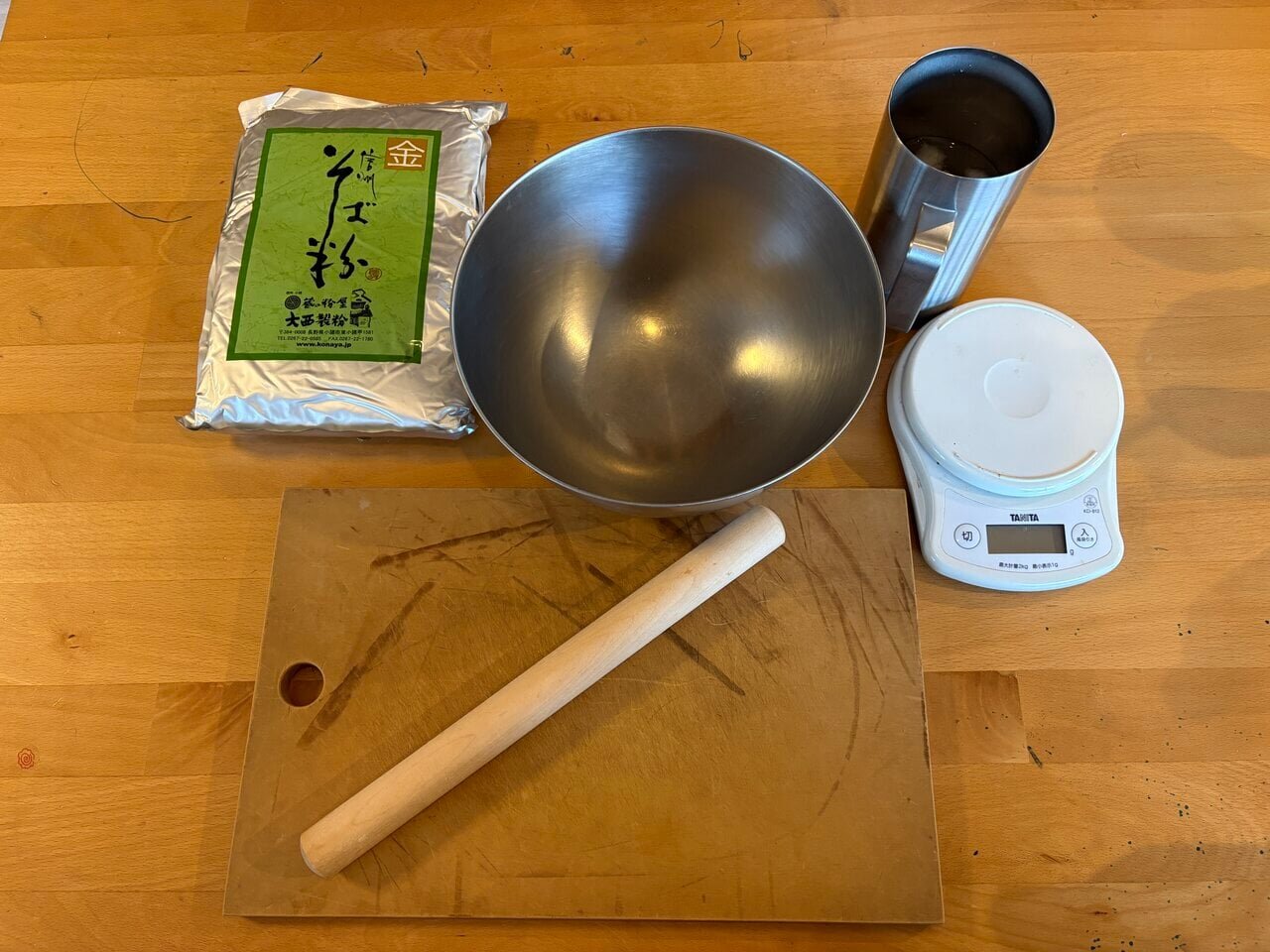
The ingredients for 100% soba are surprisingly simple.
【Ingredients】
・Buckwheat flour: 400g
・Water: 200ml (cold)
【Tools】
・Bowl
・Rolling pin (a thin one for cookies is sufficient)
・Cutting board
・Knife
・Buckwheat flour
・Scale
It doesn't seem like there is anything that can't be done without specialized tools.
【Ingredients】
・Buckwheat flour: 400g
・Water: 200ml (cold)
【Tools】
・Bowl
・Rolling pin (a thin one for cookies is sufficient)
・Cutting board
・Knife
・Buckwheat flour
・Scale
It doesn't seem like there is anything that can't be done without specialized tools.
Here we go! Into the simple yet profound world of soba artisans
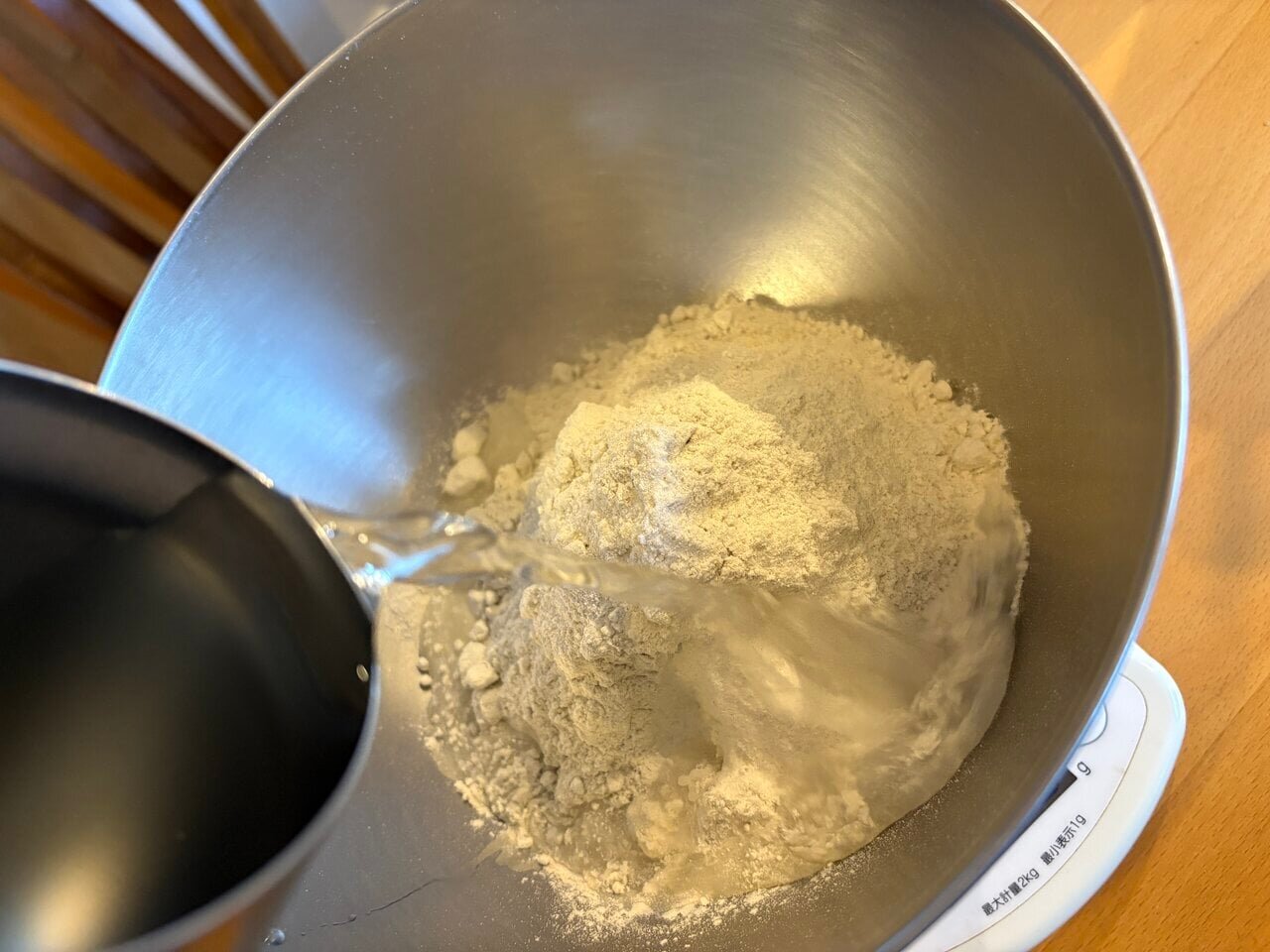
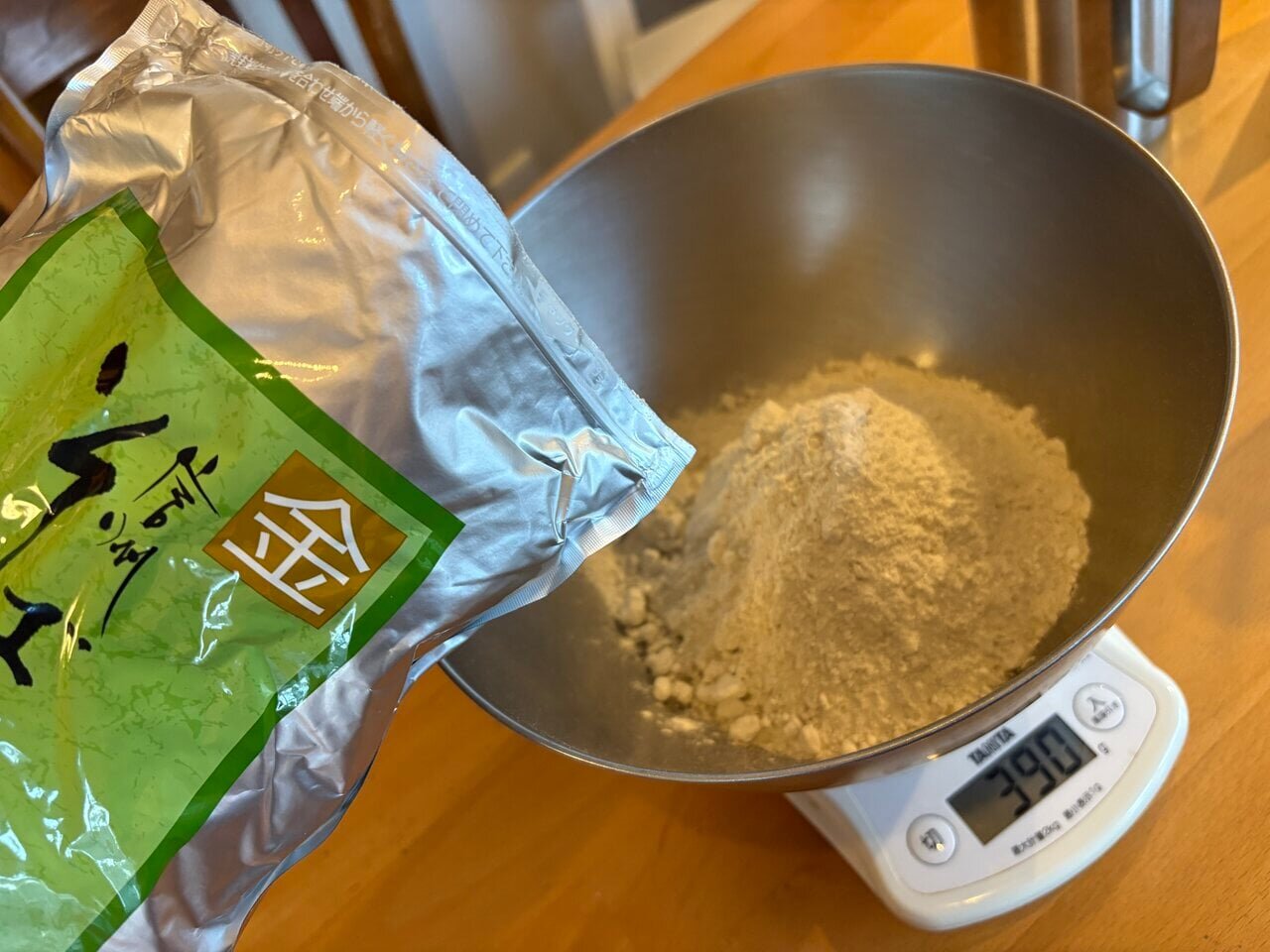
After putting the buckwheat flour in a bowl and measuring an appropriate amount, slowly add water little by little. If you add it all at once, it will quickly become sticky.
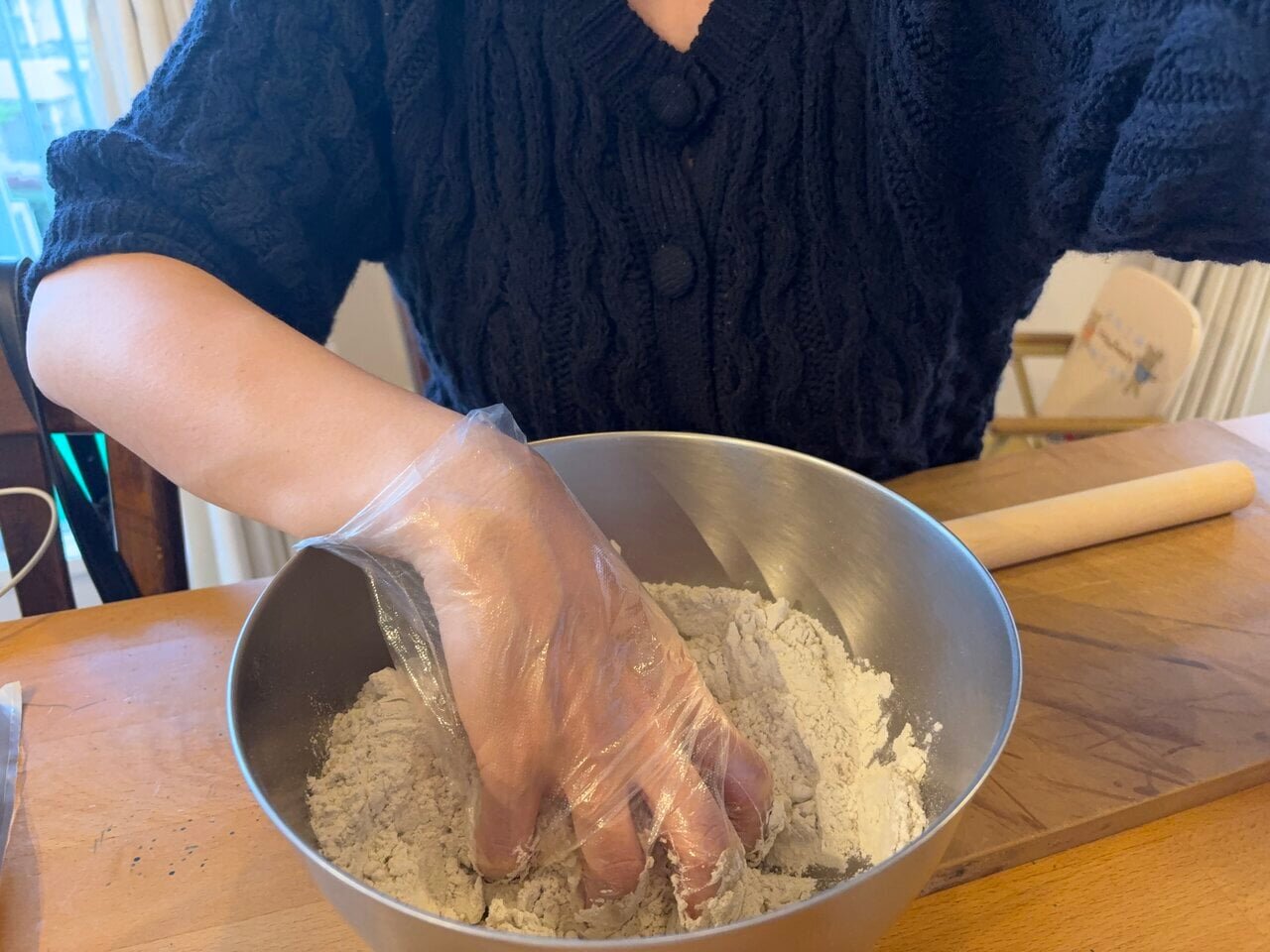
Divide it into about 3 portions, and mix it gently with your hands while checking its consistency. It seems to be okay if it reaches a hardness where "it holds when you squeeze it."
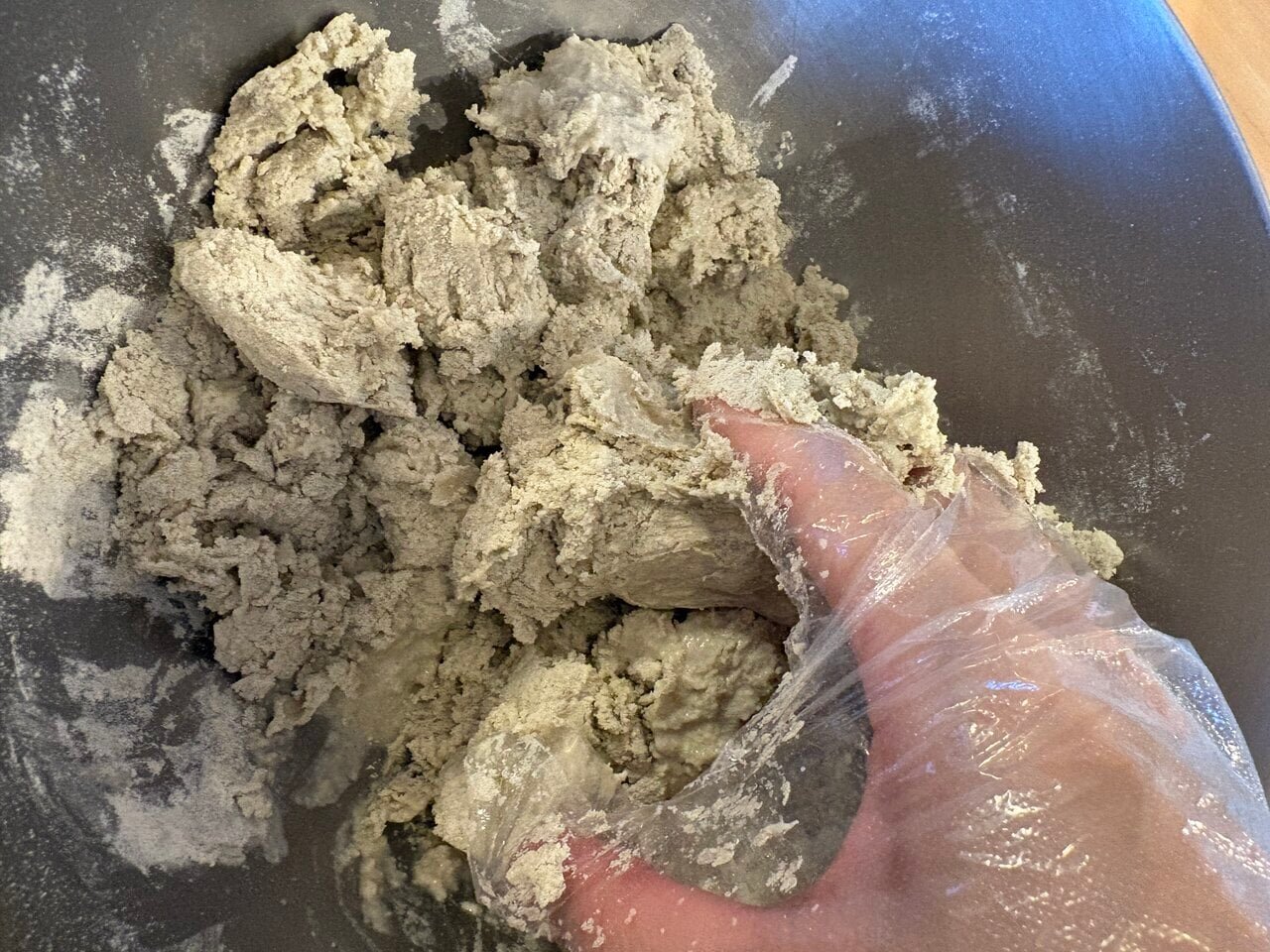
When I actually tried it, I found it to be more difficult than I expected. If there’s too much water, the dough gets too wet, and if there’s too little, it remains crumbly and doesn’t come together. I thought to myself, "This is different from bread dough!" as I kept pressing it with my hands.
The process of rolling it out with a rolling pin eventually turns into a battle.
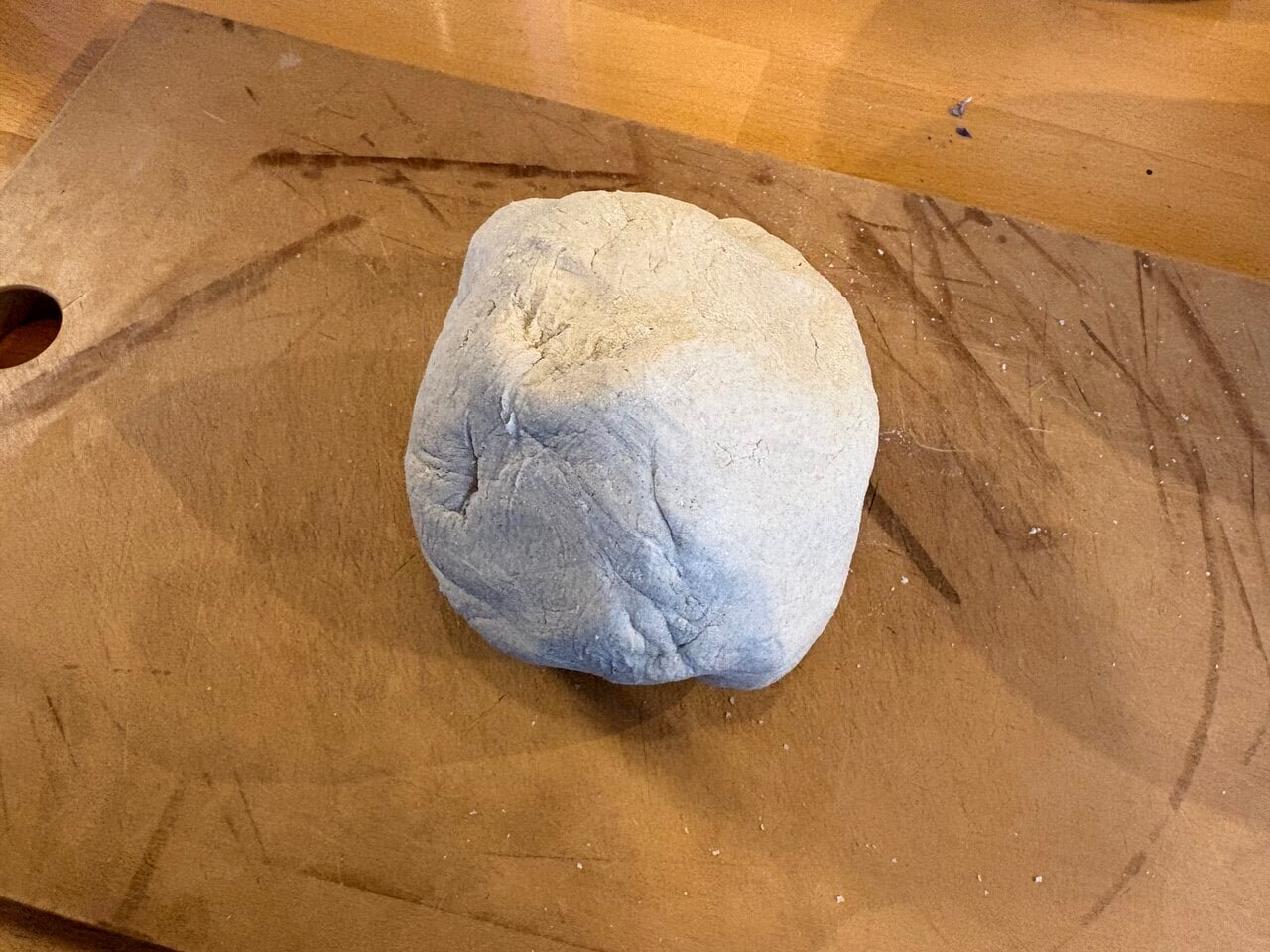
Once you have formed the soba dough into a lump, the next step is to roll it out.
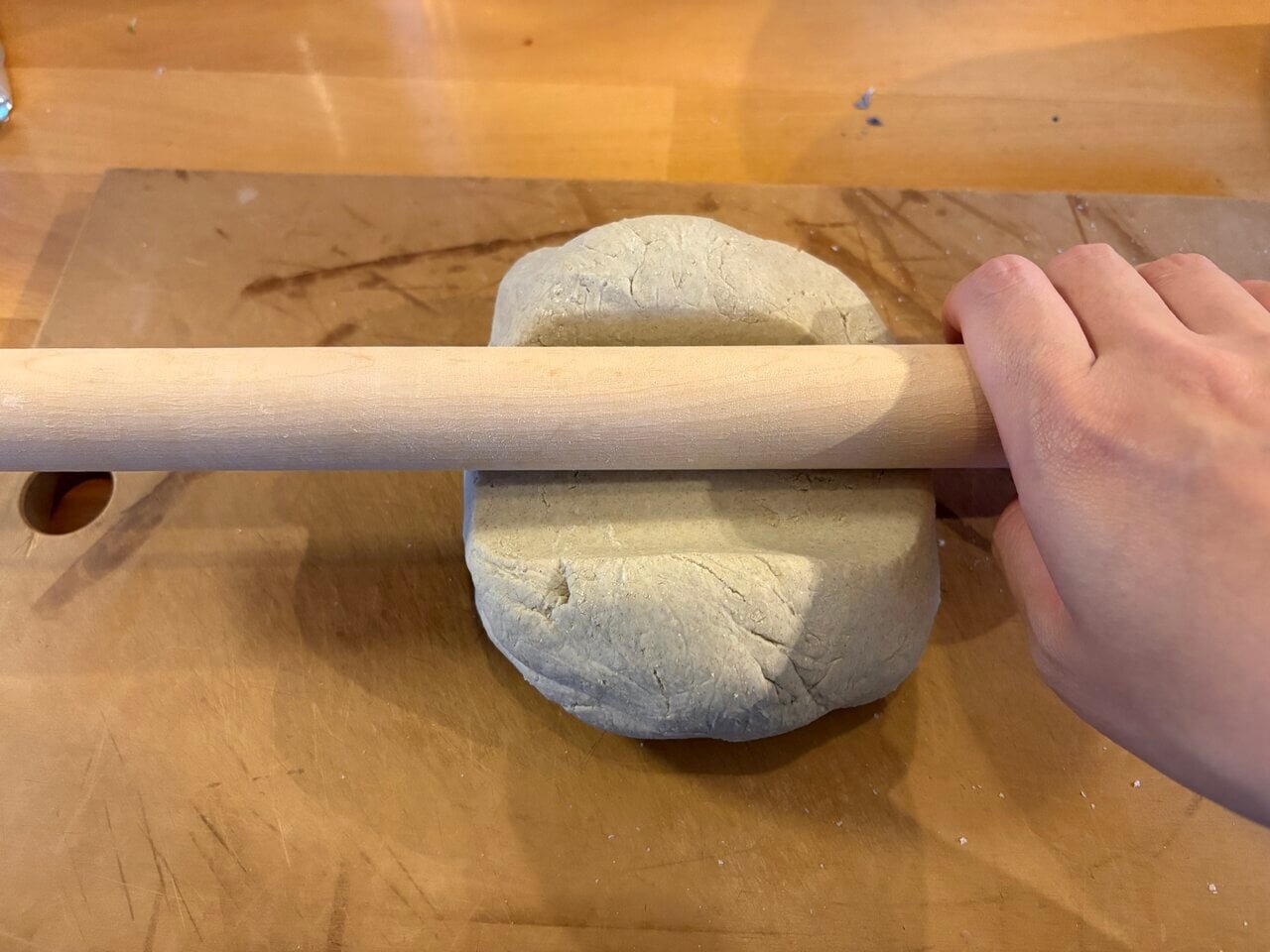
I pulled out a rolling pin for cookies and began to spread the dough on the cutting board. The target thickness is 2mm. A problem arose here.
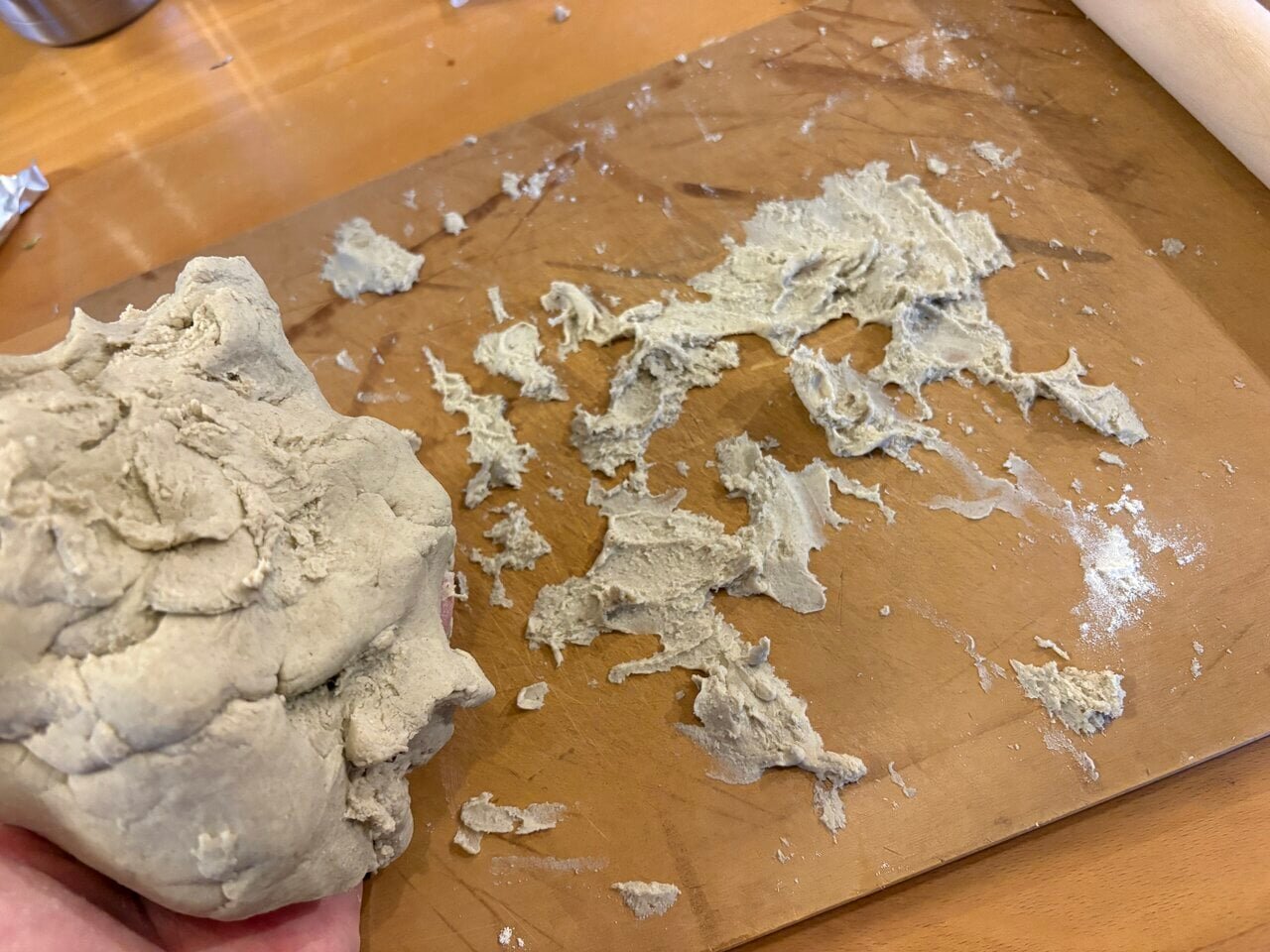
The dough was sticking solidly to the cutting board. Was it because I skimped on the buckwheat flour? As I thought, "What a waste," while dusting flour, the dough became impossible to peel off halfway through and started sticking to the rolling pin as well.
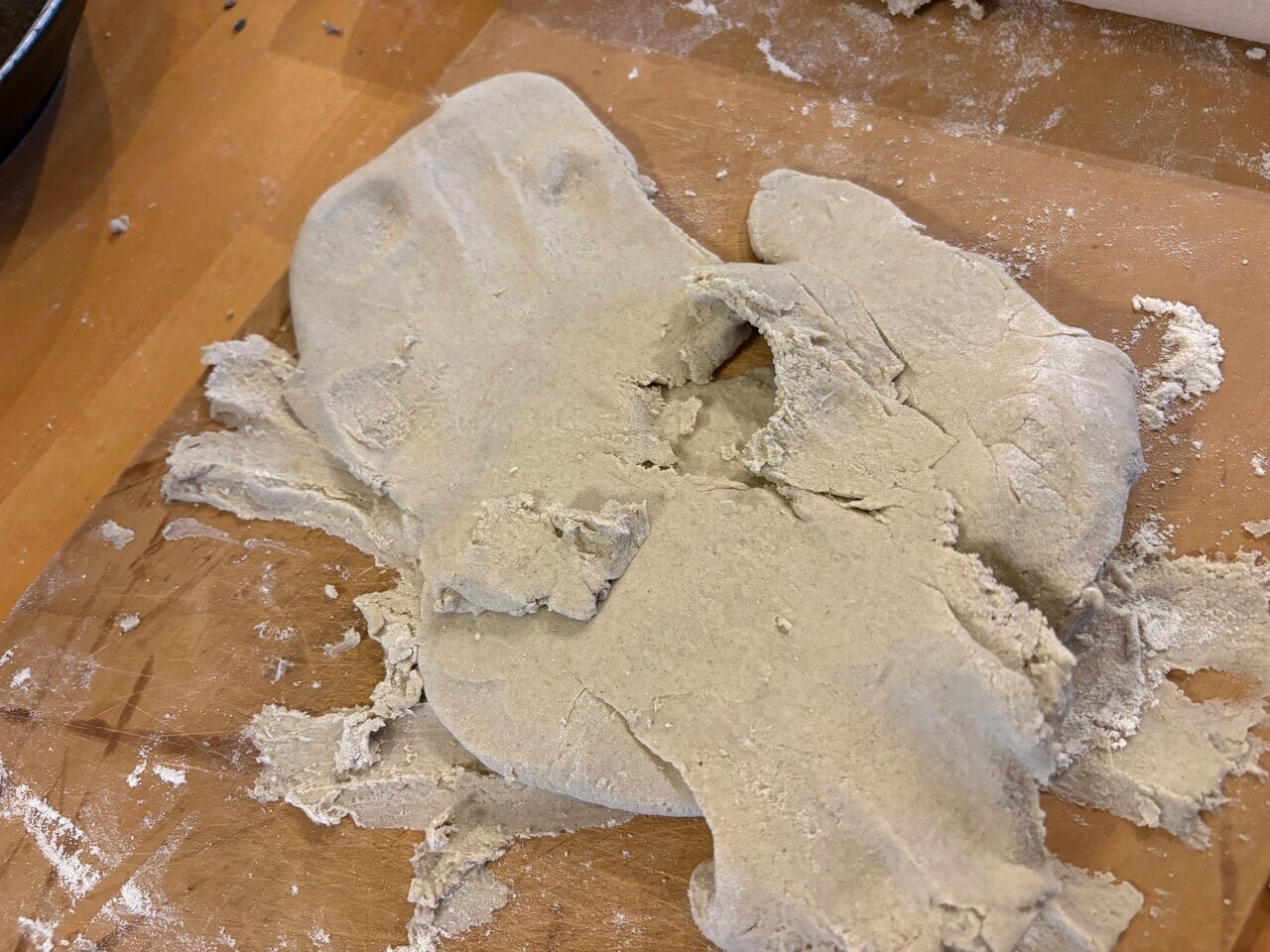
While struggling, I somehow managed to roll it thin, but it was far from an even thickness. Do not be stingy with the dusting flour. I learned this lesson the hard way.
Cutting it to "2mm" requires more craftsmanship than I expected.
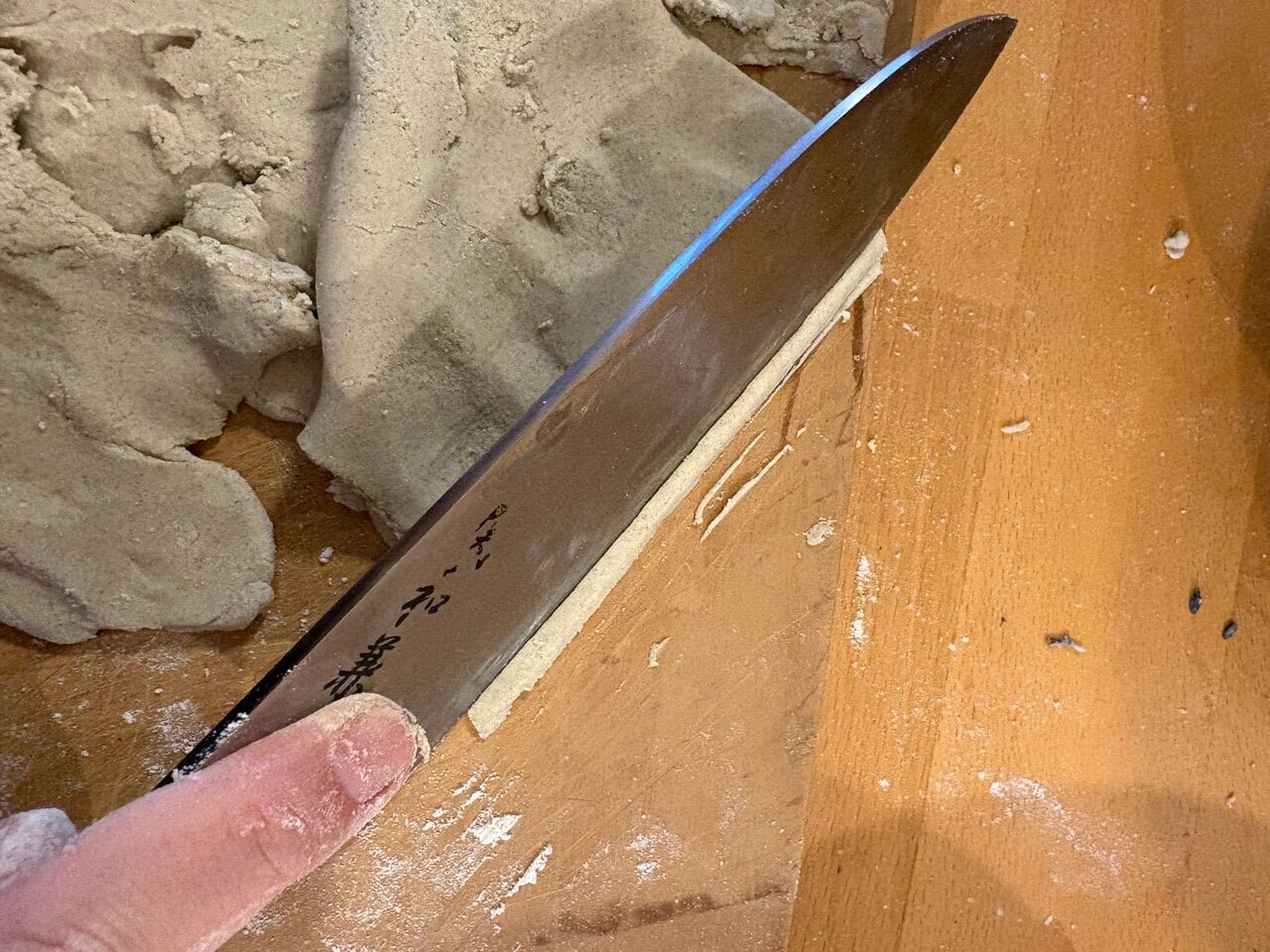
The process of folding the stretched dough and cutting it thinly with a knife. The goal is a thickness of 2mm, but when I actually try cutting it, it never turns out to be 2mm at all.
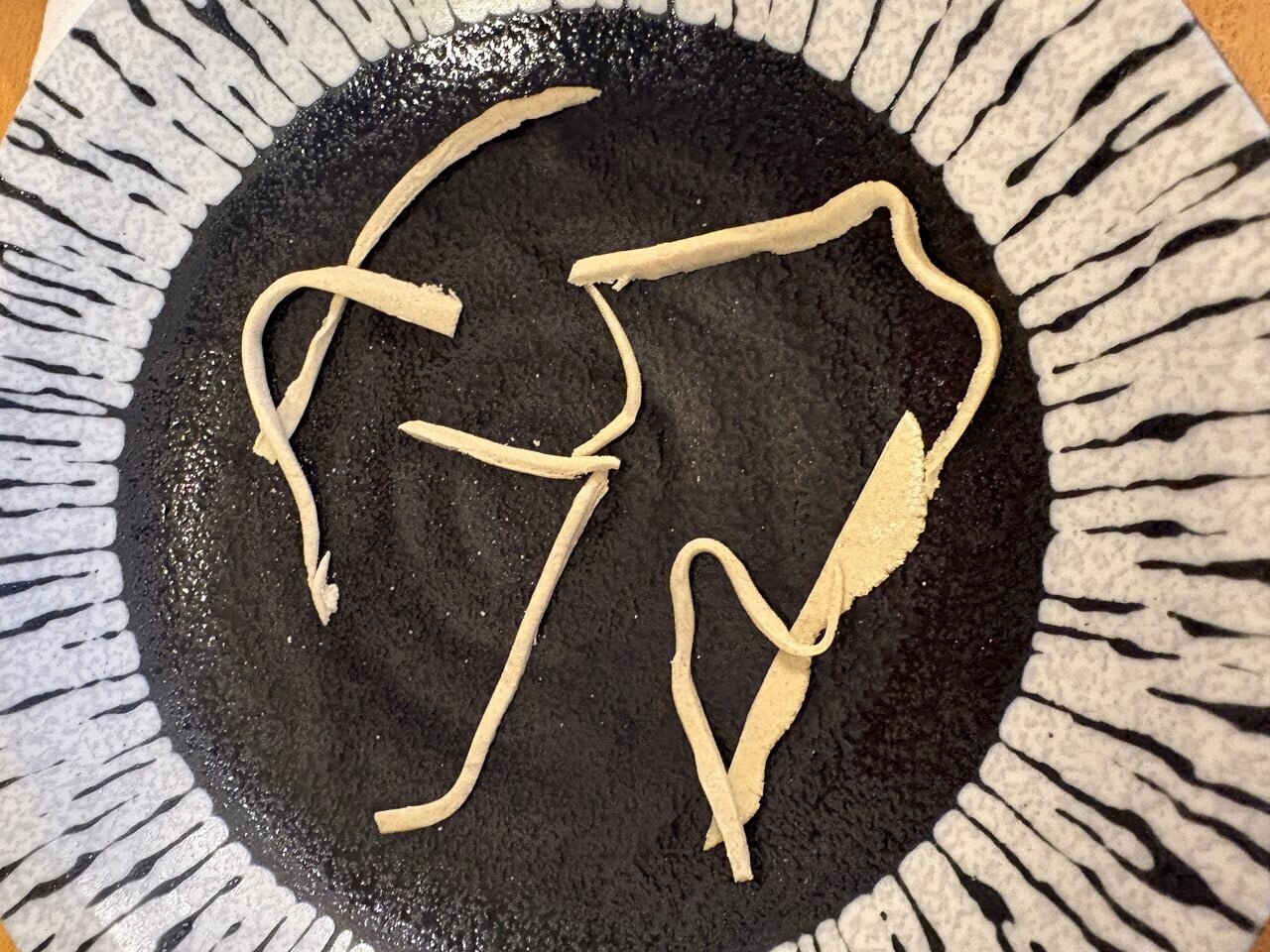
Some parts are thick, some are thin, and for some reason, there are places that are cut off halfway. What lies on the plate resembles "uneven noodles" rather than 100% buckwheat soba. While I hope that the handmade feel will add a good flavor, whether it's because of my knife skills or the dough, things don't go as I thought.
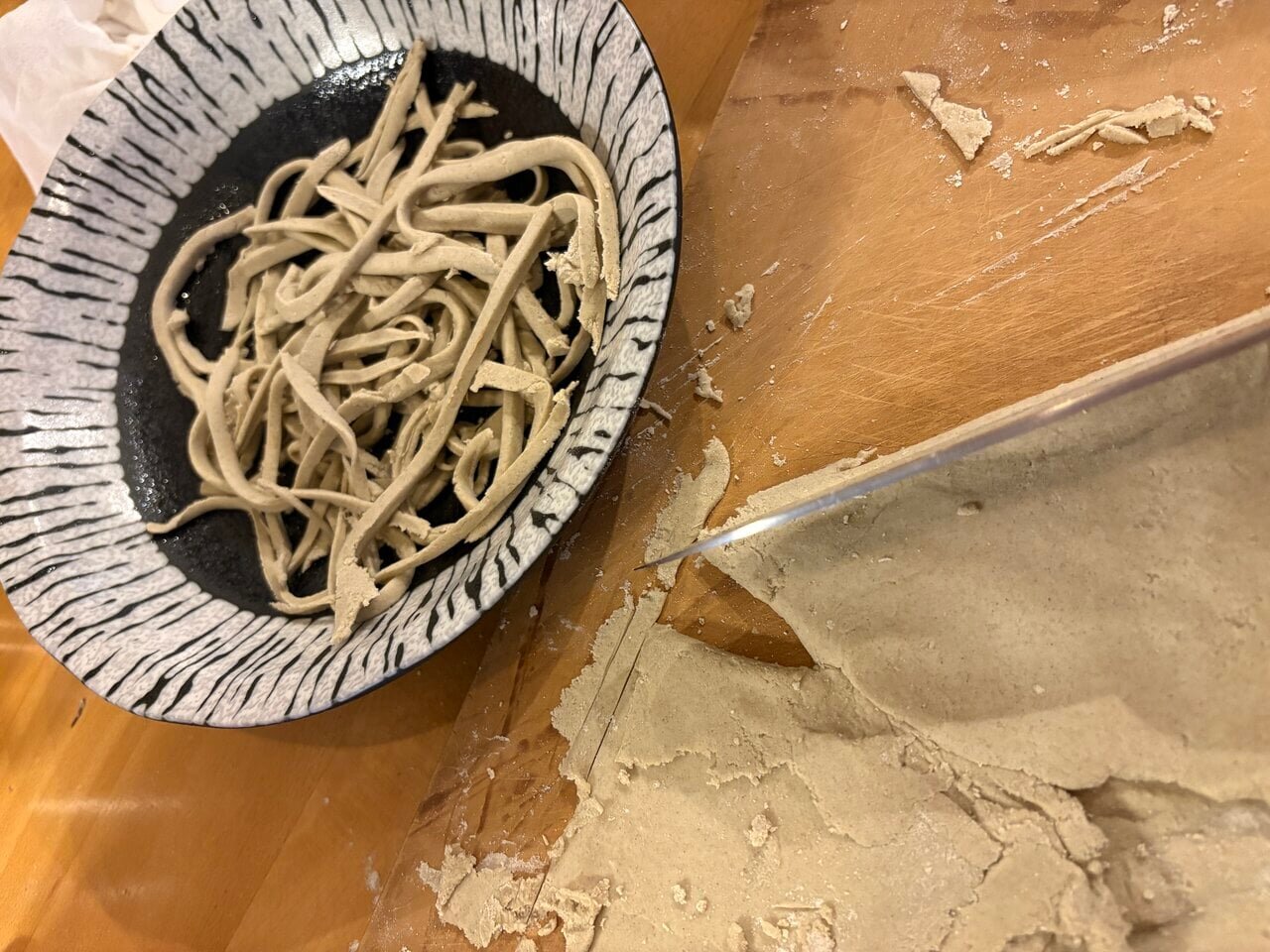
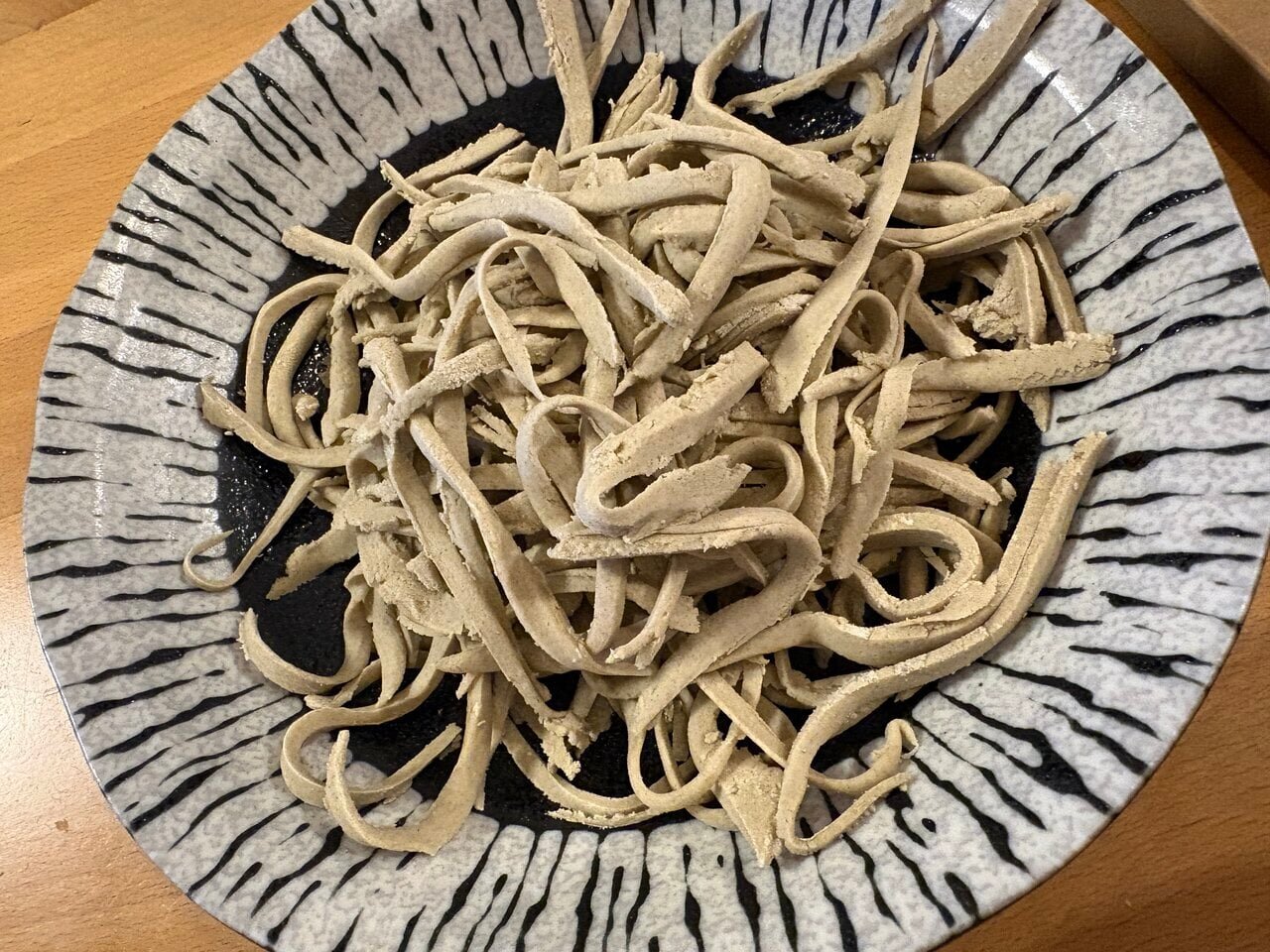
Even when I think I'm cutting straight with the knife, the dough shifts, and especially the folded edges tend to crumble easily. I didn't think cutting evenly would be this difficult, but somehow, I managed to finish cutting, even though it turned out to be messy.
When I boiled it and tried it, it was somewhat soba.
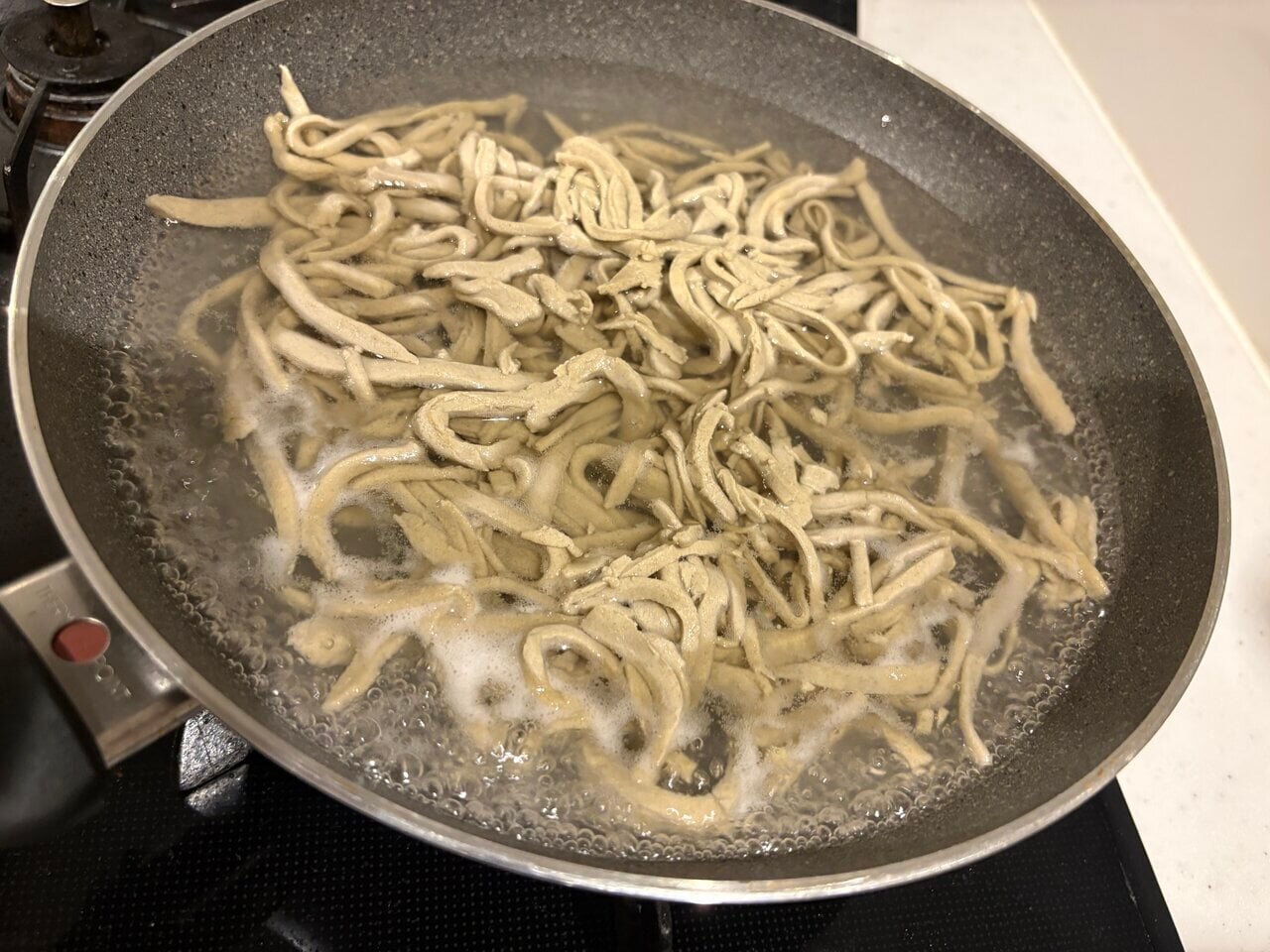
I boiled it in plenty of water for 1-2 minutes. Because the thickness is uneven, there are inconsistencies in cooking, but I exhausted my life in the process of slicing the soba, so I couldn't pay much attention to細やかな気配り.
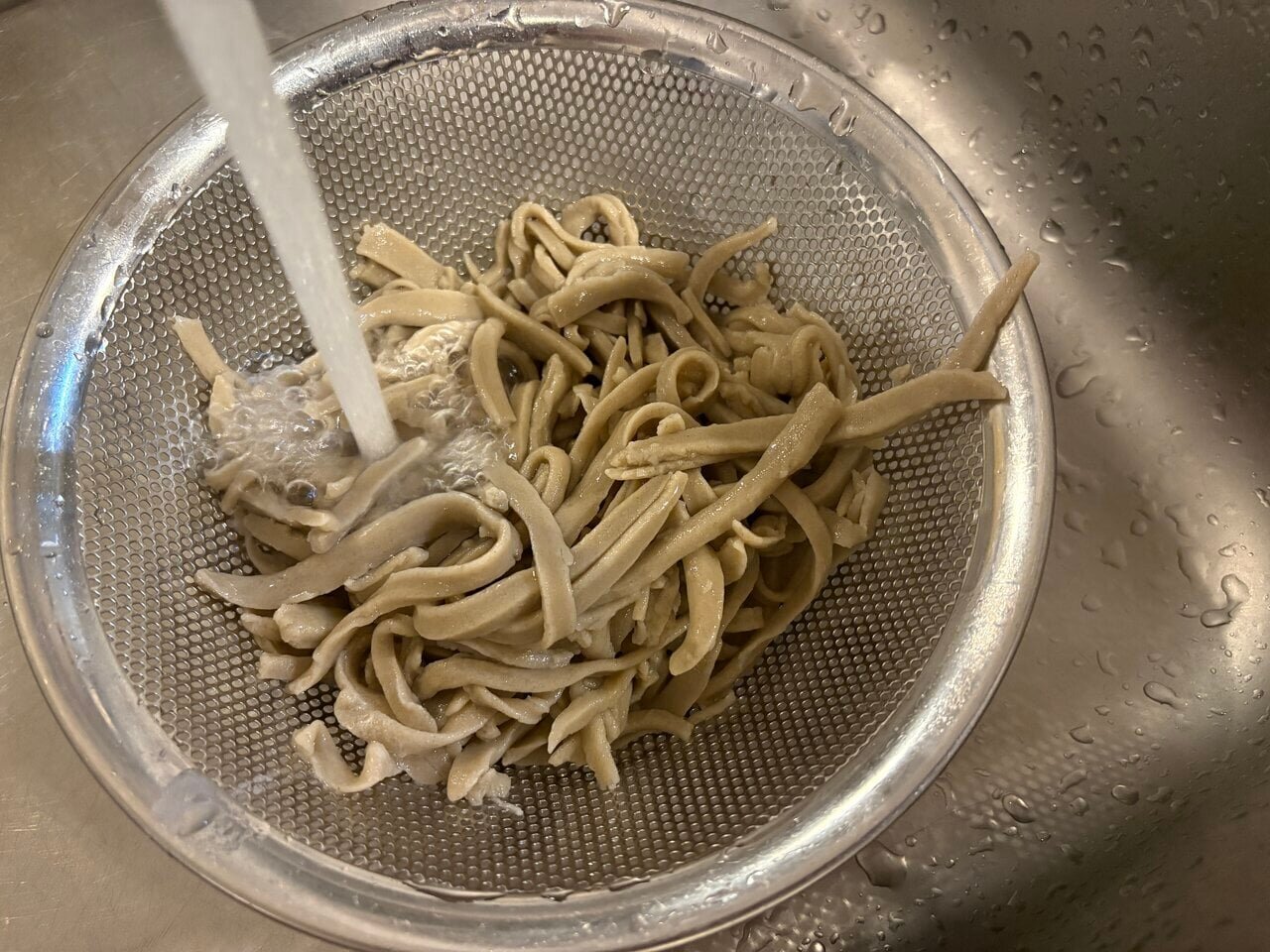
I immediately immerse it in cold water. Although it has become quite thick soba, I also feel a growing anticipation for tasting it.
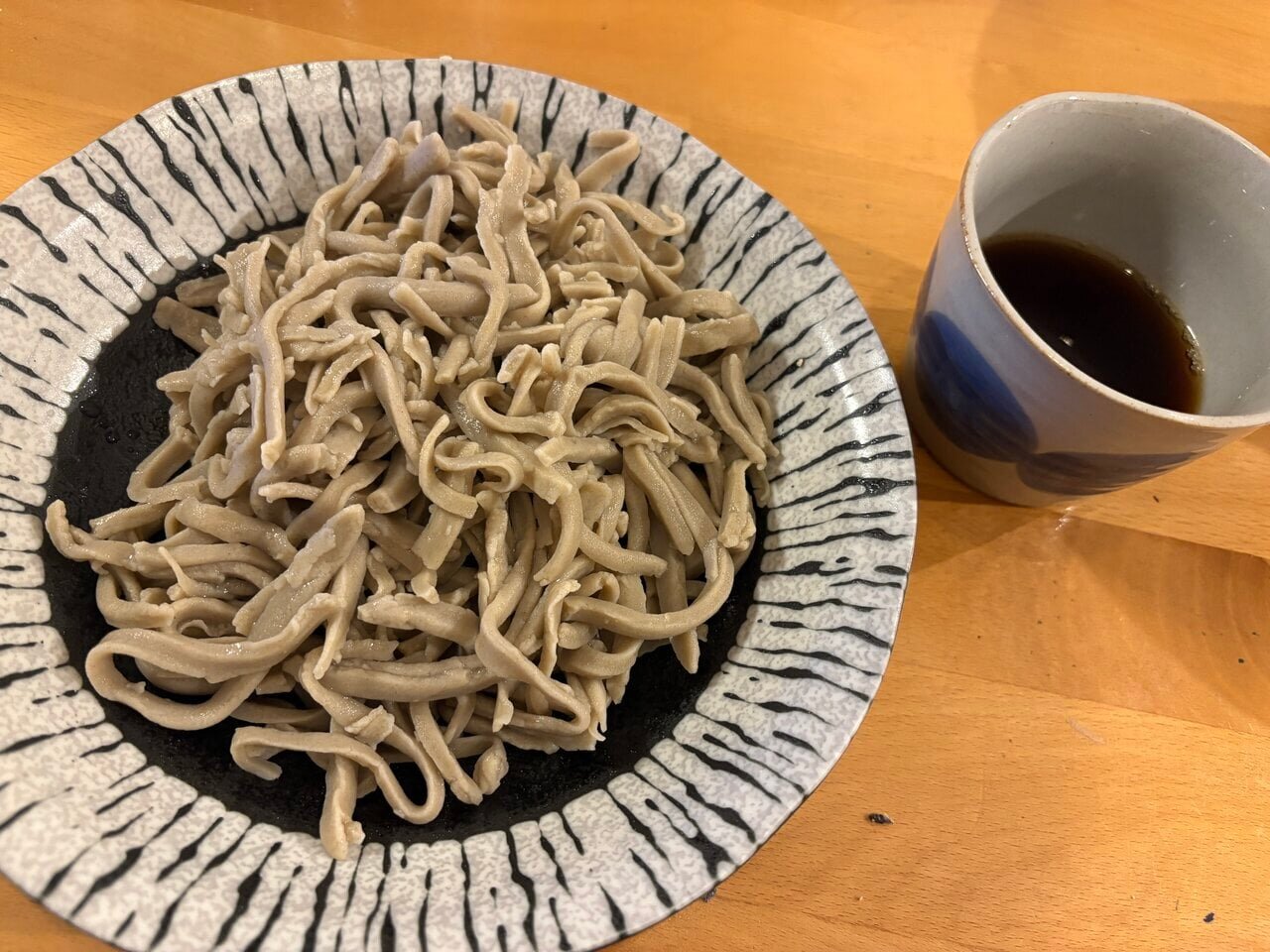
When I put the finished soba on a plate, although it's clumsy, it certainly has the color and shape of soba... When I tasted it, the flavor of buckwheat flour was strong. It's different from store-bought dried noodles, it's a rough taste, or should I say, simplicity, resulting in a feeling of "it works out in the end."
To be honest, the appearance was a disappointing result showing amateurishness, but when I put it in my mouth, there was a sense of "Ah, this is proper soba."
Perhaps the first step for a craftsman is "if it holds together, it's a success."
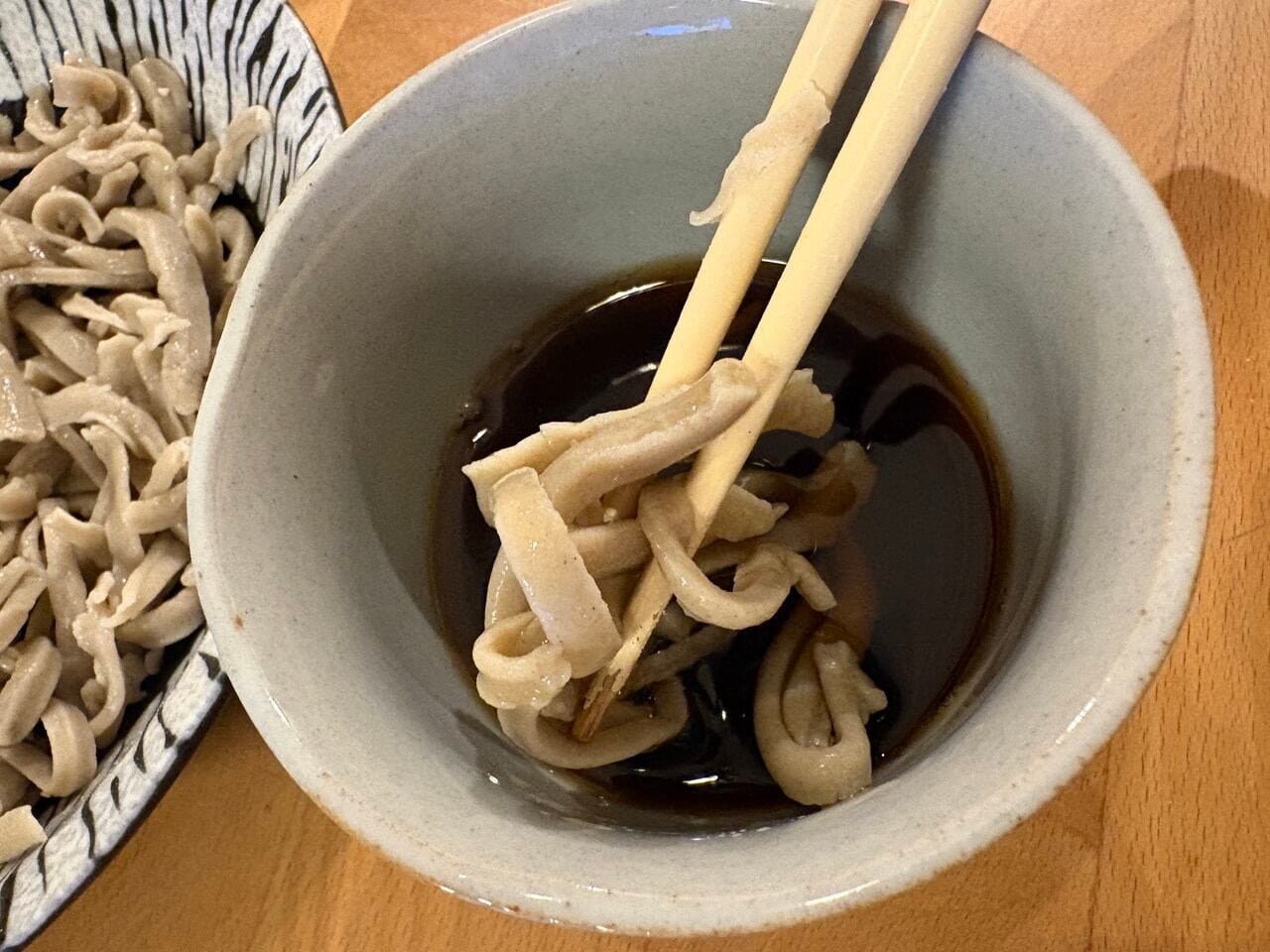
Thinking about it after tasting, it might be natural that 100% buckwheat soba doesn't turn out well from the start. The balance of water, the amount of flour for dusting, the uniformity of cutting. Each of these is simple, yet there is a "difficulty that you only understand after trying."
And above all, I realized just how amazing that thin and uniform bowl of soba served at restaurants really is. That finish must have been built on the craftsman's skills and accumulated experience. The next time I go to a soba restaurant, I might look at that bowl with a slightly different perspective.
And above all, I realized just how amazing that thin and uniform bowl of soba served at restaurants really is. That finish must have been built on the craftsman's skills and accumulated experience. The next time I go to a soba restaurant, I might look at that bowl with a slightly different perspective.
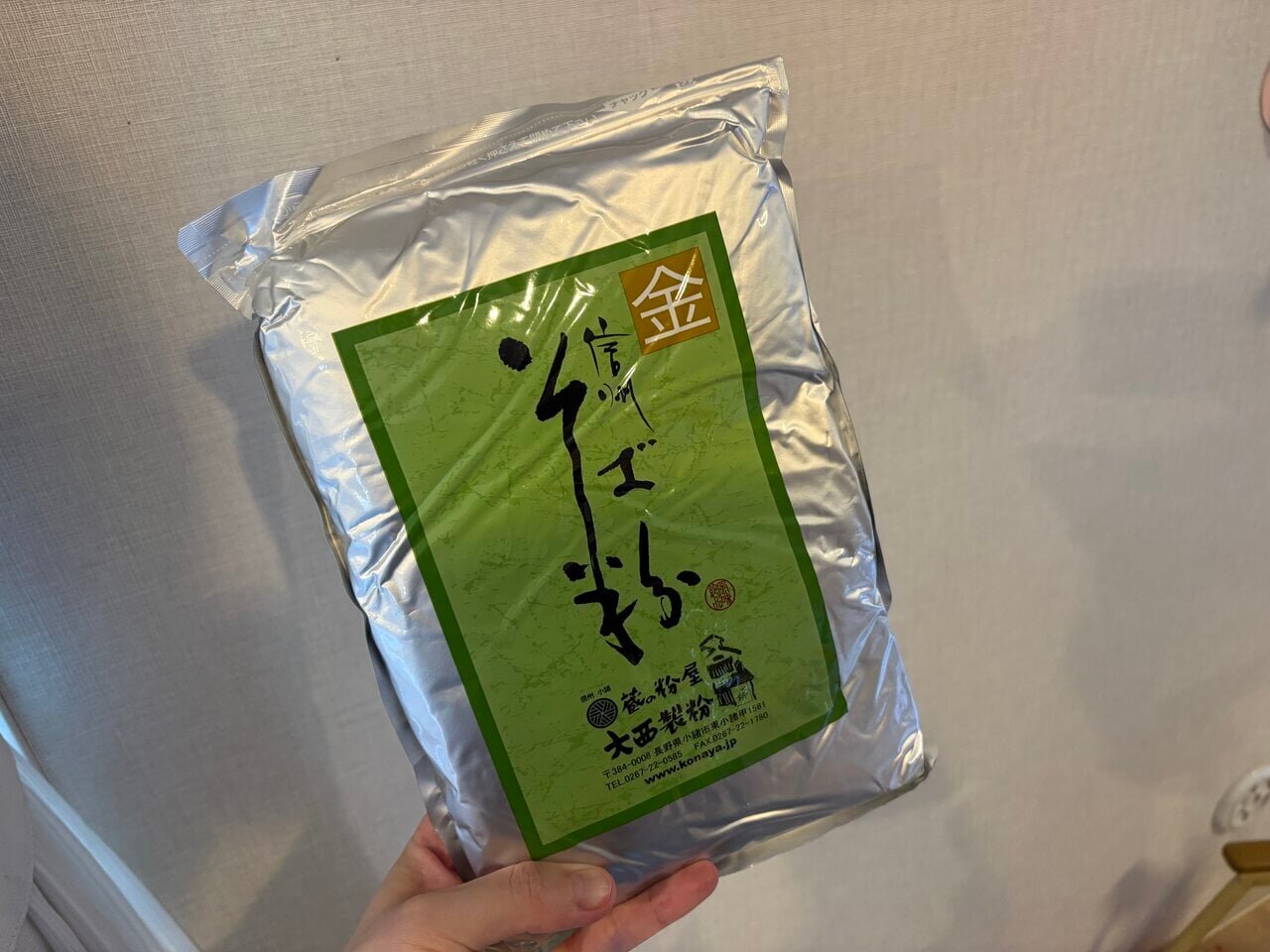
That said, the tools needed are sufficient with what’s at home. With buckwheat flour and water, and just motivation, it can be completed in the mornings of the weekend. The next challenge is to cut it evenly into 2mm pieces. If I can do that, the appearance should get much closer. I’m thinking of going to buy buckwheat flour again.
Interview & Text / SYURI
Interview & Text / SYURI
- SHARE





![[Midnight Drive] I wanted to cool off a bit, so I went for an adult night stroll at the retro vending machine corner in Sagamihara.](https://cdn.clipkit.co/tenants/1046/articles/images/000/032/887/large/a1bf17cd-06d0-4ad5-8236-8fd2970728e5.jpg?1787522426)
![[Interview] Bongo Brownie ✕ VAN LIVING What is the concept of living space that can be enjoyed with simple DIY?](https://cdn.clipkit.co/tenants/1046/articles/images/000/029/348/large/1669c7fe-4dba-4cc5-b0a3-7defa56bc0c0.jpg?1774904732)

 FASHION
 OUTDOOR
 WATCH
WATCH CAR & BIKE
 SNAP
SNAP DINING
 LIFE
LIFE GADGET
 GOLF
GOLF