
DINING
2026.01.18
【Homemade Challenge】Making ham for the first time was surprisingly easy! But how does it taste?
As everything is becoming more expensive, news has emerged that there are concerns about a supply shortage of prosciutto due to the ban on imports of Spanish pork at the end of 2025. In that case, why not use domestic pork to make it yourself? It’s a challenge.
Homemade Ham Ingredients
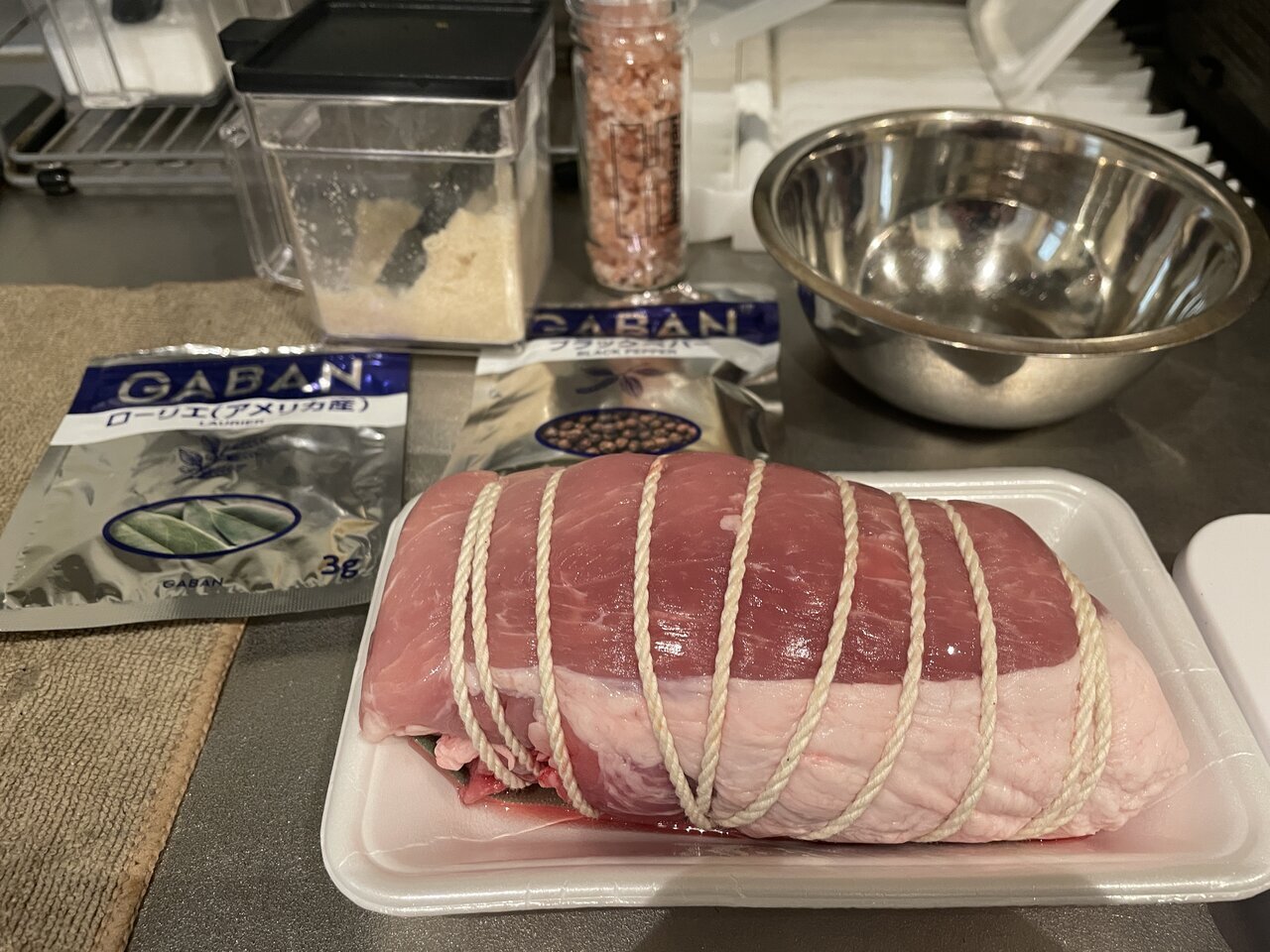
That said, while the DIY spirit to try making prosciutto has risen within me, prosciutto cannot ensure safety, so this time I am challenging myself to make boiled ham. I referred to a recipe I found online.
・Pork (leg) 300g
・Bay leaf 1 leaf
・Whole black pepper 20 grains
・Rock salt 80g
・Sugar 2 tablespoons
・Water 2 tablespoons (for seasoning)
I happened to find pork that was rolled with string, so I am using that. It was a perfect opportunity since large cuts of meat were being sold around the end of the year.
・Pork (leg) 300g
・Bay leaf 1 leaf
・Whole black pepper 20 grains
・Rock salt 80g
・Sugar 2 tablespoons
・Water 2 tablespoons (for seasoning)
I happened to find pork that was rolled with string, so I am using that. It was a perfect opportunity since large cuts of meat were being sold around the end of the year.
Rock salt, which is essential for ham-making ≒ Potassium nitrate
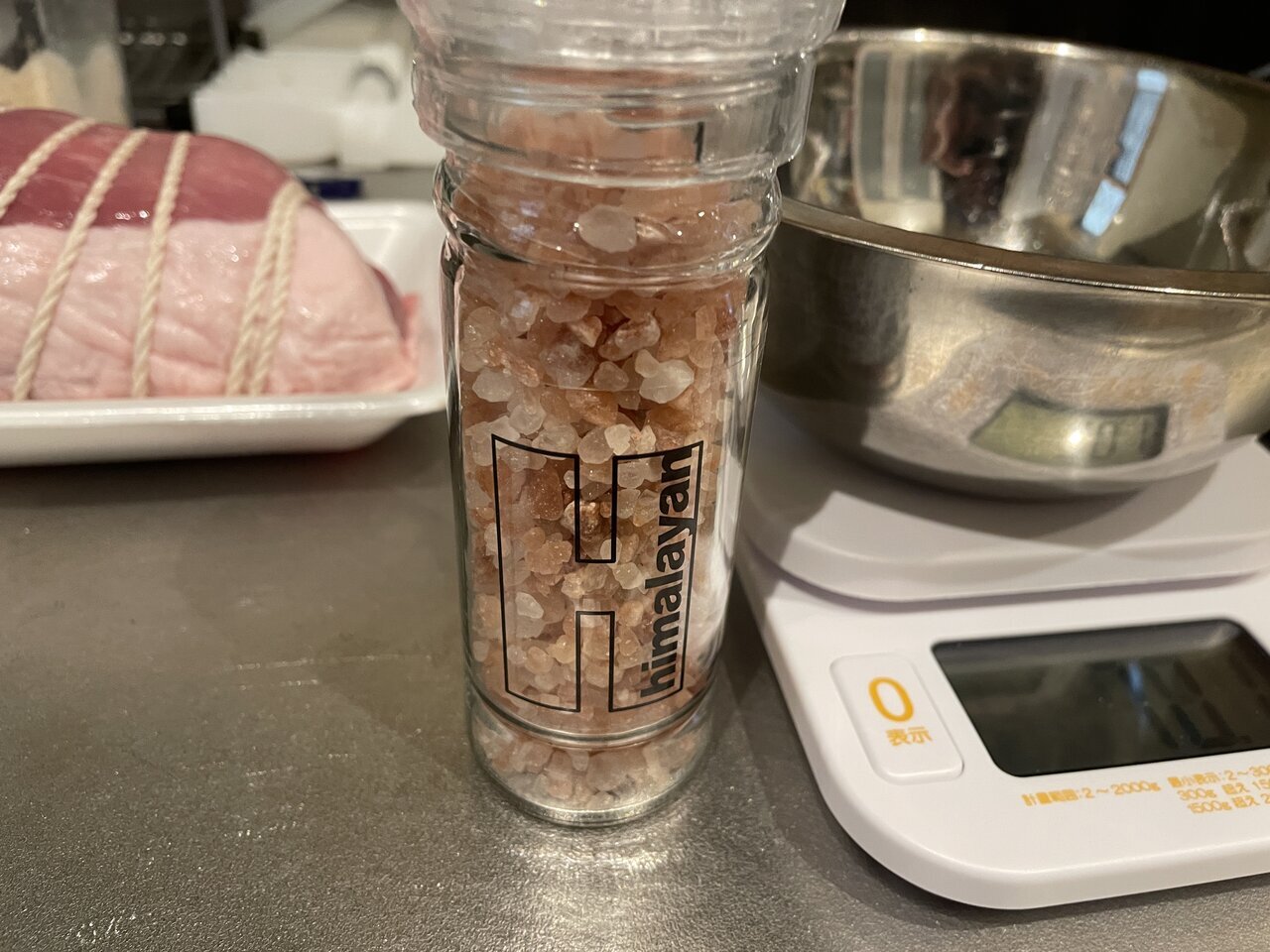
The big point this time is using rock salt. Although it was not used in the recipe I referred to, the reason I specifically chose rock salt is that I want the ham to have a pink cross-section.
Pork that is cooked through normally turns brown, while the ham sold in stores is pink. In fact, the pink color of ham is created not just by cooking it but by allowing "saltpeter (potassium nitrate)" to permeate it.
However, because saltpeter can also be a hazardous material, it is difficult to purchase, so I decided to use rock salt, which contains a small amount of potassium nitrate.
Pork that is cooked through normally turns brown, while the ham sold in stores is pink. In fact, the pink color of ham is created not just by cooking it but by allowing "saltpeter (potassium nitrate)" to permeate it.
However, because saltpeter can also be a hazardous material, it is difficult to purchase, so I decided to use rock salt, which contains a small amount of potassium nitrate.
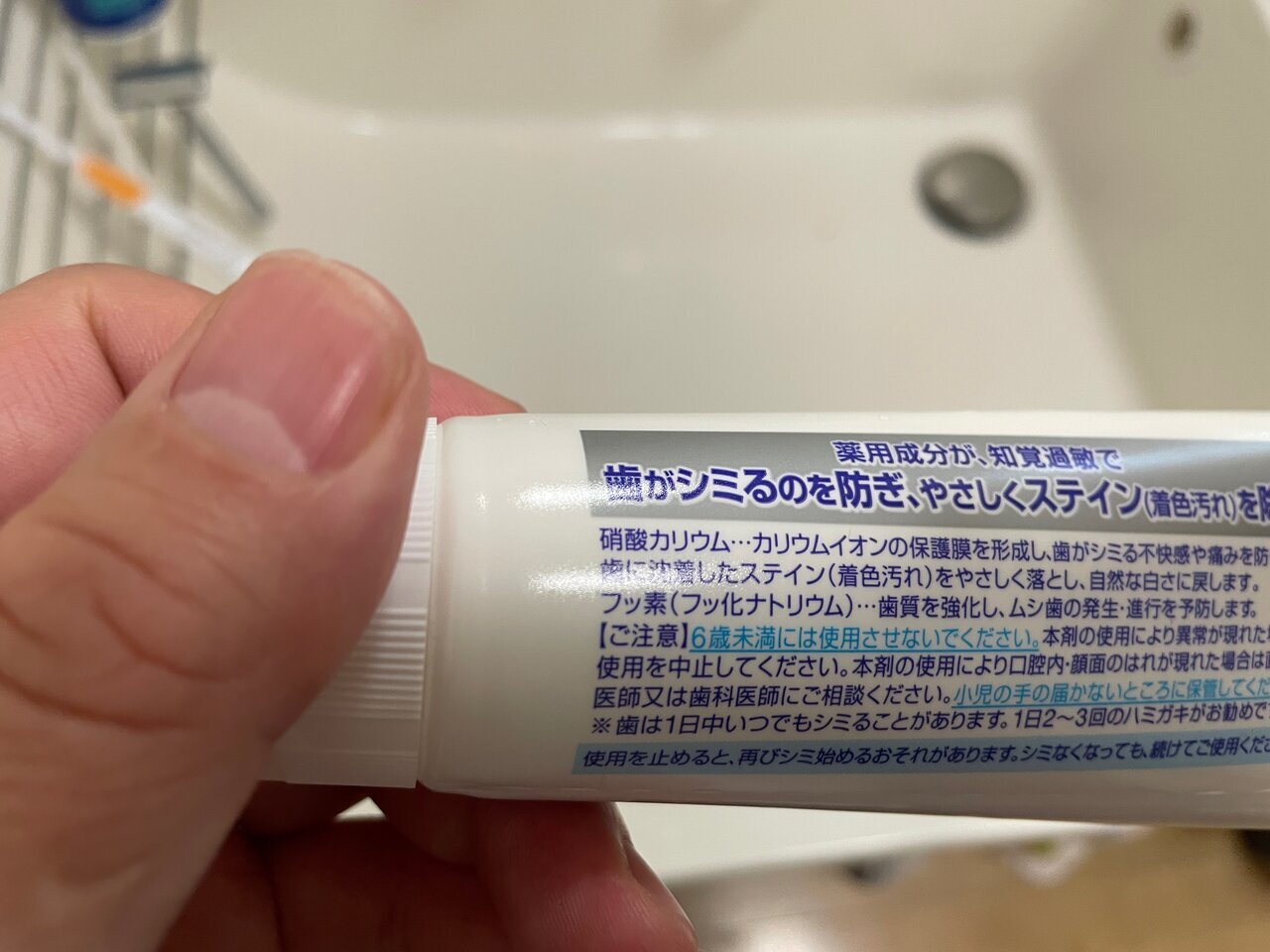
By the way, I use toothpaste for sensitive teeth, and its main ingredient is potassium nitrate. I learned this from a dentist I used to visit, and since I remembered this name, I felt a strange connection and got excited when I heard this ingredient name in the context of making ham.
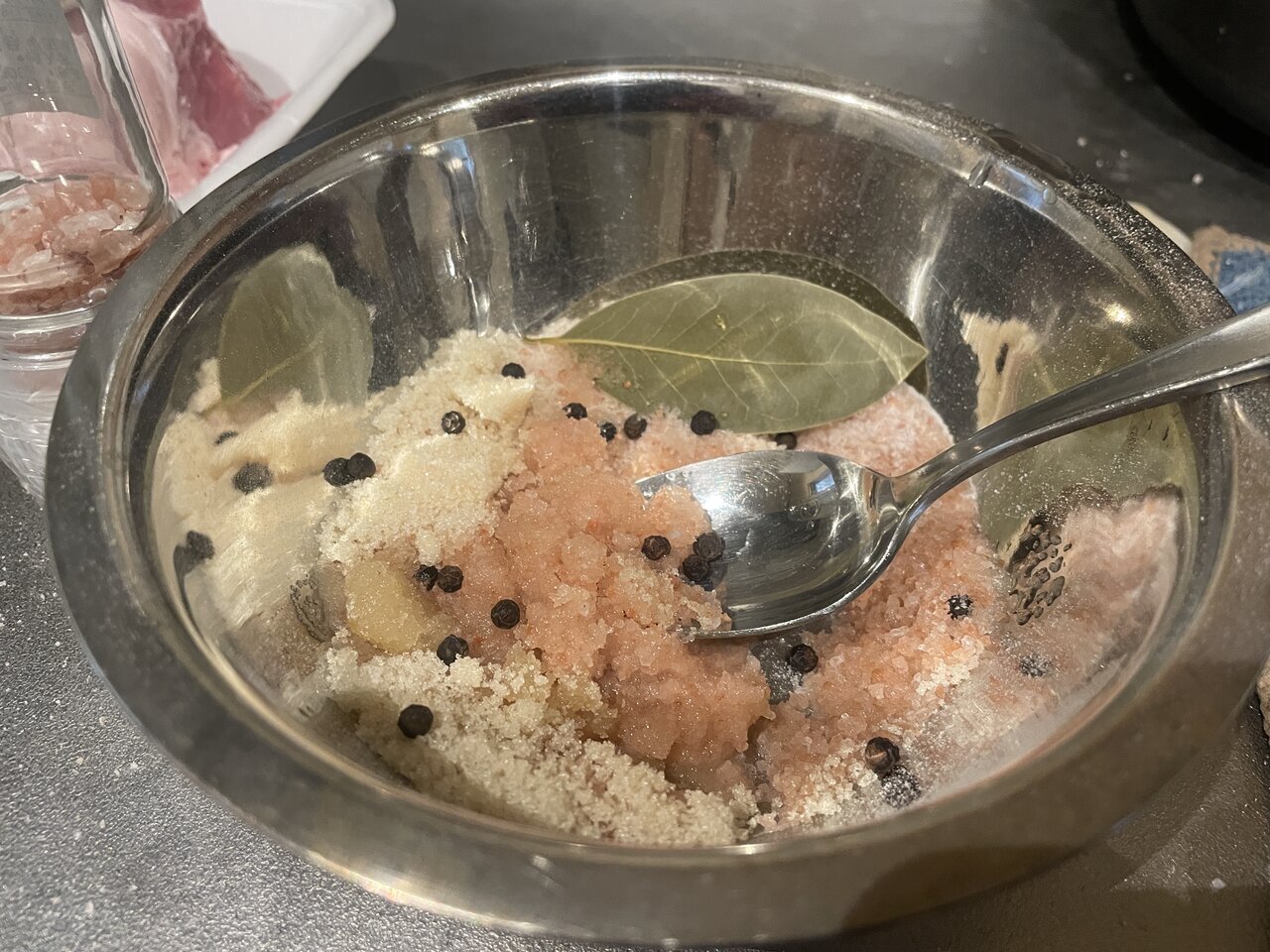
Scrape the rock salt with some effort and mix everything together. Next, combine the pork and seasonings in a sealable bag and let it sit for about 1 to 1.5 days.
After that, you just boil it! Surprisingly easy.
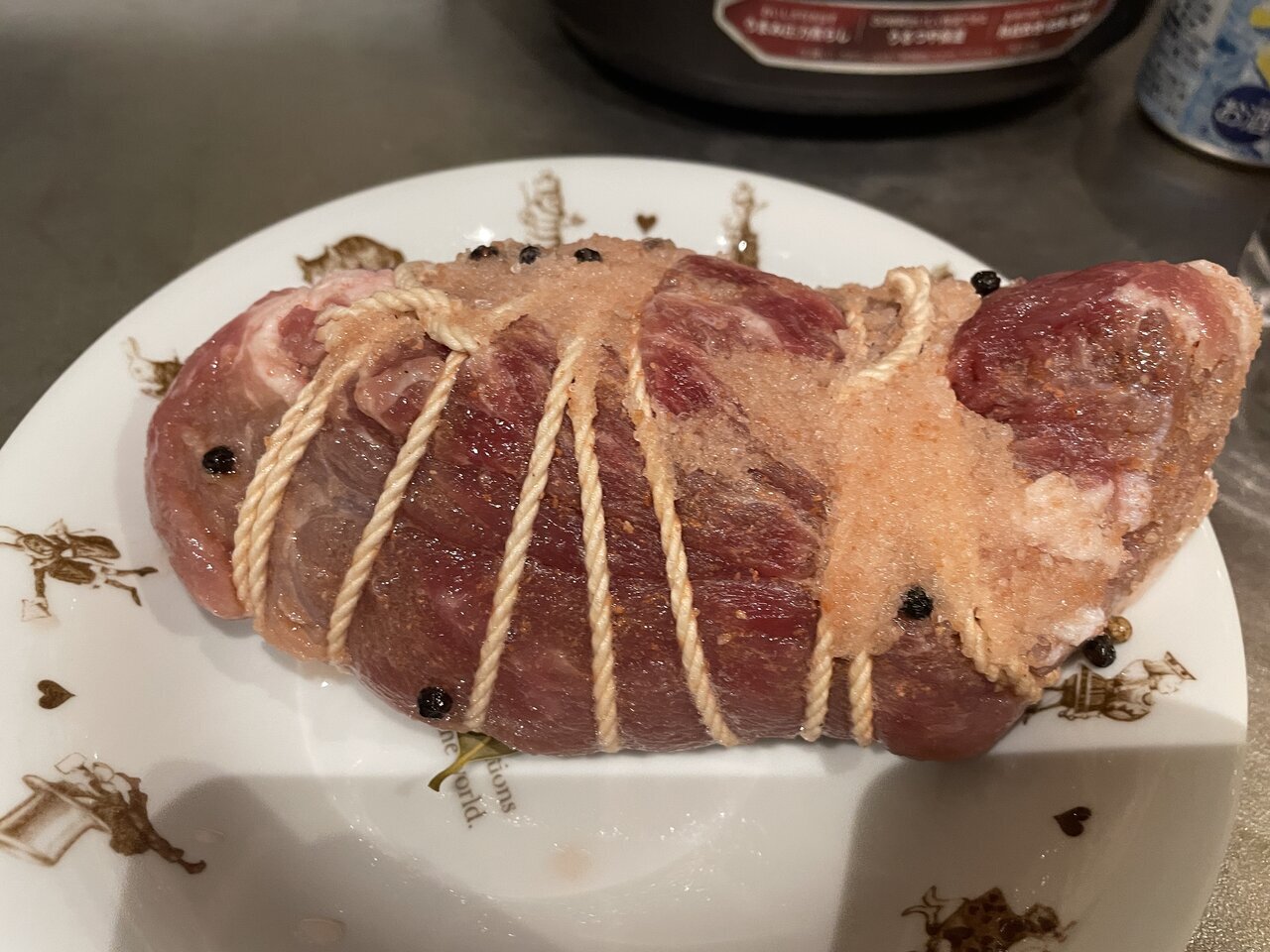
Here’s what it looks like after sitting for 1.5 days. The meat should be firm and elastic, and it’s perfect if it is. Rinse off the seasonings and you’re ready to boil.
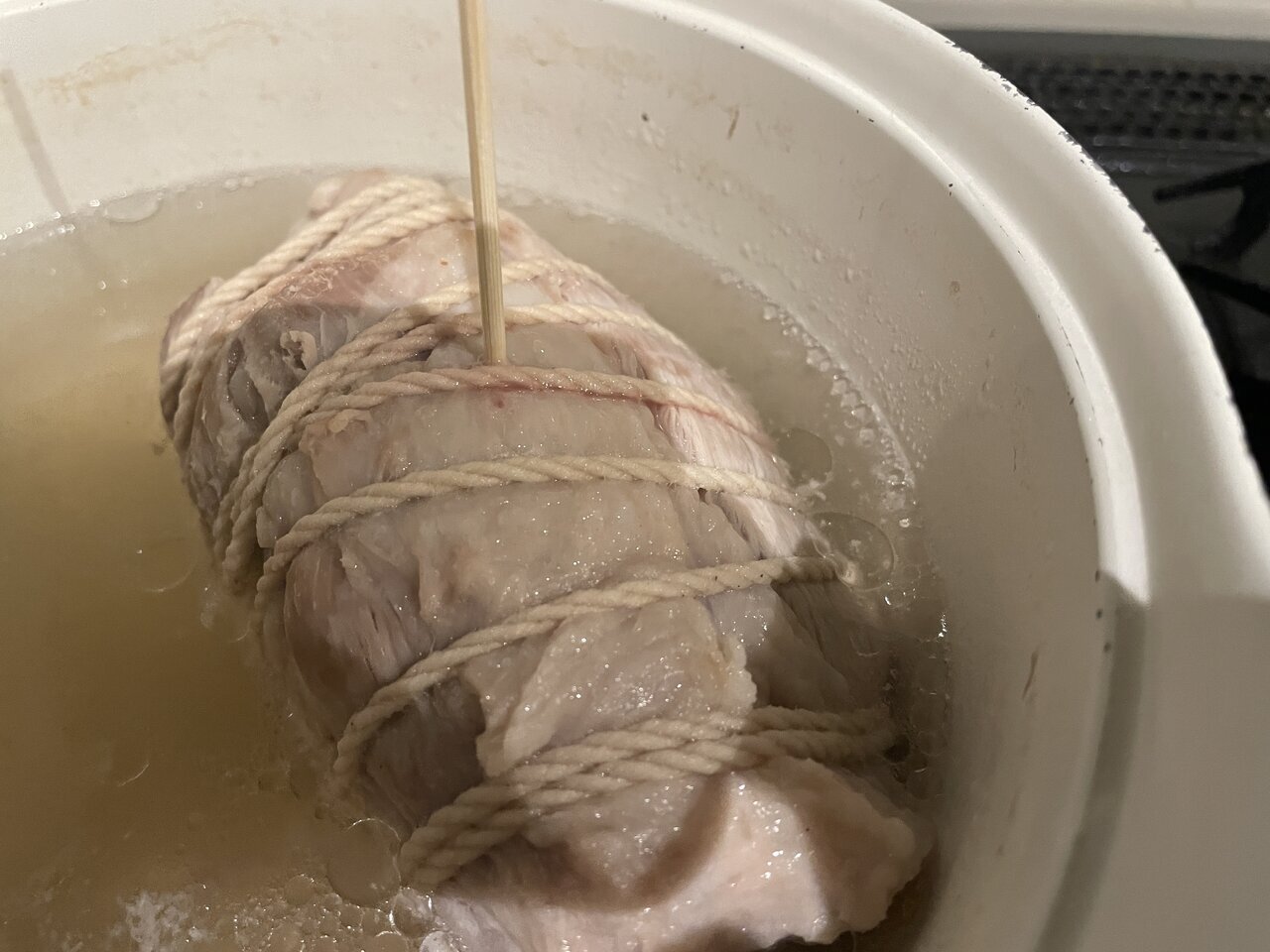
Fill a pot with enough water to submerge the meat, bring it to a boil, then reduce to low heat and maintain a temperature of 85℃ to 90℃ while boiling for 50 minutes. Since I don't have a thermometer, keeping this temperature was difficult, and I visually judged the cooking by looking for a bubbling state. A bamboo skewer should easily pierce through, and you can check if it’s done by feeling the heat of the skewer.
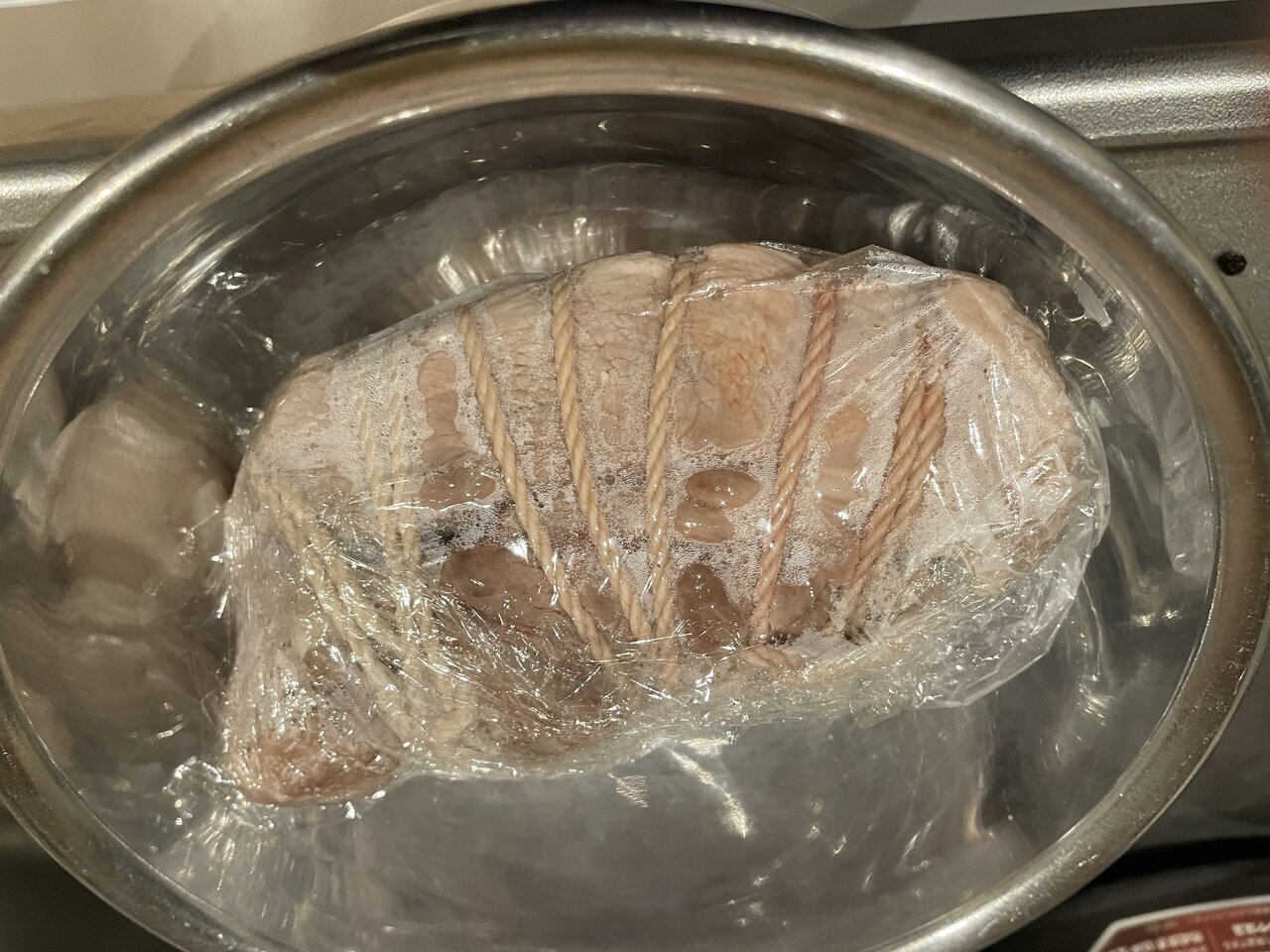
Once boiled, immediately wrap it in plastic wrap, place it in a bowl over ice, and put another bowl on top of it with the meat to cool it down.
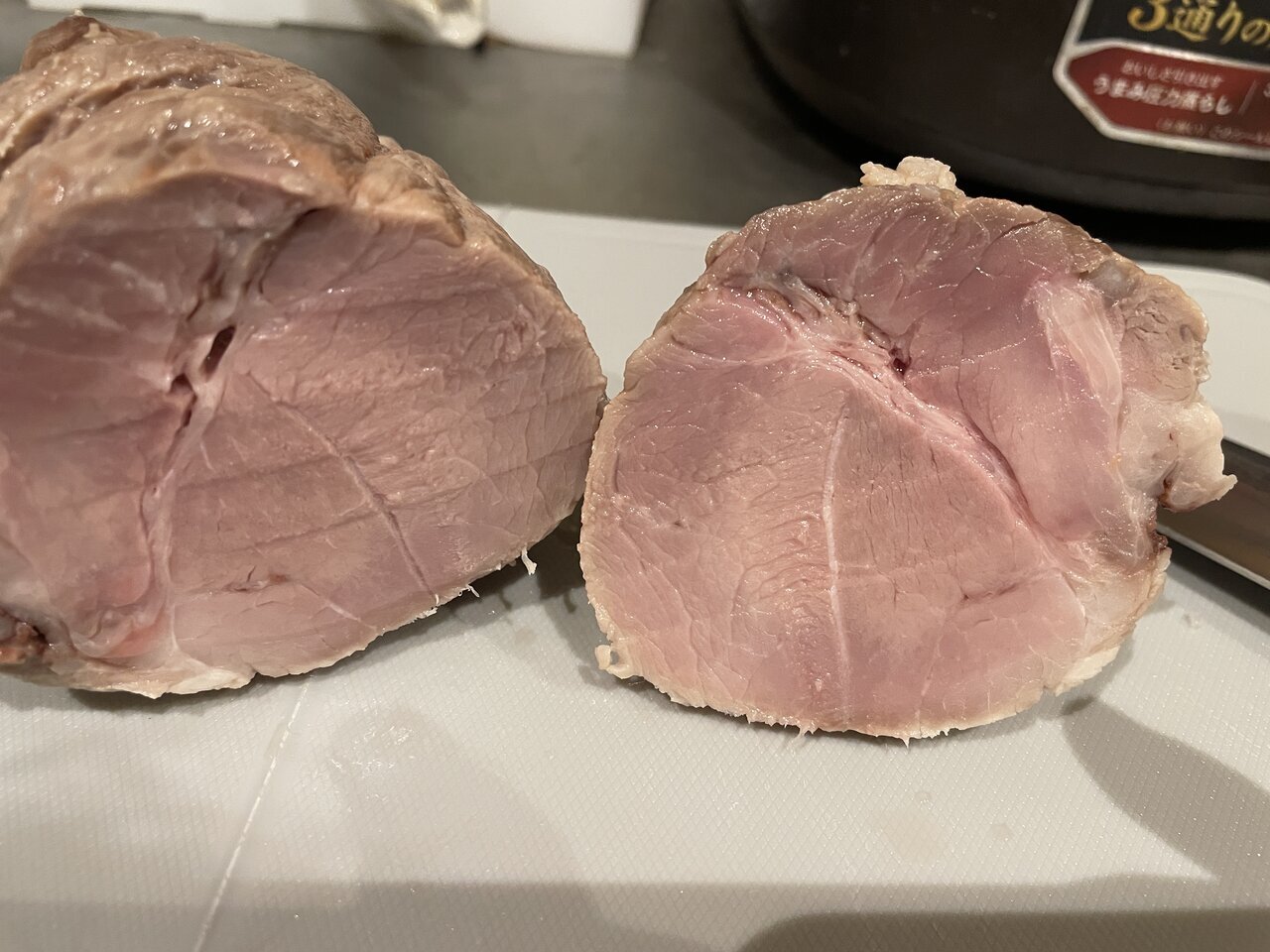
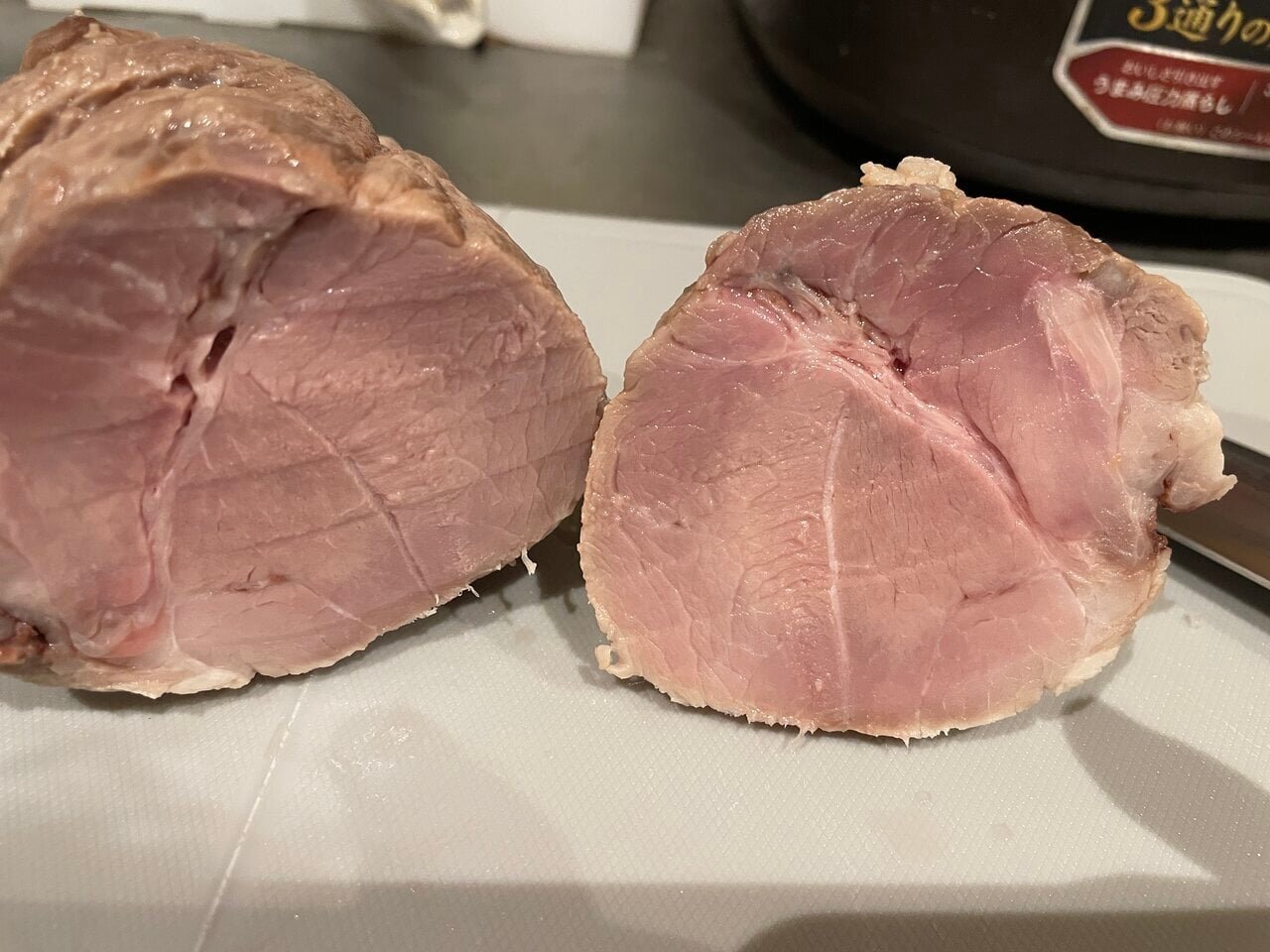
Since it has finished curing, I tried cutting it, and it turned out to be quite a nice pink color. I didn't add much spice, so I'm curious if it tastes distinctly like ham or not.
I tasted the freshly made ham! How does it taste?
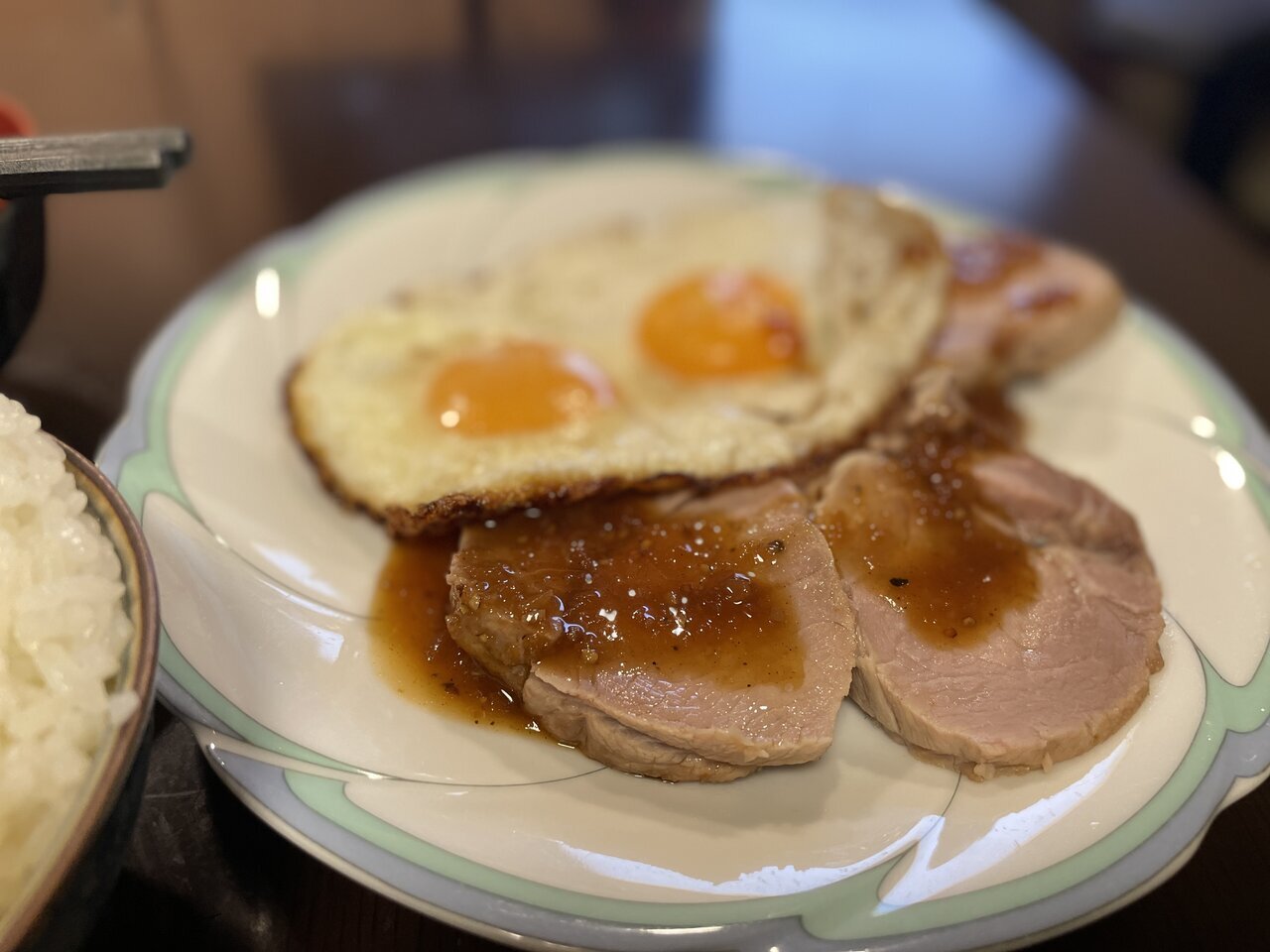
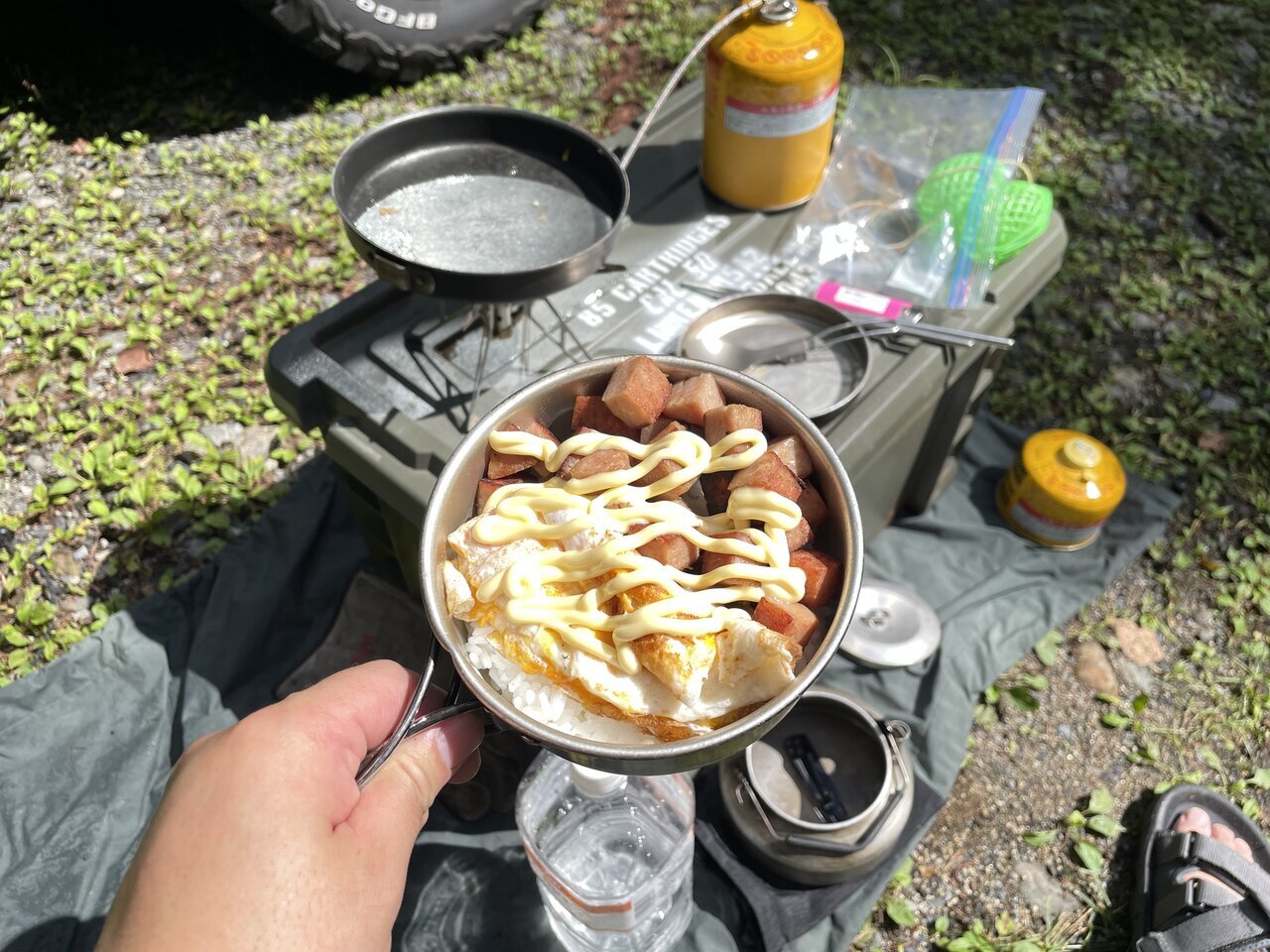
For now, I made it into ham and eggs, but it tastes more like char siu than ham. There's no meatiness, so I think that's due to the effects of the pepper and bay leaf. However, the saltiness was a bit too strong, so it seems better to reduce the draining time with the current meat size and cut.
By making various ingredients like this, I feel I've acquired a way to live without being influenced by external circumstances, and it feels like I've become more resilient. I will also find more interesting recipes and challenge myself to make them, so please look forward to the next article.
By making various ingredients like this, I feel I've acquired a way to live without being influenced by external circumstances, and it feels like I've become more resilient. I will also find more interesting recipes and challenge myself to make them, so please look forward to the next article.
Interview and text by Kazuma Tanaka
- SHARE






![[Midnight Drive] I wanted to cool off a bit, so I went for an adult night stroll at the retro vending machine corner in Sagamihara.](https://cdn.clipkit.co/tenants/1046/articles/images/000/032/887/large/a1bf17cd-06d0-4ad5-8236-8fd2970728e5.jpg?1787522426)
![[Interview] Bongo Brownie ✕ VAN LIVING What is the concept of living space that can be enjoyed with simple DIY?](https://cdn.clipkit.co/tenants/1046/articles/images/000/029/348/large/1669c7fe-4dba-4cc5-b0a3-7defa56bc0c0.jpg?1774904732)


 FASHION
 OUTDOOR
 WATCH
WATCH CAR & BIKE
 SNAP
SNAP DINING
 LIFE
LIFE GADGET
 GOLF
GOLF