
DINING
2026.03.23
【A Home in Thailand】 Challenge authentic Thai cuisine with MUJI's handmade "Pad Thai," "Tom Yum Goong," and "Larb".
While browsing at MUJI, I noticed the presence of a well-stocked food section. As I looked at the shelves, what caught my eye was the "handmade kit" that allows you to make authentic dishes. I picked up three Thai dishes that are hard to make at home and actually tried cooking them...
Is it really possible to make Thai dishes that I've never cooked before using Muji's handmade kits?
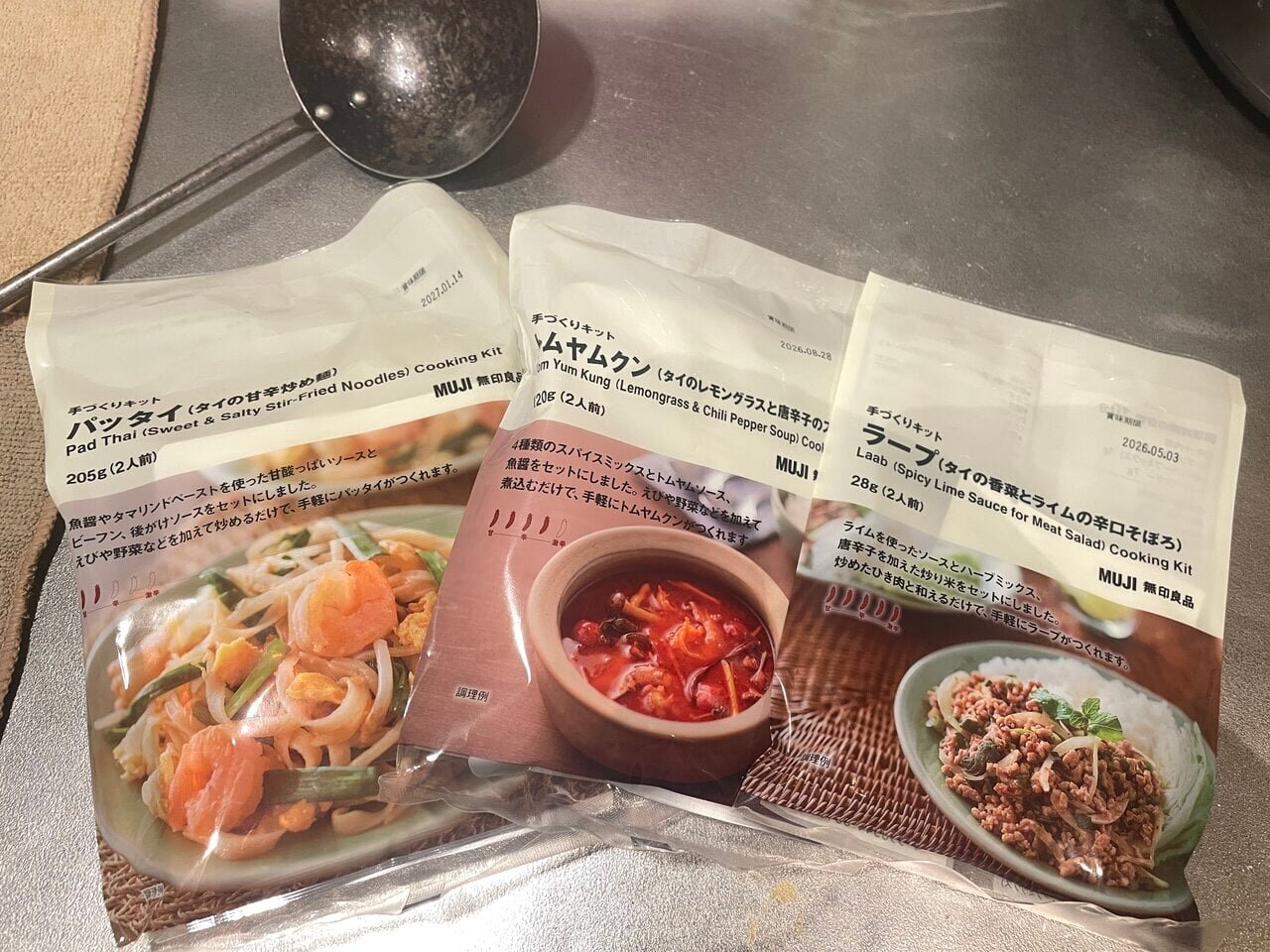
Muji's handmade kits come with a set of hard-to-find ingredients, spices, and seasonings, and require you to add fresh ingredients for cooking. They are not like ready-to-eat products that just need to be warmed up; instead, they allow you to cook authentic Thai dishes, which I thought would deepen my understanding of recipes I've never tried, so I ended up purchasing one.
The three types of Thai dishes I purchased were "Pad Thai," "Tom Yum Goong," and "Larb."
The three types of Thai dishes I purchased were "Pad Thai," "Tom Yum Goong," and "Larb."
The classic Thai dish "Pad Thai"
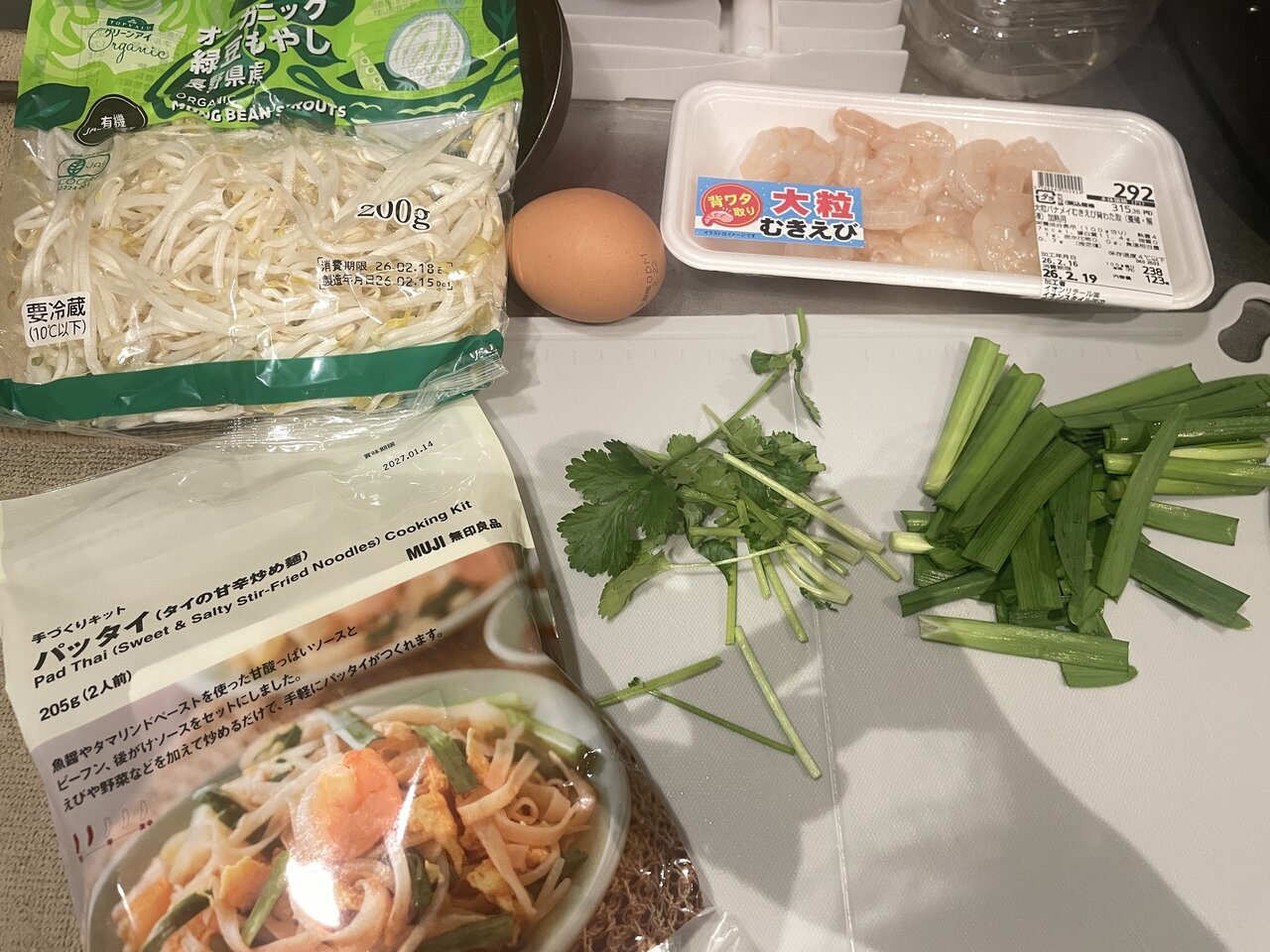
First, I cooked the classic Thai dish Pad Thai (390 yen). The additional ingredients are listed on the package, and since there's a certain element of choosing according to personal preference, I will omit the explanation. Each product seems to be designed so that you can complete it by simply following the instructions without much thought.
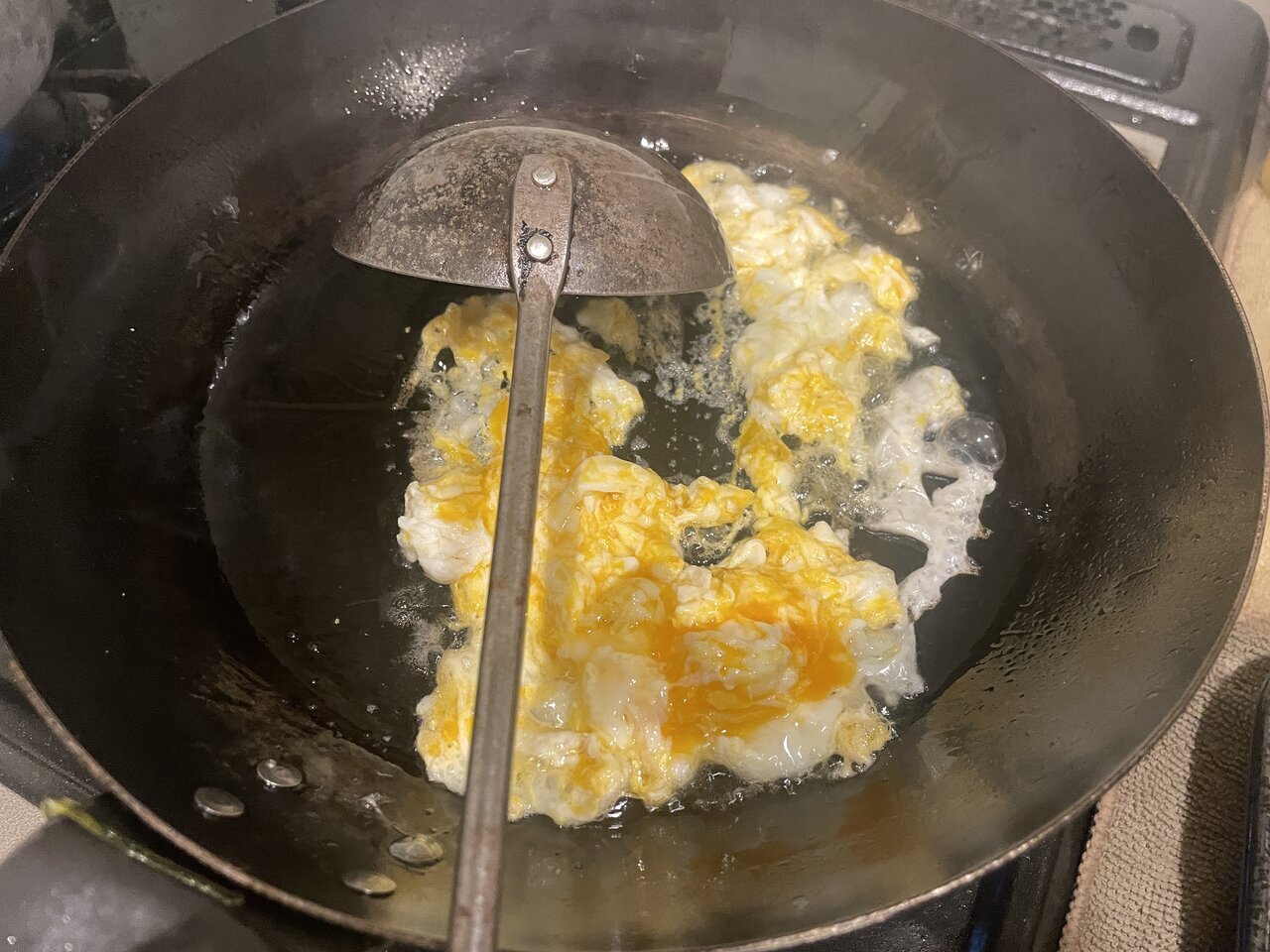
Not everything can be made in one pot; you need to boil the noodles and fry the eggs beforehand, so you need to prepare a certain amount of cooking tools and dishes.
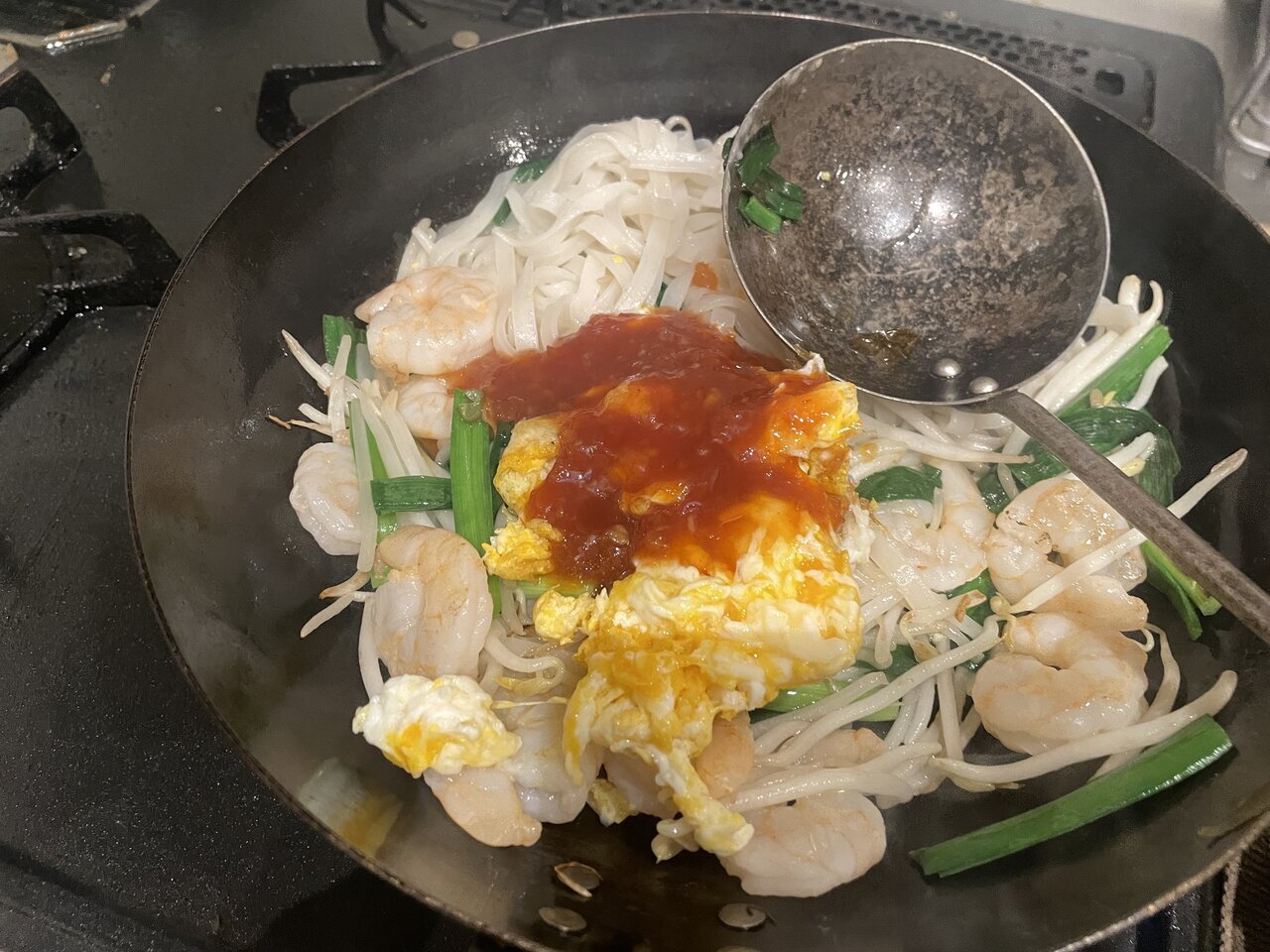
Add the sautéed ingredients and boiled rice noodles, and finally add the accompanying seasoning and toss the frying pan to complete. It's very convenient that you can save the trouble of combining or gathering unfamiliar ethnic seasonings.
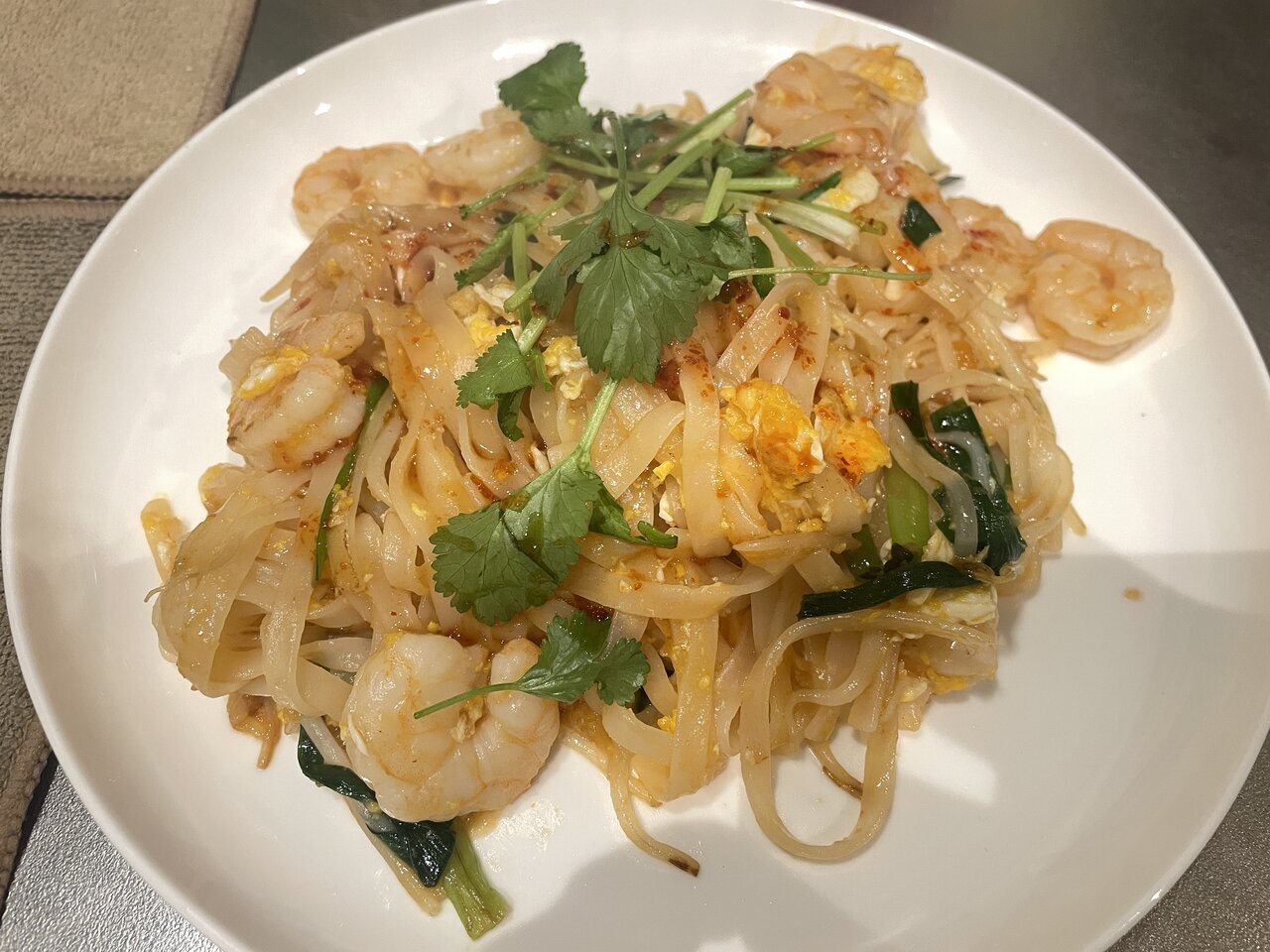
It’s ready in a few minutes. Although it was recommended to include nuts, I left them out and added my favorite cilantro instead. The texture of the rice noodles is good, and the flavor tastes very delicious, just like what you would eat at a restaurant. However, perhaps there weren't enough vegetables, as the seasoning turned out quite strong. The kit is portioned for two servings, but I was unsure if I would be able to eat it all, so I only added about one serving's worth of vegetables.
Spicy minced meat rice "Larb"
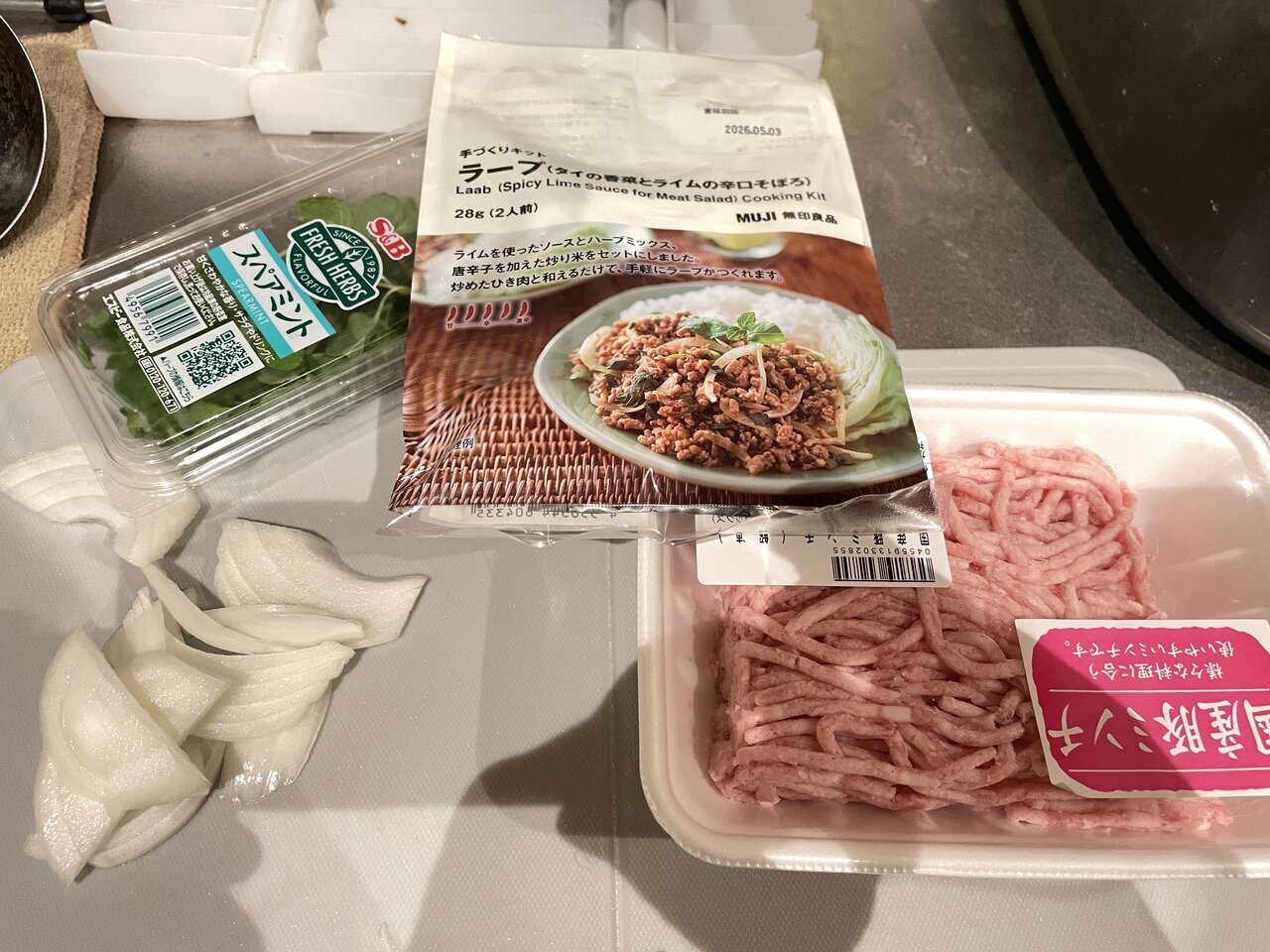
Finally, there's "Larb" (290 yen), which uses mint, an herb I don’t usually handle. It’s a minced meat rice dish characterized by the tartness from lime, and the other ingredients, including mint, are common items like onion and ground meat that you would generally have in your refrigerator.
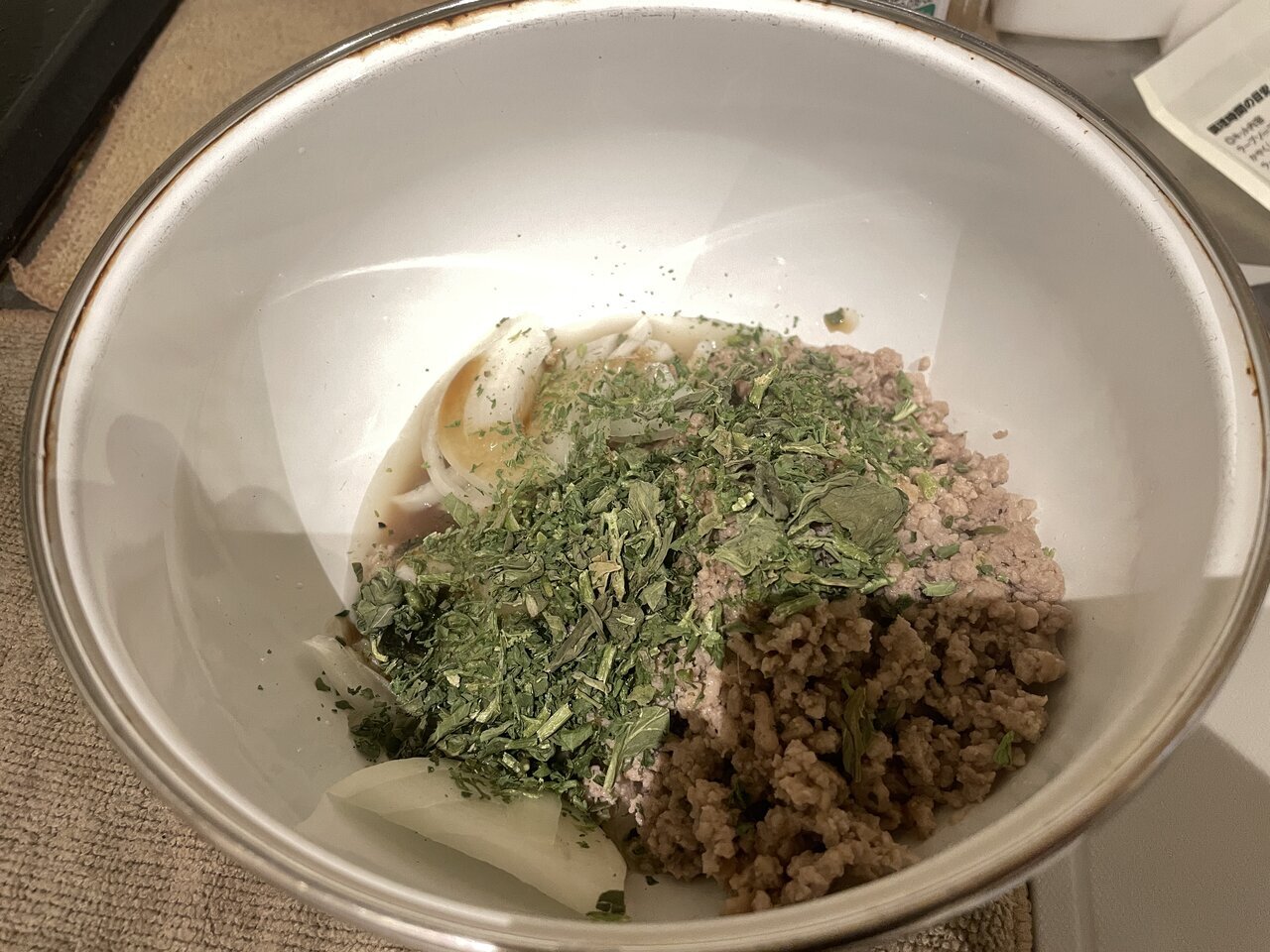
The preparation is the simplest: just sauté the ground meat and mix everything together. The other herbs, apart from mint, are dried.
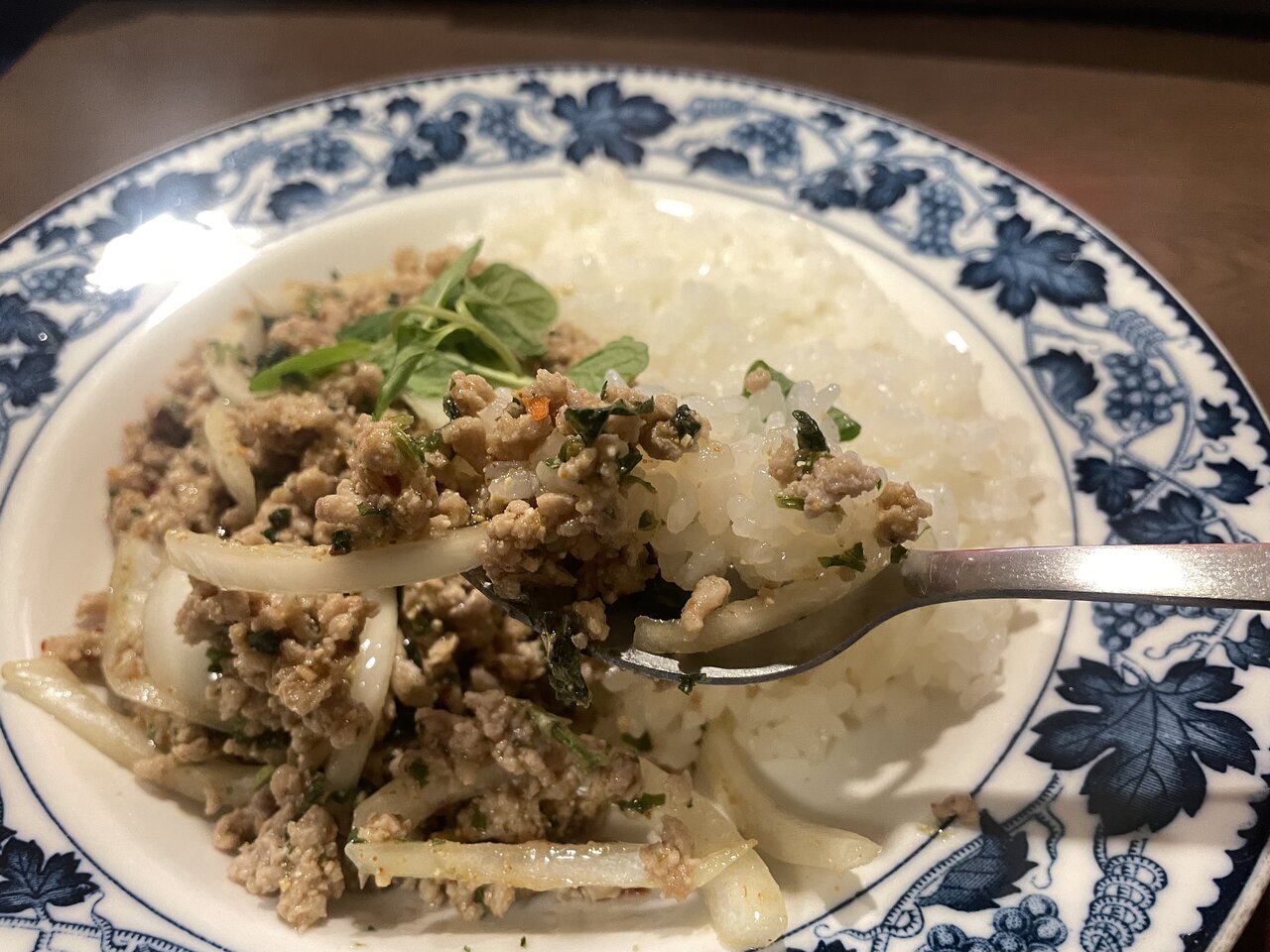
It has a sour taste and a unique flavor, giving it an authentic taste. The amount of additional mint may have been a bit low, so personally, I felt the herb flavor was a little weak. Adding coriander, which I didn’t include at this time, might really bring the flavors together.
My personal favorite is "Tom Yum Goong."
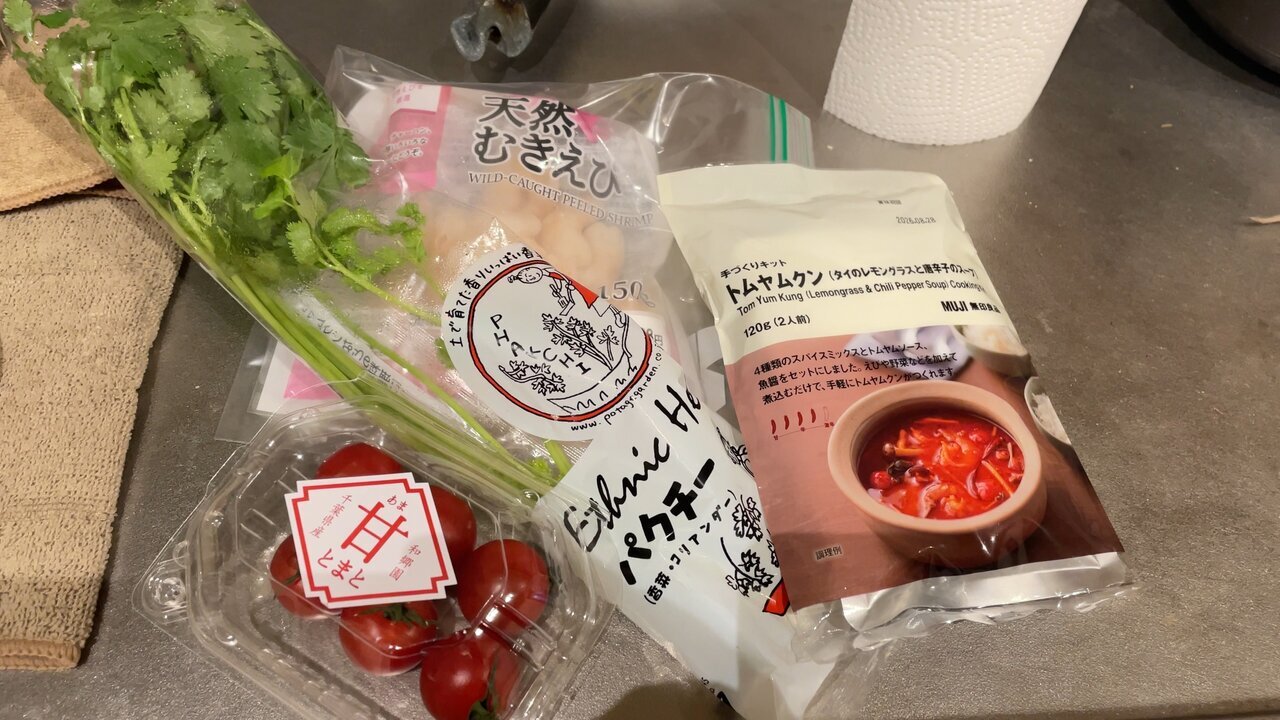
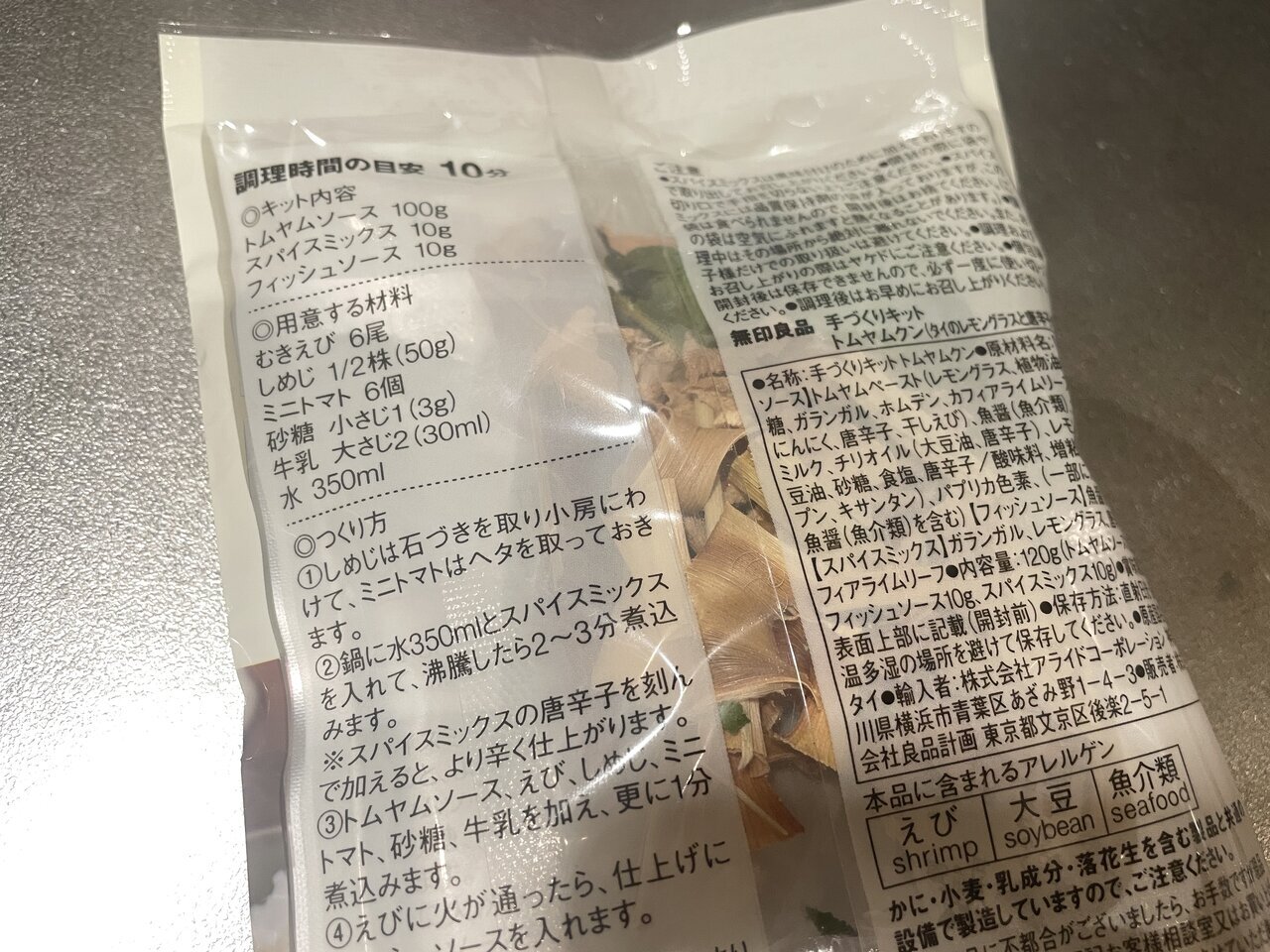
The Tom Yum Goong (290 yen) is almost complete just by putting ingredients in the pot. Although it's not in the picture, I also add milk instead of coconut milk.
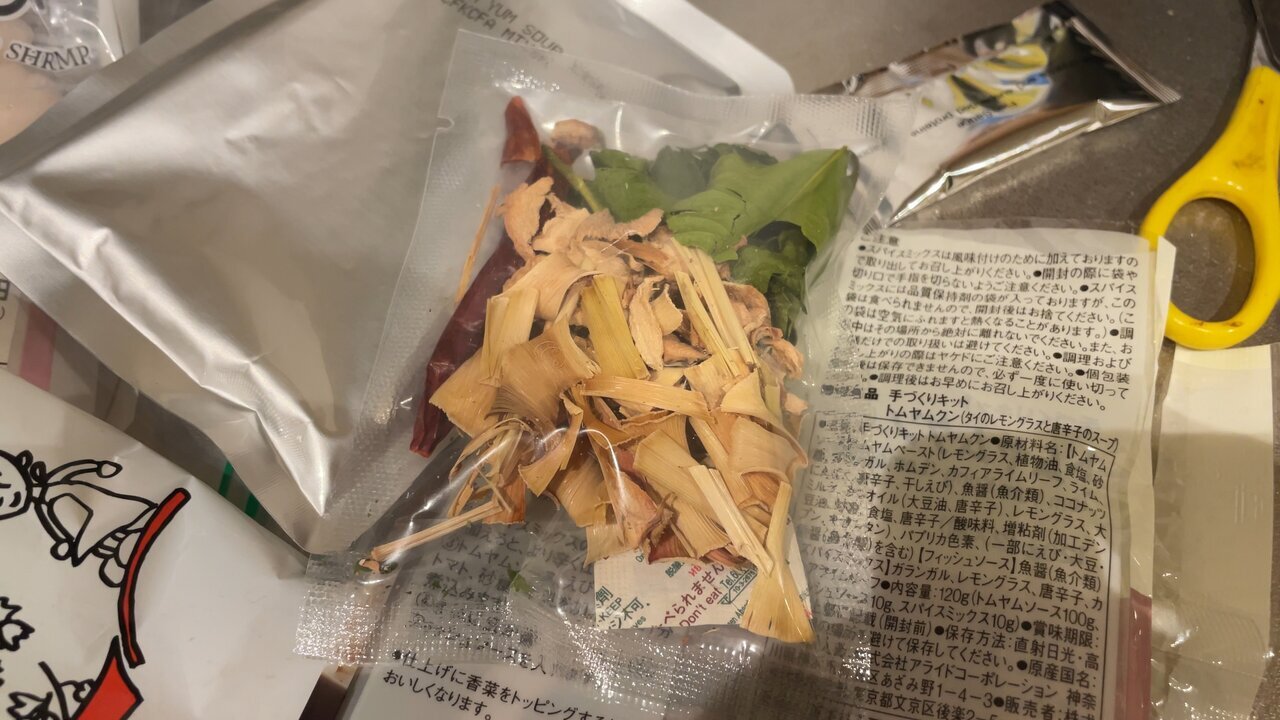
The deciding factor for purchasing the handmade kit was being able to confirm that whole spices and herbs were included. I felt it was a good deal that authentic flavors could be reproduced at a price of 290 yen. Therefore, I especially have high expectations for this Tom Yum Goong.
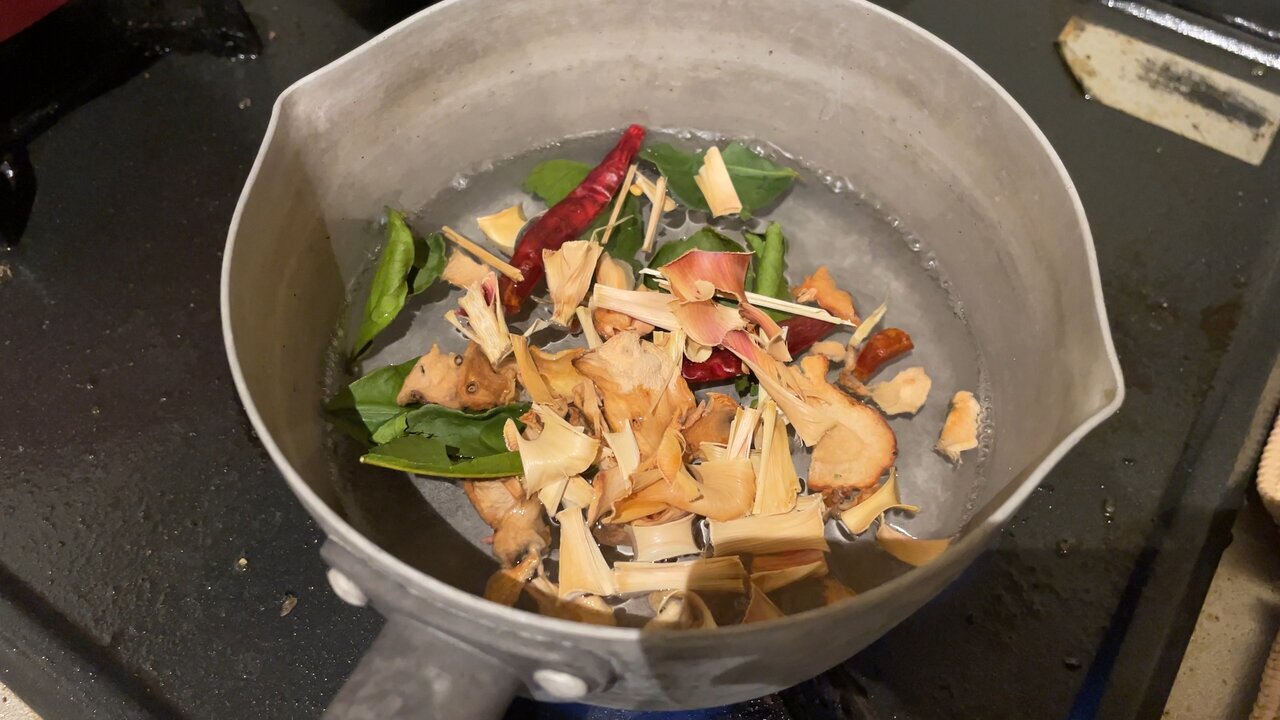
First, I start by boiling the spices. I was surprised to find that it was the same method I used when I made chai before. This discovery revealed the structure of the process, and I was able to reach an understanding of the cooking steps I had anticipated when buying it at Muji.
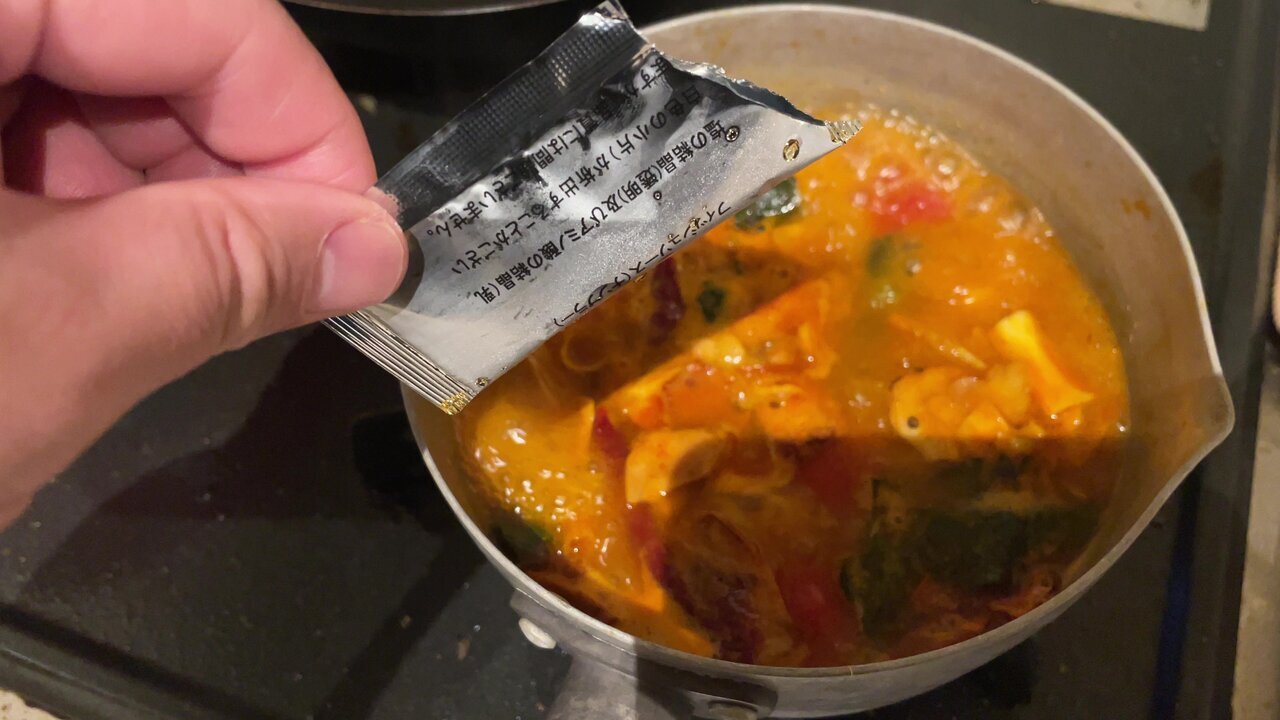
After that, add all the ingredients and seasonings, and finally, add what seems to be fish sauce like Nam Pla to complete.
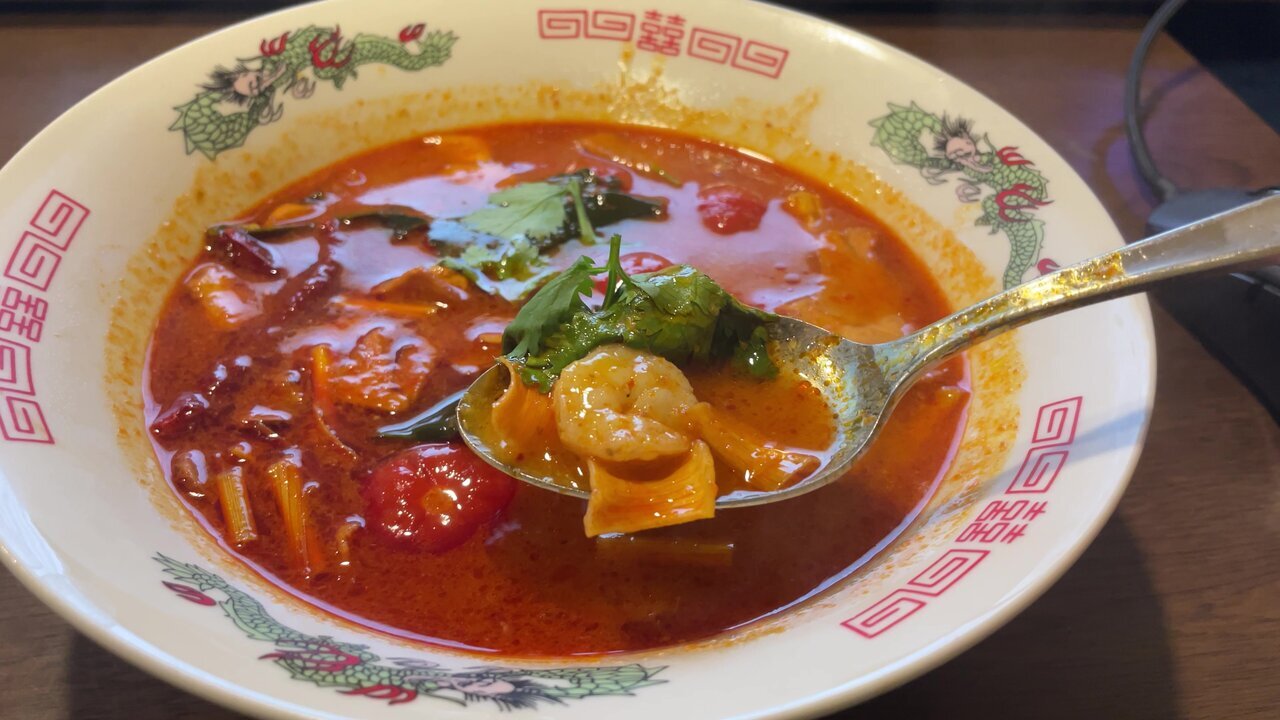
The aroma rises, and the balance of acidity and spiciness is good, making it very high quality! However, even though it had enough flavor when I tasted it before adding the fish sauce, the result after adding the whole amount gave a rather strong salty impression. Personally, it might have been better to add the fish sauce while adjusting it.
I tried the handmade kits with three flavors, and they were all easier to cook and of higher quality than I expected. There were types other than Thai cuisine, so if I find something else that catches my interest, I think I'll give it a try.
I tried the handmade kits with three flavors, and they were all easier to cook and of higher quality than I expected. There were types other than Thai cuisine, so if I find something else that catches my interest, I think I'll give it a try.
Interview and text by Kazuma Tanaka
- * Muji Thai Cuisine
- Cooking
- Handmade Kit
- Kazuma Tanaka
- Laab
- Muji
- Pad Thai
- Thai Cuisine
- Tom Yum Goong
- SHARE










![[Midnight Drive] I wanted to cool off a bit, so I went for an adult night stroll at the retro vending machine corner in Sagamihara.](https://cdn.clipkit.co/tenants/1046/articles/images/000/032/887/large/a1bf17cd-06d0-4ad5-8236-8fd2970728e5.jpg?1787522426)

![[Interview] Bongo Brownie ✕ VAN LIVING What is the concept of living space that can be enjoyed with simple DIY?](https://cdn.clipkit.co/tenants/1046/articles/images/000/029/348/large/1669c7fe-4dba-4cc5-b0a3-7defa56bc0c0.jpg?1774904732)


 FASHION
 OUTDOOR
 WATCH
WATCH CAR & BIKE
 SNAP
SNAP DINING
 LIFE
LIFE GADGET
 GOLF
GOLF