
LIFE
2026.10.25
【Historical Walk】 Just a short walk from Yokohama’s Center Kita Station, "Otsuka-Saikotsudo Archaeological Park" takes you back in time 2200 years
The "Otsuka-Saikotsudo Archaeological Park", accessible by walking from Yokohama City Subway's Center Kita Station. What lies about 1.5 meters below the residential area where the Yayoi village rests? You will traverse back and forth 2200 years of time by walking through pit dwellings, approximately 80 meters of burial paths, and Edo-period houses.
A holiday without a packed schedule, I tried visiting a village that sleeps at my feet
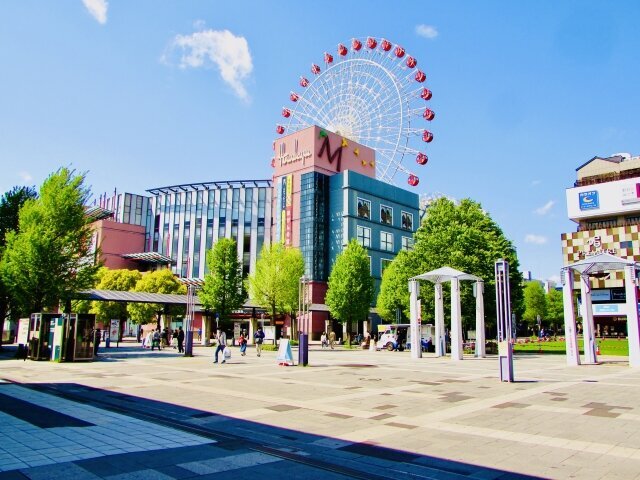
I usually pass by this town on the train, but today, without cramming my schedule, I decided to walk leisurely. I have always longed for such a relaxed holiday. So, I boldly walked from Yokohama City Subway Center-Kita Station to visit "Otsuka-Saikatsudo Ruins Park."
At the feet of the Kohoku New Town residential area, there lies the ruins of a village from about 2200 years ago, during the Yayoi period (a moat-enclosed settlement), where pit dwellings and elevated storehouses have reportedly been reconstructed. It's amazing to think that the lives of the Yayoi period existed right next to a new town. On a clear autumn day when persimmons are ripening, I began walking with high hopes for this place I was visiting for the first time.
At the feet of the Kohoku New Town residential area, there lies the ruins of a village from about 2200 years ago, during the Yayoi period (a moat-enclosed settlement), where pit dwellings and elevated storehouses have reportedly been reconstructed. It's amazing to think that the lives of the Yayoi period existed right next to a new town. On a clear autumn day when persimmons are ripening, I began walking with high hopes for this place I was visiting for the first time.
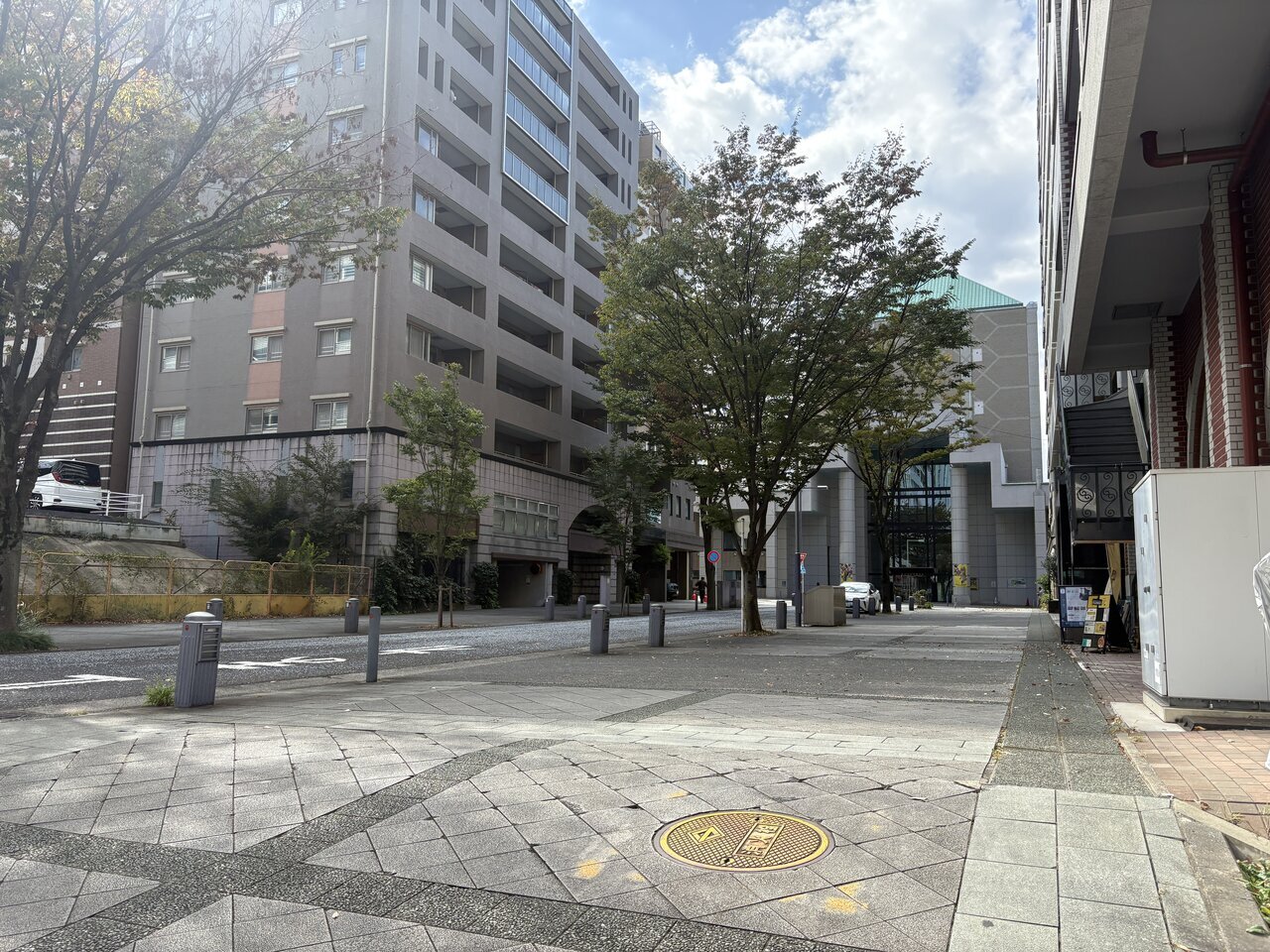
According to the museum's guide, it's a 5-minute walk from Center-Kita Station. The street leading from the station is a spacious road where the stone-paved sidewalk is shaded by street trees. At my feet, there is a yellow manhole cover, and spotting such designs on the ground really lifts my spirits while walking.
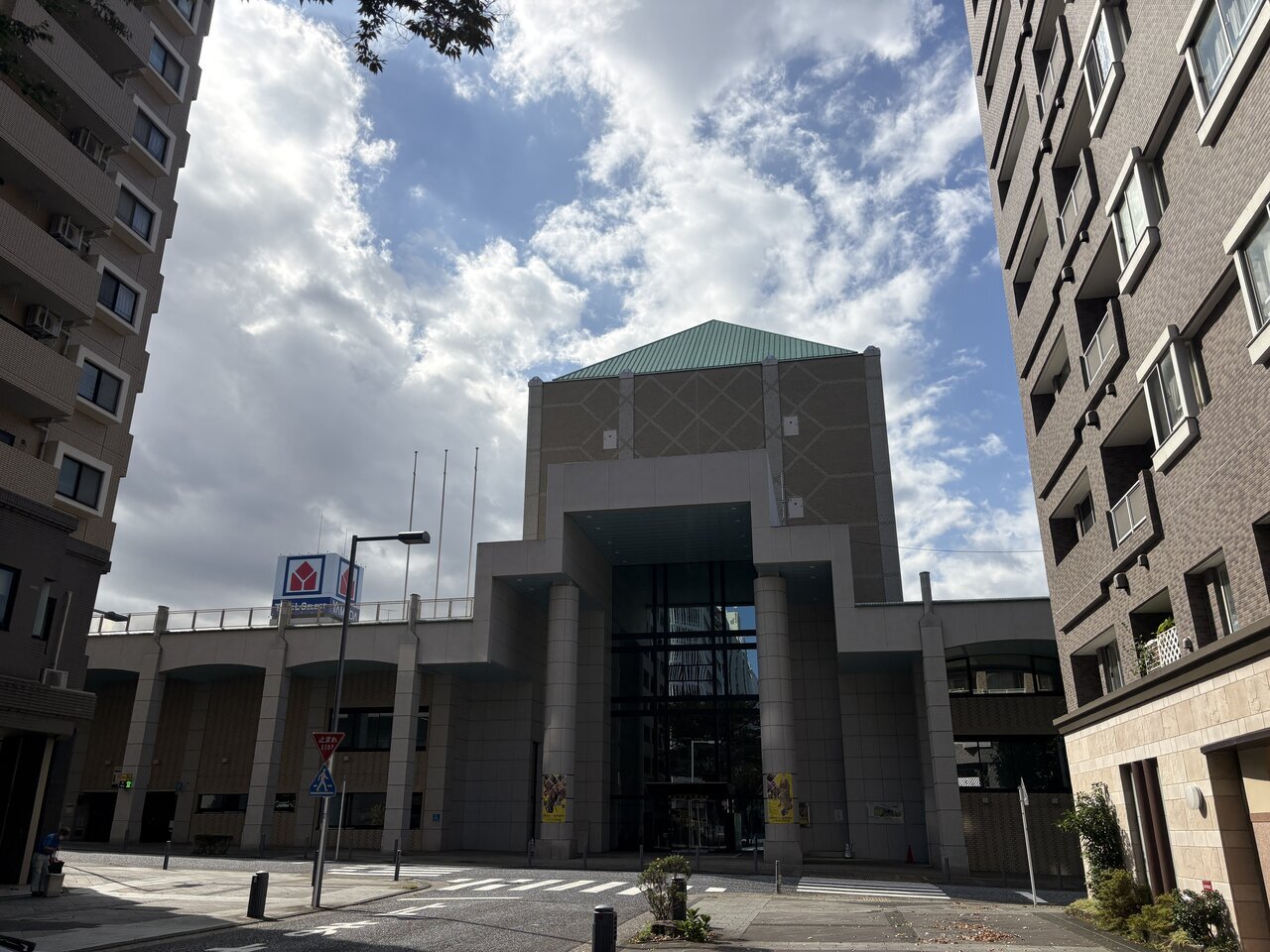
As I walked, I caught sight of a teal triangular roof peeking between the apartments. This is the Yokohama City History Museum.
The entrance to the ruins park, surprisingly, is from the rooftop of a building!?
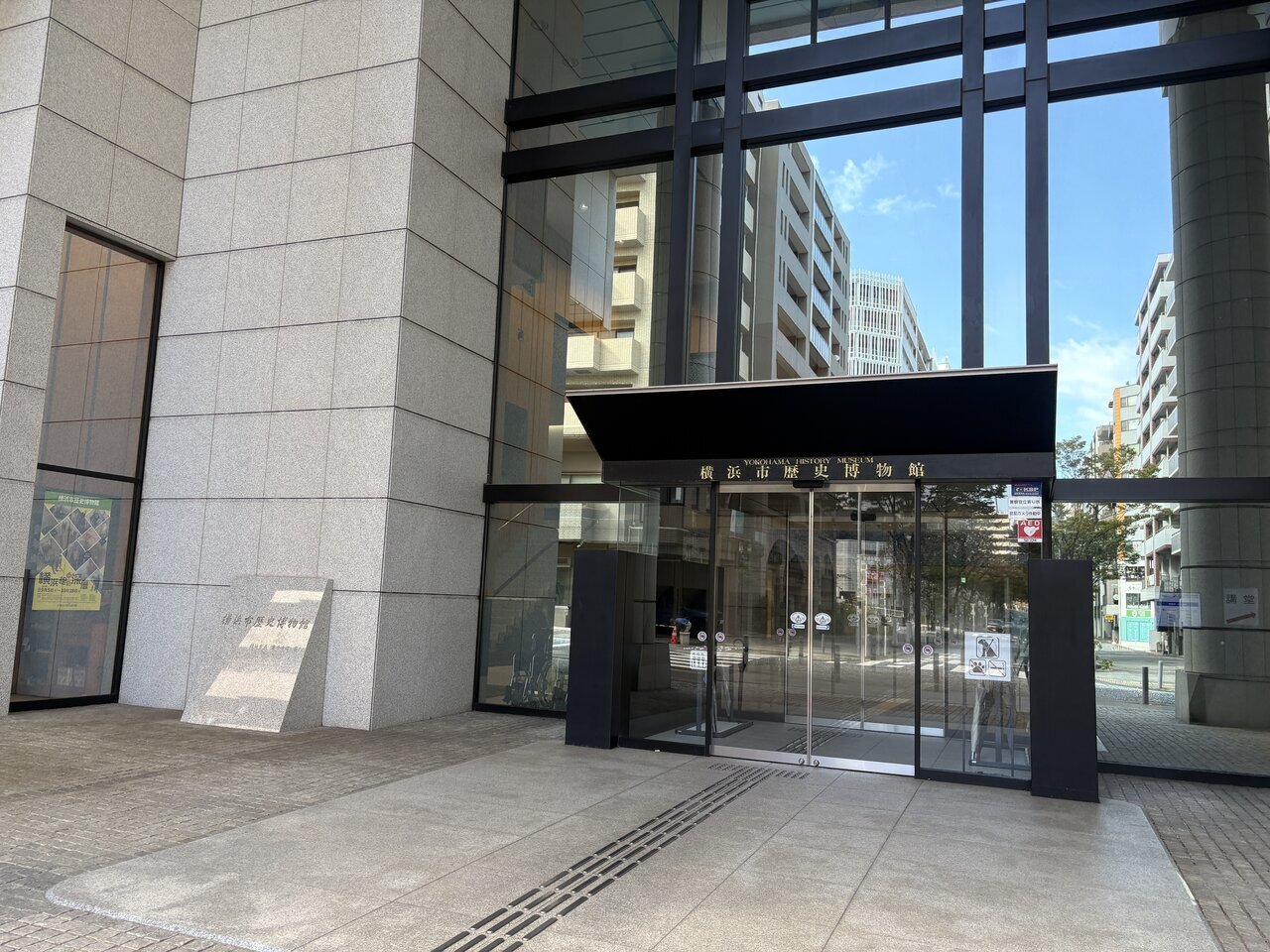
The entrance to the museum is large and glass-walled, with the golden letters "Yokohama City History Museum" catching the eye.
Since I couldn't find the entrance to the park, I went inside and asked a staff member at the information desk for directions to the ruins park. After they kindly explained the way, I also referenced a brochure that was nearby and proceeded.
Since I couldn't find the entrance to the park, I went inside and asked a staff member at the information desk for directions to the ruins park. After they kindly explained the way, I also referenced a brochure that was nearby and proceeded.
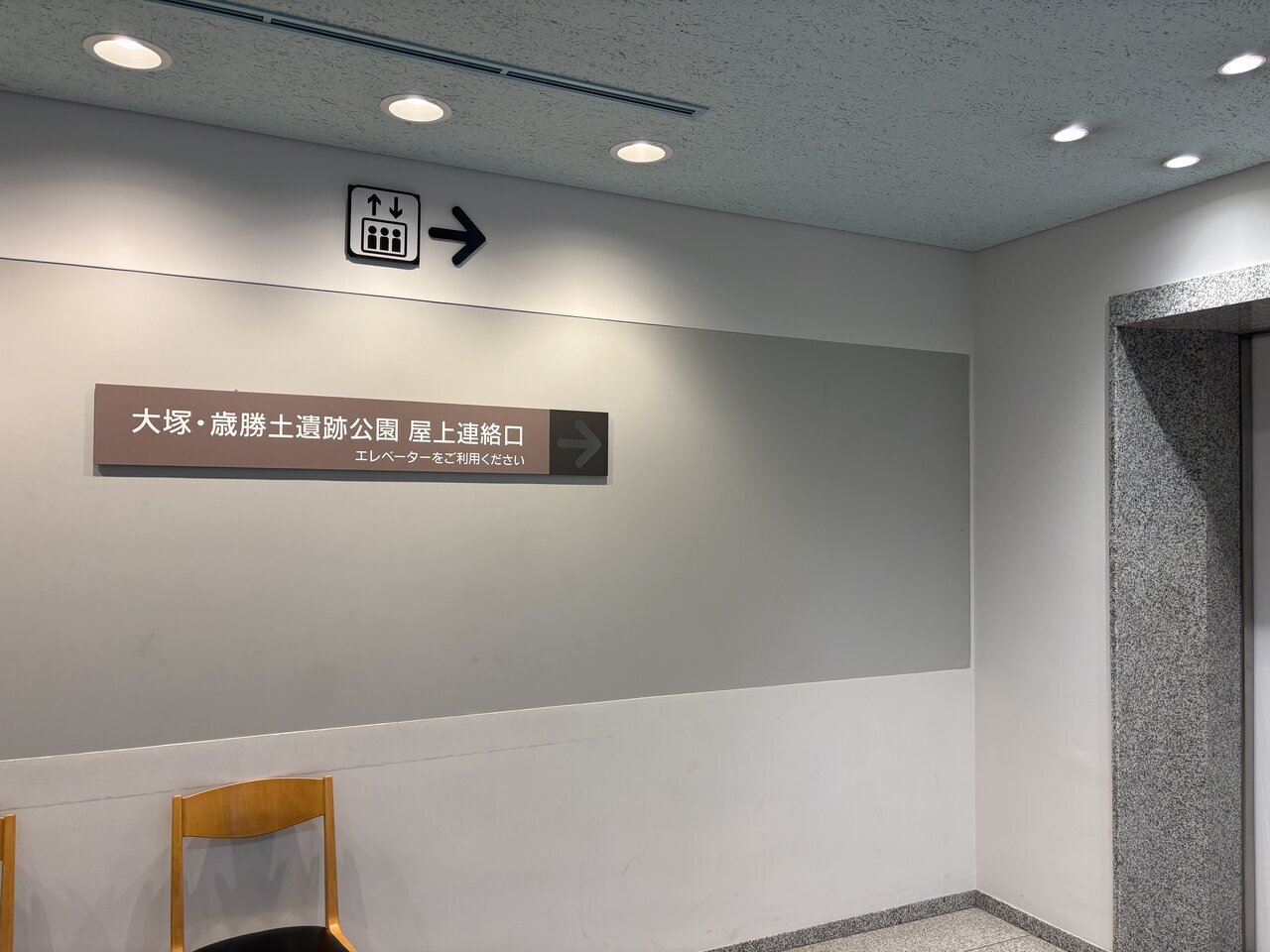
On the wall of the lobby is a sign that says, "Otsuka-Saikotsudai Ruins Park Rooftop Access Please Use the Elevator." To get to the ruins park, one must first go up to the rooftop. I thought it was interesting that the beginning of this time-traveling journey starts on the top floor.
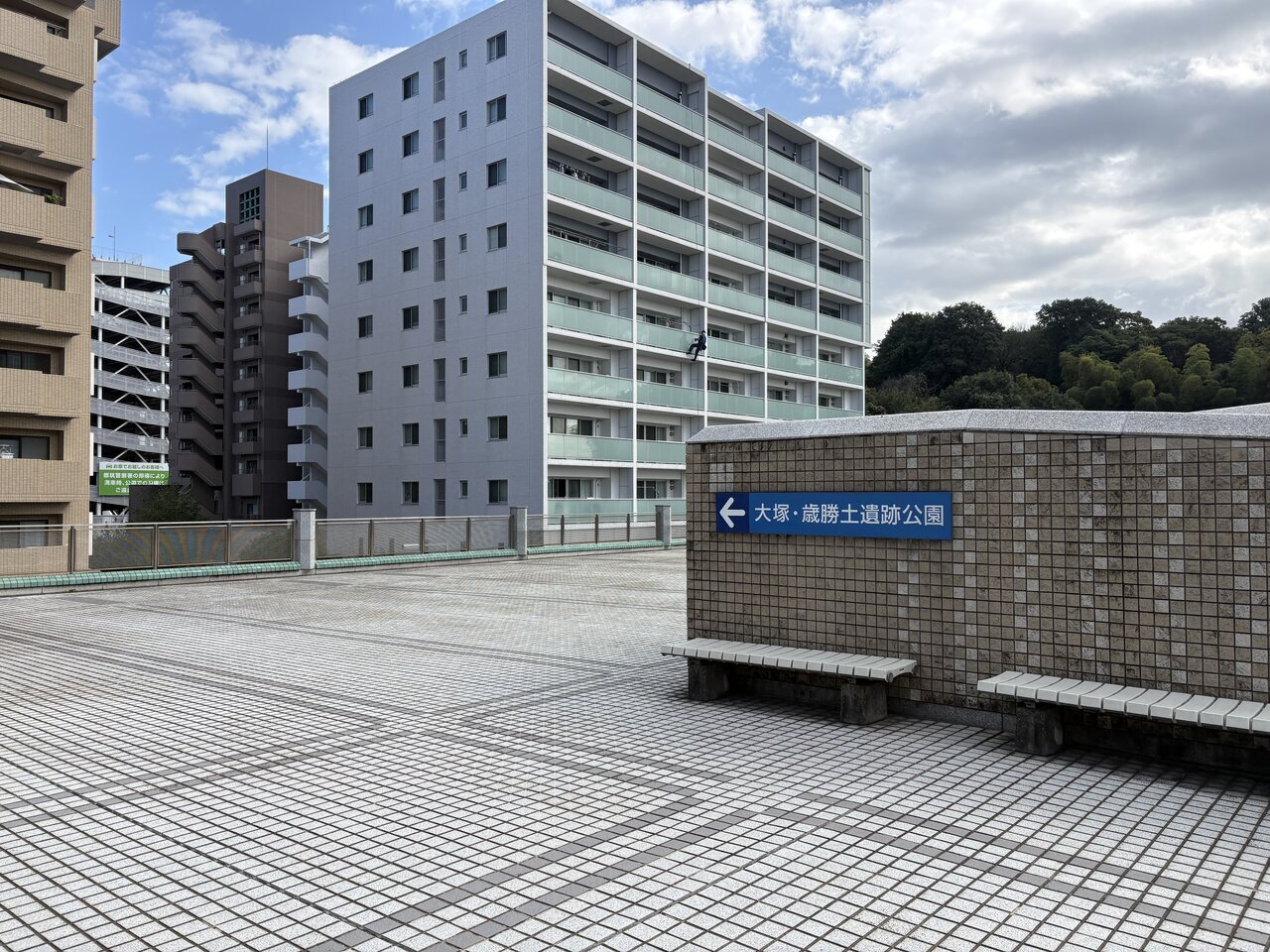
Once I made it to the rooftop, there was a square of white tiles with benches lined up, and on a blue sign, the words "Otsuka-Saikotsudai Ruins Park" and an arrow were displayed.
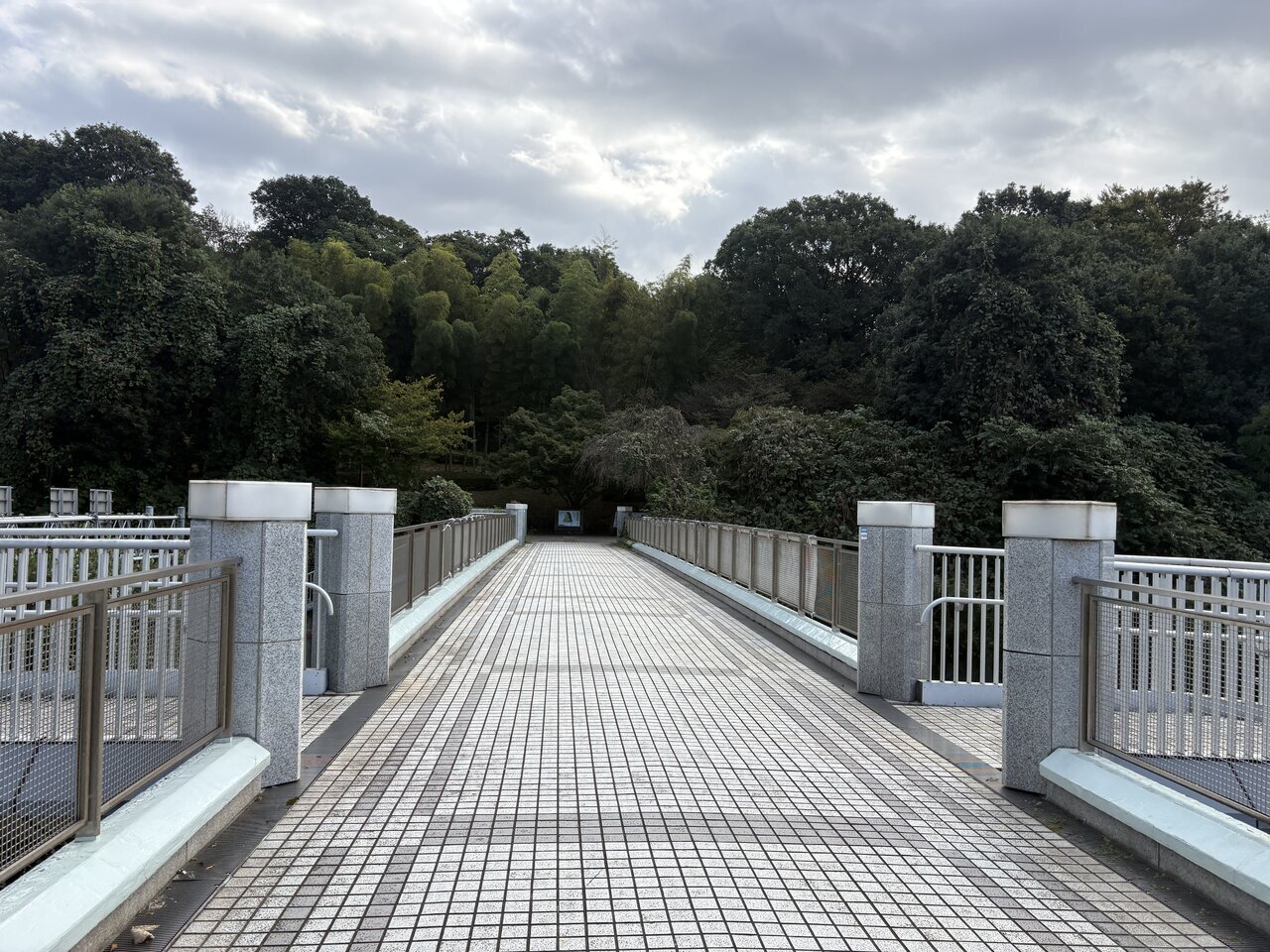
As I walked across the pedestrian bridge towards the arrow, a lush bamboo grove and deciduous forest spread out ahead. It's a mysterious entrance where the landscape transforms into a forest simply by crossing a pedestrian bridge from the rooftop of a building. It felt like I'm warping from the city to another era with just one bridge.
"This park has ruins sleeping underground."
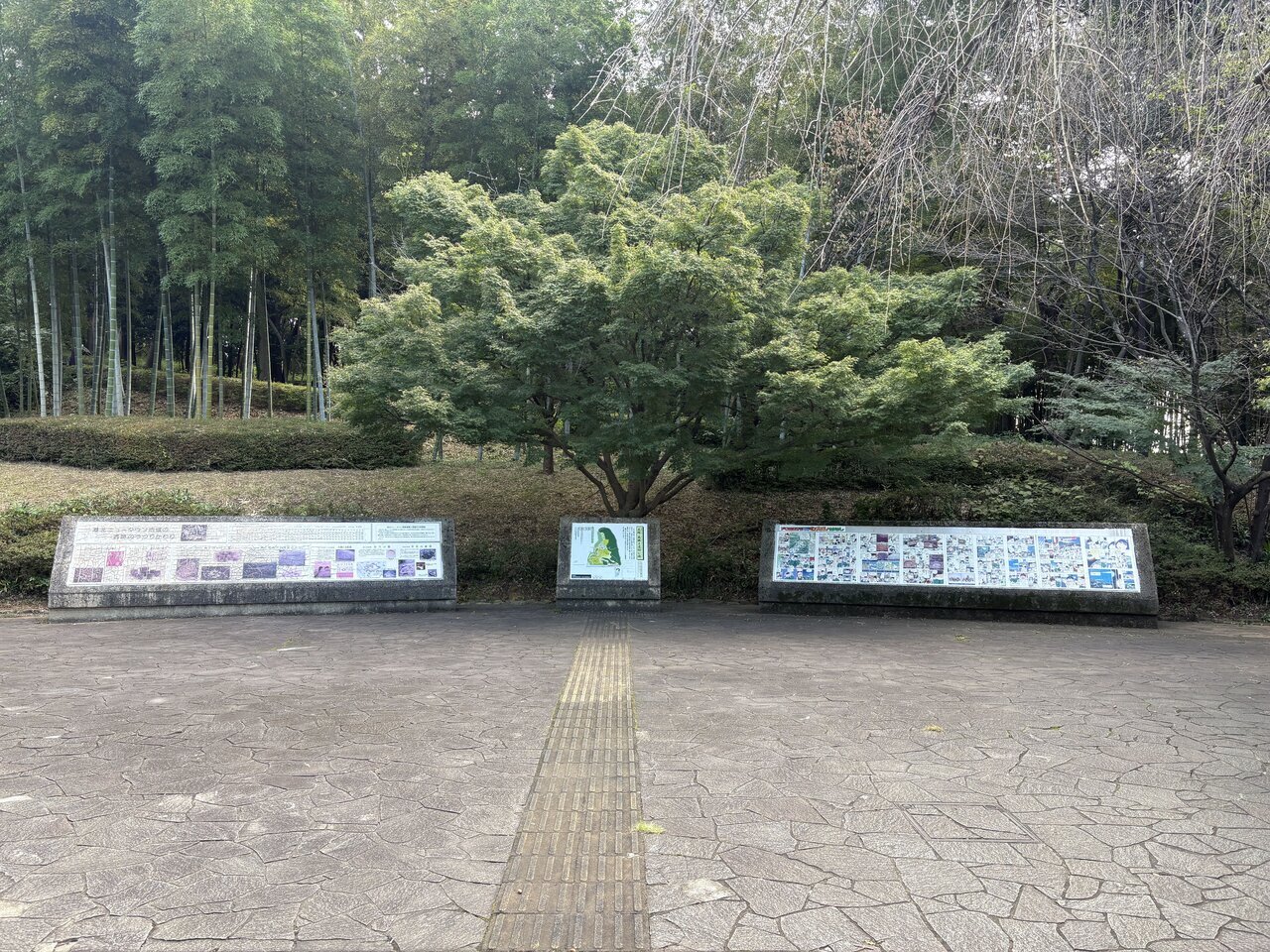
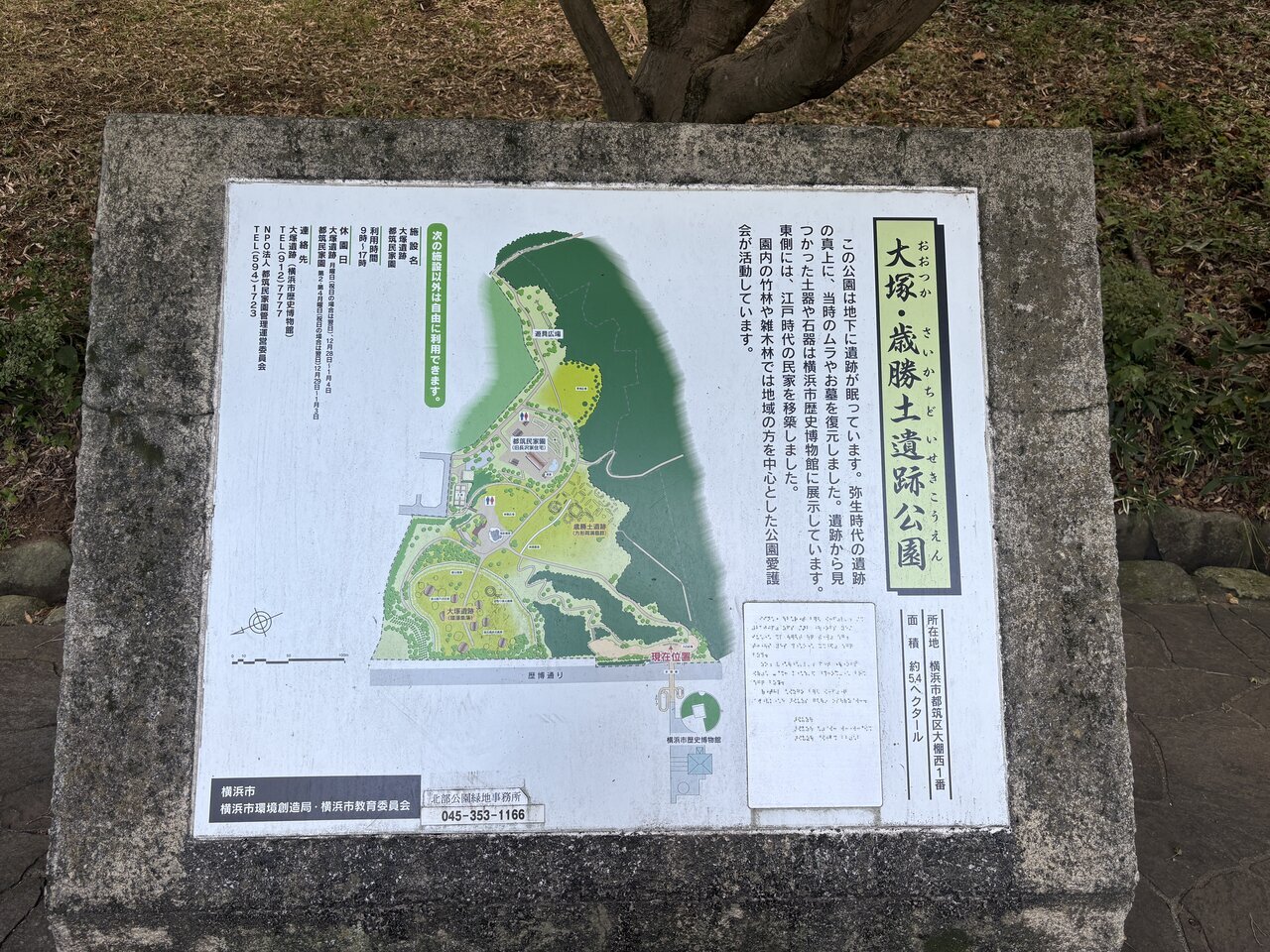
When I arrived at the entrance of the park, there were three information boards lined up side by side.
One of them caught my attention on the map. "This park is home to ruins beneath the ground."
"Directly below where I'm standing?" I couldn't help but glance at my feet.
A park of about 5.4 hectares that has reconstructed the villages and graves of the Yayoi period right above the archeological site. The information board states that the area's history spans about 30,000 years, revealed through investigations in the Kohoku New Town. I had only known this town as a residential area, but to think it had such a long history made me straighten my back a little.
Holding the pamphlet, I walked along the bamboo grove path.
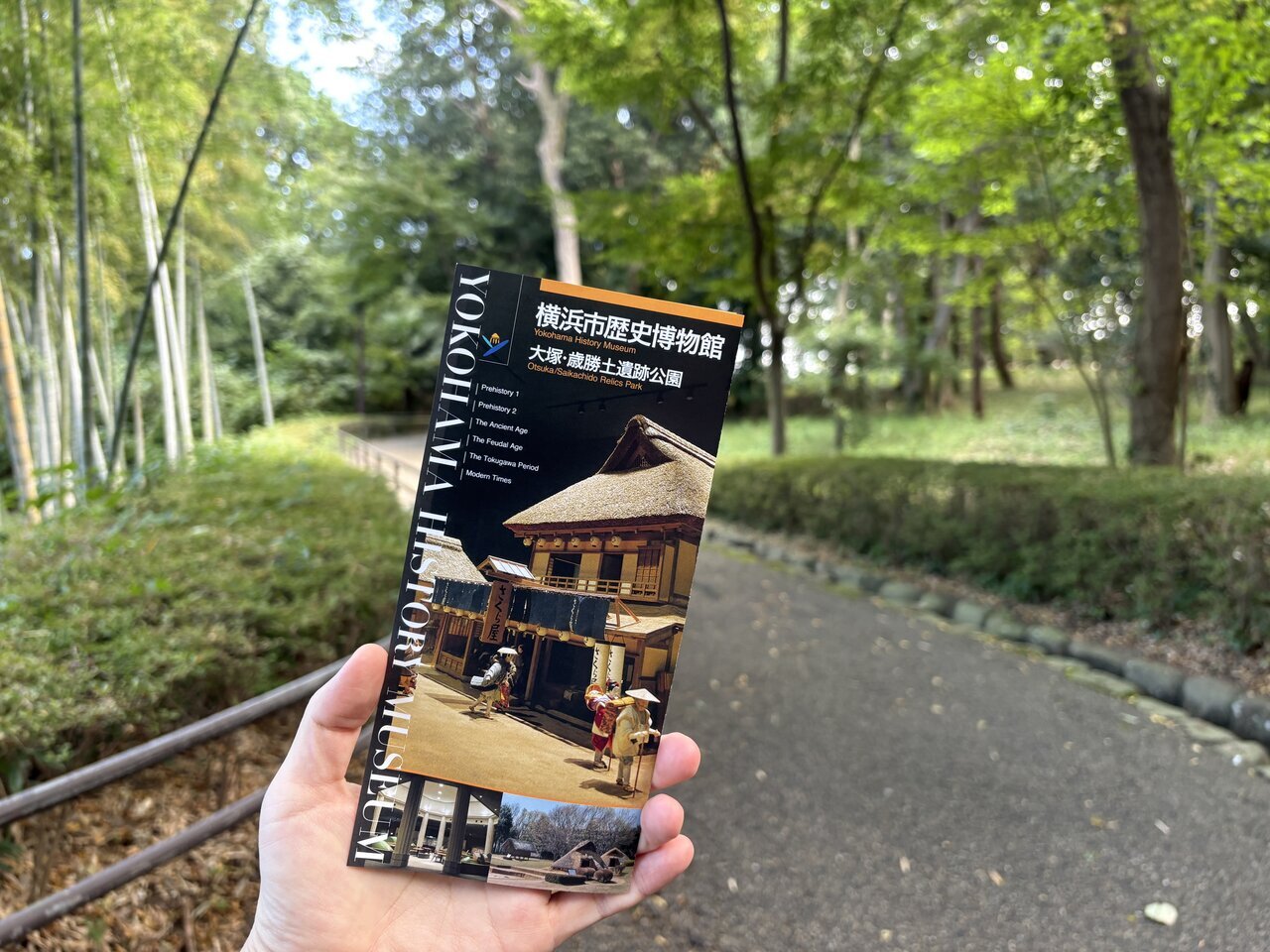
With the pamphlet in one hand, I walked along the paved road with a handrail, where the path gently curved between the bamboo grove and the mixed woods, with the noise of the city gradually fading away.
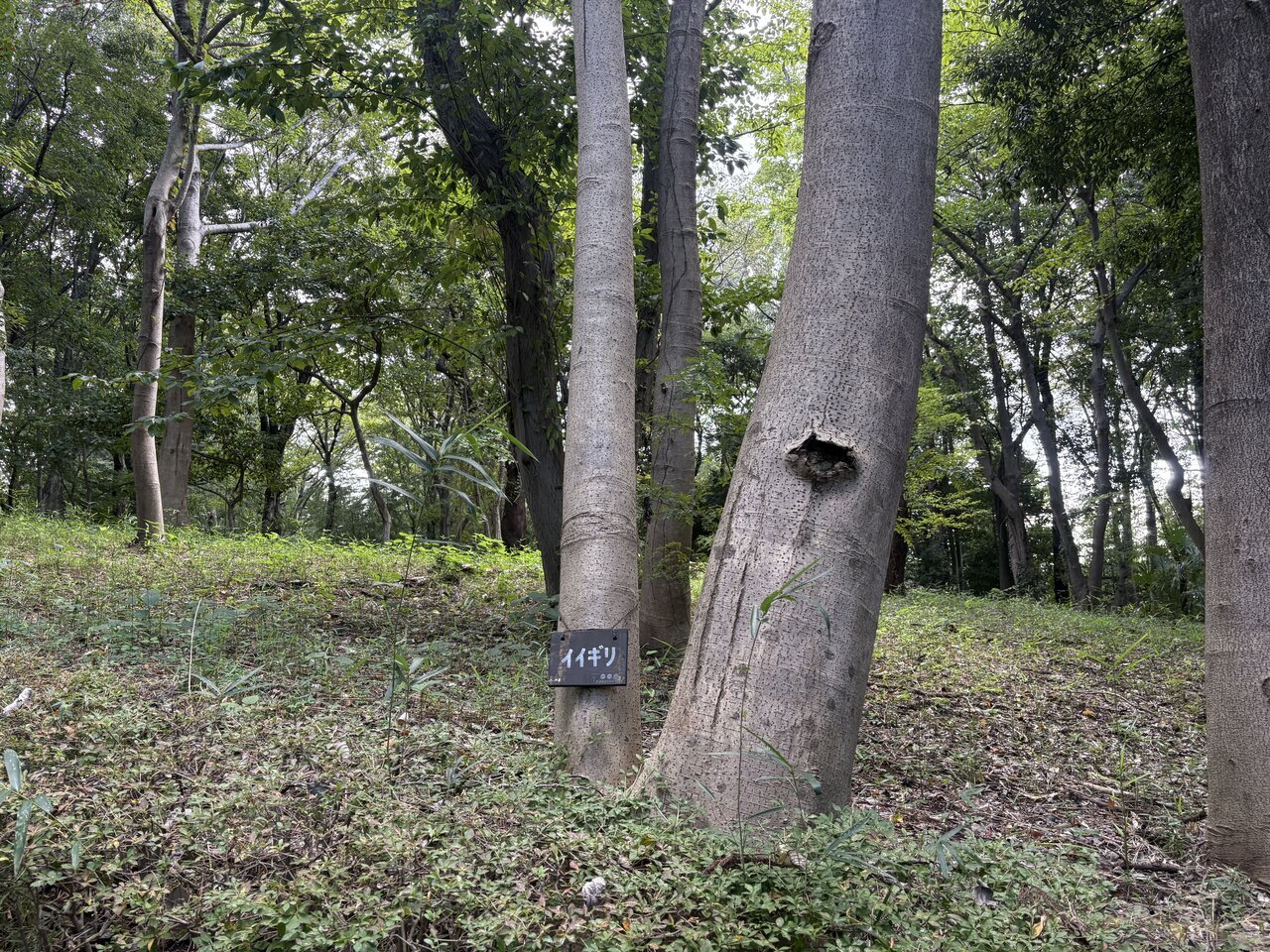
A nameplate hanging from the trunk of a tree by the roadside reads "Iigiri" in white letters on a black board. The map mentions that a park conservation association, mainly composed of local residents, is active in the bamboo grove and mixed woods, and I was reminded again that this quiet path is being protected by human hands.
Beyond the pointed log fence is the "Otsuka Ruins."
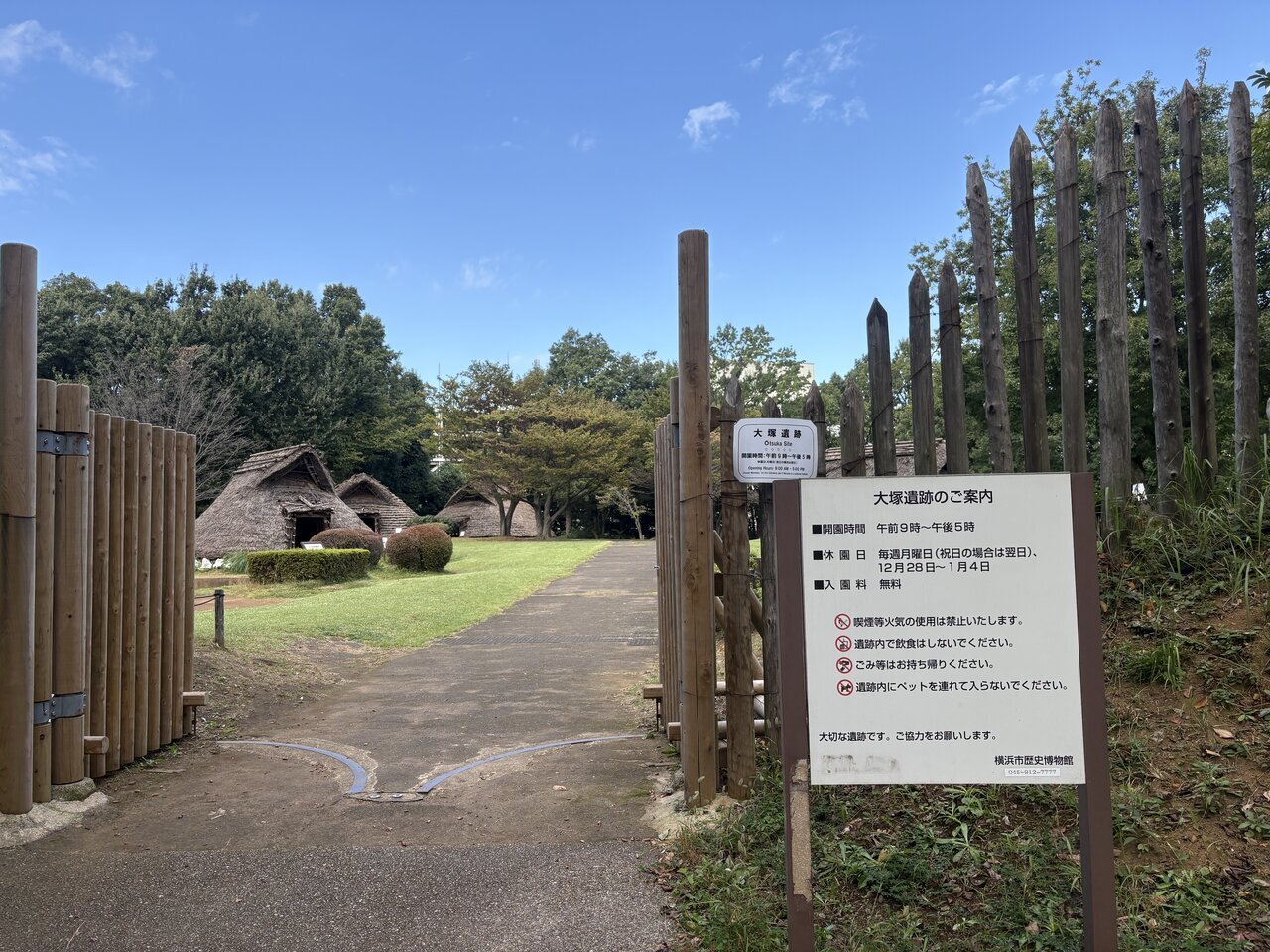
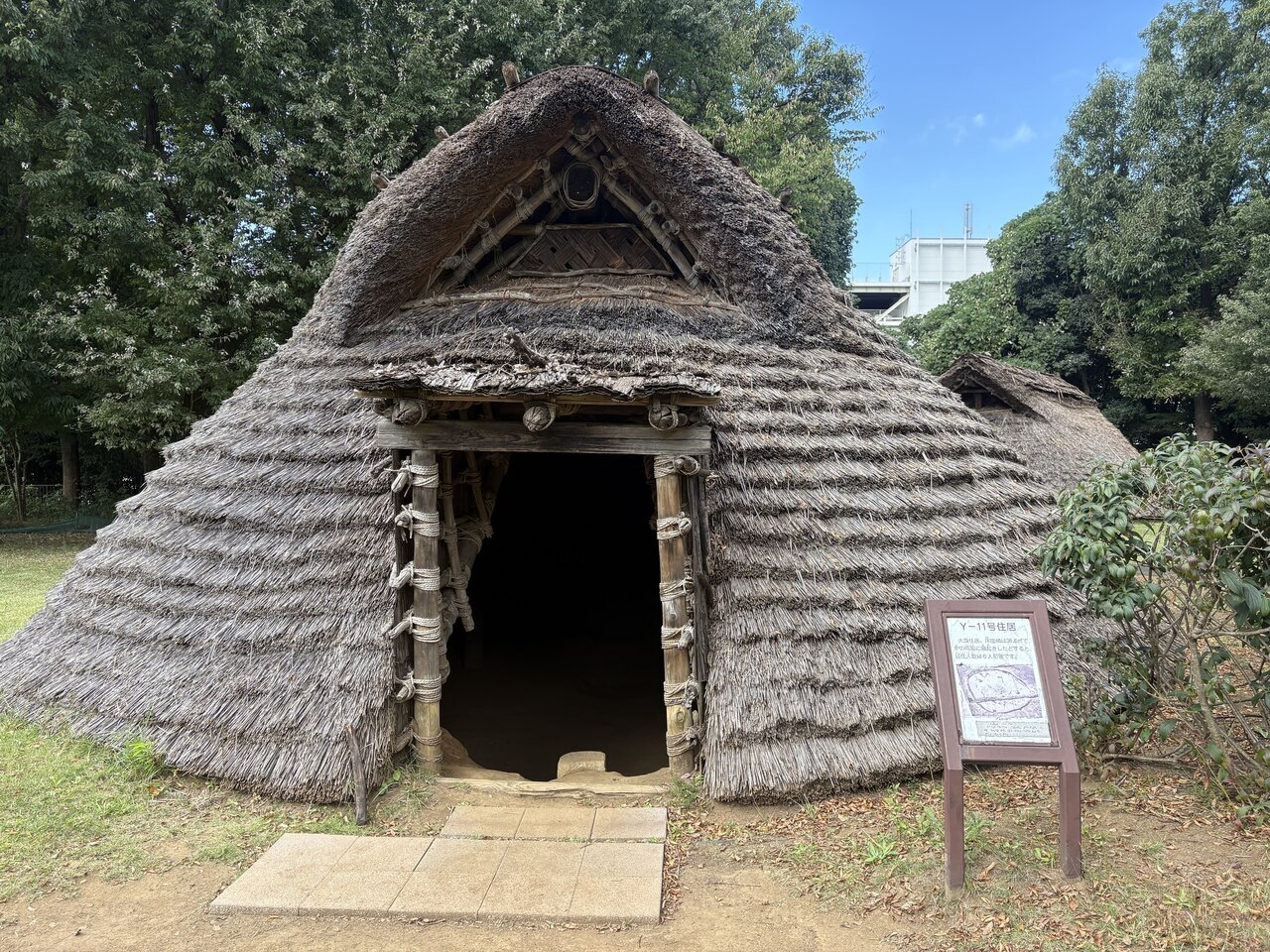
As you pass through the wide grassy square, you will come across a fence made of logs that taper at the ends, and a wooden gate. This seems to be the entrance to the Otsuka ruins. On the outside of the moat, there are reconstructed earthworks and fences believed to be for defense, making it clear that this was built to "protect the village." Beyond the gate, there are several pit dwellings with thatched roofs lined up on the grassy area.
By the way, the park is open from 9 AM to 5 PM, and is closed on Mondays (the following day if it’s a holiday), with free admission. Please note that eating, drinking, and bringing pets into the ruins are prohibited.
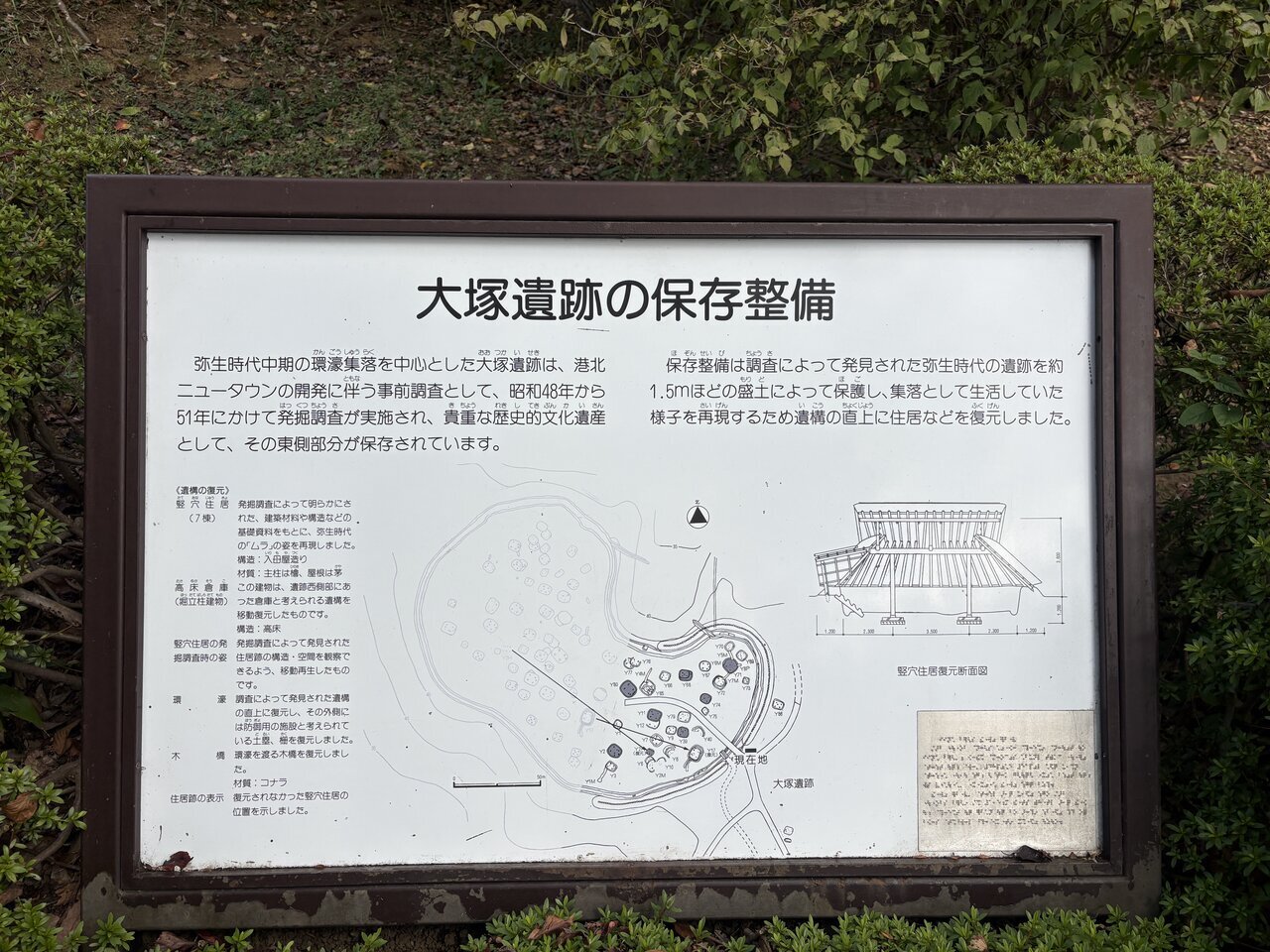
The most surprising thing while looking at the signboard was the numbers. The excavation survey was conducted from 1973 to 1976, with the site protected by about 1.5 meters of mound, and it seems that a dwelling has been reconstructed directly above it.
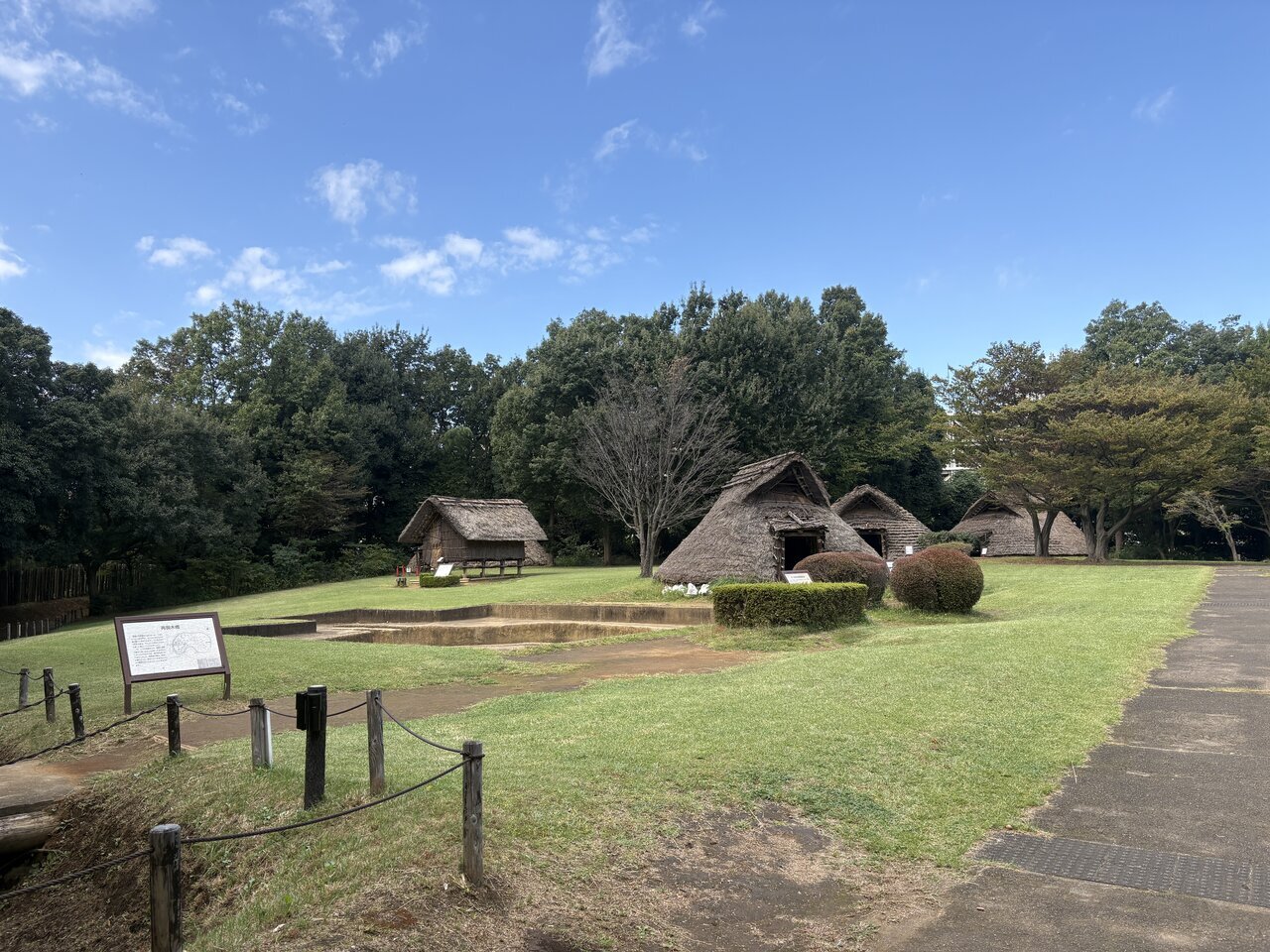
In other words, 1.5 meters below where I'm walking, a real village is sleeping. I suddenly felt that my feet stepping on the grass became more cautious.
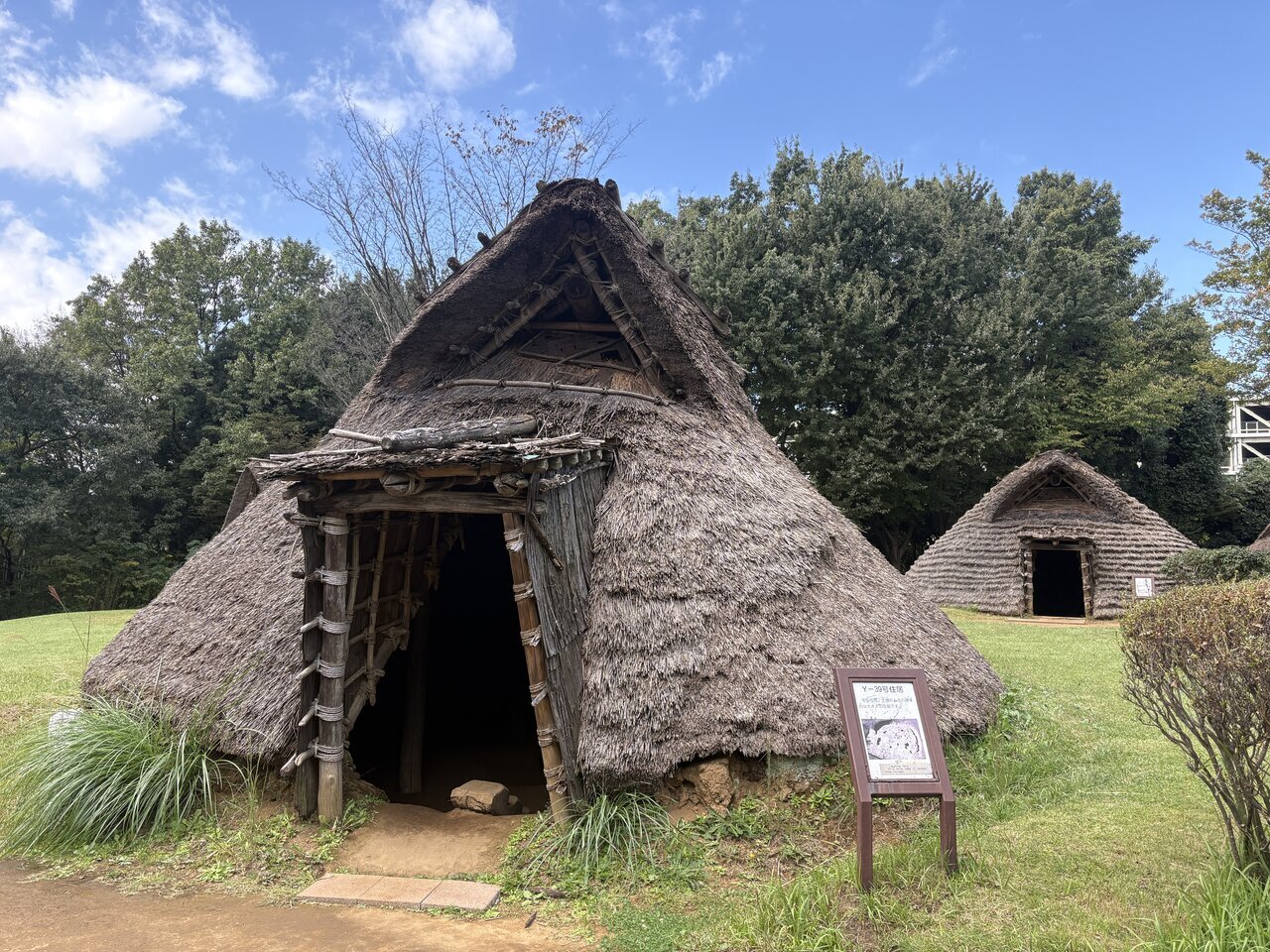
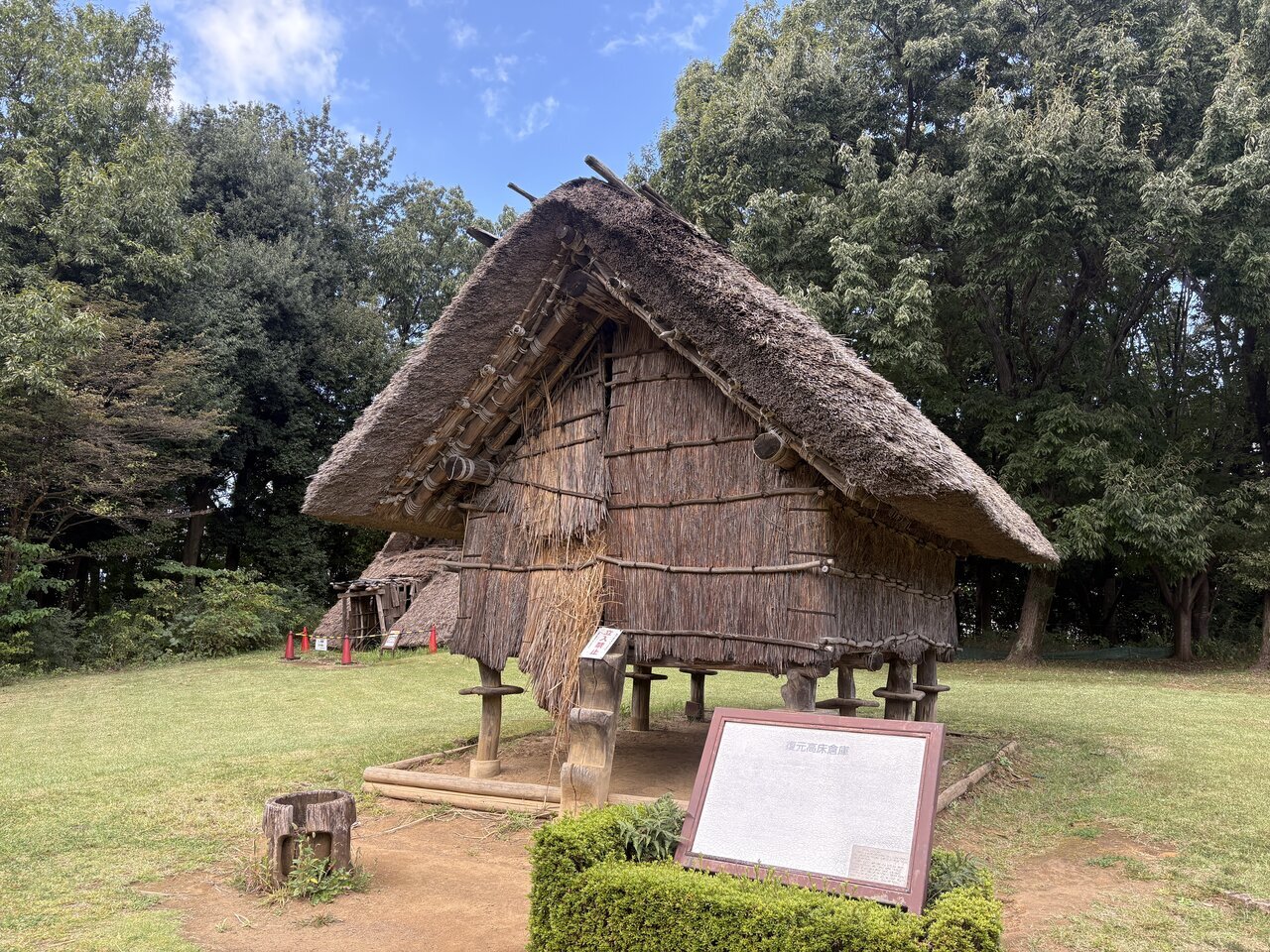
Furthermore, what is surprising when looking at the map is that 85 pit dwellings were found, and 7 have been reconstructed along with 1 elevated granary. The thatched roofs lined up in front of me are just a small part of the village, representing about 1 out of every 12 houses.
The shape of the moat extends significantly beyond the current park. It seems that only the eastern part has been preserved. I thought to myself that the village once spread even further than this. According to the information boards, the positions of the un-reconstructed dwellings are also indicated on the ground.
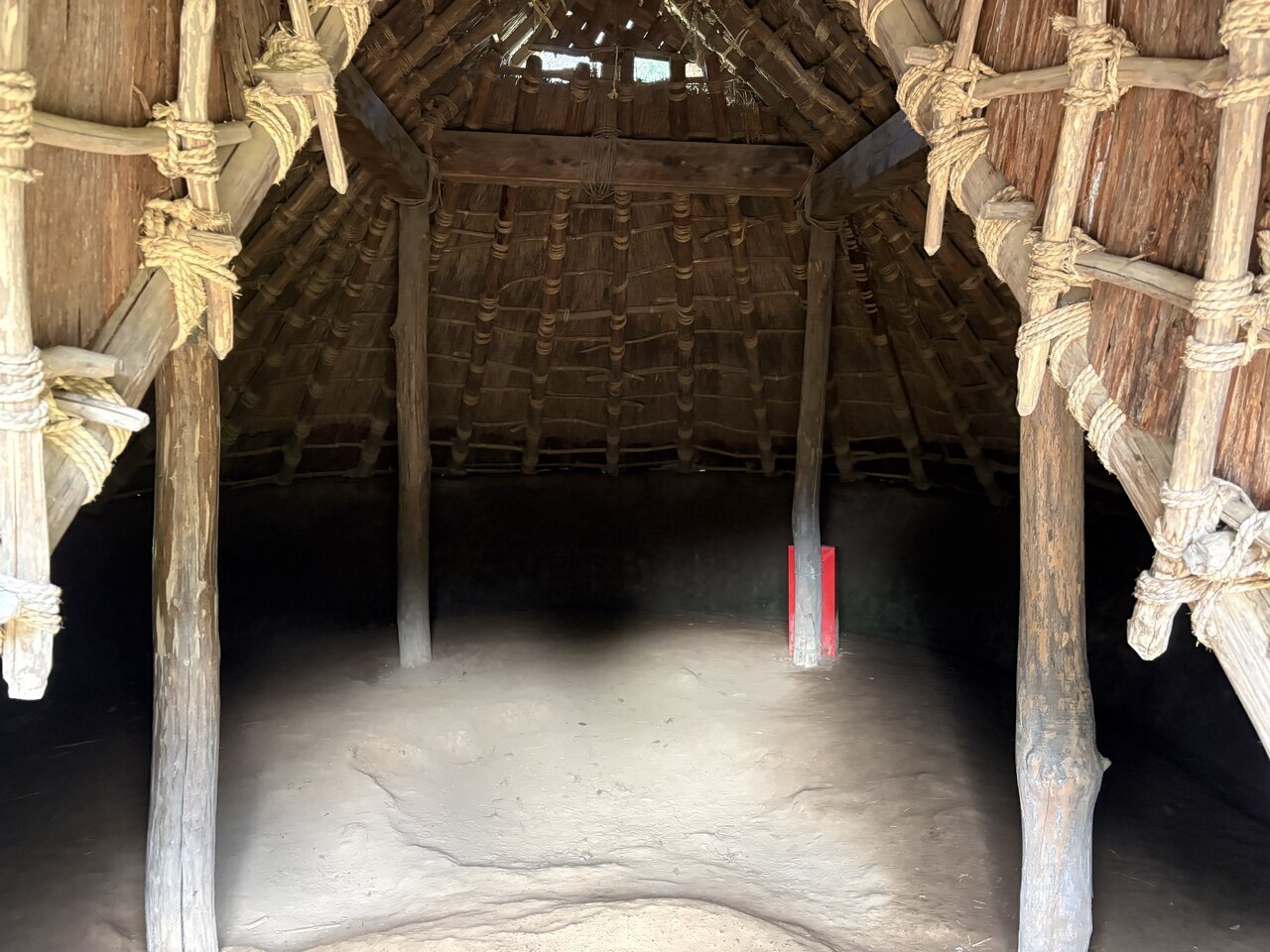
The restored pit dwelling is built in the "Irimoya-zukuri" style, with the main pillar made of cedar and the roof covered with thatch. The back of the dwelling's entrance is dark, and under the heavy thatched roof, what kind of nights did the people of that time spend?
I walked toward the cemetery from 2200 years ago, pondering.
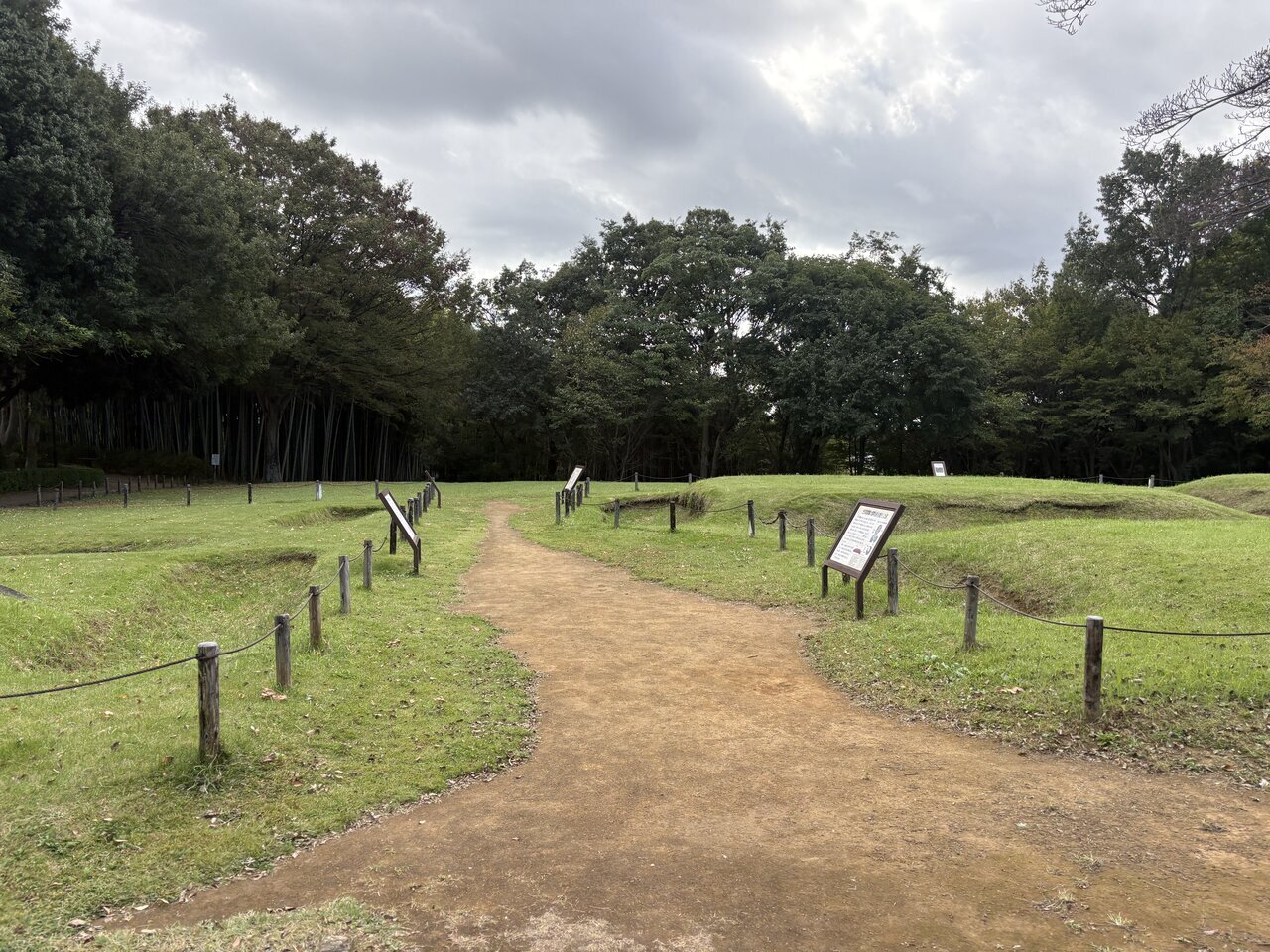
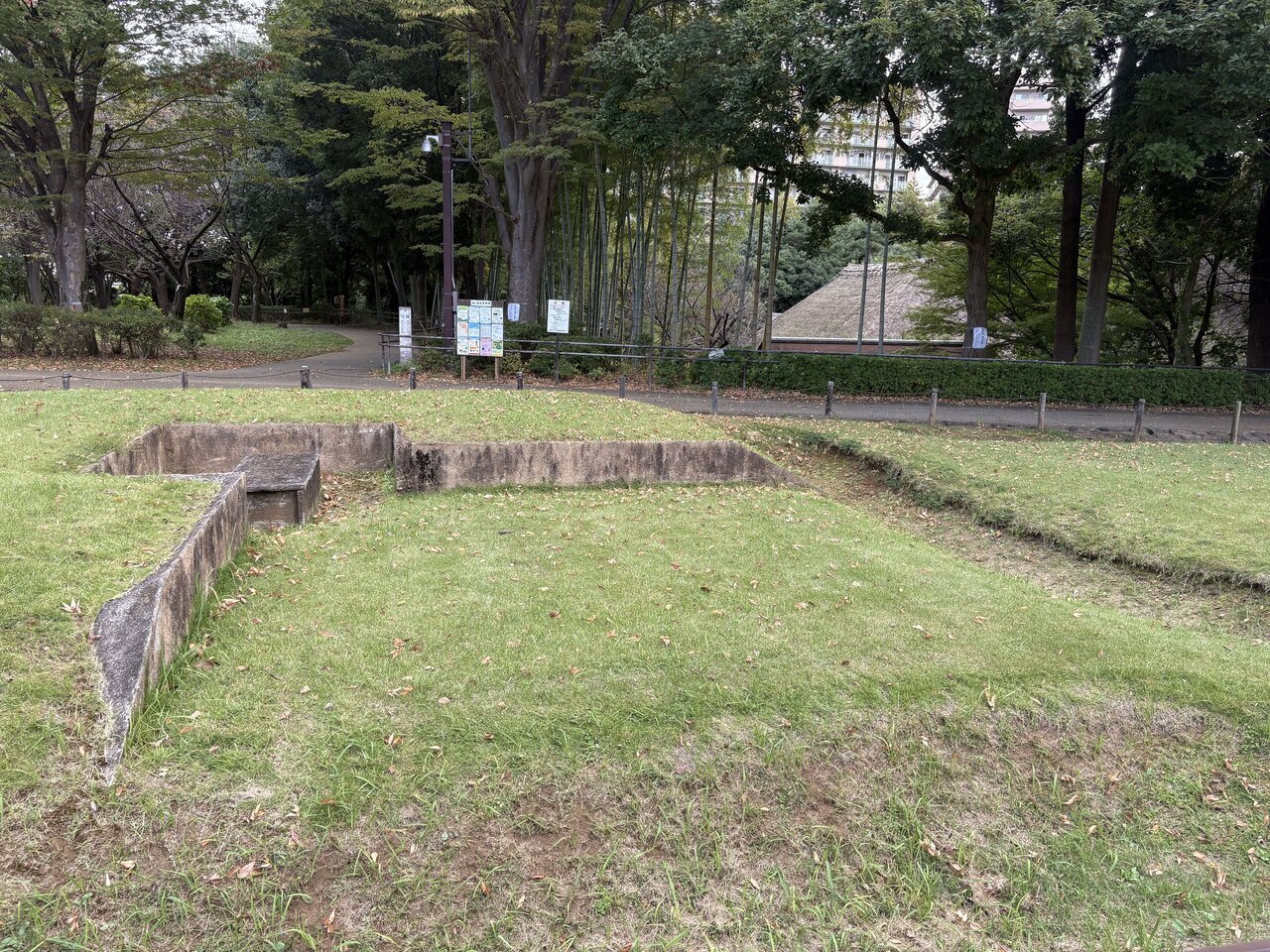
In the grass of the Sakagatsudo ruins, there were low rectangular earthen mounds lined up. These are the graves of the village people. They are called "hōkei shūrobo," shaped like squares surrounded by ditches. According to the information board, 25 have been found, of which 5 have been restored.
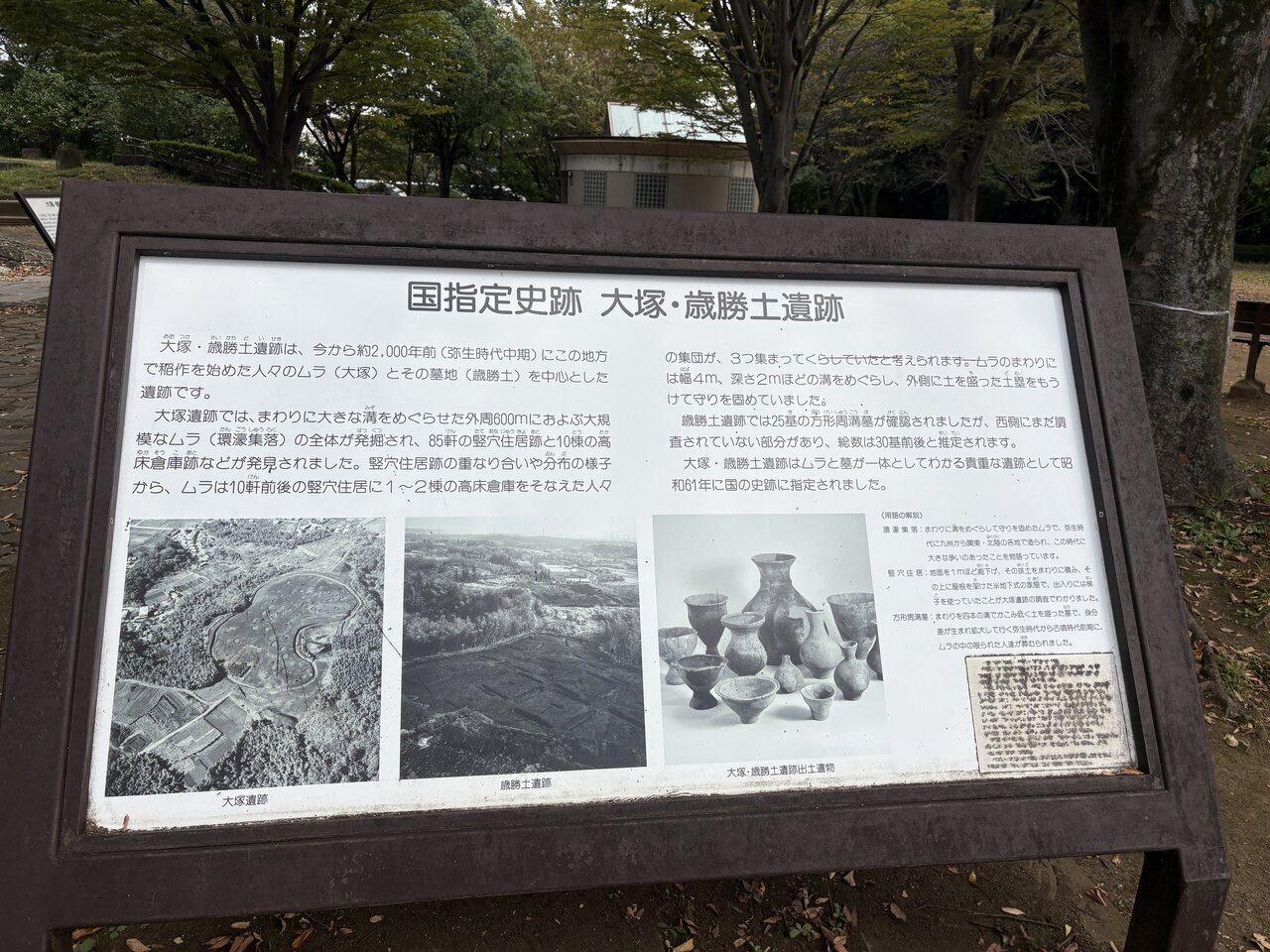
The information board mentions that rectangular holes presumed to be the traces of coffins were found in 14 out of the 25 discovered. Although the coffins themselves did not remain due to decomposition in the soil, it seems that the presence of the coffins was understood by closely examining the soil in the holes. I was surprised to learn that the shape of coffins from 2200 years ago could be inferred from soil observation.
The mounds have also been eroded over the long years and were not present during excavation. I realized that the mounds I am seeing now are reconstructions based on the shapes of the ditches.
The mounds have also been eroded over the long years and were not present during excavation. I realized that the mounds I am seeing now are reconstructions based on the shapes of the ditches.
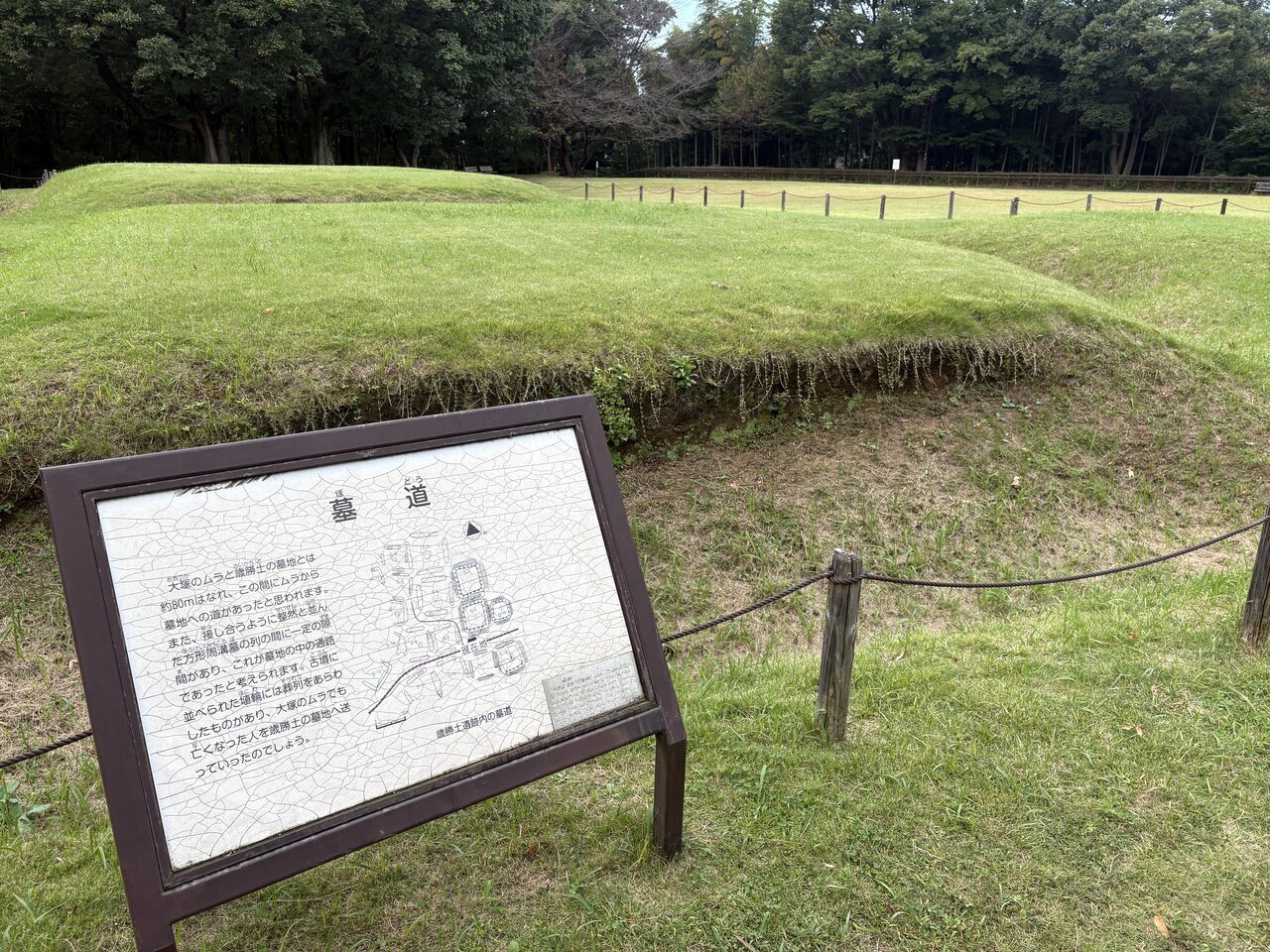
I couldn't help but stop and read the information board about the "tomb path." The Otsuka village and this grave are about 80 meters apart, and there seems to have been a path from the village to the cemetery in between. It was written that there was a certain distance between the rows of square surrounded ditches, which is believed to have been a passage within the cemetery. People from about 2200 years ago might have walked this path to bid farewell to their loved ones.
Another "Tsuzuki Folk House Park" Time Slip to the Edo Period
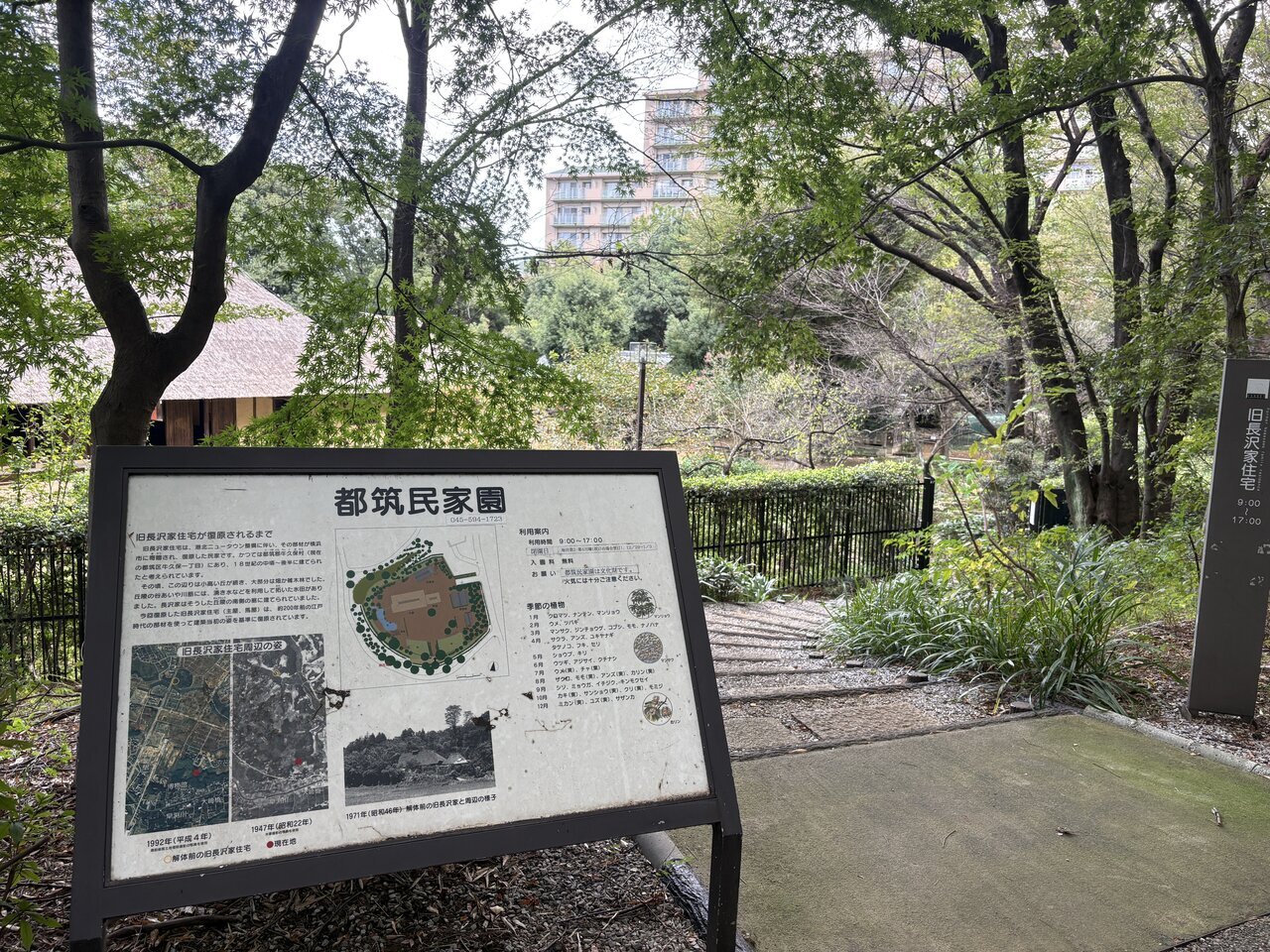
Another highlight of the ruins park is the Tsuzuki Folk House Park. What caught my interest the most from the information board was a photo taken before the dismantling.
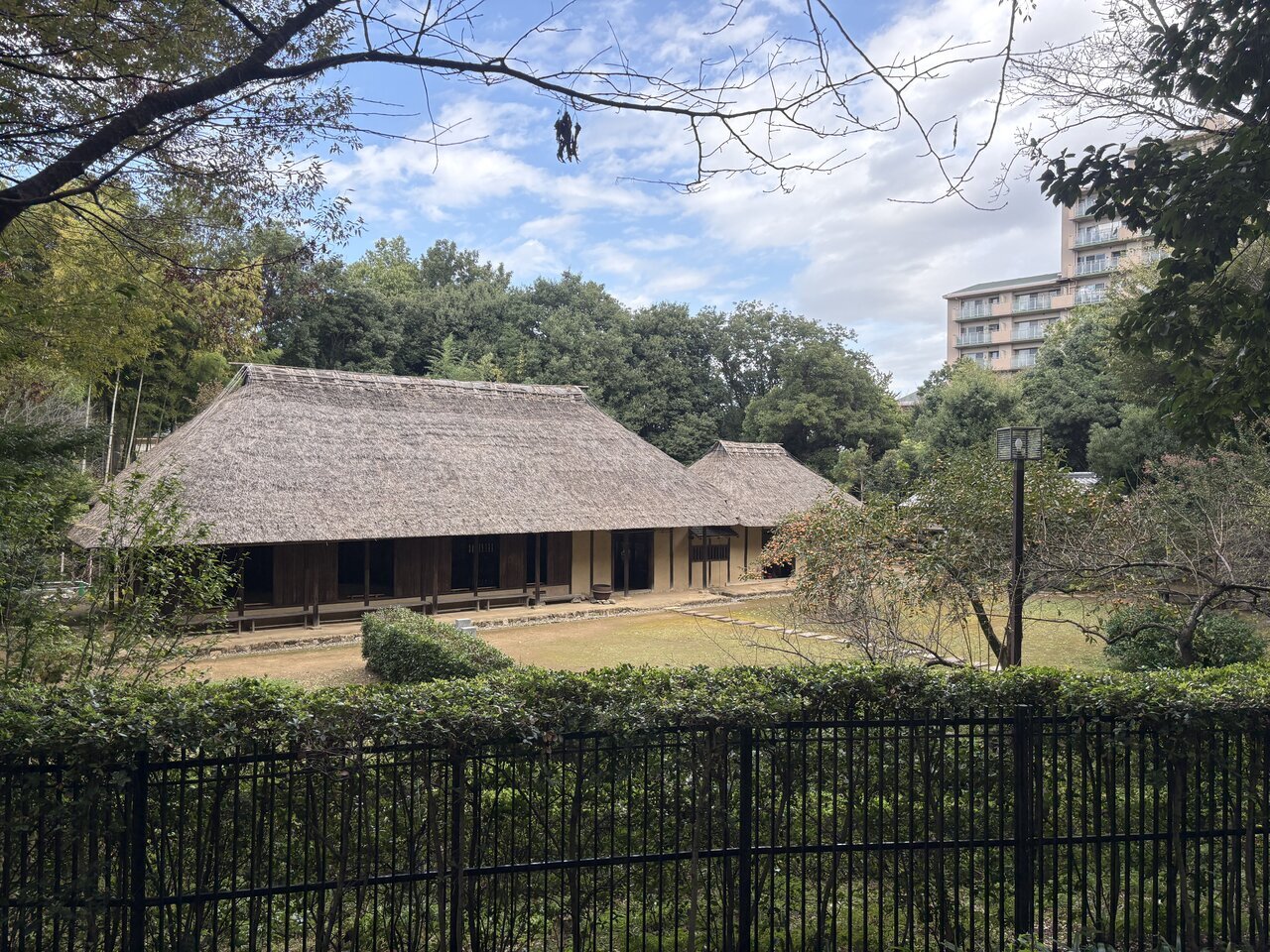
This thatched house was originally located in Ushikubo Town (now Ushikubo 1-chome) and is believed to have been built from the mid to late 18th century. Due to the development of Kohoku New Town, its materials were donated to Yokohama City and restored here.
In the photos from 1971 and 1947, a peaceful scene surrounded by a gentle hill and a thicket is depicted. It is strange to think that this place, which now has an apartment building nearby, was once a thicket.
In the photos from 1971 and 1947, a peaceful scene surrounded by a gentle hill and a thicket is depicted. It is strange to think that this place, which now has an apartment building nearby, was once a thicket.
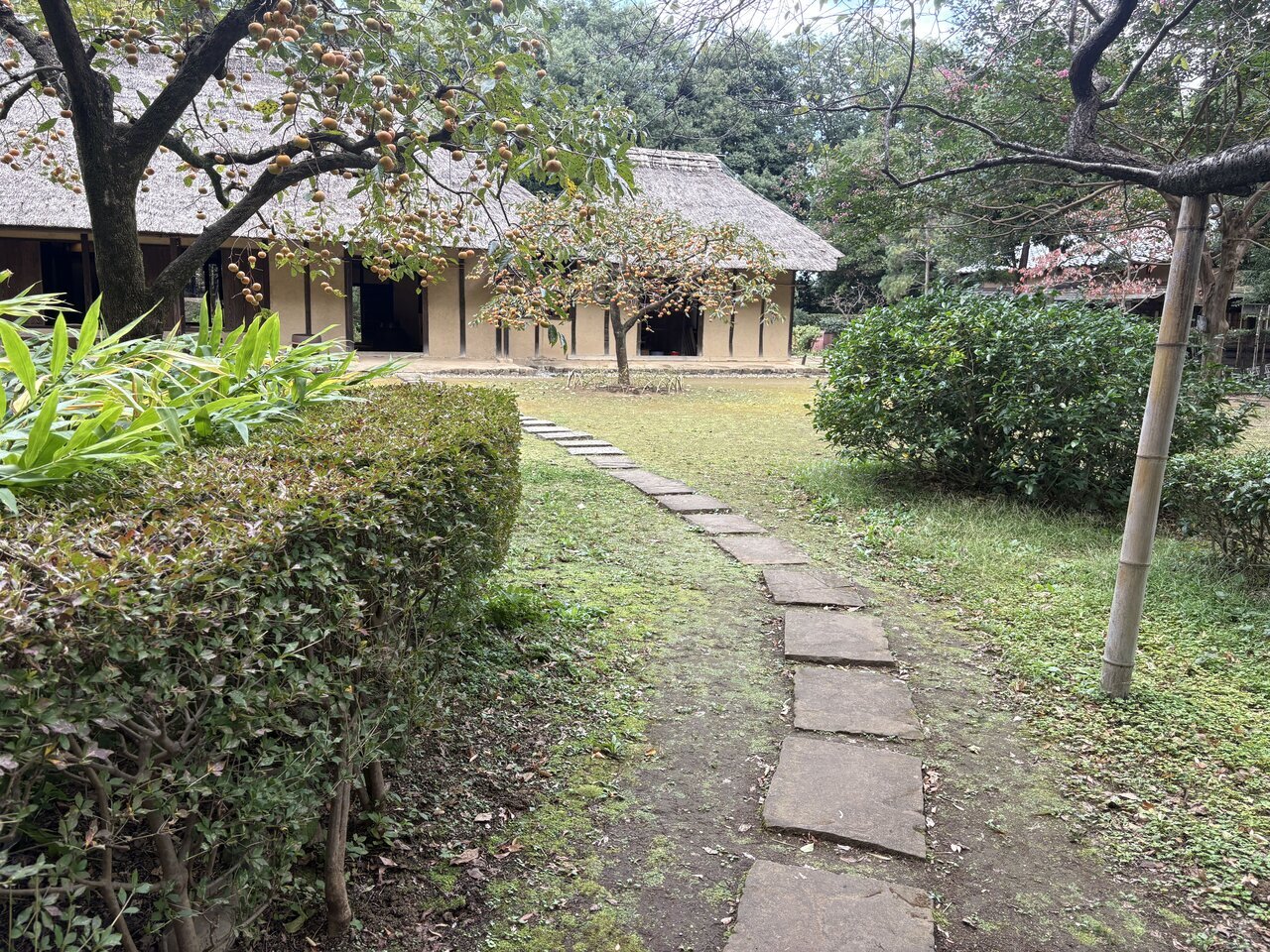
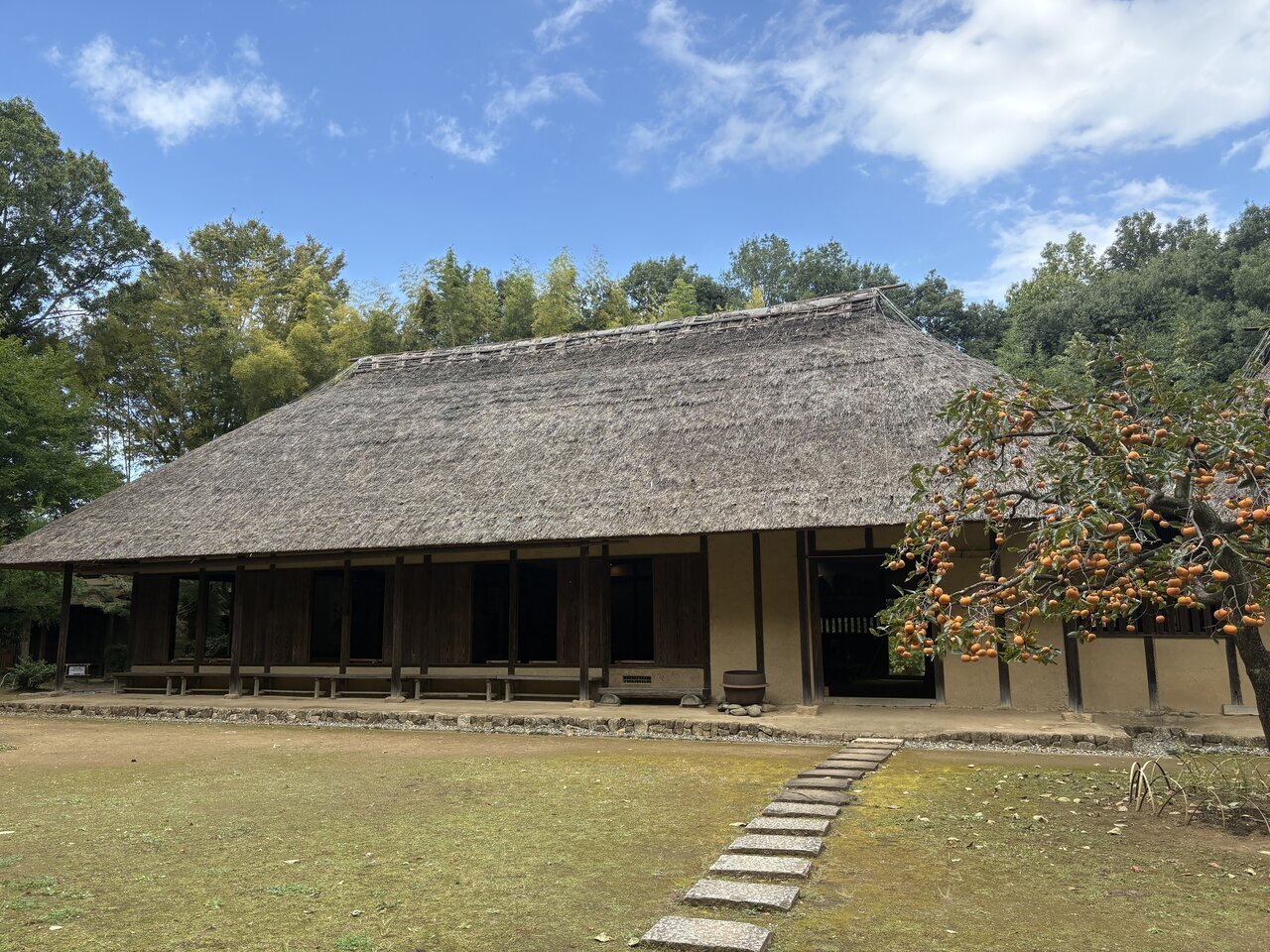
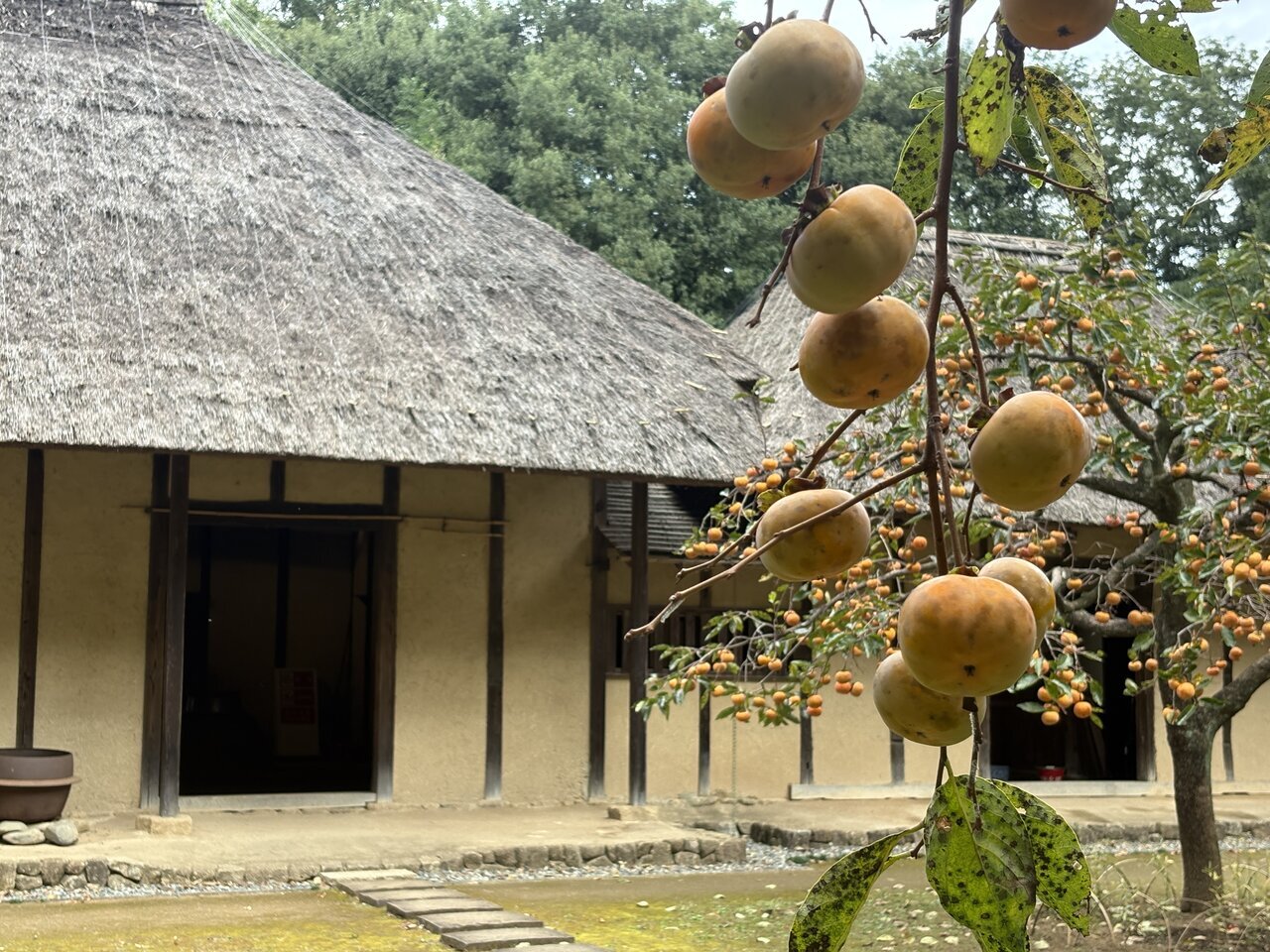
Entering the garden, beneath the large thatched roof are earthen walls and a veranda. The persimmon tree next to the stepping stones is heavily laden with fruit, so much so that I gave up trying to count them mid-way due to the bountiful harvest.
Experiencing life in the Edo period at the Folk House Park
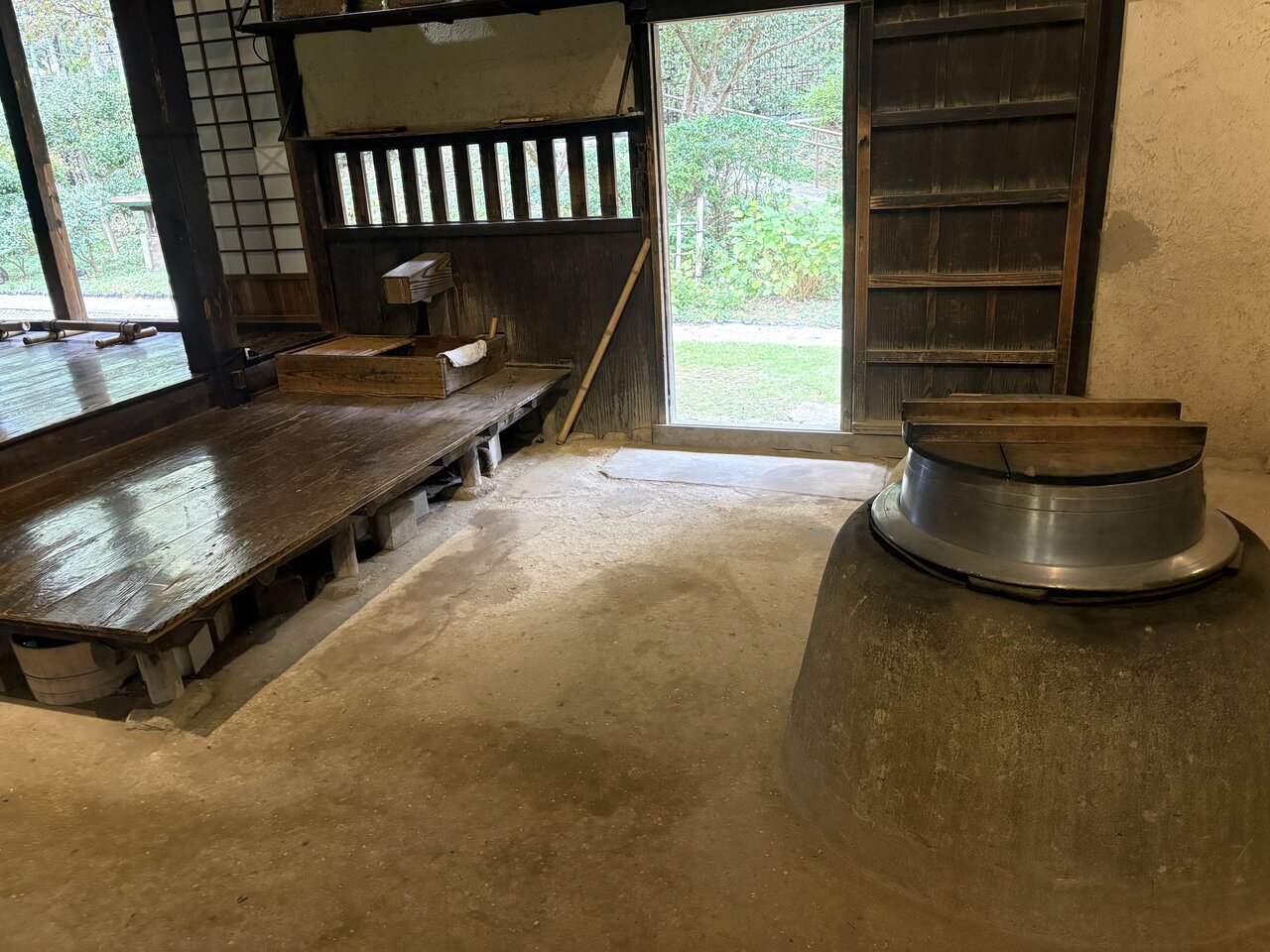
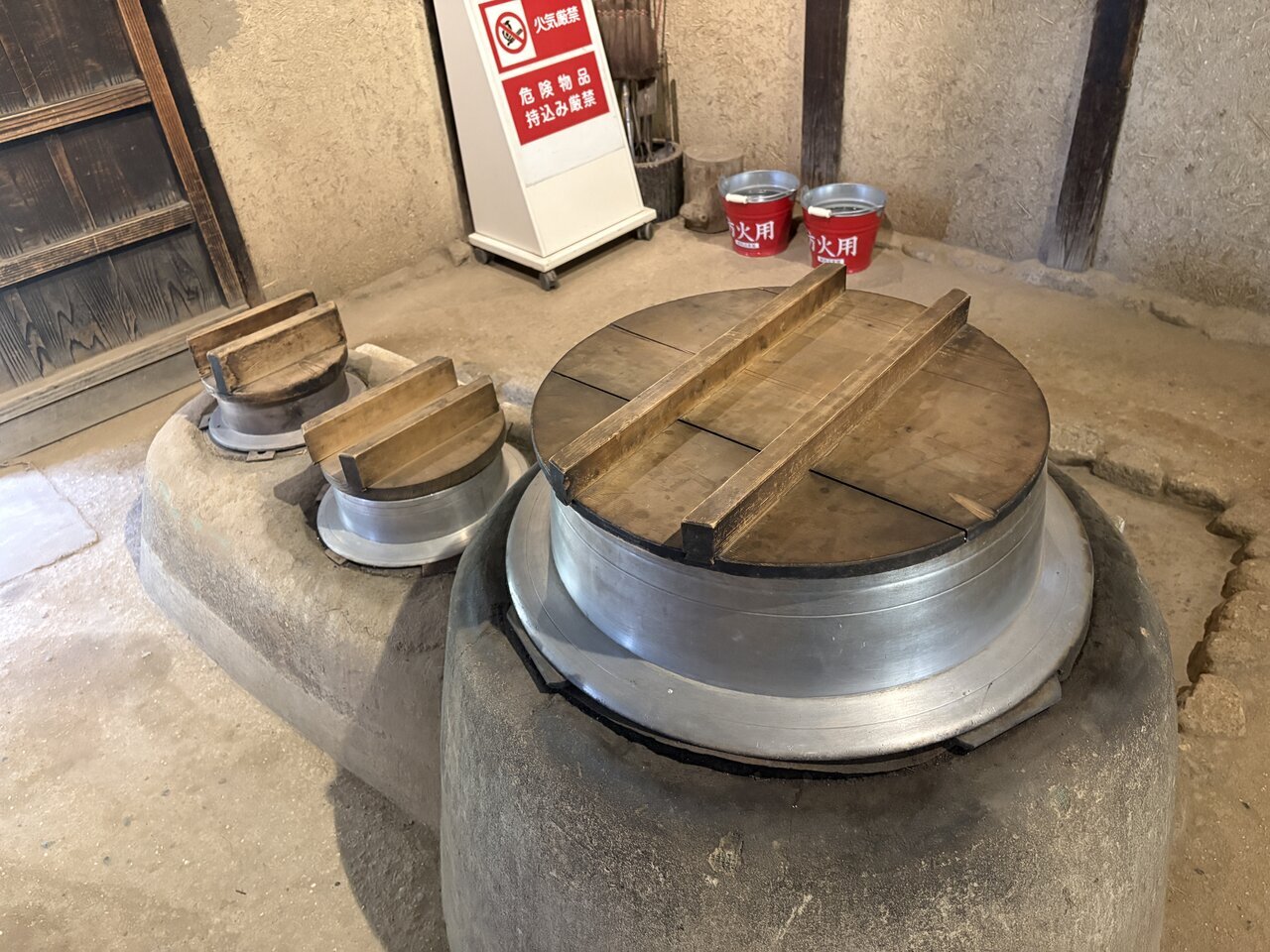
Looking inside the main house, there were large earthen stoves with big kettle pots on the dirt floor, and I could also see a wooden sink and firewood.
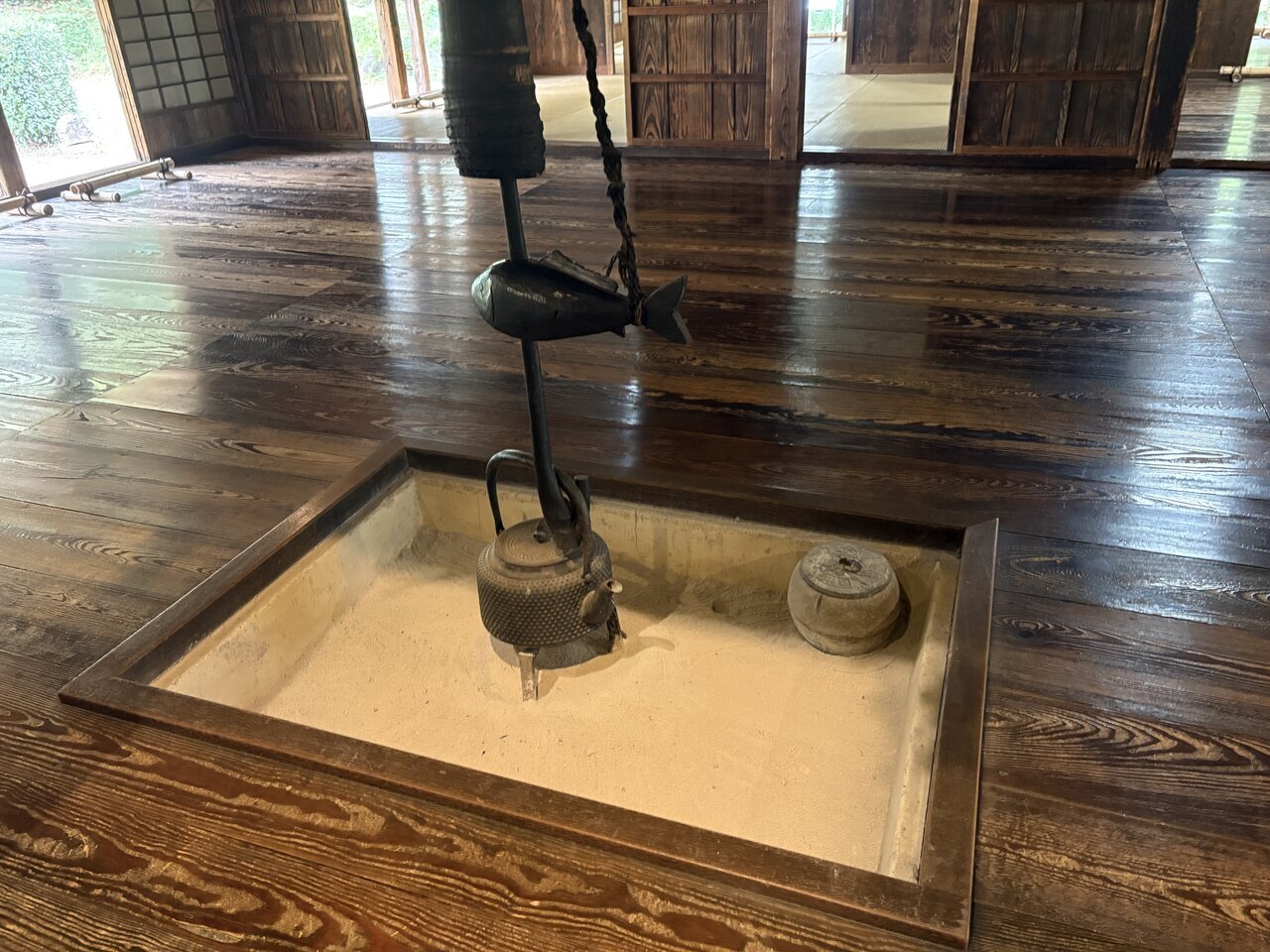
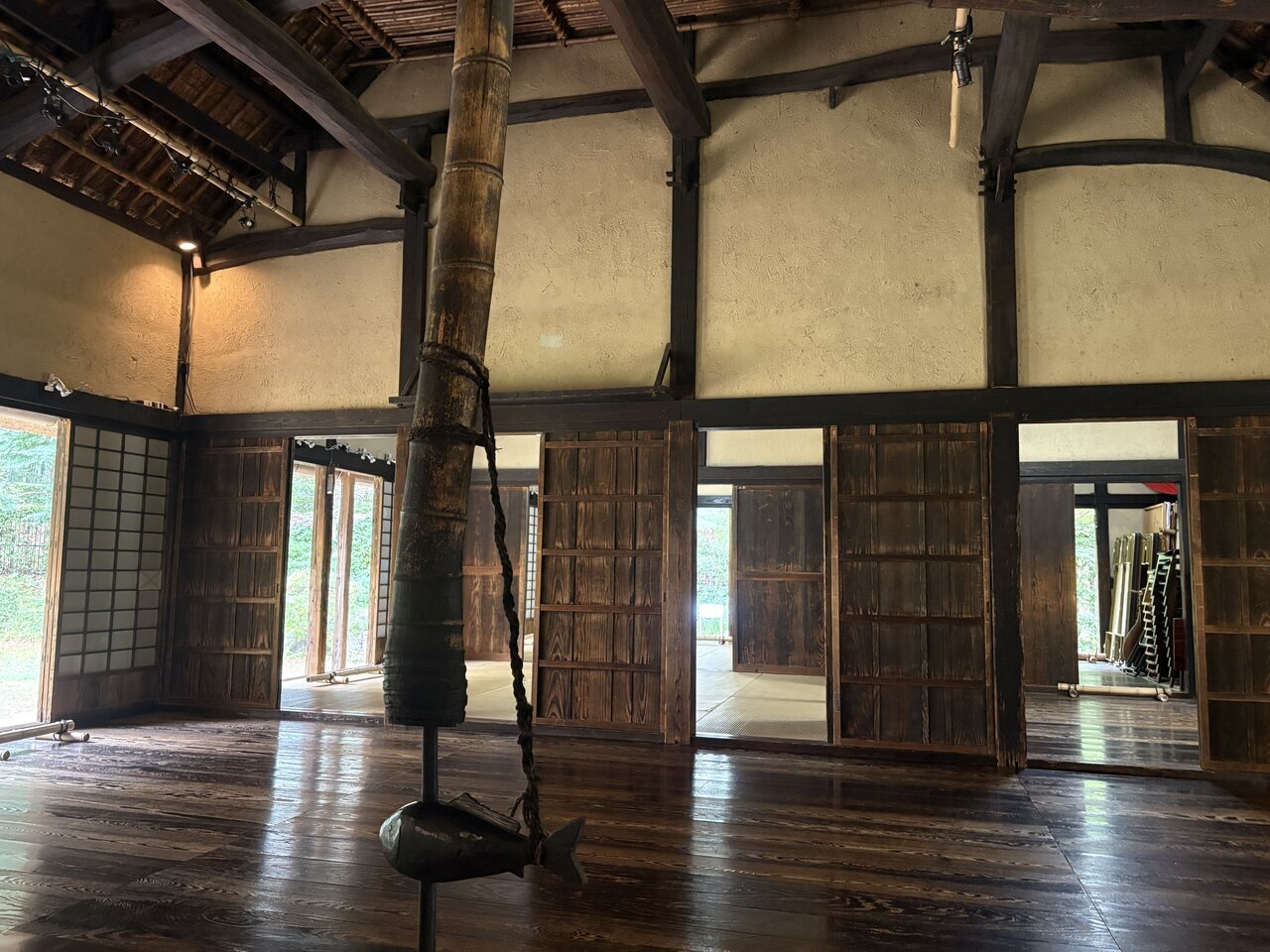
On the wooden floor, there was an irori (hearth), and hanging from a hook from the ceiling was a decoration in the shape of a fish. Thick beams were arranged in the high ceiling, and beyond the shoji screens and sliding doors, tatami rooms continued. It was a space that made it feel like the figure of a family living around the fire was right there.
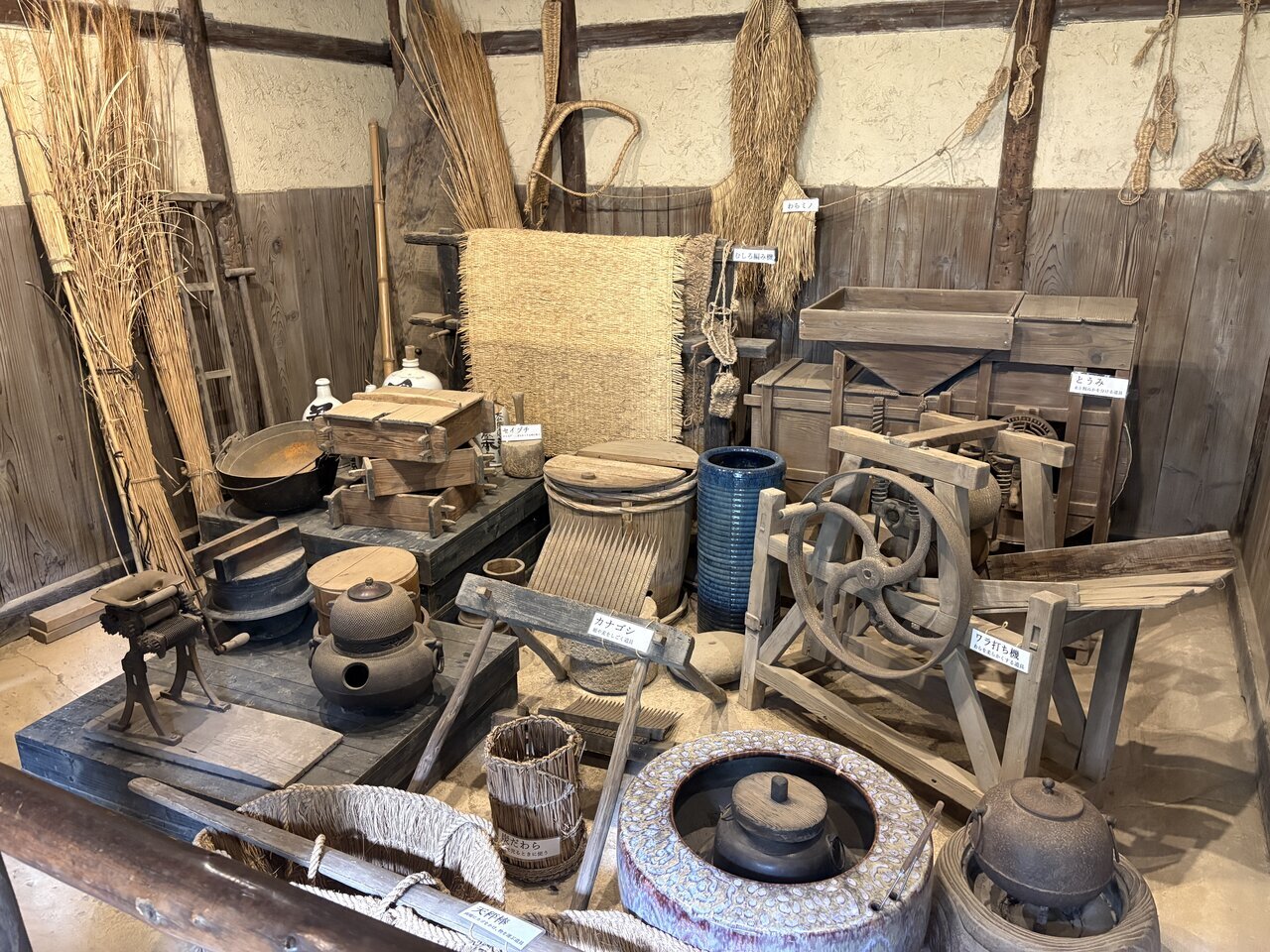
In the folk tools corner, old farming implements were displayed with tags such as "straw beating machine" and "tohmi." The sign at the entrance stated, "The architecture of the folk house park is cultural property. Please be very careful with fire," and inside, there were signs prohibiting smoking and fire.
Experiencing 2200 years through the bulletin board and the voices of the children
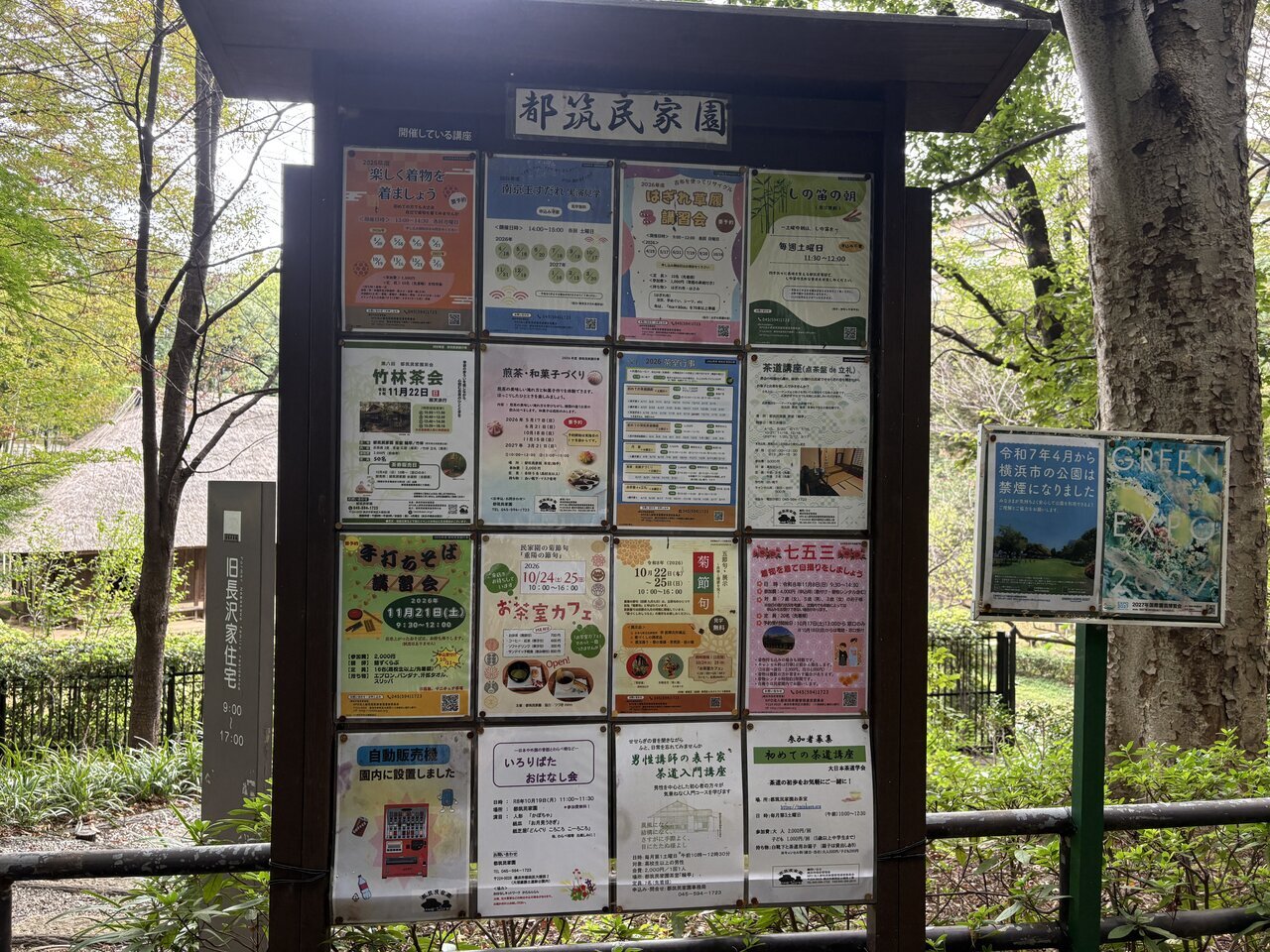
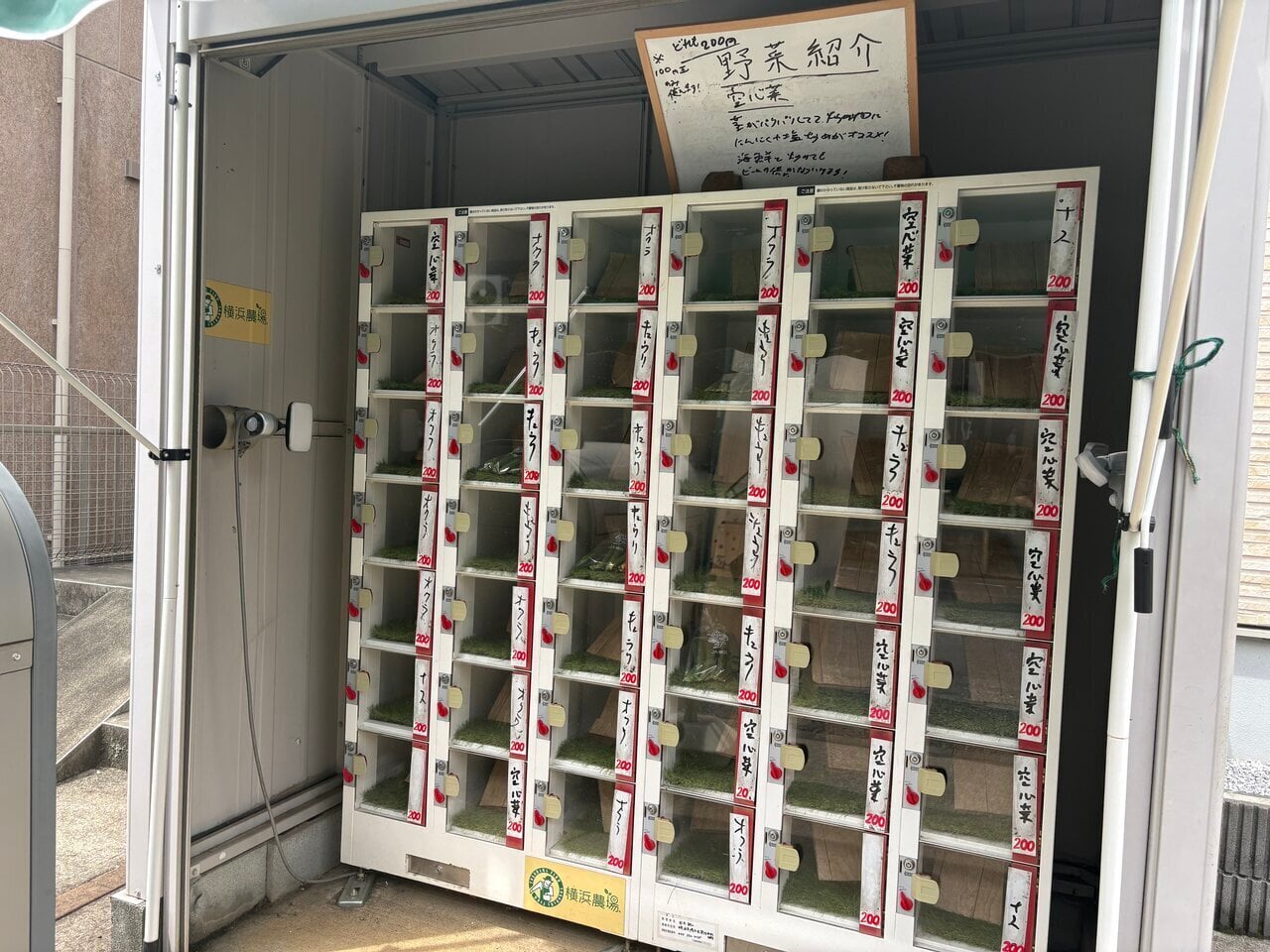
On the bulletin board at the entrance of the folk house park, there were posters for various courses such as kimono dressing, tea ceremony, and soba making. There were also announcements for "Tea Room Cafe" and "Bamboo Grove Tea Ceremony," and a notice that vending machines had been installed in the park. I felt it was a park that is not only a place to see historical sites but also used as a living space.
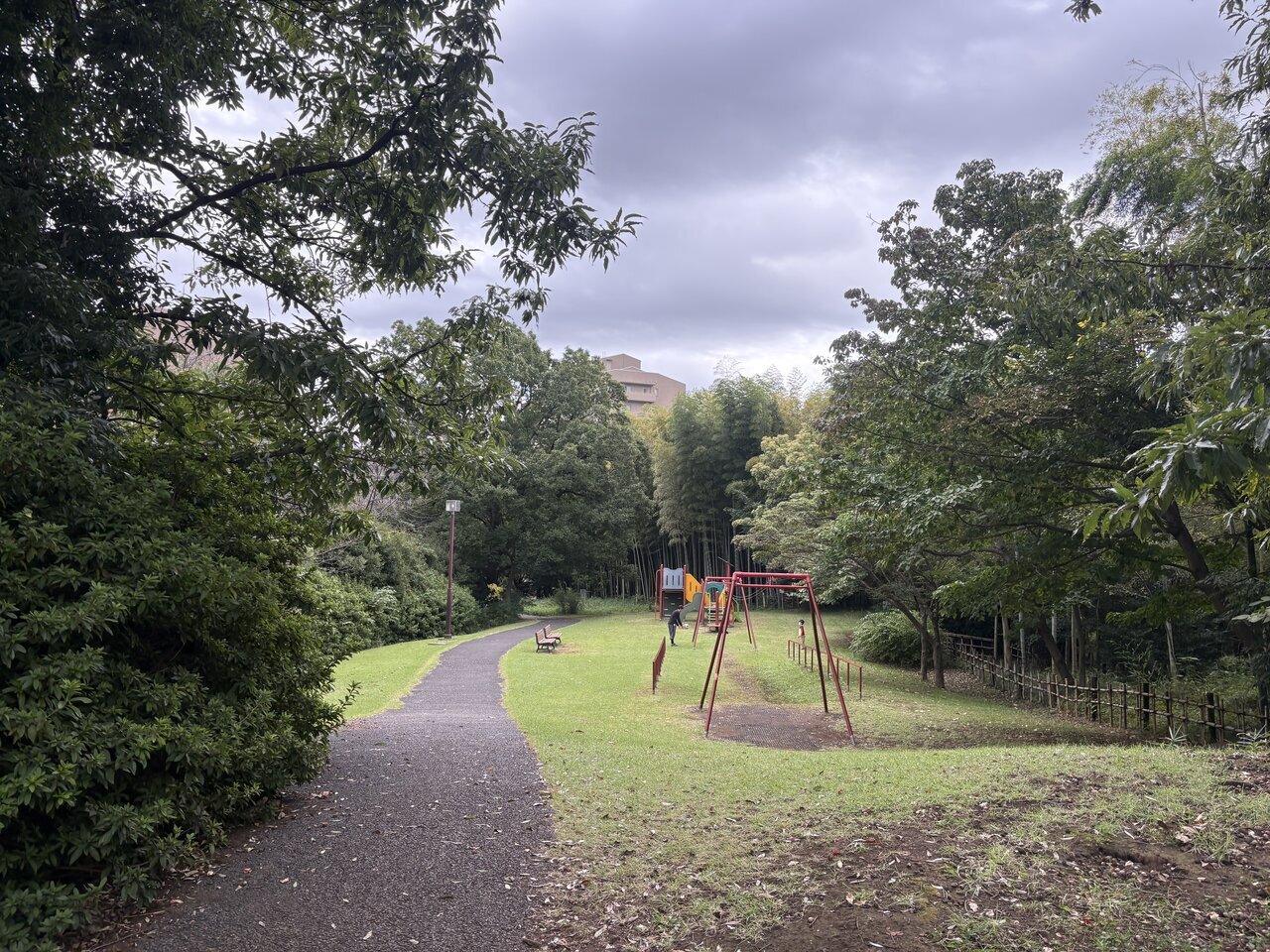
As I passed by the playground area, I saw the kindergarten children out for a walk and playing. The small sounds of joy spread around the red play equipment. I felt as if the quiet air of the historical park suddenly brightened up.
Surely, 2200 years ago in the village, the voices of children like this must have echoed. I imagined the sight of children running around in front of a pit dwelling. The Yayoi village, Edo-period houses, and now the playground of the children living here. I felt the gentle connection of times within the same park as I was leaving.
Surely, 2200 years ago in the village, the voices of children like this must have echoed. I imagined the sight of children running around in front of a pit dwelling. The Yayoi village, Edo-period houses, and now the playground of the children living here. I felt the gentle connection of times within the same park as I was leaving.
Otsuka-Saikotsudo Archaeological Park
Location: 1-1 Oda-nanishi, Tsuzuki Ward, Yokohama City, Kanagawa Prefecture
Opening hours: 9:00 AM to 5:00 PM (the park section excluding the Otsuka ruins is open 24 hours)
Closed: Mondays (the following weekday in case of holidays), New Year's holidays (Otsuka ruins)
Fee: Free
Transportation and parking: No parking within the park. Use the museum parking lot (100 yen for 30 minutes)
Yokohama City History Museum
Location: 1-18-1 Nakagawa Chuo, Tsuzuki Ward, Yokohama City, Kanagawa Prefecture
Access: 5 minutes on foot from Center Kita Station of the Yokohama City Subway
Opening hours: 9:00 AM to 5:00 PM (ticket sales until 4:30 PM)
Closed: Mondays (the following weekday in case of holidays), New Year's holidays
Tsuzuki Folk House Park
Opening hours: 9:00 AM to 5:00 PM
Closed: 2nd and 4th Mondays (the following day in case of holidays), December 29 to January 3
Fee: Free
Report and text by SYURI
- SHARE







 FASHION
 OUTDOOR
 WATCH
 CAR & BIKE
 SNAP
 DINING
 LIFE
 GADGET
 GOLF